
📖 ✝️ Scripture Reading: Matthew 21:33–46
“The greatest act of rebellion against God is to refuse His Son.”
— Oswald Chambers
💒 🕊️ ✨ Context ( Story ) :
Jerusalem was filled with tension.
Just days earlier, Jesus had entered the city during what Christians now call Palm Sunday, welcomed by crowds who shouted “Hosanna!” The city was overflowing with pilgrims celebrating Passover under the watchful eyes of Roman soldiers. The Jewish leaders—chief priests, scribes, and elders—were already disturbed by Jesus’ growing influence.
He had cleansed the temple. He had publicly challenged their authority. Now, standing again in the temple courts, surrounded by people eager to hear Him, Jesus began telling a story.
But this story was more than a story. It was a mirror revealing the hearts of Israel’s leaders.
Jesus said there was a landowner who planted a vineyard. He carefully prepared it: he built a hedge around it, dug a winepress, and constructed a tower. Then he leased the vineyard to tenant farmers and went away on a journey.
The listeners would have immediately recognized the imagery. Vineyards were common in ancient Israel, and tenant farming was a familiar arrangement under Roman economic systems.
But there was something deeper.
This image echoed the powerful prophecy of Book of Isaiah 5, where Israel itself is described as God’s vineyard. The audience, especially the religious leaders, knew this Scripture well.
In Jesus’ story, when harvest time came, the landowner sent his servants to collect his share of the fruit.
Instead of honoring him, the tenants attacked the servants.
One servant was beaten. Another was killed. Another was stoned.
The landowner sent more servants—more than before. But the same violence followed.
The listeners must have felt the tension building.
The Greek word used here for servant is “δοῦλος (doulos)”, meaning a servant or messenger under authority. These servants symbolically represent the prophets whom God had sent to Israel across centuries.
Prophets like Isaiah, Jeremiah, and Zechariah were often rejected, persecuted, or killed by those who should have listened to them.
Then comes the climax of the story.
Finally, the landowner sends his son.
“Surely,” the owner thinks, “they will respect my son.”
But when the tenants see him, they whisper among themselves:
“This is the heir. Come, let us kill him and seize his inheritance.”
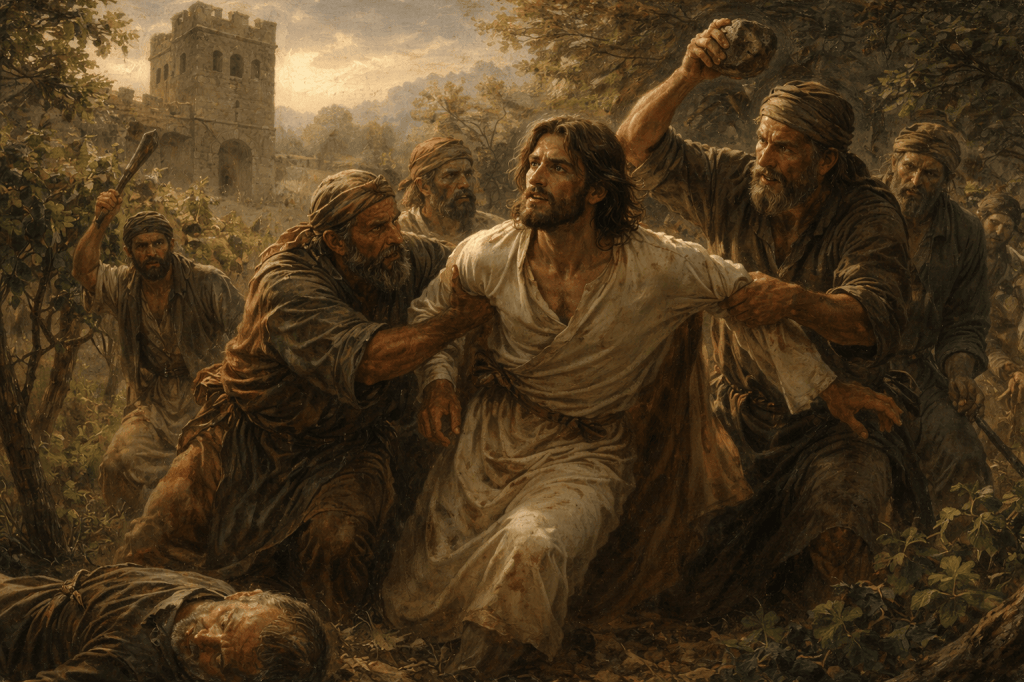
And so they take him, throw him out of the vineyard, and kill him.
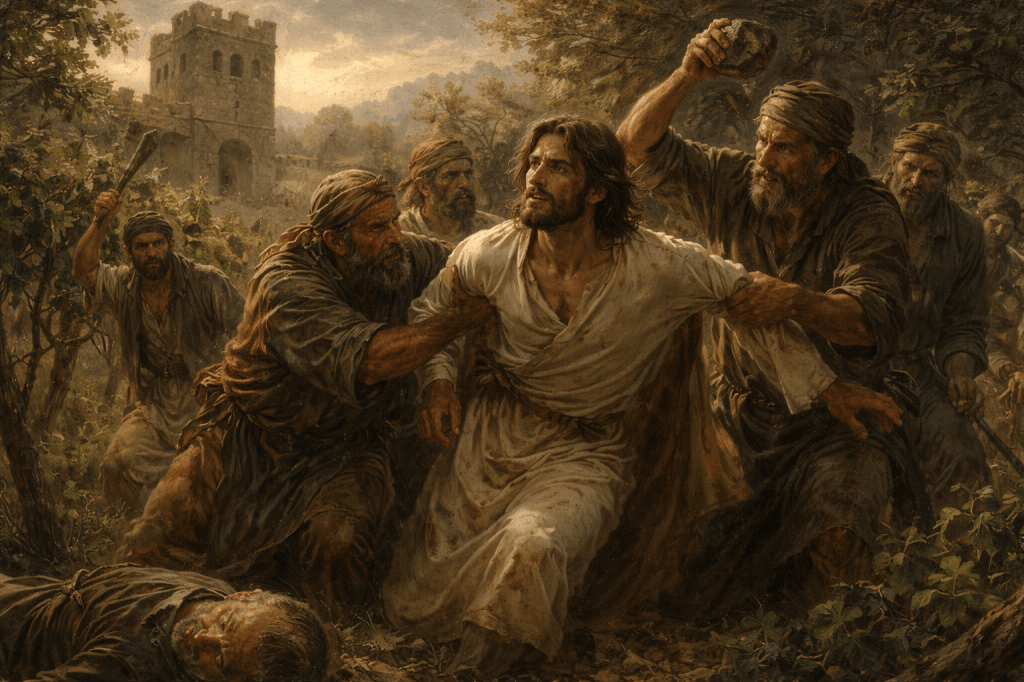
As Jesus told this part of the story, the meaning must have started becoming painfully clear.
The son represented Jesus Himself.
The vineyard represented Israel and God’s kingdom work.
The tenants represented the religious leaders entrusted with spiritual responsibility.
Jesus then asked the crowd a question:
“When the owner of the vineyard comes, what will he do to those tenants?”
The listeners answered with certainty.
“He will bring those wicked men to a miserable end and lease the vineyard to other tenants who will give him his share of the crop.”
Then Jesus revealed the deeper truth.
Quoting Psalms 118:22, He said:
“The stone the builders rejected has become the cornerstone.”
The Greek word “ἀπεδοκίμασαν (apedokimasan)”, translated “rejected,” means to examine something carefully and deliberately declare it unworthy.
The leaders had examined Jesus and consciously rejected Him.
Yet God would reverse their verdict. The rejected stone would become the cornerstone—the most important stone in the entire building.
Jesus then declared something astonishing.
The kingdom of God would be taken from those who rejected Him and given to people who would produce its fruit.
At this point the religious leaders realized something shocking.
Jesus was speaking about them.
The Gospel writer records that they wanted to arrest Him immediately. But they feared the crowd, because the people recognized Jesus as a prophet.
The conflict between Jesus and the religious leaders had now reached a decisive point.
This parable was not merely teaching—it was a prophetic announcement of what would soon happen.
Within days, these same leaders would reject the Son of God and hand Him over to be crucified.
🤔 🪞 💡 Reflection Thought :
This parable reveals the patient heart of God and the tragic hardness of human rebellion.

Throughout history God repeatedly reached out to His people. He sent prophets, messengers, warnings, and invitations. Each servant represented divine patience and mercy.

Yet again and again, humanity resisted.

The vineyard owner’s decision to send his son shows the depth of God’s love. In the ancient world, sending the son was the ultimate act of trust and reconciliation.

Spiritually, this reflects the incarnation—God sending His own Son into the world.

The tragedy of the parable is not ignorance but rejection. The tenants knew the son was the heir. Their rebellion was deliberate.

This reflects spiritual blindness. Pride often prevents people from recognizing God’s authority even when truth stands before them.

Theologically, this passage reveals several profound truths.

First, God is the rightful owner of His vineyard. Creation and salvation history belong to Him.

Second, Jesus is the beloved Son whose authority surpasses every prophet before Him.

Third, rejection of Christ has consequences. The kingdom of God advances beyond those who refuse Him.

Yet the parable also contains hope.

The rejected stone becoming the cornerstone points to the resurrection and exaltation of Christ. Human rejection cannot overturn God’s purposes.

What appears to be defeat—Jesus being cast out and killed—will become the very foundation of redemption.
🎬🔛 Historical True Story :
The Costly Faith of Richard Wurmbrand – Romania, 1948
In 1948, in communist Romania, Pastor Richard Wurmbrand faced a moment similar to the tenants’ choice in Jesus’ parable.
The new communist government demanded that church leaders publicly support the regime and silence the message of Christ’s authority.
Many religious leaders complied to protect their positions.
But Wurmbrand refused.
At a national church congress in Bucharest, government officials praised communism and encouraged churches to align with it.
Then Wurmbrand stood up.
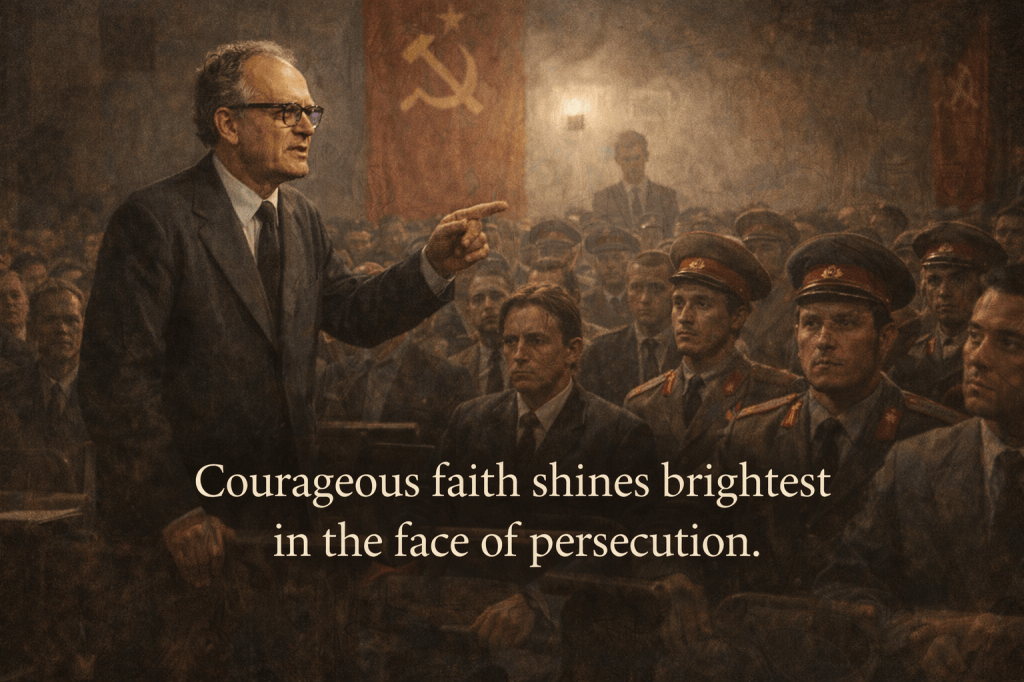
In front of thousands, he boldly declared that the church must remain faithful to Jesus Christ alone.
Soon afterward he was arrested by the secret police.
For fourteen years, Wurmbrand endured imprisonment, torture, and isolation. Yet he continued secretly preaching Christ to fellow prisoners.
When he was finally released, he did not speak with bitterness. Instead, he continued proclaiming the gospel around the world and founded Voice of the Martyrs.
Like the prophets and servants in Jesus’ parable, Wurmbrand suffered because he refused to reject the Son.
🔗 Source:
https://www.persecution.com/richard-wurmbrand/
⚒️🎯 Personal Application :
This parable invites us to examine our own hearts. Like the tenants, we sometimes live as if our lives belong to us rather than to God. We enjoy the blessings of His vineyard but resist His authority over our decisions, priorities, and obedience. Jesus reminds us that God is the true owner of our lives, and He seeks fruit—faith, repentance, humility, and love. When we truly recognize Christ as the cornerstone, our lives begin to align with His kingdom purposes.
🙏 🕯️Prayer:
Lord Jesus, Thank You for being the cornerstone of our faith. Forgive us when our hearts resist Your authority. Help us produce the fruit of Your kingdom in our lives. Teach us to honor the Son whom the world often rejects. Amen.


Leave a comment