
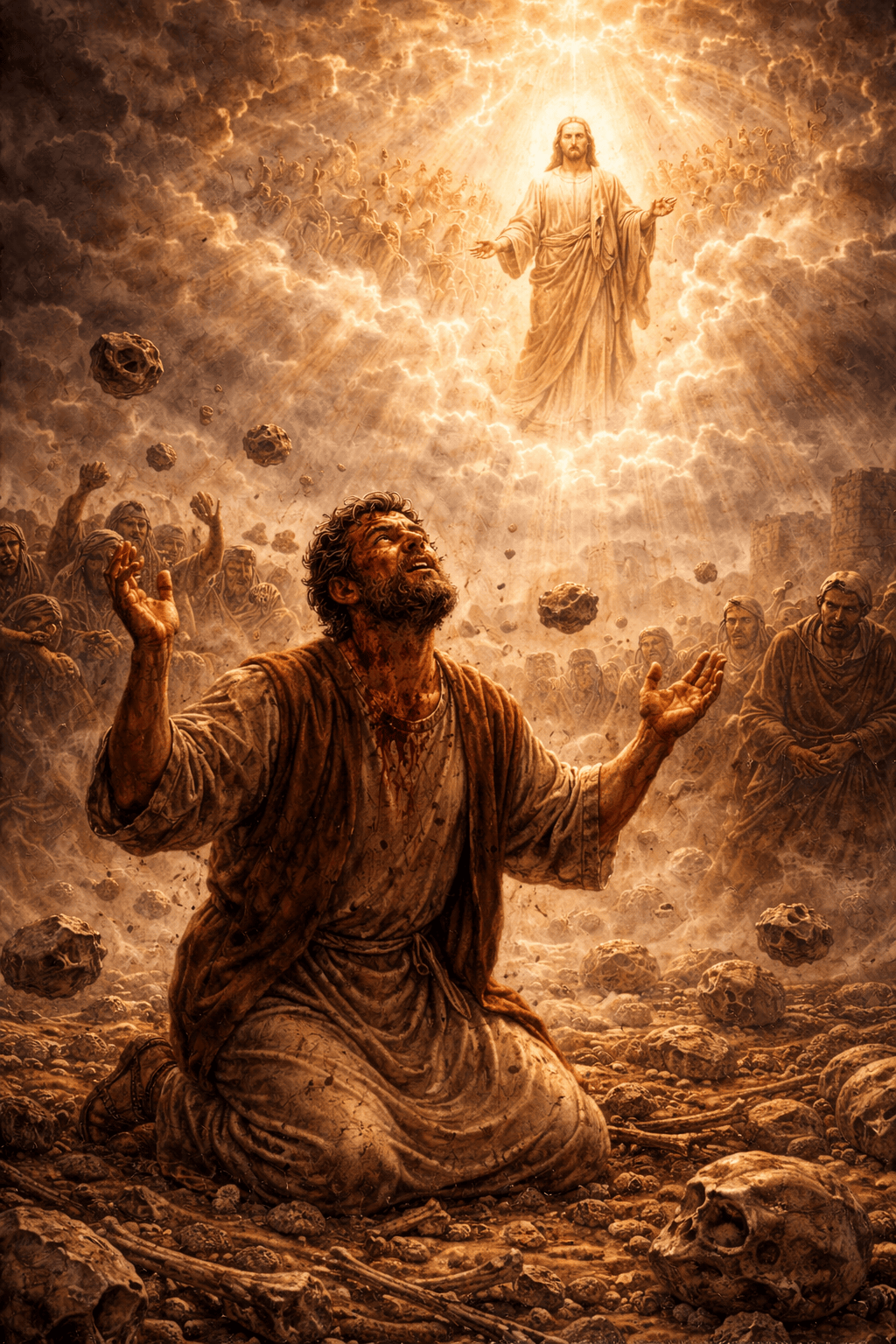
📖 Scripture Reading : Acts 7:54–60; 8:1–4
✨
— Corrie ten Boom
“Faith sees the invisible, believes the unbelievable, and receives the impossible.”
⏳ Background:
Stephen was not an apostle. He was one of seven chosen to serve tables and care for widows (Acts 6:5). Yet Scripture describes him as “full of faith and of the Holy Spirit” (Acts 6:5) and “full of grace and power” (Acts 6:8). His faith was not loud, but it was deep.
Opposition rose quickly. False witnesses accused him. He was dragged before the council (Acts 6:12). Standing before religious authorities, Stephen traced Israel’s history and exposed their resistance to God’s messengers (Acts 7). His words were faithful—but costly.
Acts 7:54 says they were “enraged, and they ground their teeth at him.” This was not a misunderstanding. It was fury.
They rushed him, cast him out of the city, and stoned him (Acts 7:57–58). The execution was deliberate and public. Among those approving was a young man named Saul (Acts 7:58).
Imagine the shock among believers. One of their own—godly, Spirit-filled, faithful—was murdered. There was no miraculous rescue. No angelic deliverance. Stephen fell to his knees and prayed, “Lord Jesus, receive my spirit” and “Lord, do not hold this sin against them” (Acts 7:59–60).
Then he died.
From a human perspective, this was defeat. The church was fragile. Leadership was limited. Fear spread. “There arose on that day a great persecution against the church in Jerusalem” (Acts 8:1). Believers were scattered. Homes were entered. Men and women were imprisoned (Acts 8:3).
It looked like faithfulness had led to loss.
🔥 Turning Point:
The turning point did not come with thunder. It came through sovereignty.
Acts 8:4 quietly states, “Those who were scattered went about preaching the word.”
The persecution meant to silence them became the means by which the gospel traveled beyond Jerusalem. Jesus had promised, “You will be my witnesses in Jerusalem and in all Judea and Samaria” (Acts 1:8). What comfort could not accomplish, suffering propelled.
Stephen’s final prayer echoed the heart of Christ. His forgiveness was not wasted. Saul, who witnessed the execution, would later encounter the risen Jesus (Acts 9:3–6). The man who guarded the coats at Stephen’s death would become Paul, the apostle to the Gentiles.
God was working beyond what anyone present could see.
Stephen saw “the heavens opened, and the Son of Man standing at the right hand of God” (Acts 7:56). While stones fell from earth, Christ stood in heaven. The turning point was not the removal of suffering—but the revelation of glory.
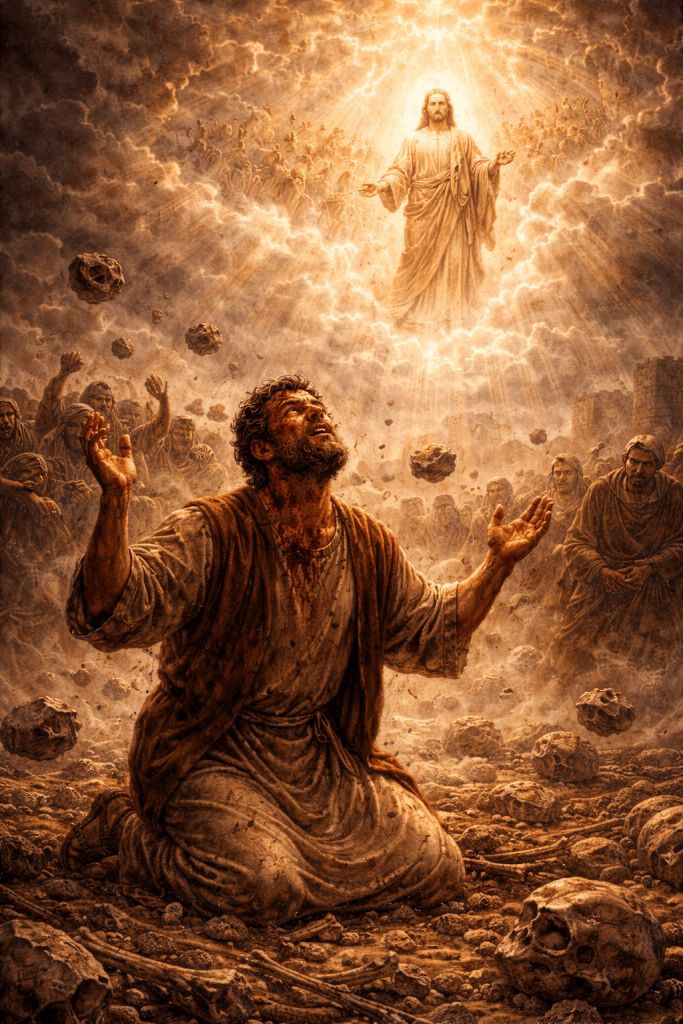
God did not prevent the martyrdom. He transformed its impact.
🌿 Transformation:
The immediate result was scattering—but scattering became sowing. Philip preached in Samaria, and “there was much joy in that city” (Acts 8:8). The gospel crossed ethnic and geographic barriers.
Saul’s conversion reshaped history. Through his missionary journeys, churches were planted across Asia Minor and Europe. Letters were written that now form much of the New Testament.
Stephen’s recorded sermon in Acts 7 remains one of the longest theological defenses in Scripture. His testimony still speaks.
His life was short. His influence was vast.
Faithfulness echoed beyond death.
The church learned that obedience does not guarantee safety—but it guarantees significance in God’s redemptive plan. Fear gave way to courage. Grief gave way to mission. What appeared to crush them actually clarified their calling.
🕊️ Spiritual Reflection:
Stephen’s story confronts our assumptions about victory. We often equate victory with survival, comfort, or visible success. Scripture defines victory as faithfulness under the sovereign hand of God.

God’s sovereignty does not mean the absence of suffering. It means suffering cannot derail His purposes. Stephen’s death was not an accident. It became a catalyst.

Defeat often precedes transformation because it reveals what truly governs our hearts. When security is stripped away, allegiance is exposed. The early church discovered that their hope was not anchored in safety but in a risen Christ.

God redeems even irreversible losses. He can take what appears final and use it to initiate something eternal. No act of faithfulness is wasted in His economy.

From Abel’s blood crying out (Genesis 4:10) to the prophets rejected and killed, Scripture shows that God weaves the suffering of the righteous into His unfolding redemption. Apparent losses advance covenant purposes.

Stephen died praying like Jesus. Christ’s crucifixion looked like ultimate defeat, yet through His death came resurrection and global salvation. The pattern of the cross assures us: apparent endings in God’s hands become beginnings.
💬 Closing Encouragement:
We know what it feels like when obedience seems to cost more than it yields, when integrity leads to misunderstanding, when faithfulness is met with rejection, when loss feels unfair and irreversible. We are tempted to conclude that our suffering has no meaning. Yet Stephen’s life reminds us that God sees beyond our moment and writes beyond our lifetime. Even when we cannot trace His plan, we can trust His character. Our faithfulness matters. Our prayers matter. Our endurance matters. God is able to turn even our deepest wounds into seeds of future victory. Therefore, we must not give up.
🙏 Prayer:
Lord, when faithfulness feels costly, steady our hearts. When loss overwhelms us, remind us You are sovereign. Use even our pain for Your eternal purposes. Give us courage to stand and grace to forgive. Turn our suffering into testimony and victory. Amen.


Leave a comment