
📖 Scripture Reading : 2 Peter 3:9
“The Lord is not slack concerning His promise, as some count slackness, but is longsuffering toward us, not willing that any should perish but that all should come to repentance.”
II Peter 3:9 NKJV
✨ Short Introduction
Throughout church history, God has often moved powerfully when believers carried a deep burden for lost souls. The story of Charles Grandison Finney in the city of Rochester, New York in 1830 is one such remarkable example.
His ministry reminds us that spiritual revival rarely begins with large crowds—it begins with a heart broken before God.
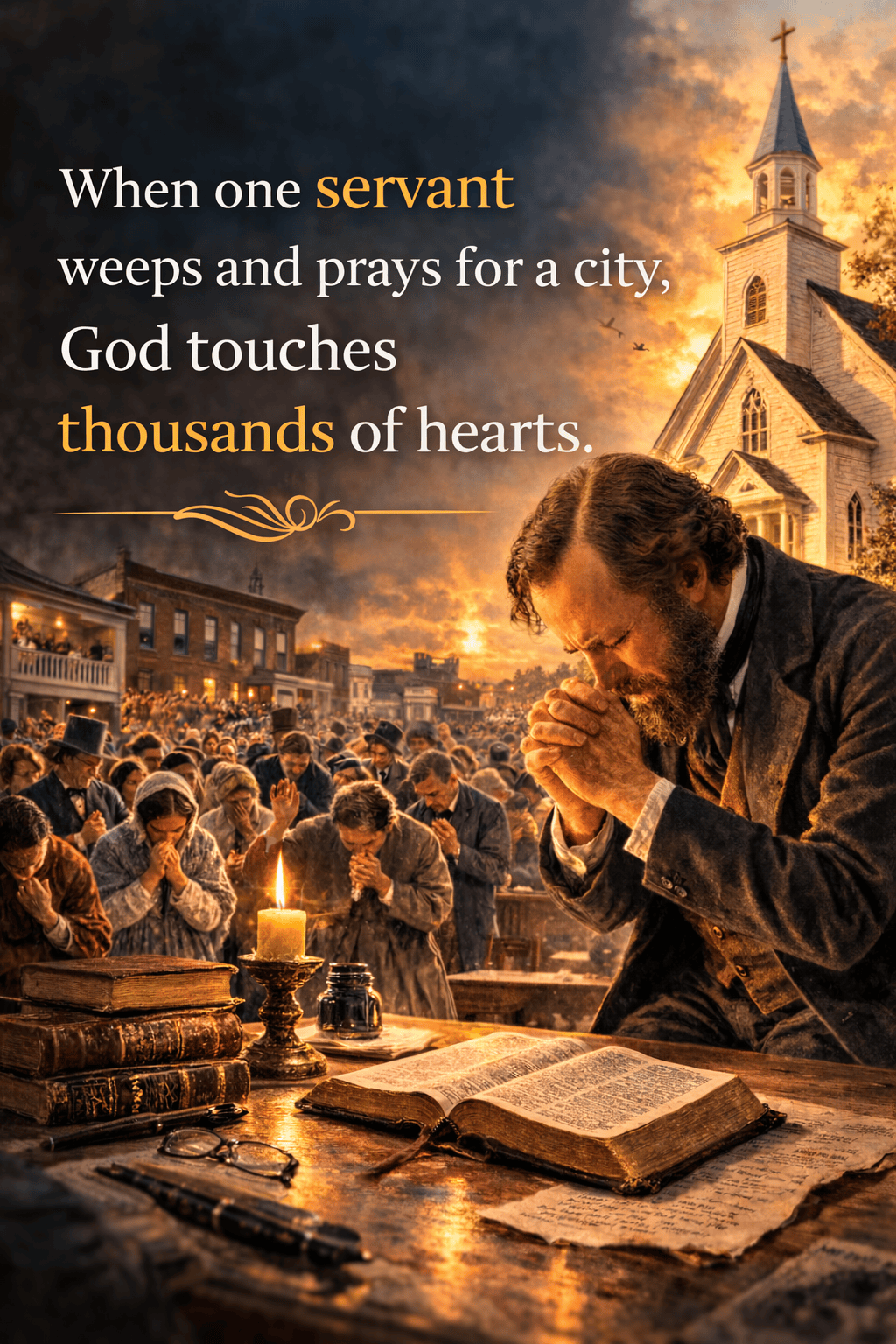
When one servant of God wept and prayed for a city, thousands experienced spiritual awakening.
⏳ Background:
During the early 19th century, Rochester was one of the fastest-growing towns in America. Located along the Erie Canal, the city was booming with new businesses, factories, and migration.
Prosperity was rising—but spiritual life was declining.
Many churches were weak and discouraged. Attendance had fallen in several congregations. Ministers struggled to engage the population, and many residents had become indifferent to faith.
People were busy building careers, wealth, and social standing, leaving little room for spiritual reflection.
Into this environment came Charles Finney in 1830.
Finney had once been a lawyer before experiencing a dramatic conversion to Christ in 1821. After that transformation, he devoted his life to preaching the gospel.
When he arrived in Rochester, he immediately sensed the spiritual condition of the city.
Witnesses later recorded that Finney often walked through the streets alone, praying quietly for the people he passed. Shopkeepers, workers, and families became subjects of his silent prayers.
At times, he was seen weeping.
He was not discouraged by the hardness of hearts; rather, he felt a deep compassion for souls who were spiritually lost.
🔥 Turning Point:
Finney began holding simple revival meetings in local churches.
At first, the gatherings were modest. But something unusual began to happen.
Prayer increased.
Conviction of sin spread among listeners. People began to feel a strong awareness of their spiritual condition.
Finney’s preaching focused clearly on repentance and faith in Christ. Yet he often emphasized that revival was not produced by human effort—it was the work of God responding to sincere prayer and obedience.
Soon the meetings began to fill.
People who had ignored church for years suddenly felt compelled to attend. Merchants, laborers, and professionals began seeking spiritual guidance.
Some accounts recorded that even business operations slowed because workers were attending prayer gatherings.
The movement continued throughout 1830 and 1831, becoming one of the most well-documented revivals in American history.
Historians estimate that thousands of residents in Rochester turned to Christ during this period.
Churches that had been struggling were suddenly filled with people seeking forgiveness, renewal, and a restored relationship with God.
Many observers later said the revival transformed the moral and spiritual life of the city.
🌿 Transformation:
The Rochester revival left a lasting impact.
Church memberships increased dramatically. New believers began living out their faith in daily life—restoring broken relationships, abandoning destructive habits, and seeking to honor God in their work.
The revival also strengthened the cooperation between churches in the city. Pastors who had once struggled alone began supporting one another in ministry.
But perhaps the most important change was spiritual.
People who had once been indifferent toward God developed a deep hunger for Scripture, prayer, and holy living.
Finney later wrote that the awakening in Rochester demonstrated what can happen when believers carry a genuine burden for the salvation of others and seek God earnestly.
His tears for the city mirrored the compassion of Christ for a lost world.
🔗 Source :
https://www.britannica.com/biography/Charles-Grandison-Finney
🕊️ Spiritual Reflection:
This story reveals several profound truths about the heart of God and the role believers play in spiritual awakening.

God often begins great movements through humble obedience and persistent prayer. Finney did not begin with strategies or influence—he began with a burdened heart.

His compassion reflects the same heart that Jesus showed when He wept over Jerusalem.

Key Insights Using S.P.E.C.K.

S – Sin to Avoid
Spiritual indifference and neglect of God can slowly harden our hearts.

P – Promise to Claim
God desires people to come to repentance and respond to His grace.

E – Example to Follow
Finney’s compassion and persistent prayer for a city demonstrate Christlike love.

C – Command to Obey
Believers are called to pray for the salvation of others and share the gospel faithfully.

K – Knowledge About God
God is patient, compassionate, and deeply concerned about the salvation of people.

This story reminds us that revival is ultimately the work of God—but He often begins that work in the hearts of believers who pray.
💬 Closing Encouragement:
Perhaps God has placed a burden on your heart for your city, church, or family. Do not underestimate the power of sincere prayer.
Like Finney, we may never know how our quiet prayers and faithful obedience might become the starting point of God’s transforming work in many lives.
God still hears the prayers of His people today.
🙏 Prayer:
Lord, give us hearts that care deeply for those who do not know You. Help us to pray faithfully for our families, churches, and cities. Use our lives to reflect Your compassion and truth. May many people come to know Christ through Your grace. Amen.


Leave a comment