
📖 Scripture Reading : Psalm 20:7
“Some trust in chariots, and some in horses: but we will remember the name of the LORD our God.”
✨ Short introduction
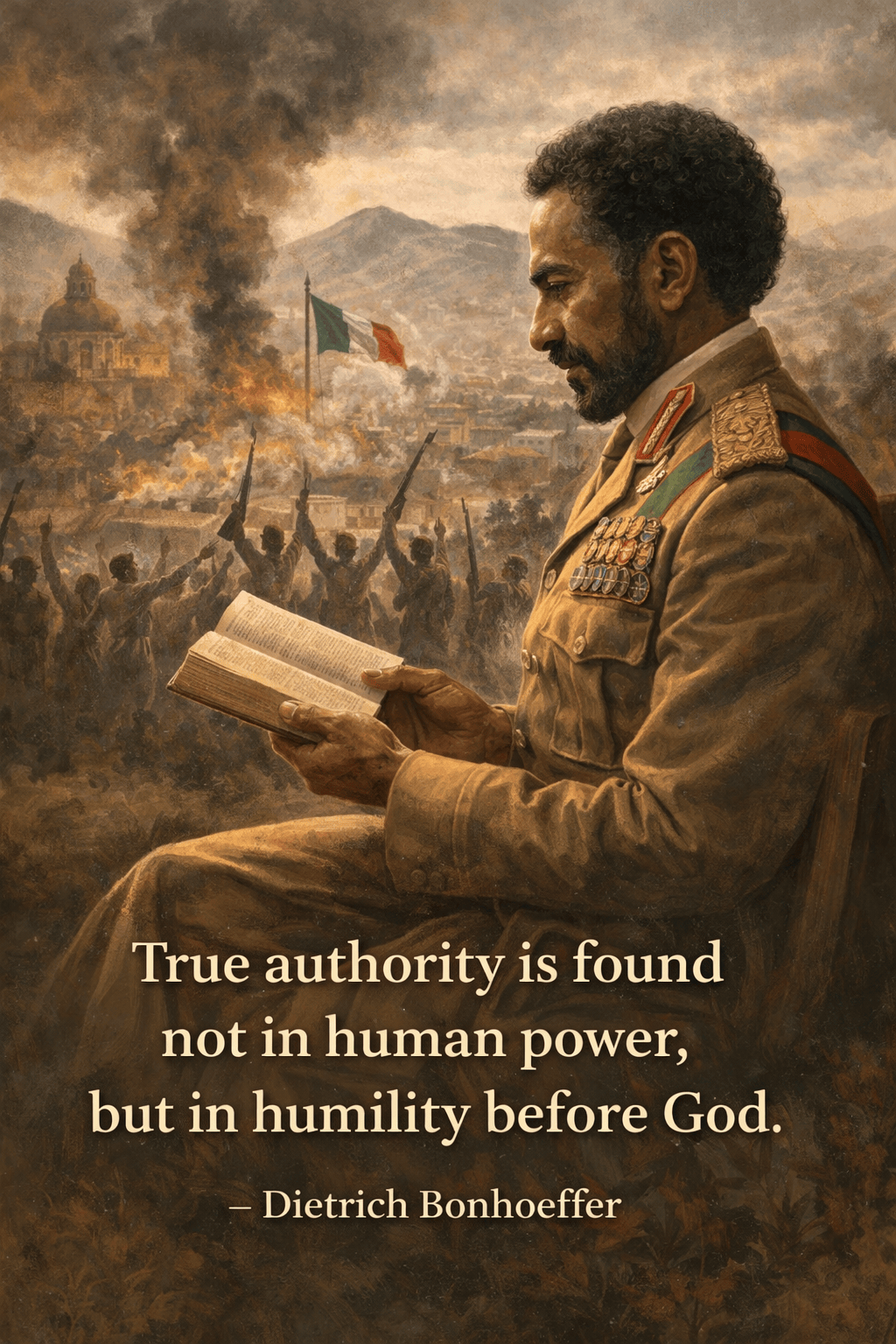
History often celebrates powerful rulers who relied on armies and political strength. Yet sometimes the most powerful testimony comes from leaders who humbly acknowledge their dependence on God.
During a national crisis in 1936, Emperor Haile Selassie of Ethiopia demonstrated that true authority comes from faith in Christ rather than earthly power.
His response to exile, suffering, and injustice became a reminder that God’s strength sustains leaders and ordinary believers alike.
⏳ Background:
In the early 20th century, Ethiopia stood as one of the few independent nations in Africa. Its ruler, Haile Selassie I, governed a nation deeply shaped by Christian heritage, particularly through the Ethiopian Orthodox Tewahedo Church.
However, in 1935, Fascist Italy under dictator Benito Mussolini launched a brutal invasion of Ethiopia. The conflict became known as the Second Italo-Ethiopian War.
Italian forces possessed modern weapons, aircraft, and chemical warfare capabilities. Ethiopian troops, though courageous, were poorly equipped.
By May 1936, the capital city Addis Ababa fell to the invading forces. Emperor Selassie was forced to flee the country to avoid capture.
For Selassie, the situation was devastating:
• His nation had been conquered.
• His people were suffering under occupation.
• His throne and authority were gone.
• The international community seemed powerless to help.
He traveled into exile and eventually addressed the League of Nations in Geneva, warning the world about the dangers of aggression and injustice.
Emotionally and politically, this was a moment of deep uncertainty. Many rulers in such circumstances might have turned to bitterness, vengeance, or political manipulation.
Yet Selassie’s response took a different direction.
🔥 Turning Point:
During his exile in Britain, Selassie spent significant time in prayer and Scripture reading. Historical accounts record that he regularly read the Bible and sought God’s guidance during this period of national crisis.
Instead of calling his followers to hatred or revenge, he continued to appeal for justice and righteousness.
When he addressed the League of Nations in June 1936, he spoke not only as a displaced emperor but also as a man who believed that truth and justice ultimately belong to God.
His faith shaped his attitude:
• He believed oppression would not have the final word.
• He trusted that God sees injustice even when the world ignores it.
• He continued to pray for his nation and people.
Five years later, global events shifted dramatically during World War II. Italian forces weakened, and in 1941, Allied troops helped liberate Ethiopia.
Selassie returned to Addis Ababa and resumed leadership of his country.
During this period he reportedly declared:
“Without Christ, I am nothing.”
His statement reflected a leader who understood that earthly power is temporary, but faith in Christ is eternal.
🌿 Transformation:
When Selassie returned to Ethiopia after liberation, he had the opportunity to rule through anger or revenge.
Instead, he encouraged reconciliation and rebuilding.
Rather than allowing bitterness to dominate his leadership:
• He focused on restoring national unity.
• He emphasized rebuilding institutions and stability.
• He worked toward healing a wounded nation.
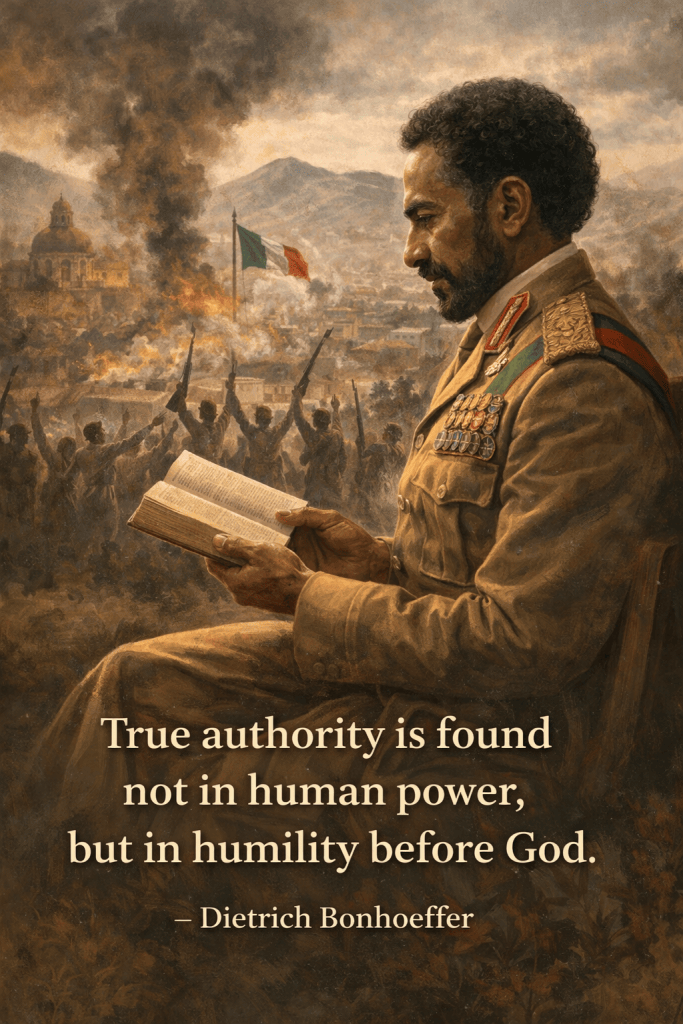
His leadership demonstrated that humility before God can shape how power is used.
The example echoes the humility of Jesus Christ, who entered Jerusalem not on a warhorse but on a donkey, showing that God’s kingdom advances through humility rather than force.
Selassie’s life reminds believers that even those in positions of great authority must ultimately depend on Christ.
Source :
https://www.britannica.com/biography/Haile-Selassie-I
🕊️ Spiritual Reflection:
This story teaches that faith is not only for private life but also for moments of public crisis.

When everything collapses—power, security, and plans—God remains faithful.

S.P.E.C.K. Insights

S — Sin to Avoid
Trusting human strength more than God’s guidance.

P — Promise to Claim
God sustains those who trust Him even in exile or loss.

E — Example to Follow
Selassie’s choice to respond with humility and faith rather than revenge.

C — Command to Obey
Trust in the Lord rather than earthly power (Psalm 20:7).

K — Knowledge About God
God is sovereign over nations and history. Even when injustice seems victorious, His purposes continue.

Key Learnings
	•	True authority comes from humility before God.
	•	Faith must remain steady during national or personal crisis.
	•	God can restore what seems permanently lost.
	•	Christian leadership is marked by reconciliation, not revenge.
💬 Closing Encouragement:
You may not be an emperor or a national leader, but you will face moments when life feels out of control. Plans collapse. Opportunities disappear. Injustice may seem to prevail.
In those moments, remember that God is still ruling. Like Selassie in exile, you can choose to trust Christ rather than circumstances. God often writes His greatest testimonies during seasons of waiting.
🙏 Prayer:
Lord, help me to trust You when my plans fail and my strength feels small. Teach me to depend on You rather than human power or success. Give me a humble heart that seeks Your will in every season. May my life point others to Christ, the true King. Amen.


Leave a comment