
📖 Scripture Reading : Luke 23:32–43
✨
— Corrie ten Boom
“There is no pit so deep, that God’s love is not deeper still.”
⏳ Background:
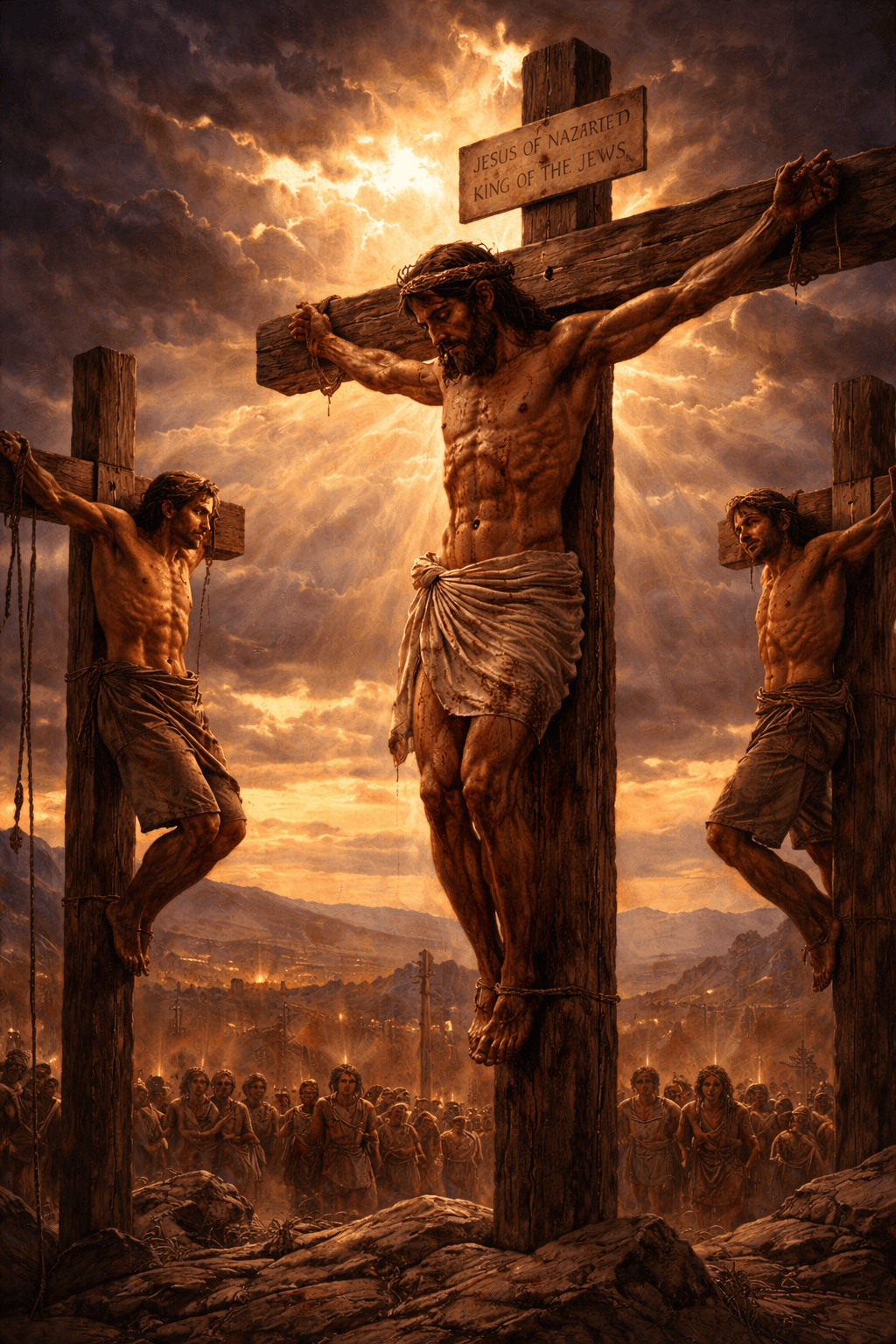
Three crosses stood on a hill outside Jerusalem. One held the sinless Son of God. The other two held criminals—men condemned under Roman law, publicly exposed, stripped of dignity, awaiting slow death.
One of them had likely spent years in rebellion—stealing, perhaps violence, living outside the boundaries of righteousness. Scripture calls them criminals (Luke 23:32). They were not misunderstood victims; they were guilty. One of them admits it plainly: “We are receiving the due reward of our deeds” (Luke 23:41).
There is no appeal left. No courtroom reversal. No future to rebuild. Nails have sealed their fate. Breath comes in painful gasps. Blood loss and shock creep steadily inward. The crowd mocks. Religious leaders sneer: “He saved others; let him save himself” (Luke 23:35).
Hopelessness hangs thicker than the dust in the air.
At first, both criminals join in the reviling (Matthew 27:44). Even at the edge of eternity, bitterness speaks easily. Pain often hardens before it humbles.
This is a man who has wasted his life. Reputation destroyed. Relationships likely severed. Future erased. He is hours away from death with nothing left to repair.
Execution is certain. Shame is public. Time is gone.
🔥 Turning Point:
Something changes.
As he watches the Man in the center cross, he hears words that do not belong in an execution ground: “Father, forgive them, for they know not what they do” (Luke 23:34).
Who prays like that while dying?
He sees the inscription above Jesus’ head: “This is the King of the Jews” (Luke 23:38). He hears the mockery. He watches the silence of Christ. And somewhere in that suffering, light breaks into a condemned heart.
He rebukes the other criminal: “Do you not fear God?” (Luke 23:40). Confession follows: “We indeed justly… but this man has done nothing wrong” (Luke 23:41).
This is repentance without defense. No excuses. No comparison. Just ownership.
Then comes one of the most fragile yet powerful prayers in Scripture:
“Jesus, remember me when you come into your kingdom” (Luke 23:42).
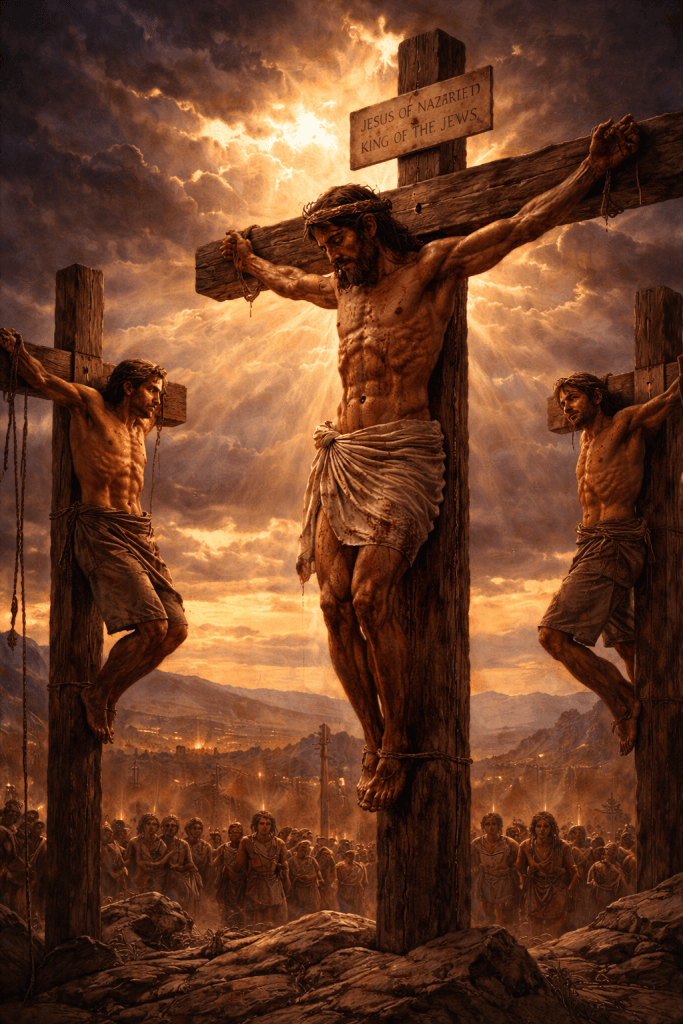
No theological sophistication. No record of good works. No time for restitution. Just faith reaching across a few feet of splintered wood.
And Jesus responds immediately:
“Truly, I say to you, today you will be with me in Paradise” (Luke 23:43).
Notice what happened. The man asked to be remembered someday. Jesus promised him presence that very day.
The criminal offered a plea. God gave a kingdom.
The nails remained. The cross remained. Death still came. But condemnation was overturned in a single sentence.
🌿 Transformation:
Nothing about his outward circumstance changed. He was not taken down. He was not spared physical death. Rome did not reverse the sentence.
Yet everything eternal changed.
From criminal to citizen of Paradise.
From condemned to welcomed.
From shame-exposed to forgiven.
In his final recorded moments, his speech transformed: from mockery to defense of Christ, from despair to confession, from fear to faith. A wasted life did not prevent a redeemed ending.
One man entered that hill as a thief. He left it as a saved man walking into the presence of God.
Execution became entrance.
Hopelessness became victory.
🕊️ Spiritual Reflection:
The cross-bearing thief forces us to confront a profound truth: no human failure outlasts divine mercy. His life was objectively wasted in many ways. There is no record of restitution, no time to repair broken trust, no opportunity to rebuild a moral resume. Yet God’s sovereignty is not limited by the length of time remaining.

Salvation was never about accumulated merit. It has always been about grace received through faith. The thief’s story dismantles pride and dismantles despair at the same time. Pride cannot boast—he had nothing to offer. Despair cannot dominate—Jesus had everything to give.

Defeat often precedes victory because defeat exposes our helplessness. At the cross, the thief had no illusions left. Stripped of self-sufficiency, he could finally see the King beside him.

Throughout Scripture, God rescues the undeserving—the guilty Passover households in Egypt, rebellious Israel in the wilderness, exiled Judah in Babylon. Mercy repeatedly interrupts judgment.

At Calvary, judgment and mercy meet. Jesus bears wrath so the guilty may receive welcome. The thief’s promise of Paradise previews the greater resurrection hope secured by Christ’s empty tomb.

It is never too late to believe while breath remains.
💬 Closing Encouragement:
There are moments when we look at our past and see wasted years, damaged relationships, compromised integrity, and doors permanently closed. We feel the weight of consequences and assume that opportunity has expired. We may believe we are too far gone, too exposed, too late. Yet the thief reminds us that as long as we can turn toward Christ, grace is still within reach. We may not undo yesterday, but we can surrender today. We may not escape every consequence, but we can receive eternal mercy. Our failure does not intimidate God’s power to redeem. Therefore, we refuse to give up. We cling to Christ, even at the final hour.
🙏 Prayer:
Lord Jesus, when shame whispers that it is too late, remind us of mercy at the cross. Give us courage to confess and believe. Turn our endings into beginnings through Your grace. Amen.


Leave a comment