
📖 Scripture Reading : Luke 15:11–32
✨
— A.W. Tozer
“Our sins are more than forgiven; they are forgotten.”
⏳ Background:
The younger son’s rebellion began not in a far country, but at home. “Father, give me the share of property that is coming to me” (Luke 15:12). In that culture, such a request was more than impatience—it was a relational rupture. It was as though he said, I want your gifts, not you.
The father divided his property. No argument is recorded. No resistance. Just sorrowful generosity.
The son gathered “all he had” and journeyed into a far country (v. 13). There he squandered his inheritance in reckless living. The text does not romanticize his freedom. It was wasteful. Impulsive. Empty. When the money ran out, so did the friendships.
“And when he had spent everything, a severe famine arose” (v. 14). Loss met external crisis. Financial ruin collided with economic disaster. He began to be in need. He hired himself out to feed pigs—unclean animals to a Jewish listener. Hunger reduced him to longing for the pods the pigs ate (v. 16). No one gave him anything.
Isolation deepens when shame settles in. The far country is not merely geographical; it is spiritual estrangement. He had traded sonship for self-rule and found himself starving in both body and soul.
Hopelessness whispers that return is impossible. That bridges are burned. That dignity cannot be restored.
🔥 Turning Point:
“But when he came to himself” (Luke 15:17).
Clarity dawned in the pigsty. He remembered his father’s house. “How many of my father’s hired servants have more than enough bread, but I perish here with hunger!” (v. 17). This was not yet full understanding of grace, but it was awakening.
He rehearsed his confession: “Father, I have sinned against heaven and before you. I am no longer worthy to be called your son. Treat me as one of your hired servants” (vv. 18–19). He planned to negotiate his way back as a servant.
He arose and came to his father.
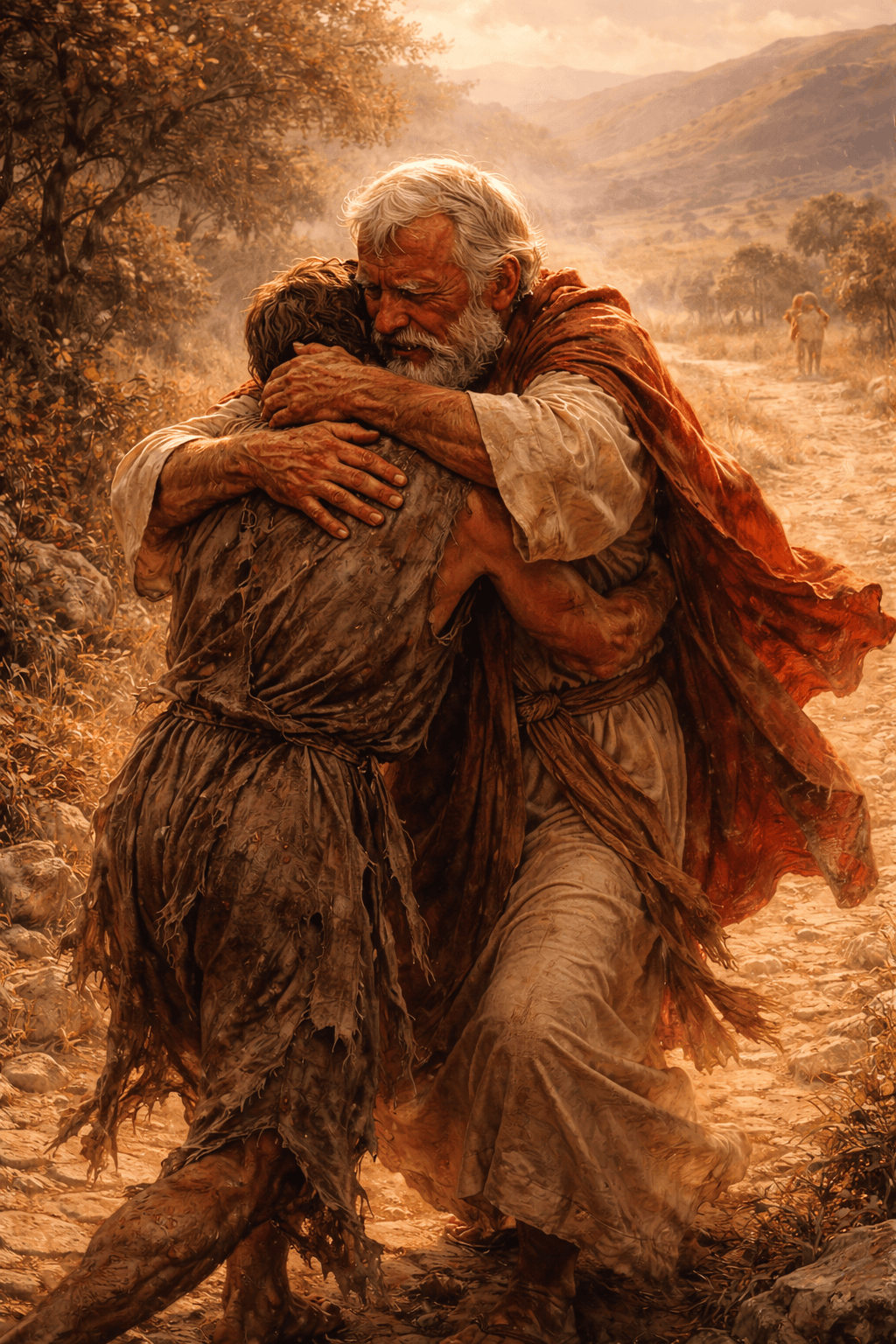
But the greater movement was not the son’s—it was the father’s. “While he was still a long way off, his father saw him and felt compassion, and ran and embraced him and kissed him” (v. 20).
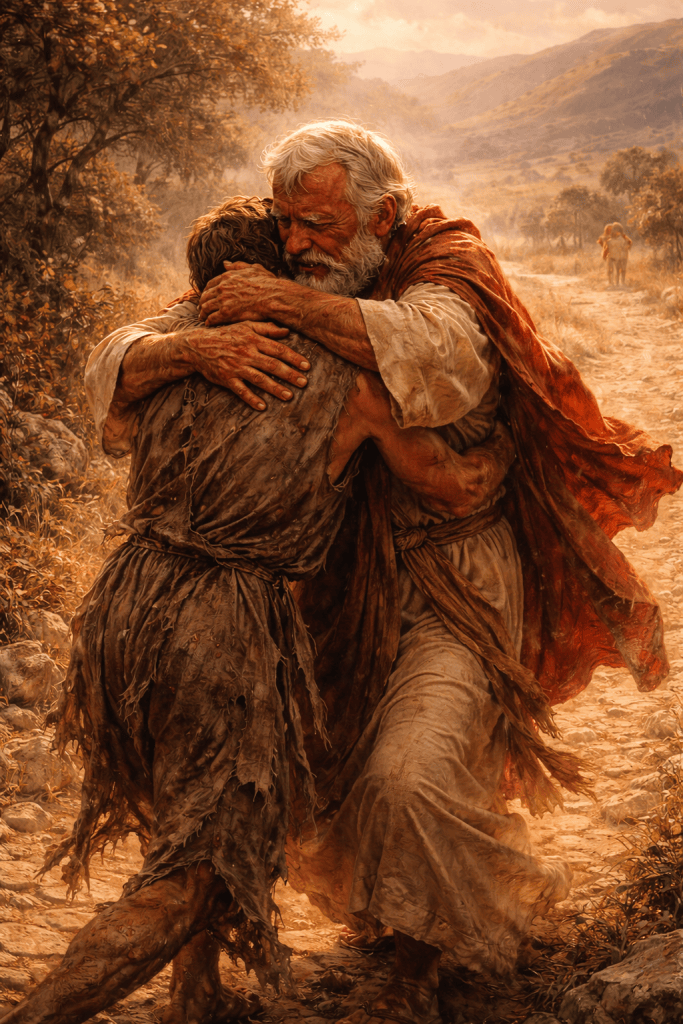
In a culture where dignified patriarchs did not run, the father ran. He absorbed the shame. He closed the distance. He interrupted the son’s rehearsed speech before it could fully downgrade his identity.
God’s intervention is not reluctant acceptance; it is compassionate pursuit.
🌿 Transformation:
The son confessed, “I have sinned… I am no longer worthy” (v. 21). The father did not argue with the sin; he addressed the identity.
“Bring quickly the best robe, and put it on him, and put a ring on his hand, and shoes on his feet” (v. 22). The robe signified honor. The ring signified authority. The shoes signified sonship—servants went barefoot.
“And bring the fattened calf and kill it, and let us eat and celebrate” (v. 23). This was not quiet reinstatement; it was public restoration. A feast for the village. Evidence of complete acceptance.
“For this my son was dead, and is alive again; he was lost, and is found” (v. 24).
The circumstances changed—hunger to abundance, exile to home. But deeper still, the heart changed. The son who once demanded independence now returned in humility. He experienced not wages, but grace.
The story also reveals the elder brother’s struggle with resentment (vv. 25–30), reminding us that grace offends self-righteousness. Yet the father’s posture remains consistent: inviting, pleading, generous.
Ruin did not have the final word. Reunion did.
🕊️ Spiritual Reflection:
This parable unveils the heart of God toward rebels and failures. The father did not minimize the son’s sin; the confession stands. Yet grace outran shame. Restoration preceded restitution. Identity was restored before performance could be offered.

Defeat often precedes transformation because independence must collapse before dependence can flourish. The famine exposed the fragility of self-sufficiency. The pigsty became the classroom of repentance.

God’s sovereignty is evident even in the far country. The famine was not accidental; it became the instrument of awakening. What seemed like final ruin became the turning point toward home.

Throughout Scripture, exile leads to restoration—Adam expelled yet promised redemption, Israel scattered yet called back. The story of God is consistently one of bringing wanderers home.

Jesus tells this parable on His way to the cross, where He Himself would bear the shame of rebels to secure their adoption. Through His death and resurrection, the robe of righteousness is placed upon undeserving sinners (Isaiah 61:10; 2 Corinthians 5:21). The ultimate feast awaits in the kingdom of God.

No far country is beyond the reach of the Father’s sight. No famine can cancel His compassion. Grace is not hesitant; it runs.
💬 Closing Encouragement:
We know the pull of distant lands, the illusion of freedom apart from God, and the emptiness that follows wasted years and broken choices. We know the ache of famine seasons and the temptation to believe we must earn our way back. Yet the Father’s heart remains open, watching the horizon. When we rise in repentance and take even trembling steps home, we discover that grace moves faster than our shame. We are not restored as hired servants striving for approval, but as sons and daughters embraced in mercy. Therefore we return, we trust, we persevere—and we do not give up.
🙏 Prayer:
Father, we confess our wandering hearts.Meet us in our far countries and awaken us.Give us courage to rise and return.Clothe us again in Your mercy and grace.Keep us trusting that Your love restores completely.


Leave a comment