
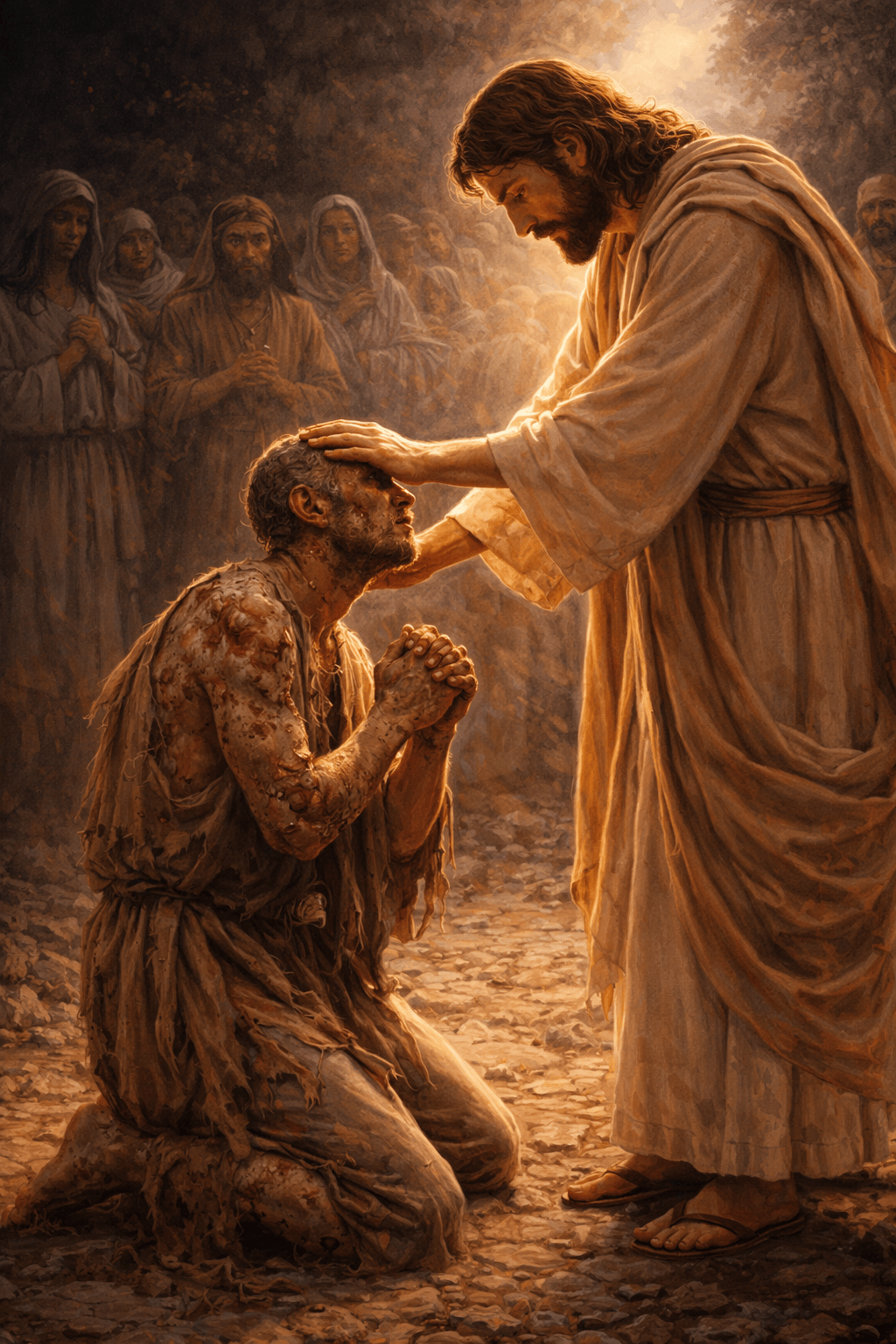
📖 Scripture Reading : Mark 1:40–45
✨
— John Piper
“God is most glorified in us when we are most satisfied in Him.”
⏳ Background:
Leprosy in the first century was more than a disease; it was a sentence. According to Leviticus 13–14, a leper was declared ceremonially unclean, forced to live outside the camp, separated from family, worship, and community. Torn clothes, uncovered head, and the humiliating cry of “Unclean!” marked his daily existence.
The man in Mark 1 does not even have a name. He is identified only by his condition: “a leper came to him” (Mark 1:40). His body was likely deteriorating—numb limbs, disfigured skin, progressive decay. But the deeper wound was social exile. No embrace. No synagogue. No normal life. He was physically afflicted and spiritually isolated.
Years of isolation erode hope. When prayers seem unanswered and healing never comes, despair quietly settles in. The law itself placed boundaries around him; no rabbi would risk ceremonial defilement by coming close.
Yet something stirred in this man. He had heard about Jesus—the authority in His teaching (Mark 1:22), the demons obeying Him (1:27), the sick healed (1:34). So he broke protocol. He approached.
“Kneeling, he said to Him, ‘If You will, You can make me clean’” (1:40). Notice the humility: not questioning power, only willingness. He does not demand. He pleads. He believes Jesus can, but he does not presume that Jesus will.
This is the prayer of someone who has suffered long enough to fear disappointment.
🔥 Turning Point:
“Moved with pity, He stretched out His hand and touched him” (Mark 1:41).
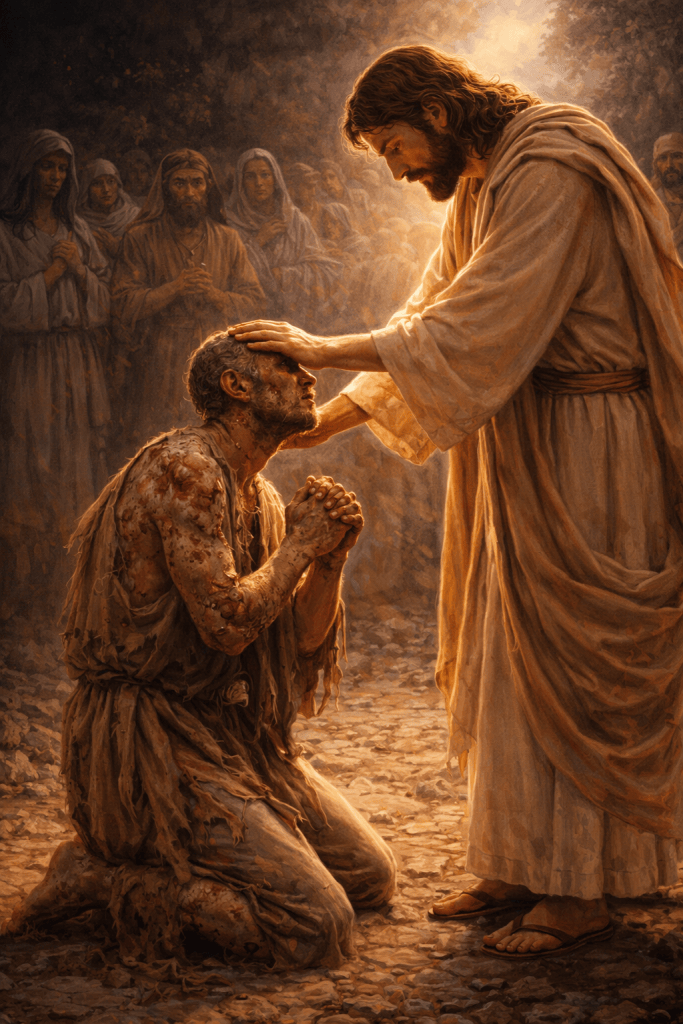
Before the healing word came the human touch.
Jesus did what no one else dared to do. He crossed the boundary. Under the law, touching a leper made one unclean. But here, holiness moves toward impurity—and impurity does not contaminate Him; His purity cleanses it.
“I will; be clean” (1:41).
Immediately—Mark emphasizes the suddenness—“the leprosy left him, and he was made clean” (1:42). No gradual improvement. No partial relief. The disease that had defined his existence vanished at the word of Christ.
Jesus then commanded obedience: “Show yourself to the priest and offer for your cleansing what Moses commanded” (1:44). Restoration was not only physical; it was covenantal and communal. The priest’s declaration would officially reintegrate him into society.
The turning point was not the man’s boldness; it was Christ’s compassion. Not merely the request, but the Savior’s will. God initiated the reversal.
🌿 Transformation:
The man who once lived outside the city now had access to home, worship, and family. His skin restored, nerves renewed, stigma removed. The priests would examine him according to Leviticus 14 and declare him clean. Legally and socially, he was reinstated.
His identity changed. He was no longer “the leper” but a cleansed man.
Interestingly, Mark records that he “went out and began to talk freely about it” (1:45). Though he struggled to contain his joy and disobeyed Jesus’ instruction to remain silent, his heart overflowed. Shame had given way to testimony.
Meanwhile, “Jesus could no longer openly enter a town, but was out in desolate places” (1:45). The One who touched the exile experienced a form of isolation Himself. The healer stepped into inconvenience so the outcast could step into freedom.
Healing did more than repair skin; it revealed the heart of Christ. It nurtured faith. It restored dignity. It displayed authority over what seemed irreversible.
Hopelessness did not have the final word.
🕊️ Spiritual Reflection:
This account reveals a Savior who is sovereign not only over disease but over disgrace. Leprosy symbolized uncleanness, separation, and decay—realities that mirror our deeper spiritual condition apart from grace. Yet Jesus does not recoil. He moves toward contamination and reverses it.

Defeat often precedes transformation because need drives us to Christ. The leper’s desperation became the pathway to encounter. Isolation prepared him to kneel. Brokenness positioned him for mercy.

God’s sovereignty is evident even in prolonged suffering. The years of exile were not meaningless; they formed the soil from which faith emerged. And when the moment came, Christ acted decisively.

Throughout Scripture, God consistently moves toward the unclean—touching the impure, restoring the excluded, cleansing the defiled (Leviticus fulfilled in mercy).

Ultimately, at the cross, Jesus bore our uncleanness. “He Himself bore our sins in His body on the tree” (1 Peter 2:24). The One who touched the leper would later take on sin itself, so that through His wounds we might be healed. The greatest reversal occurred there—shame exchanged for righteousness, death overturned by resurrection.

No condition is too decayed. No exile too far. No shame too deep. In Christ, reversal is not wishful thinking; it is covenant promise.
💬 Closing Encouragement:
We know what it feels like to carry hidden shame, to feel excluded because of failure, to believe our condition defines us. We know the exhaustion of long seasons where nothing seems to change and the quiet fear that perhaps restoration is not meant for us. Yet like the leper, we are invited to kneel and entrust both God’s power and His will. We may not control timing, but we can cling to His character. When we come honestly, Christ does not withdraw; He draws near. Therefore we surrender our despair, trust His compassion, walk in obedience, and refuse to give up.
🙏 Prayer:
Lord Jesus, we come to You in our uncleanness and shame. Stretch out Your hand toward our broken places. Strengthen our faith when healing feels delayed. Restore what has been lost and renew our hope. Help us trust Your will and never give up.


Leave a comment