
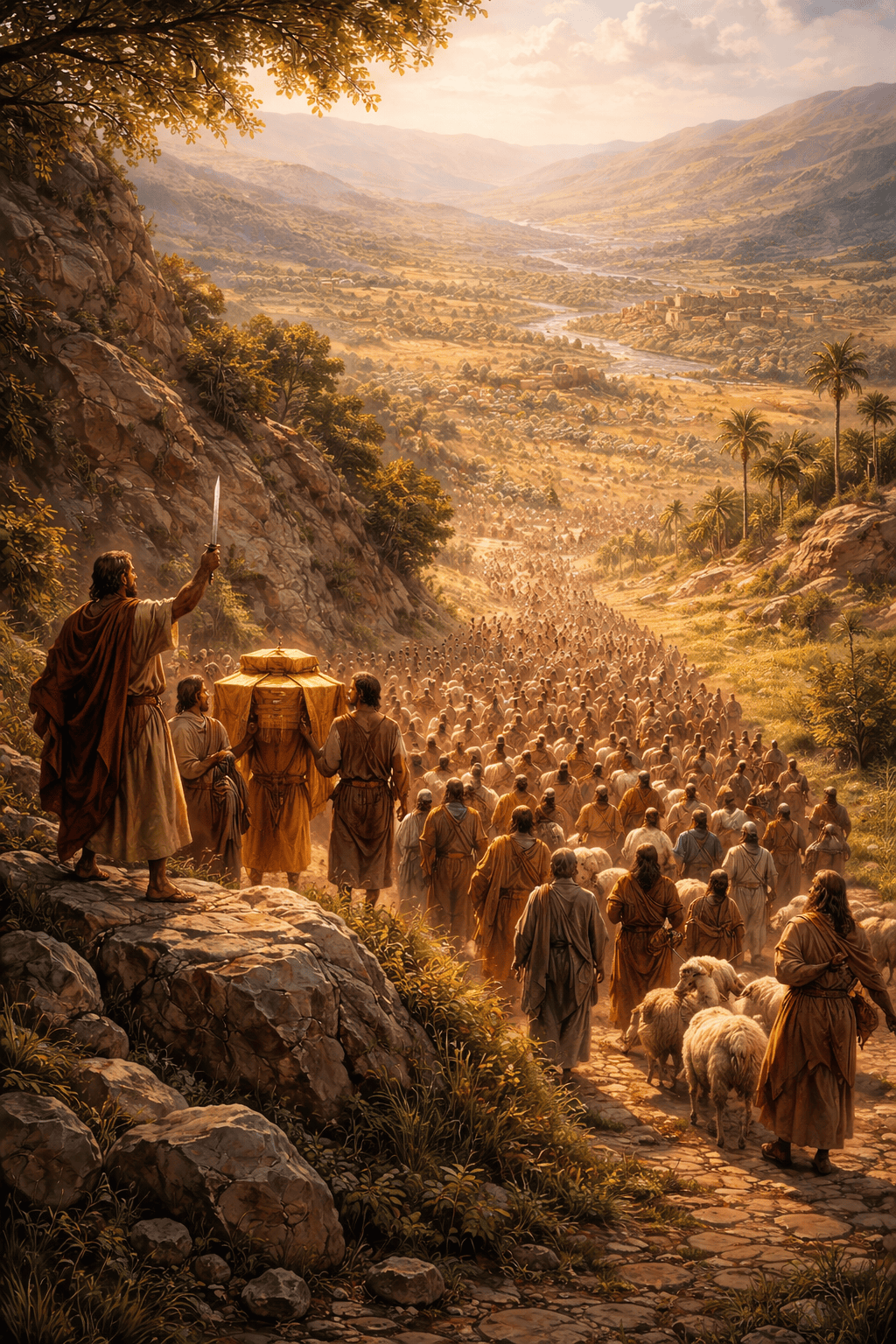
📖 Scripture Reading : Joshua 1:1–9
✨
— Oswald Chambers
“Faith never knows where it is being led, but it loves and knows the One who is leading.”
⏳ Background:
Israel had seen miracles few generations ever witnessed. They walked through the Red Sea on dry ground (Exodus 14:22). They ate manna from heaven (Exodus 16:15). They drank water from a rock (Numbers 20:11). God’s power was undeniable.
Yet when they stood at the edge of the Promised Land in Numbers 13–14, fear drowned memory. Twelve spies entered Canaan; ten returned with reports of giants and fortified cities. “We seemed to ourselves like grasshoppers” (Numbers 13:33). Their language revealed their hearts — small in their own eyes, smaller in their faith.
The people wept all night (Numbers 14:1). They spoke of appointing a new leader and returning to Egypt (Numbers 14:4). Slavery felt safer than promise.
This was not mere anxiety; it was unbelief. They had evidence of God’s faithfulness, yet they chose fear over trust. The consequence was severe: “Your children shall be shepherds in the wilderness forty years” (Numbers 14:33). An entire generation would die in the desert.
Forty years of wandering. Funerals instead of feasts. Sand instead of vineyards. Delay because of distrust.
Some seasons of our lives feel like that wilderness — not because God failed, but because we faltered. We live with the weight of missed obedience, wrong decisions, spiritual hesitation. We watch opportunities slip away. We circle the same terrain, wondering if our failure has permanently disqualified us.
🔥 Turning Point:
Yet even in judgment, God did not abandon His covenant. He preserved a remnant — Joshua and Caleb, who had believed (Numbers 14:24). He sustained the people with daily manna for four decades. The wilderness was discipline, not destruction.
When Moses died, the moment seemed fragile again. A new generation stood on the same border their parents once feared. The leader they had known for forty years was gone. Uncertainty loomed.
Then the Lord spoke: “Moses my servant is dead. Now therefore arise, go over this Jordan” (Joshua 1:2). The command was not based on Israel’s perfection but on God’s promise. “Every place that the sole of your foot will tread upon I have given to you” (Joshua 1:3).
The turning point was not human bravery but divine assurance: “I will be with you. I will not leave you or forsake you” (Joshua 1:5).
God did what they could not do for themselves — He renewed the promise after their failure. He raised new leadership. He commanded courage grounded in His presence (Joshua 1:6–9).
The Jordan would part just as the Red Sea had (Joshua 3:16). The promise had not expired.
🌿 Transformation:
This new generation crossed the Jordan on dry ground (Joshua 3:17). Twelve stones were set as memorial (Joshua 4:7), not of shame, but of faithfulness. Jericho’s walls fell without siege engines, only obedience (Joshua 6:20).
The land once feared became inheritance.
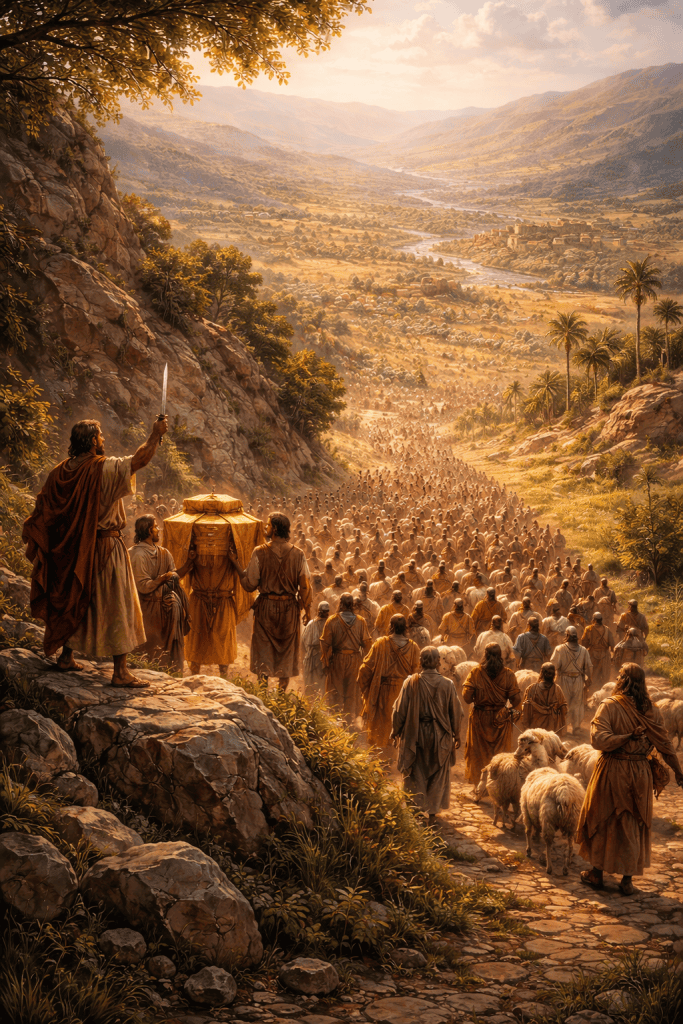
The previous generation died in the wilderness, but the nation itself was not erased. God’s covenant endured. Joshua, once a faithful spy, now stood as a courageous leader. Caleb, at eighty-five years old, still claimed the hill country promised to him (Joshua 14:10–12).
Forty years lost did not cancel the promise.
The wilderness shaped them. It taught dependence, daily trust, reverence. The manna years formed a people who understood that victory flows from obedience. Their identity shifted from fearful slaves to covenant heirs.
God did not waste the delay. He redeemed it.
🕊️ Spiritual Reflection:
The Exodus generation teaches a sobering and hopeful truth: unbelief has consequences, but it does not have ultimate authority. God remains sovereign even over our seasons of failure.

Israel’s wandering was real loss — years that could have been spent in abundance were spent in barrenness. Yet God’s redemptive plan moved forward. The promise given to Abraham (Genesis 12:7) was not nullified by Israel’s fear. Divine covenant outlasted human weakness.

Often defeat precedes transformation because God is forming character that can sustain promise. The wilderness strips self-reliance and exposes unbelief. It teaches that inheritance is not seized by impulse but received through obedience.

Canonical trajectory shows a pattern: exile precedes restoration; wilderness precedes kingdom; death precedes resurrection. God brings His people through barren places into fulfillment.

The Christological trajectory reaches its fullness in Jesus, who endured forty days in the wilderness (Matthew 4:1–11) and where Israel failed, He obeyed. He is the true and faithful Son who secures the inheritance we forfeited. Through His obedience unto death and resurrection, He leads us into the ultimate Promised Land — reconciliation with God and eternal life (Hebrews 4:8–10).

Therefore, even when we have lost years to fear, sin, or delay, Christ stands as the greater Joshua, leading us forward. The promise stands because He stands.
💬 Closing Encouragement:
We know the ache of wasted seasons and wandering decisions. We carry regret over opportunities not taken and obedience postponed. We are tempted to believe that delay has disqualified us and that our wilderness is permanent. Yet Scripture reminds us that God’s promises are anchored in His faithfulness, not our perfection. Even when we circle the desert, He feeds us, guides us, and prepares us for future obedience. Let us surrender unbelief, choose courage grounded in His presence, and step forward when He says “arise.” Our failure is not final. Let us not give up.
🙏 Prayer:
We know the ache of wasted seasons and wandering decisions. We carry regret over opportunities not taken and obedience postponed. We are tempted to believe that delay has disqualified us and that our wilderness is permanent. Yet Scripture reminds us that God’s promises are anchored in His faithfulness, not our perfection. Even when we circle the desert, He feeds us, guides us, and prepares us for future obedience. Let us surrender unbelief, choose courage grounded in His presence, and step forward when He says “arise.” Our failure is not final. Let us not give up.


Leave a comment