
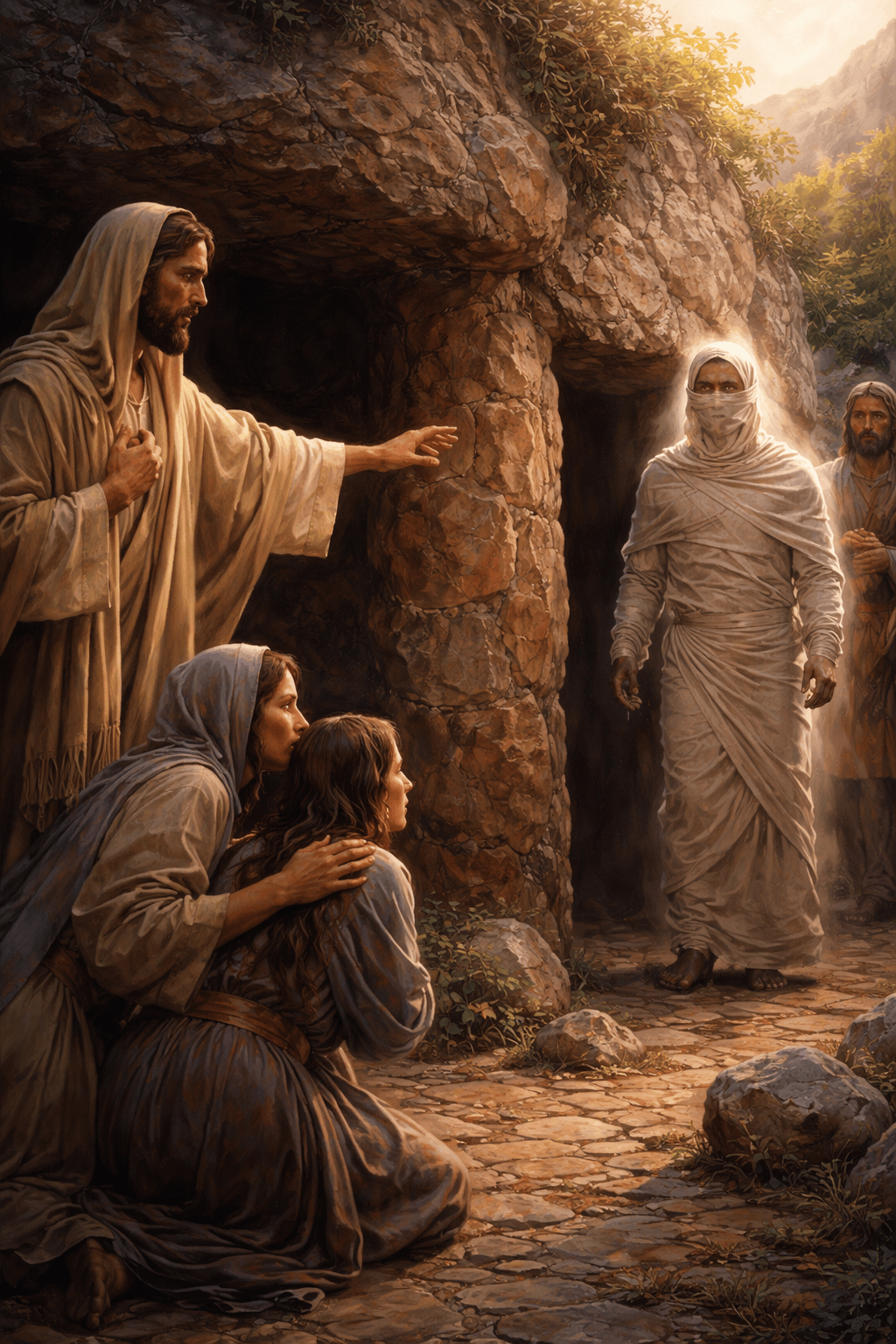
📖 Scripture Reading : John 11:1–44
✨
— A.W. Tozer
“God is too good to be unkind and He is too wise to be mistaken.”
⏳ Background:
Lazarus was not a stranger to Jesus. He was loved (John 11:5). His sisters, Martha and Mary, had seen Christ’s compassion before. So when sickness struck, they did what faith does — they sent word: “Lord, he whom You love is ill” (John 11:3).
But Jesus did not come.
Days passed. The fever worsened. Breath grew shallow. Prayers felt unanswered. Then Lazarus died. Hope was buried with him.
By the time Jesus arrived in Bethany, Lazarus had been in the tomb four days (John 11:17). In Jewish understanding, death after four days was irreversible. Decay had begun. The finality was undeniable.
Martha’s words carry restrained disappointment: “Lord, if You had been here, my brother would not have died” (John 11:21). Mary echoes the same sentence (John 11:32). Grief mixed with faith. Faith mixed with confusion.
This was not theoretical pain. It was a sealed tomb, a grieving home, a silent heaven.
Sometimes our despair feels like that fourth day. Not fresh pain, but settled loss. Not crisis, but conclusion. The dream is over. The relationship is broken. The reputation is ruined. The opportunity is gone.
Irreversible.
And Jesus seems late.
🔥 Turning Point:
Before going to Bethany, Jesus had said something strange: “This illness does not lead to death. It is for the glory of God” (John 11:4). What looked like delay was design.
Standing before the tomb, Jesus did not offer explanation first — He wept (John 11:35). He entered their sorrow fully. Then He commanded, “Take away the stone” (John 11:39).
Martha hesitated. “Lord, by this time there will be an odor.” Logic resisted hope. Experience resisted faith.
But obedience moved the stone.
Jesus lifted His eyes and prayed (John 11:41–42). The turning point was not human effort; it was divine authority. Then He cried out with a loud voice, “Lazarus, come out” (John 11:43).
The voice that called creation into being now called a dead man to life.
And the dead man came out.
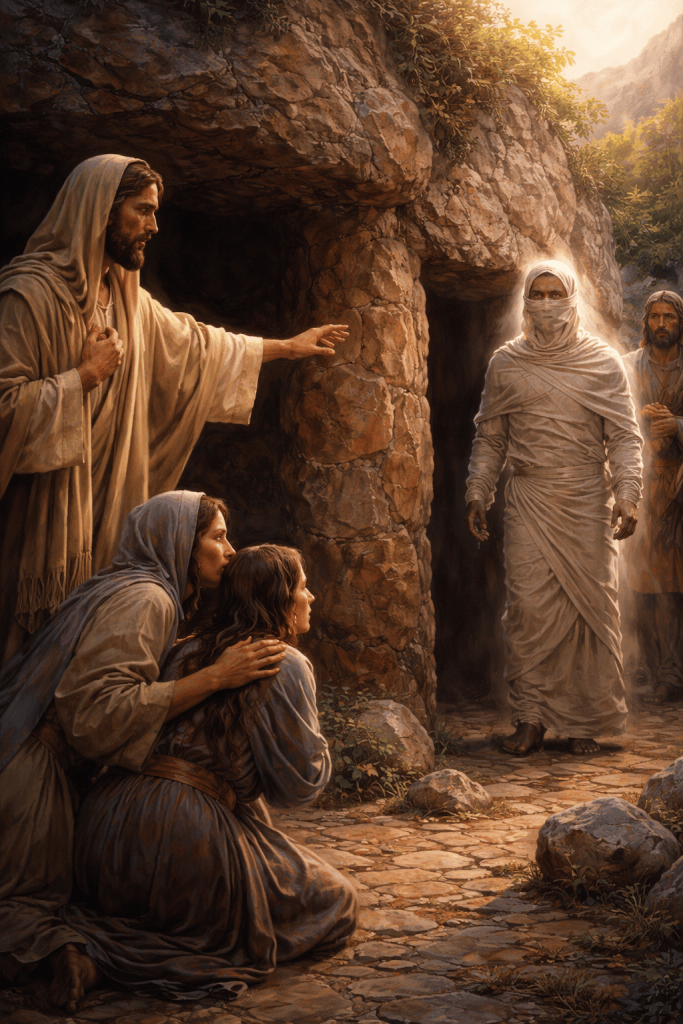
Jesus did not merely improve circumstances. He reversed death. He proved what He had declared earlier: “I am the resurrection and the life” (John 11:25). Not future hope only — present authority.
God acted. God spoke. God raised.
🌿 Transformation:
Lazarus walked out bound in grave clothes (John 11:44). The community that had gathered to mourn now witnessed resurrection. Many believed in Him because of what they saw (John 11:45).
The loss that shattered a household became a testimony that shook a nation.
Martha’s theology deepened from distant resurrection hope (“I know that he will rise again on the last day,” John 11:24) to present trust in the living Christ. Mary’s tears turned into worship. Lazarus’ silence turned into living proof.
Even though future persecution would come (John 11:53), something irreversible had happened in their faith. They had seen that Jesus reigns over decay.
The grave no longer had the final word.
🕊️ Spiritual Reflection:
John 11 reveals a sobering truth: God sometimes allows situations to die completely before He intervenes. The delay was intentional. Jesus remained two days longer (John 11:6). What felt like abandonment was actually preparation for greater glory.

Defeat often precedes divine display.

God’s sovereignty means nothing in our lives is beyond His authority — not sickness, not shame, not failure, not even death. Lazarus did not raise himself. God did what humanity could not.

Loss in Scripture is frequently the soil of revelation. Abraham faced the altar before receiving promise (Genesis 22). Joseph endured prison before palace (Genesis 41). Israel stood before the sea before it parted (Exodus 14). The canonical trajectory consistently shows death preceding deliverance.

The Christological trajectory reaches its climax at the cross. Jesus Himself entered the tomb — not for four days, but three — and rose in triumph (John 20). Lazarus was raised temporarily; Christ rose eternally. Lazarus needed someone to remove his grave clothes; Jesus left His folded in the tomb.

The resurrection at Bethany points beyond itself to the greater victory of Calvary and the empty grave. If Christ reigns over death itself, then no circumstance in our lives is final.

What appears irreversible is not beyond resurrection power.
💬 Closing Encouragement:
We know what it feels like to stand before sealed tombs in our own lives — failed plans, broken trust, repeated mistakes, prayers that seem unanswered. We wrestle with the thought that if God had acted sooner, things would be different. We are tempted to accept decay as destiny. Yet John 11 calls us to roll away the stone in obedience, even when logic protests. We are invited to trust divine timing over human urgency, to believe that God’s delays are not denials, and to cling to Christ when everything appears buried. Our fourth day is not beyond His voice. Let us not give up; the Lord who calls the dead to life still speaks.
🙏 Prayer:
Lord, when hope feels buried and prayers feel late,strengthen our trembling faith. Teach us to trust Your timing over our understanding. Speak life into what we have declared dead.Help us persevere until we see Your victory. Amen.


Leave a comment