
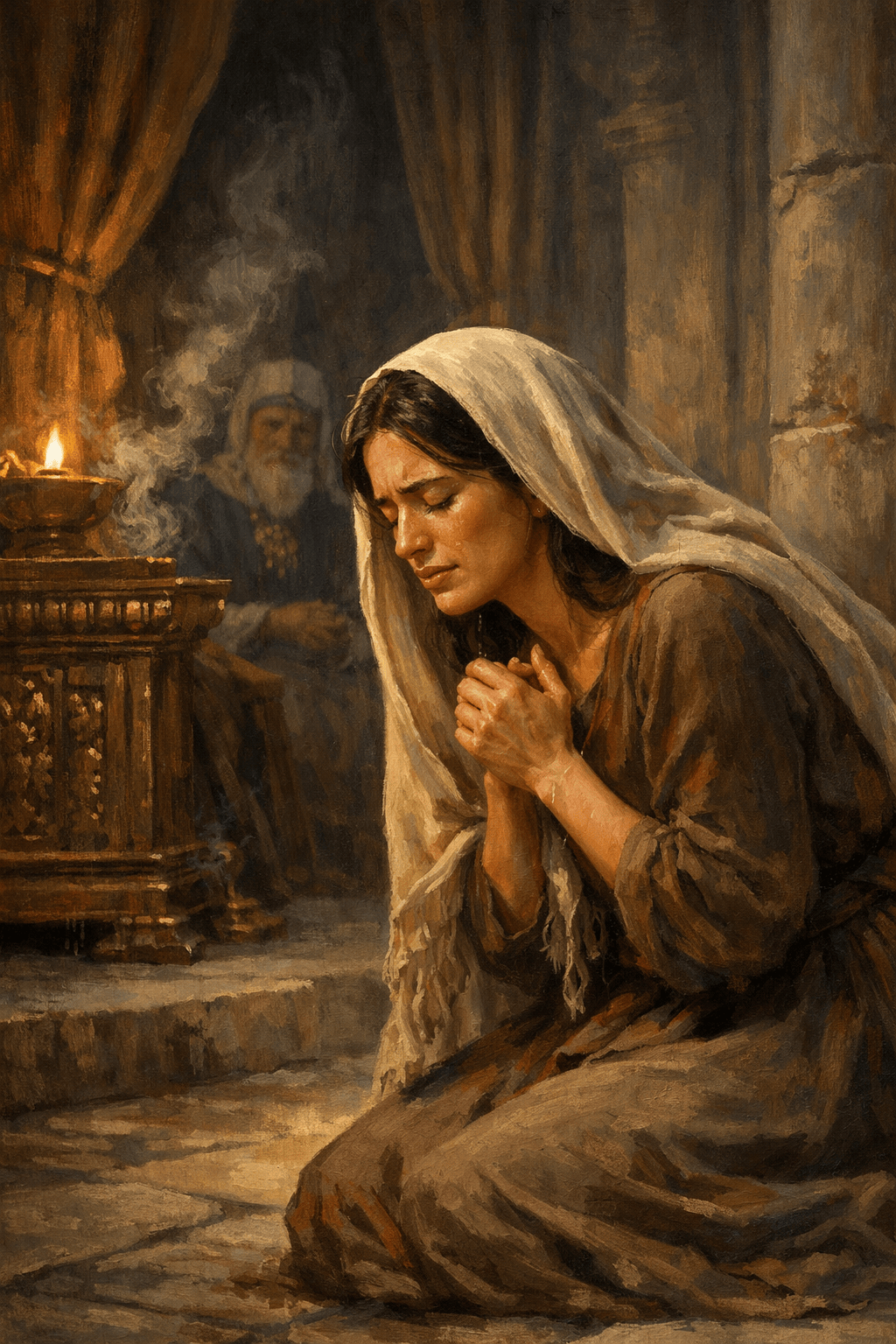
📖 Scripture Reading: 1 Samuel 1:1–20; 2:1–10
✨
— John Wesley
“Prayer is where the action is.”
⏳ Background:
Hannah’s pain was not hidden—it was public.
She was one of two wives of Elkanah. The other, Peninnah, had children; Hannah had none (1 Samuel 1:2). In ancient Israel, barrenness carried deep social shame. A woman’s worth was often measured by her ability to bear children. Every empty year felt like a verdict.
Scripture states plainly, “The LORD had closed her womb” (1 Samuel 1:5). This was not random misfortune; it was a season under God’s sovereign hand. Yet knowing that does not remove the ache.
Each year the family traveled to Shiloh to worship. What should have been a sacred celebration became a reminder of sorrow. Peninnah “provoked her grievously to irritate her” (1 Samuel 1:6). The taunting was continual—“year by year” (1 Samuel 1:7).
Hannah wept. She would not eat. Even Elkanah’s tender question—“Am I not more to you than ten sons?” (1 Samuel 1:8)—could not fill the void.
Her struggle was layered:
• Emotional pain from unfulfilled longing.
• Social humiliation from comparison.
• Spiritual confusion under God’s silence.
She was not rebellious. She was broken.
There are seasons when heaven feels quiet, and the ache does not ease. Hannah lived in that silence.
🔥 Turning Point:
The turning point came not with immediate conception—but with desperate prayer.
In Shiloh, Hannah “rose” after eating and drinking (1 Samuel 1:9). She went to the temple and stood before the LORD. Verse 10 says she was “deeply distressed and prayed to the LORD and wept bitterly.”
Her lips moved, but her voice was not heard (1 Samuel 1:13). This was silent, trembling prayer. She poured out her soul before God (1 Samuel 1:15).
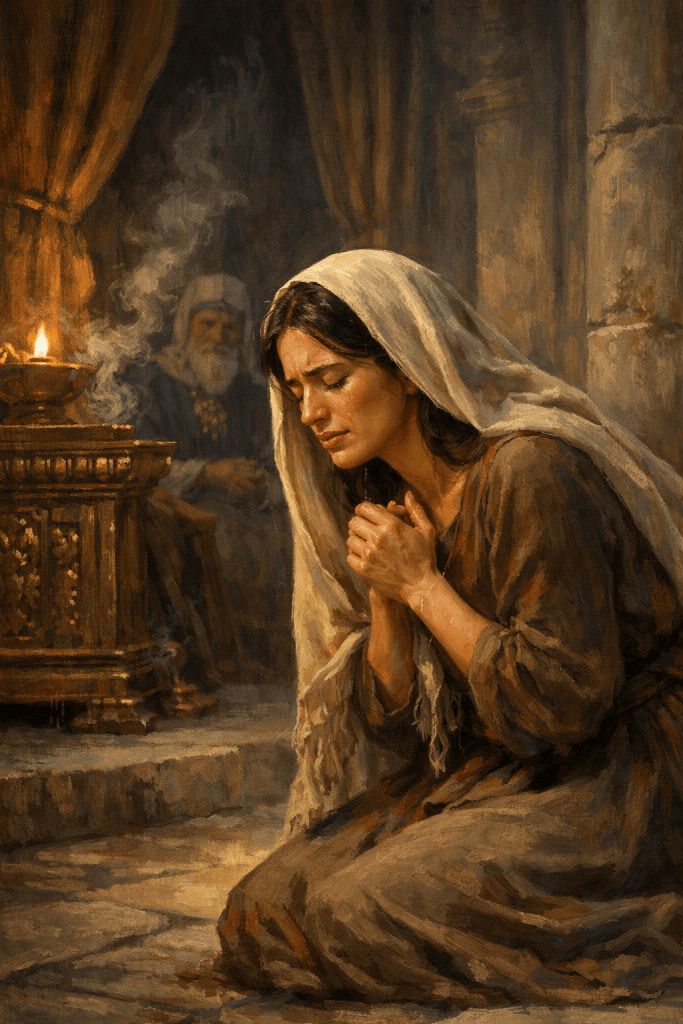
She made a vow: if God would give her a son, she would give him back to the Lord all his days (1 Samuel 1:11). Her request was not selfish ambition; it was surrender.
Even the priest Eli misunderstood her, thinking she was drunk. But when he heard her explanation, he blessed her: “Go in peace, and the God of Israel grant your petition” (1 Samuel 1:17).
Here is the miracle before the miracle: “Her face was no longer sad” (1 Samuel 1:18).
Nothing had changed externally. No pregnancy yet. No visible sign. But she had left her burden with God.
Verse 19 declares, “The LORD remembered her.” In due time, she conceived and bore a son. She named him Samuel, saying, “I have asked for him from the LORD” (1 Samuel 1:20).
God acted. God opened the womb. God reversed the shame.
🌿 Transformation:
Hannah did not cling possessively to the answered prayer. When Samuel was weaned, she brought him to the house of the LORD in Shiloh and presented him to Eli (1 Samuel 1:24–28).
Her long-awaited son was given back in worship.
Her response in 1 Samuel 2 is not quiet gratitude—it is triumphant theology. “My heart exults in the LORD… He raises up the poor from the dust” (2:1, 8). Her personal story became a declaration of God’s character.
Samuel would grow to become a prophet, judge, and spiritual leader over Israel. Through him, God would anoint kings. From that lineage would eventually come David—and ultimately Christ.
Hannah’s closed womb became the doorway to national restoration.
And Scripture later records that the LORD blessed her with additional sons and daughters (1 Samuel 2:21). The once-barren woman became fruitful.
Her shame turned to song.
Her silence turned to praise.
Her humiliation turned to legacy.
🕊️ Spiritual Reflection:
Hannah’s story reminds us that God’s sovereignty includes seasons of barrenness. The closed womb was not divine neglect but divine preparation. God was shaping both a mother and a prophet.

Barrenness—whether physical, emotional, vocational, or spiritual—often exposes the depth of our longing. It strips away illusions of control. It drives us to prayer.

Before Samuel was conceived, Hannah’s heart was transformed. The greater miracle was not childbirth but surrendered trust.

God does not ignore silent prayers. He hears whispered anguish and unseen tears. And when He acts, He often does more than solve the problem—He creates a testimony that outlives us.

Defeat often precedes deliverance. Shame often precedes song. God specializes in reversals.

No situation is too barren for His power.
💬 Closing Encouragement:
We understand what it feels like to live with unanswered prayers, to carry silent disappointments while others seem to flourish. We know the sting of comparison and the temptation to believe we have been overlooked. Yet Hannah’s story calls us to rise, to pour out our souls honestly before God, and to leave the outcome in His hands. Even when circumstances remain unchanged, trust can be born within us. As we surrender our deepest longings to Him, He works in ways we cannot see. He is able to turn humiliation into honor and emptiness into abundance. Let us continue praying, continue trusting, continue worshiping—because God can turn any situation completely upside down into victory. We must not give up.
🙏 Prayer:
Father,You see the places where we feel empty and ashamed. Receive our silent prayers and hidden tears.Teach us to trust You before the answer comes.Turn our barrenness into breakthrough and our sorrow into song. We believe You are working even now. Amen.


Leave a comment