
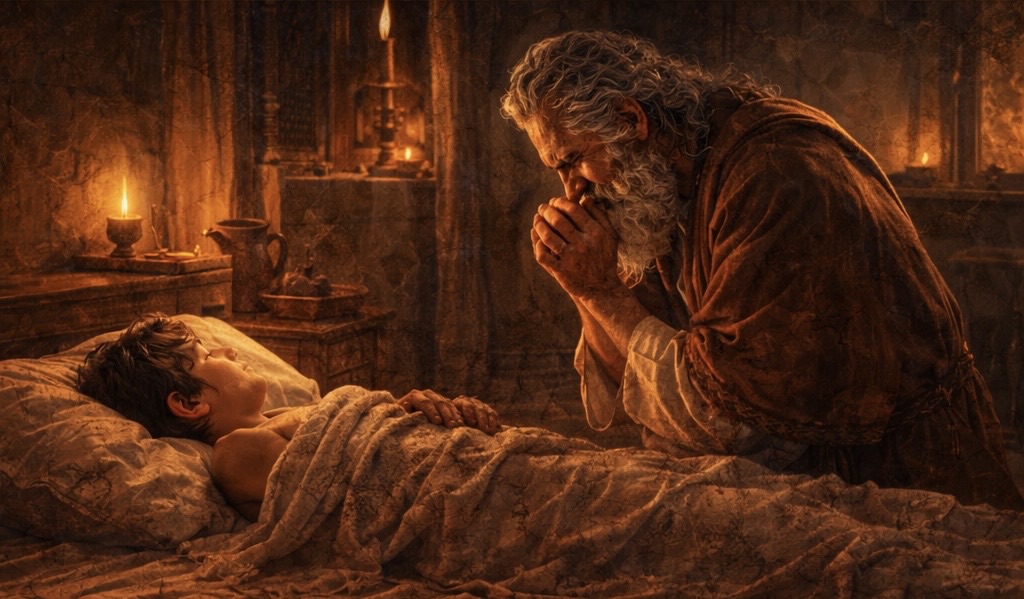
📖 Scripture Reading : 2 Kings 4:8–37
✨
— Victor Hugo
“Hope is the word which God has written on the brow of every man.”
⏳ Background:
She was a capable, perceptive woman in Shunem. Scripture describes her as “a great woman” (2 Kings 4:8)—not merely wealthy, but discerning and generous. She recognized the presence of God upon Elisha and persuaded her husband to prepare a small upper room for the prophet—a bed, a table, a lamp (2 Kings 4:10). Quiet faith expressed through practical hospitality.
Yet beneath stability lay sorrow. She had no son, and her husband was old (2 Kings 4:14). In that culture, barrenness carried social grief and personal ache. When Elisha promised, “At this season… you shall embrace a son” (2 Kings 4:16), her response was not celebration but guarded pain: “No, my lord… do not lie to your servant.” Deferred hope had taught her caution.
But the promise came to pass. A son was born.
Years later, without warning, the boy went to the fields to his father. Suddenly he cried, “Oh, my head, my head!” (2 Kings 4:19). By noon he was dead, lying across his mother’s knees (2 Kings 4:20). The child of promise. The laughter of her old age. Gone in a single day.
No medical remedy. No explanation. No gradual decline—just abrupt devastation.
She carried his lifeless body to the prophet’s room and laid him on the bed of the man of God (2 Kings 4:21). Then she shut the door.
Her husband asked, “Why will you go to him today? It is neither new moon nor Sabbath” (2 Kings 4:23). Religious routine saw no urgency. But a mother who has held death in her arms does not wait for the calendar.
Her words are haunting: “All is well.” Not denial. Not emotional numbness. But a refusal to let the final word belong to death.
Hopelessness had entered her house. Yet she refused to surrender the promise to the grave.
🔥 Turning Point:
She saddled the donkey and went straight to Mount Carmel. When she reached Elisha, she fell at his feet and clung to him (2 Kings 4:27). Grief finally found voice:
“Did I ask my lord for a son? Did I not say, ‘Do not deceive me?’” (2 Kings 4:28).
This was not rebellion. It was wounded faith bringing its confusion to God’s representative.
Elisha first sent Gehazi with his staff, but “the child has not awakened” (2 Kings 4:31). Methods failed. Symbols failed. This would require divine intervention, not ritual.
Elisha entered the room alone. “He went in… and shut the door… and prayed to the Lord” (2 Kings 4:33).
Before there was resurrection, there was prayer.
He stretched himself upon the child—mouth to mouth, eyes to eyes, hands to hands. The flesh grew warm (2 Kings 4:34). Still not fully alive. He walked back and forth in the house—persistent, interceding, refusing to accept finality. Then he stretched himself again.
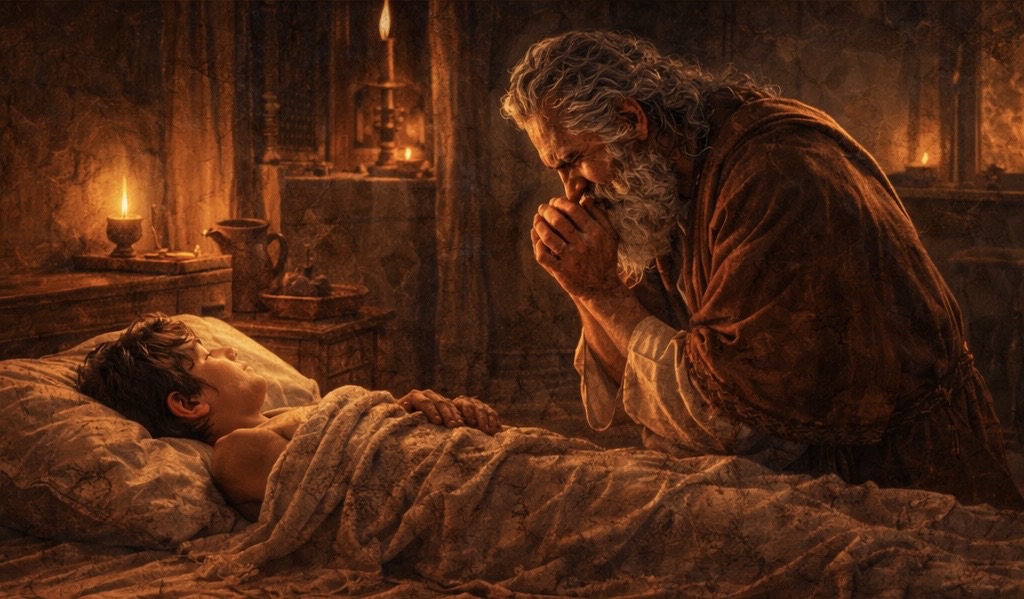
The child sneezed seven times and opened his eyes (2 Kings 4:35).
Notice carefully: God did not merely comfort the mother. He restored the very thing that was lost.
This was not symbolic hope. This was reversal.
🌿 Transformation:
When Elisha called her, he said simply, “Pick up your son” (2 Kings 4:36). She came in, fell at his feet, bowed to the ground, and picked up her son and went out (2 Kings 4:37).
The woman who had carried a corpse now carried a living child.
But something deeper had changed.
Earlier, she guarded her heart against hope. Now she had walked through death and seen God’s authority over it. Her faith was no longer cautious—it was proven. She had learned that God’s promises are not fragile. Even when buried, they are not broken.
Her household moved from silent despair to visible restoration. The boy lived. The marriage endured. The testimony spread. A private room once used for hospitality became the site of resurrection power.
Hopelessness → God’s intervention → tangible victory.
🕊️ Spiritual Reflection:
This narrative confronts us with a hard truth: God sometimes allows the promise to appear dead before He reveals His power over death. The Shunammite woman did nothing to deserve this loss. There is no recorded sin, no moral failure, no rebuke from heaven. Her suffering was not punishment—it was preparation for revelation.

God’s sovereignty does not eliminate pain; it governs it. What feels like contradiction is often construction. The death of the child did not cancel God’s earlier gift—it created the stage for greater glory.

Throughout Scripture, defeat often precedes deliverance: Joseph’s prison before the palace, Israel’s Red Sea before freedom, David’s exile before the throne. Death in Scripture is repeatedly a doorway through which God displays resurrection power.

From barren wombs to restored sons, the Old Testament consistently reveals a God who brings life from impossibility.

This story whispers forward to the greater Son who truly died and rose again. In Christ, resurrection is not an exception—it is the pattern of redemption.

God’s ultimate answer to hopelessness is not explanation but resurrection power.
💬 Closing Encouragement:
There are seasons when we hold what feels like the lifeless remains of a dream, a relationship, a calling, or our own dignity. We know what God once promised, and yet what we see now feels like contradiction. We are tempted to withdraw, to protect ourselves from further disappointment, to quietly bury what hurts too much to hope for again. But like the Shunammite woman, we are invited to carry our grief toward God rather than away from Him, to cling in prayer, to persist when nothing seems to move. We may not control outcomes, but we can refuse to surrender faith. The same God who reversed her story is still sovereign over ours. Therefore, we do not give up.
🙏 Prayer:
Lord, in seasons where hope feels buried, give us courage to bring our grief to You. Strengthen our faith when answers delay. Teach us to trust Your power over every loss. Turn what seems final into testimony. Amen.


Leave a comment