
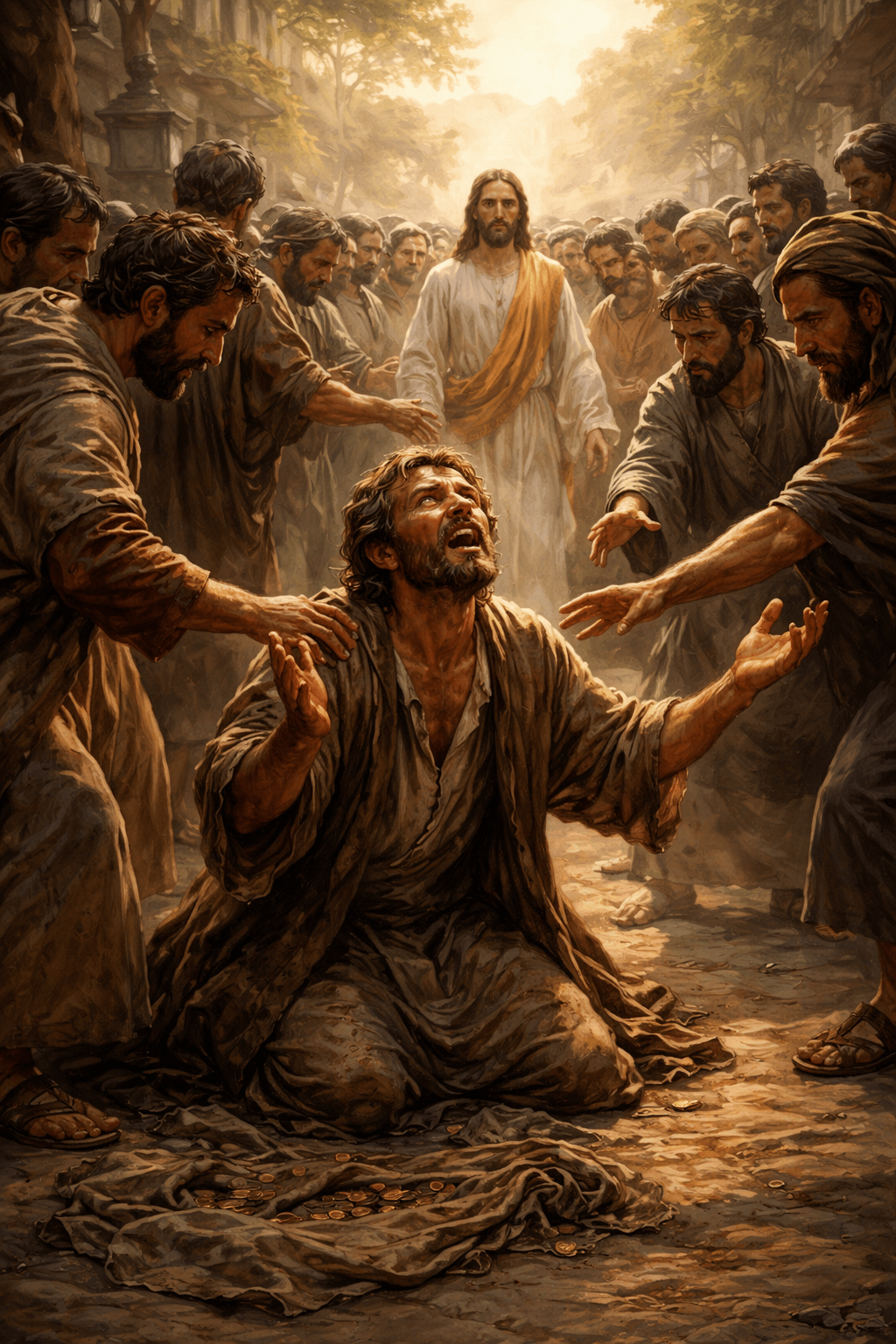
📖 Scripture Reading :Mark 10:46–52
✨
— G.K. Chesterton
“Hope is the power of being cheerful in circumstances that we know to be desperate.”
⏳ Background:
His name was Bartimaeus. Mark does something rare—he tells us the beggar’s name (Mark 10:46). That alone suggests this man’s story mattered deeply in the early church.
Bartimaeus was blind.
In the first-century world, blindness was not merely a medical condition; it was a sentence to poverty. There were no systems of care, no employment protections, no social safety nets. A blind man could not farm, fish, or labor. He survived by sitting beside the road, waiting for coins to fall into his garment.
Mark tells us he was “sitting by the roadside begging” (10:46). That roadside was not only physical—it was social. He lived on the margins. Passed by. Dependent. Likely viewed by many as cursed (cf. John 9:2). His world was darkness, dependence, and dismissal.
Imagine the emotional landscape:
• Hearing crowds but never seeing faces
• Listening to footsteps that never stopped for long
• Living with constant vulnerability
• Being defined by limitation
And then came the worst part.
When Bartimaeus heard that Jesus of Nazareth was passing by, he began to cry out:
“Jesus, Son of David, have mercy on me!” (Mark 10:47)
Many rebuked him and told him to be silent (10:48).
The crowd tried to silence his desperation.
He was not just blind; he was being shut down. His cry for mercy was inconvenient. His faith was noisy. His need was unwelcome.
This is where hopelessness sharpens.
Not only suffering—but being told to suffer quietly.
Yet Mark says, “he cried out all the more.”
🔥 Turning Point:
The turning point is only three words in verse 49:
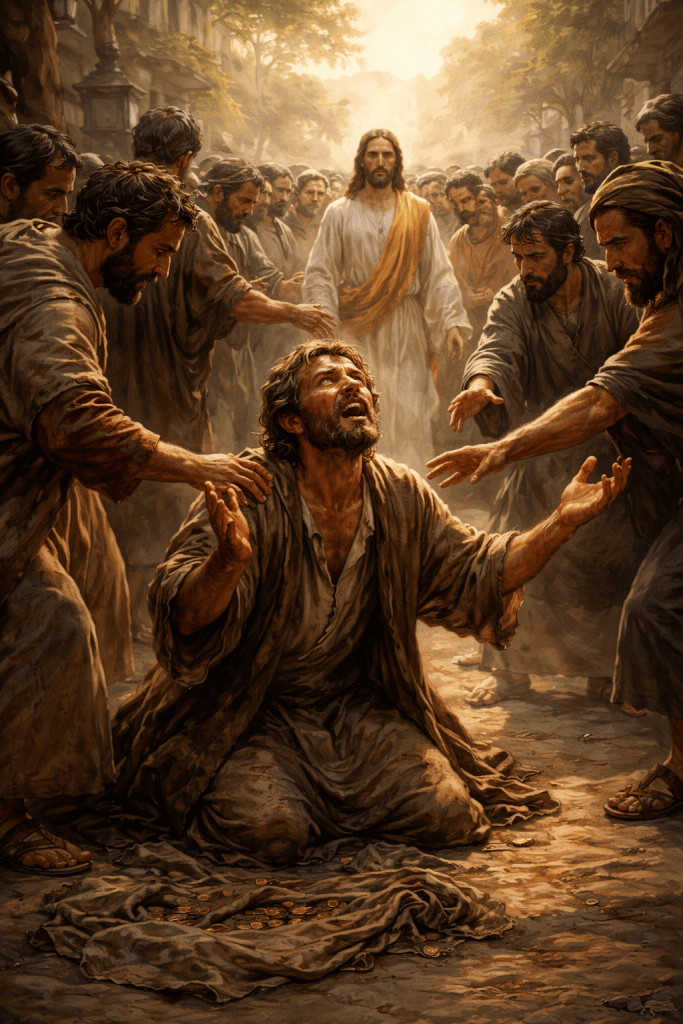
“Jesus stood still.”
The Son of God halted His journey to Jerusalem—toward the cross—because a blind beggar would not stop crying for mercy.
This is divine interruption.
Jesus did not ignore him. He did not delegate him. He did not dismiss him. He stopped.
Then He commanded, “Call him.”
The same crowd that silenced Bartimaeus now said, “Take heart. Get up; He is calling you” (10:49). Notice what God did: He transformed opposition into invitation.
Bartimaeus threw aside his cloak (10:50). That cloak was likely his only possession—used to collect alms, to keep warm at night. Throwing it aside was an act of radical faith. He was not preparing to return to begging.
Jesus asked him, “What do you want Me to do for you?” (10:51)
The question draws out faith. Bartimaeus answered plainly:
“Rabbi, let me recover my sight.”
And Jesus said, “Go your way; your faith has made you well” (10:52).
God acted. God restored. God reversed.
🌿 Transformation:
“Immediately he recovered his sight and followed Him on the way” (10:52).
Immediately.
Darkness turned to light in a moment. But the greater miracle was not just visual—it was directional. He “followed Him on the way.” That “way” was the road to Jerusalem, to suffering, to the cross.
The beggar became a disciple.
He moved from:
• Sitting → Following
• Begging → Belonging
• Margins → Mission
His status changed. His future changed. His identity changed.
He was no longer “blind Bartimaeus.” He was a witness of mercy.
The crowd that once silenced him now saw the evidence. A healed man walking behind Jesus. Restoration was visible.
Even more, his faith matured. He did not receive sight and return to comfort. He followed Christ into surrender.
This is complete turnaround. Not partial relief. Not temporary help. Total reversal.
🕊️ Spiritual Reflection:
Bartimaeus teaches us that God’s sovereignty is not hindered by human limitation or social rejection. Blindness did not disqualify him. Poverty did not exclude him. The crowd did not silence him before God.

In fact, the very depth of his desperation became the stage for divine glory.

Scripture consistently reveals that defeat often precedes transformation. Israel was trapped before the Red Sea parted. David was hunted before he was enthroned. The cross came before the resurrection. God’s pattern is not avoidance of weakness—but redemption through it.

Bartimaeus could not heal himself. He could not negotiate with darkness. His only power was persistent faith. And that was enough.

God overturned everything:
	•	Social rejection into public restoration
	•	Physical blindness into clear sight
	•	A roadside life into a redeemed calling

No situation is final when Christ is passing by.

Throughout Scripture, God hears the cry of the desperate—the enslaved in Egypt (Exodus 2:24), Hannah in her bitterness (1 Samuel 1:10–20), the psalmists in their caves (Psalm 34:6). Divine reversal is woven into the biblical narrative.

Bartimaeus calls Jesus “Son of David,” a royal Messianic title. He recognized what many sighted people missed. On the road to the cross, the true King stops for the blind. Ultimately, at Calvary, Jesus bore our deepest darkness so that we might receive eternal sight. Resurrection proves that even death can be turned upside down into victory.

God can turn any situation completely upside down.
💬 Closing Encouragement:
We know what it is to sit by the roadside of disappointment, to feel overlooked, limited, and silenced by circumstances or even by others’ opinions. We know the temptation to quiet our prayers when answers delay and crowds discourage. Yet we also see that persistent faith matters, that Christ still stops for desperate cries, and that no weakness disqualifies us from mercy. When we feel stuck in darkness, we cling to the truth that God specializes in reversal, that surrender is not defeat, and that following Christ after restoration is greater than the miracle itself. Therefore we refuse to give up, because our turning point may be one cry away.
🙏 Prayer:
Lord Jesus, we cry out for mercy in our darkness.When discouragement silences us, give us louder faith.Stand still in our chaos and call our name.Turn our loss into testimony and our weakness into strength. We trust You for complete reversal and lasting victory. Amen.


Leave a comment