
📖 Scripture Reading :Luke 22:54–62; Acts 2:1–41
✨
— Elisabeth Elliot
“Suffering is not the absence of God but the shaping of God.”
⏳ Background:
Peter was never timid. He left nets immediately when Jesus called (Luke 5:11). He stepped out of the boat into stormy waters (Matthew 14:29). He boldly declared, “You are the Christ, the Son of the living God” (Matthew 16:16). His loyalty seemed unshakeable.
Yet in Luke 22, everything collapses.
Jesus had warned him: “Simon, Simon… Satan has asked for you… before the rooster crows today, you will deny Me three times” (Luke 22:31–34). Peter insisted, “Lord, I am ready to go with You both to prison and to death.” His confidence was real—but so was his weakness.
Then came the courtyard.
Jesus was arrested. The other disciples scattered. Peter followed “at a distance” (Luke 22:54). That phrase reveals the condition of his heart—still near, but not near enough.
Around a charcoal fire, a servant girl looked at him closely: “This man also was with Him.” Peter replied, “Woman, I do not know Him” (Luke 22:57).
Another insisted. A third declared confidently, “Certainly this man also was with Him.” Each time, Peter denied Christ more forcefully. The final denial was emphatic.
Immediately, the rooster crowed.
Luke records a devastating detail: “And the Lord turned and looked at Peter” (Luke 22:61). No rebuke. No shouted condemnation. Just a look.
Peter remembered the word of the Lord. And he went out and wept bitterly (Luke 22:62).
This was not a minor mistake. This was public failure. Public collapse. The man who vowed loyalty denied even knowing Jesus. Shame flooded his soul. The disciple who once walked on water now drowned in regret.
After the crucifixion, Peter returned to fishing (John 21:3). Back to nets. Back to the old life. When hope dies, we retreat to what feels familiar.
He had failed at the worst possible moment.
🔥 Turning Point:
But failure did not have the final word—God did.
After the resurrection, Jesus did not replace Peter. He pursued him.
In John 21, on the shore of Galilee, Jesus recreated the scene—another charcoal fire (John 21:9). The setting of denial became the setting of restoration.
Three times Jesus asked, “Do you love Me?” (John 21:15–17). Each question corresponded to each denial. This was not humiliation—it was healing.
Peter affirmed his love. Jesus responded each time: “Feed My sheep.” The Lord did not merely forgive him; He recommissioned him.
What changed the story was not Peter’s determination—it was Christ’s intercession. Jesus had already said, “I have prayed for you, that your faith may not fail. And when you have turned again, strengthen your brothers” (Luke 22:32).
Notice: not if you turn—when you turn.
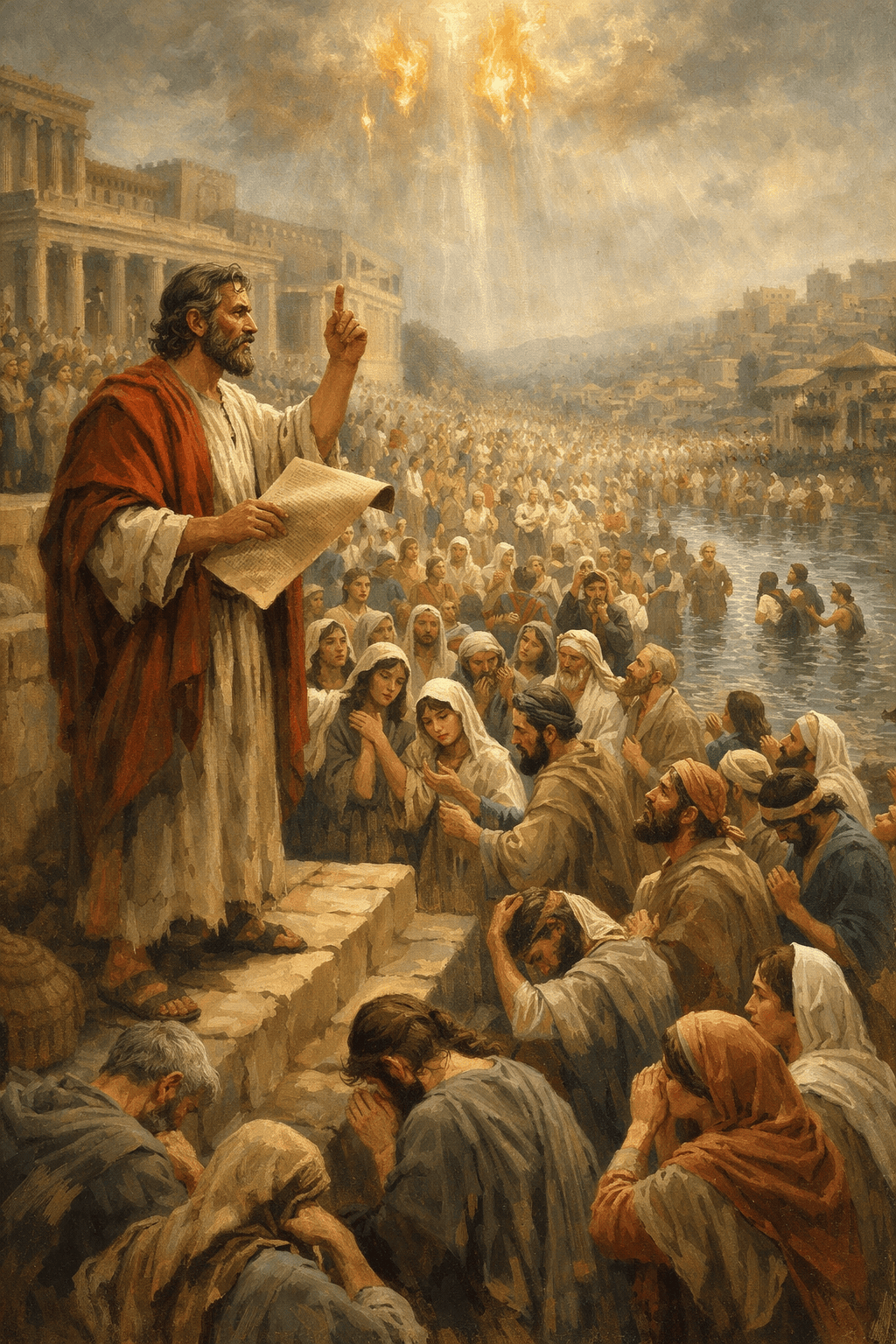
At Pentecost in Acts 2, the Holy Spirit descended. The same Peter who trembled before a servant girl now stood before thousands. He lifted his voice and declared Jesus as Lord and Christ (Acts 2:36).
God did not erase Peter’s past. He redeemed it.
🌿 Transformation:
Acts 2 records the evidence of turnaround.
Peter preached boldly from Scripture (Acts 2:14–36). He called the crowd to repentance (Acts 2:38). And about three thousand souls were added that day (Acts 2:41).
The man who once denied Christ publicly now proclaimed Him publicly.
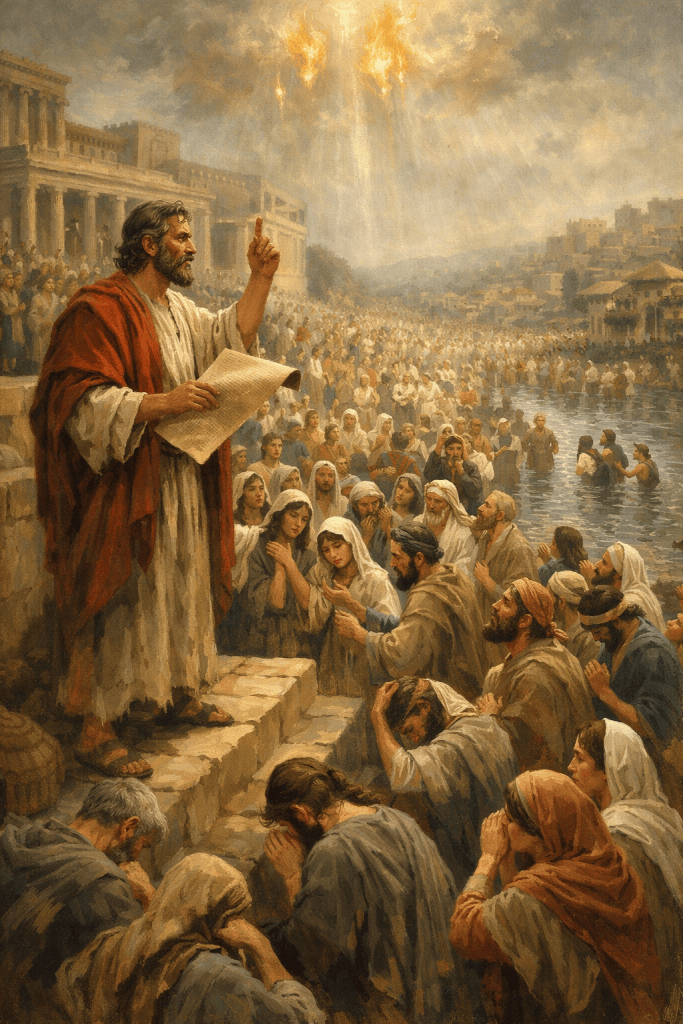
The coward became courageous.
The ashamed became shepherd.
The broken became a pillar of the Church (Galatians 2:9).
Peter’s transformation was not self-improvement; it was Spirit-empowered renewal. His failure did not disqualify him—it deepened his dependence.
The wound became the testimony.
And the courtyard of shame became the birthplace of boldness.
🕊️ Spiritual Reflection:
Peter’s story teaches us that God’s sovereignty extends even over our worst moments. Human failure does not frustrate divine purpose. Jesus predicted Peter’s fall, prayed for him through it, and restored him after it.

Failure often exposes what confidence hides. Peter trusted his devotion; God wanted him to trust grace. The collapse stripped away self-reliance and prepared him for Spirit-dependence.

In God’s redemptive plan, defeat frequently precedes transformation. The cross came before the resurrection. Weeping came before Pentecost. The bitter tears of Luke 22 prepared the bold sermon of Acts 2.

God does not waste brokenness. He reshapes it. He turns denial into declaration. He turns shame into shepherding. He turns collapse into calling.

What looks like the end may be the preparation for a greater beginning.
💬 Closing Encouragement:
We know the sting of failure, the embarrassment of spiritual inconsistency, and the temptation to retreat to old habits when courage fails us. We understand what it means to follow at a distance and then weep over our own compromises. Yet Peter’s story reminds us that our worst chapter does not cancel God’s calling over our lives. When we feel disqualified, Christ is interceding; when we want to quit, He is preparing restoration; when we think we are finished, He is preparing a new commissioning. Let us refuse to surrender to shame. Let us return to Christ, trust His grace, and stand again in His strength—because God can turn any situation completely upside down into victory. We must not give up.
🙏 Prayer:
Lord Jesus, we confess our weakness and our failures.Thank You for praying for us when our faith trembles. Restore what shame has broken and courage has lost.Fill us with Your Spirit and raise us again.We trust You to turn our defeat into victory. Amen.


Leave a comment