
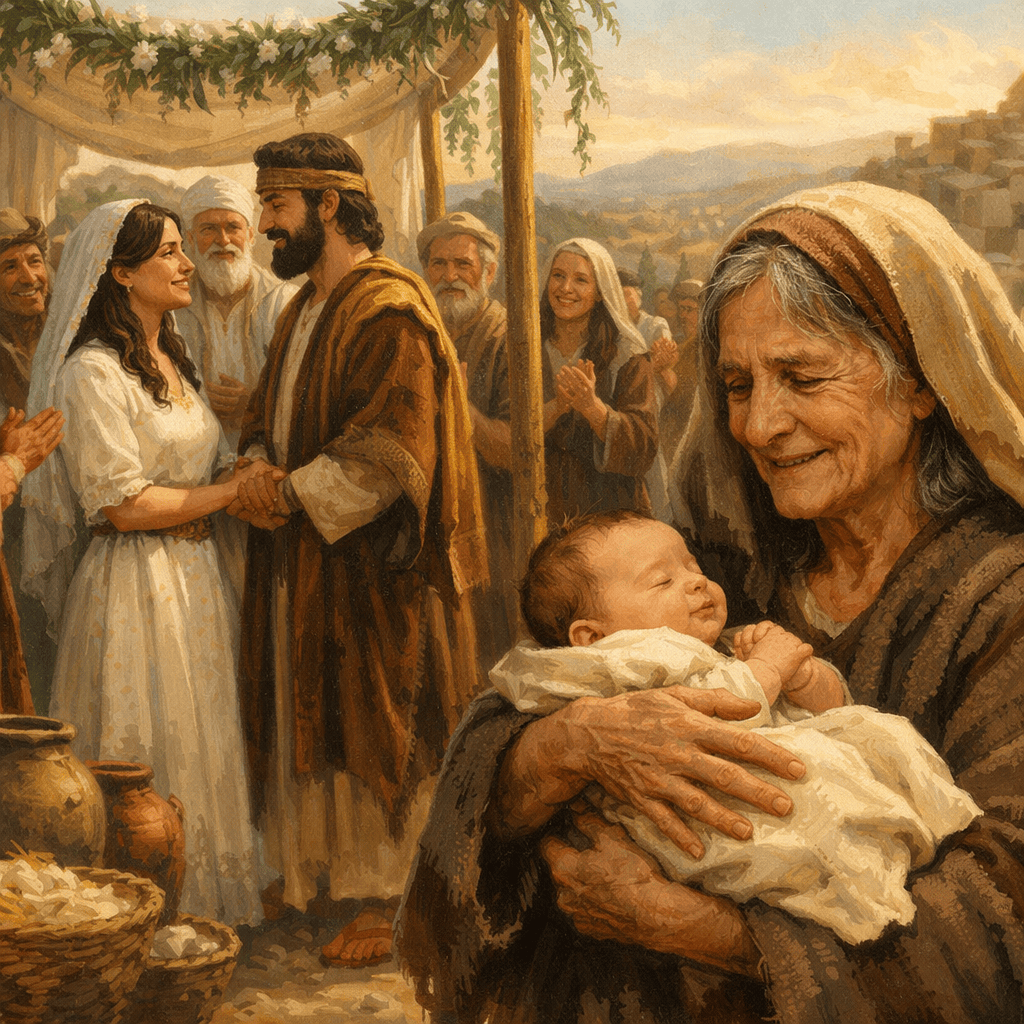
📖 Scripture Reading:Ruth 1–4
— A.W. Tozer
✨
“God is too good to be unkind and He is too wise to be mistaken.”
⏳ Background:
Naomi’s story begins in famine (Ruth 1:1). Hunger drove her husband Elimelech to leave Bethlehem—the “house of bread”—for Moab, a foreign land. What began as a survival decision became a prolonged stay. Then loss unfolded in waves.
Elimelech died (Ruth 1:3). Naomi was left a widow in a foreign country. Her two sons married Moabite women, Orpah and Ruth. For ten years they lived there—without children (Ruth 1:4). Then both sons died (Ruth 1:5).
Three graves. No grandchildren. No provider. No legal protection. No future.
Scripture says, “The woman was left without her two sons and her husband” (Ruth 1:5). The Hebrew carries the weight of emptiness—cut off, stripped bare.
When Naomi heard that the Lord had visited His people and given them bread (Ruth 1:6), she decided to return to Bethlehem. But she did not return hopeful. She returned shattered.
On the road, she urged her daughters-in-law to stay behind. She saw no future for them with her (Ruth 1:11–13). Her theology was intact, but her heart was crushed: “The hand of the Lord has gone out against me” (Ruth 1:13).
When she entered Bethlehem, the women exclaimed, “Is this Naomi?” (Ruth 1:19). She replied with raw honesty:
“Do not call me Naomi (Pleasant); call me Mara (Bitter), for the Almighty has dealt very bitterly with me. I went away full, and the Lord has brought me back empty” (Ruth 1:20–21).
This is not dramatic exaggeration. It is the confession of a woman who buried her dreams. She believed her story had ended in loss.
She could not see chapter four while standing in chapter one.
🔥 Turning Point:
The turning point is subtle. No thunder from heaven. No dramatic miracle.
It begins with providence.
Ruth, who refused to leave Naomi—“Your people shall be my people, and your God my God” (Ruth 1:16)—went to glean in the fields to provide food. “She happened to come to the part of the field belonging to Boaz” (Ruth 2:3).
But nothing “just happens” under God’s sovereignty.
Boaz was a kinsman-redeemer—a relative with both the right and the resources to restore Naomi’s family line (Ruth 2:1). He noticed Ruth. He protected her. He ensured her provision (Ruth 2:8–16).
Behind the scenes, God was aligning covenant faithfulness with divine timing.
Naomi, once paralyzed by grief, began to awaken to hope: “The man is a close relative of ours, one of our redeemers” (Ruth 2:20). Bitterness did not have the final word.
Through obedience—Ruth’s humility, Naomi’s counsel, Boaz’s integrity—God moved the story toward redemption. Boaz legally redeemed the land and married Ruth (Ruth 4:9–10).
The intervention was not sudden reversal. It was steady, covenant faithfulness.
God did not just change circumstances. He restored identity, inheritance, and future.
🌿 Transformation:
Ruth bore a son—Obed (Ruth 4:13). The women who once whispered about Naomi’s emptiness now declared:
“Blessed be the Lord… He shall be to you a restorer of life and a nourisher of your old age” (Ruth 4:14–15).
Naomi, who said, “I came back empty,” now held a grandson in her arms (Ruth 4:16). The community recognized that her loss had turned into legacy.
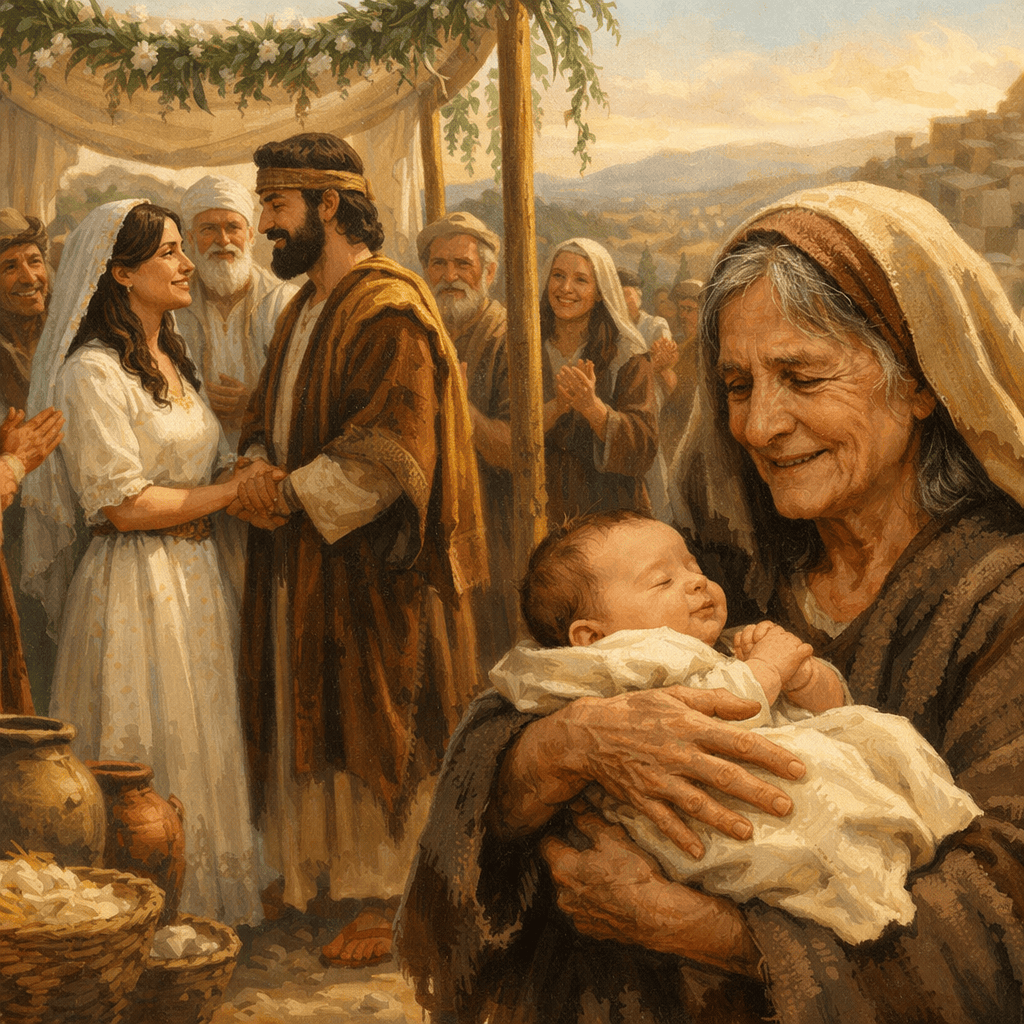
Obed became the father of Jesse, the father of David (Ruth 4:17). Through this once-bitter widow, God wove the royal line that would ultimately lead to Christ.
Her grief was real. Her bitterness was voiced. But it was not final.
The woman who thought God had written her off was written into redemptive history.
Her circumstances changed. Her heart softened. Her faith matured from complaint to quiet trust.
🕊️ Spiritual Reflection:
Naomi’s story reveals a profound theological truth: God’s sovereignty does not eliminate sorrow, but it governs it. Loss is not proof of divine abandonment. It is often the soil in which redemption takes root.

God allowed famine, relocation, widowhood, and barrenness. None of it surprised Him. Yet none of it had ultimate authority.

The book of Ruth contains no recorded miracles—only ordinary obedience under extraordinary pain. That is how God often works. He weaves redemption through daily faithfulness, through seemingly small decisions, through unseen providence.

Defeat often precedes transformation because it dismantles our illusions of control. Emptiness creates space for grace. When Naomi said, “I am empty,” she unknowingly made room for God to fill her life beyond what she had lost.

God did not merely replace what she lost. He multiplied it into generational impact.

The same God who governed Naomi’s famine governs our failures. The same God who turned her bitterness into legacy still writes redemptive endings.
💬 Closing Encouragement:
There are seasons when we feel stripped of security, relationships, reputation, or dreams, and we quietly rename our lives “Mara.” We know the language of faith, yet our hearts feel empty. We are tempted to withdraw, to stop hoping, to assume that the best chapters are behind us. But Naomi’s story invites us to remain present, to keep walking back to Bethlehem, to stay close to covenant community, and to trust God’s hidden providence even when we cannot trace His hand. When we surrender our bitterness and continue in simple obedience, God begins weaving redemption beyond what we imagine. We must not give up—because the Author is still writing.
🙏 Prayer:
Lord, when we feel empty and forgotten, steady our hearts. When loss names us bitter, remind us of Your covenant love.Give us grace to obey in small, faithful steps.Turn our sorrow into testimony and our defeat into victory. Teach us to trust You until redemption unfolds. Amen.


Leave a comment