
📖 Scripture Reading :1 Kings 18
✨
— A.W. Tozer
“Faith is the gaze of a soul upon a saving God.”
⏳ Background:
Israel was in national spiritual collapse.
Under King Ahab and Queen Jezebel, Baal worship did not merely exist—it dominated. Altars to the Lord were torn down (1 Kings 18:30). Prophets of Yahweh were hunted and killed (1 Kings 18:4). The covenant people of God had blended truth with idolatry until conviction disappeared.
For three years, drought scorched the land (1 Kings 17:1; 18:1). Crops failed. Livestock died. Hunger spread. The physical famine reflected a deeper spiritual famine.
Into this darkness stood one man: Elijah. Isolated. Outnumbered. Branded a “troubler of Israel” (1 Kings 18:17). Four hundred fifty prophets of Baal gathered on Mount Carmel (1 Kings 18:19). Elijah stood alone.
The crisis was not only political. It was spiritual confusion. Elijah confronted the people with a piercing question:
“How long will you go limping between two different opinions?” (1 Kings 18:21)
The people answered him not a word.
Silence. Indifference. Compromise.
That is what hopelessness often feels like—not loud rebellion, but quiet drift. A heart divided. A faith weakened. A nation collapsing from within.
Humanly speaking, Elijah had no leverage:
• No army.
• No institutional support.
• No visible majority.
• No rain.
• No revival.
Only a promise. Only obedience.
🔥 Turning Point:
The turning point did not begin with spectacle. It began with obedience.
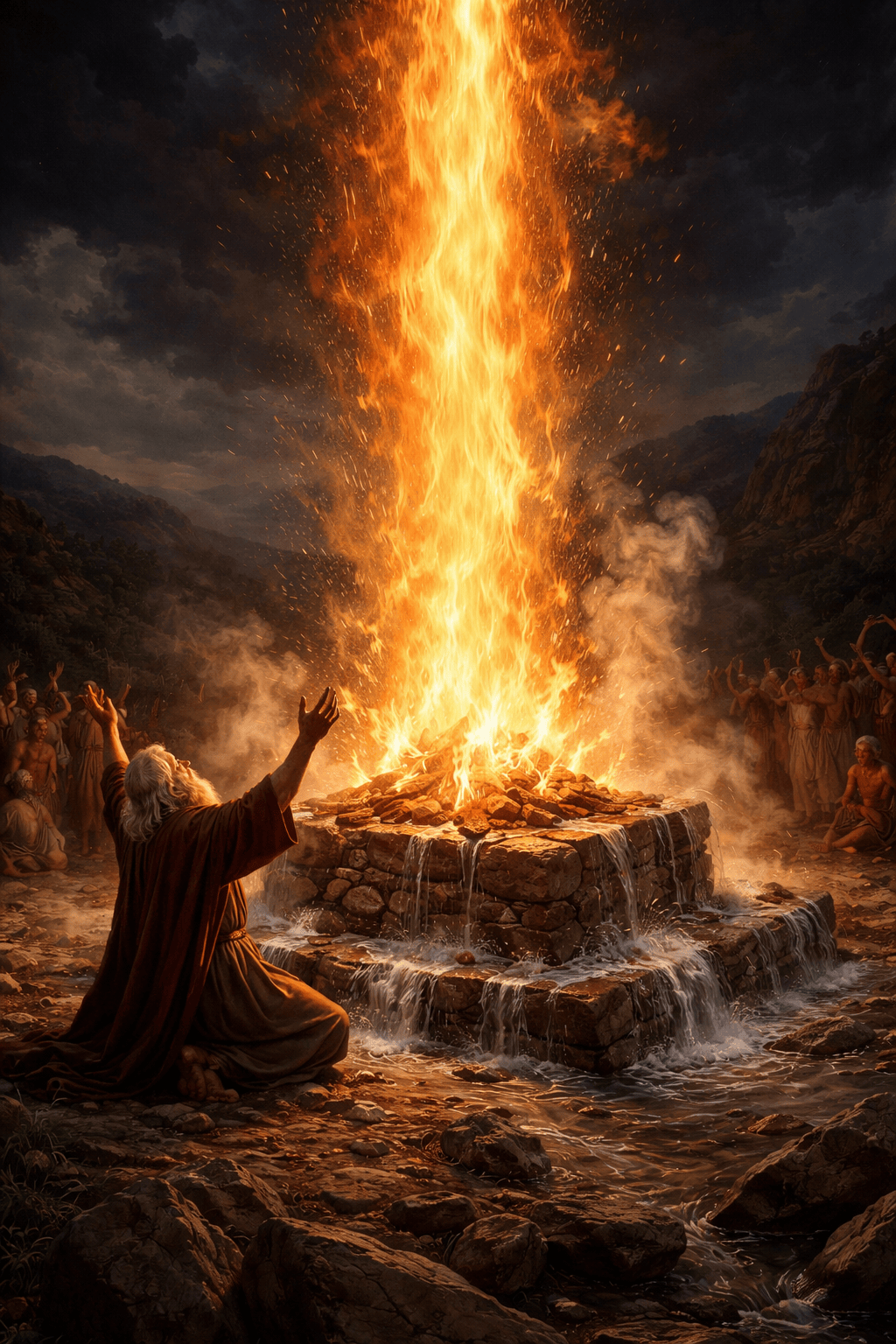
Elijah rebuilt the altar of the Lord that had been thrown down (1 Kings 18:30). Stone by stone. Twelve stones—one for each tribe—declaring that covenant identity still mattered.
Then he drenched the sacrifice with water. Not once. Three times. Until the trench overflowed (1 Kings 18:33–35). In a drought, water was precious. Elijah removed every possibility of human manipulation.
At the time of the evening sacrifice, he prayed a simple, covenantal prayer (1 Kings 18:36–37). No shouting. No frenzy. No self-harm like the prophets of Baal (1 Kings 18:28).
He asked for one thing:
“Answer me, O Lord… that this people may know that you, O Lord, are God, and that you have turned their hearts back” (1 Kings 18:37).
Then God acted.
“Then the fire of the Lord fell” (1 Kings 18:38).
Not partial fire. Not symbolic fire. Consuming fire. It devoured:
• The burnt offering,
• The wood,
• The stones,
• The dust,
• And even the water in the trench.
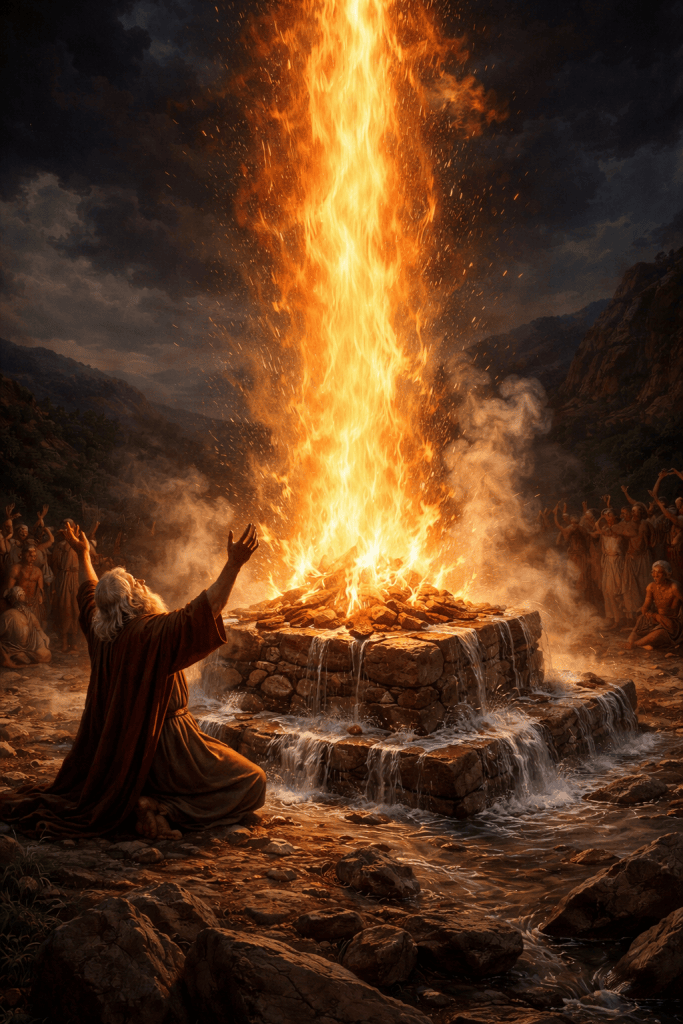
This was not Elijah’s victory. This was God revealing Himself.
The people fell on their faces and cried, “The Lord, he is God!” (1 Kings 18:39).
Truth prevailed. Not because Elijah was strong—but because God intervened.
And after the fire came the rain (1 Kings 18:45). The drought ended. The heavens reopened.
🌿 Transformation:
The outcome was measurable and unmistakable.
• The false prophets were judged (1 Kings 18:40).
• The people publicly confessed the Lord.
• The long drought broke.
• Rain poured down after three and a half years of famine.
But even deeper than national restoration was spiritual reawakening.
The altar was rebuilt.
The covenant remembered.
The silence broken.
The hearts turned back.
Israel moved from paralysis to proclamation.
And Elijah, once isolated, became the instrument of national renewal.
The problem was not merely solved—it was reversed. The very mountain that showcased idolatry became the stage for divine fire.
God turned collapse into confession.
Famine into rain.
Silence into worship.
🕊️ Spiritual Reflection:
Spiritual defeat often looks final. Idolatry seems entrenched. Systems appear too corrupt. Hearts seem too hardened.

But Scripture consistently reveals that God allows exposure before He brings reversal.

The drought revealed Israel’s dependence.
The silence revealed their compromise.
The altar’s ruins revealed their neglect.

God’s sovereignty does not prevent seasons of collapse; it governs them. He permits the drought, yet He controls the rain. He allows the confrontation, yet He sends the fire.

Often, the moment when defeat feels most public is the moment God is preparing the most undeniable demonstration of His glory.

Victory does not come from louder effort but from surrendered obedience. Elijah did not manufacture fire. He rebuilt what was broken and prayed.

Defeat, when surrendered to God, becomes the very platform for divine display.

God can turn any situation completely upside down into victory. Never give up.
💬 Closing Encouragement:
When we stand in seasons where compromise has crept in, where prayers feel unanswered, where loss feels public and faith feels small, we are tempted to believe the drought will define us. We see the “450 prophets” of opposition and feel alone in obedience. Yet we are invited to rebuild the altar in our own lives—stone by stone through repentance, prayer, and trust. Even when we feel outnumbered and emotionally exhausted, we remember that the fire does not come from our striving but from God’s sovereign hand. The drought does not have the final word, and neither does our failure. If we remain faithful, surrender our hearts fully, and refuse to limp between two opinions, we will see God move in ways that reverse despair into worship. Let us not give up.
🙏 Prayer:
Lord, when we feel surrounded by failure and spiritual drought, rebuild Your altar in our hearts. Give us courage to obey when we feel alone. Send Your fire where compromise has weakened us. Turn our drought into rain and our despair into worship. We trust You for reversal and victory. Amen.


Leave a comment