
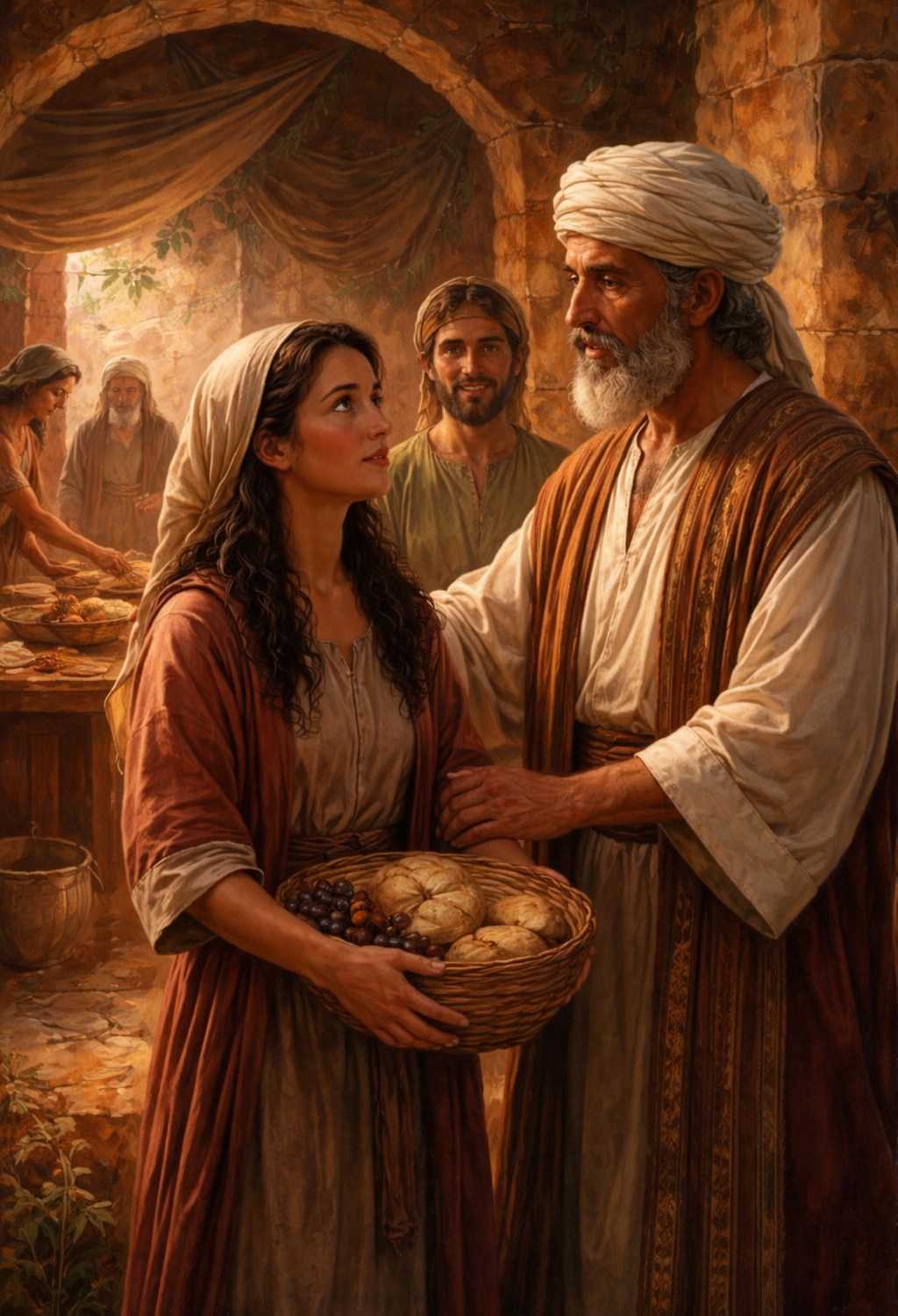
📖 ✝️ Scripture Reading: Exodus 21:7–11
“And if he does not do these three for her, then she shall go out free, without paying money.”
Exodus 21:11 NKJV
“Righteous law protects the vulnerable; it does not exploit them.”
— Dr. Miriam Adamo, Theological Scholar
💒 🕊️ ✨When the Israelites left Egypt, God did more than deliver them from bondage — He gave them a covenant, a way of life that would set them apart as a holy people. Hidden within the laws at Sinai were provisions that reshaped social realities, especially for those without power.
In the ancient Near East, a young woman sold into domestic service typically became property — easily traded or exploited. But in the covenant code of Israel (Exodus 21), something quite different is happening. A father in desperate circumstances might place his daughter under a household’s care to ensure her survival. Yet God’s law carefully guards her dignity and rights. Unlike a male servant who earns freedom after six years, the female servant’s status is tied to relationships of care, protection, marriage, and inheritance, not ownership.
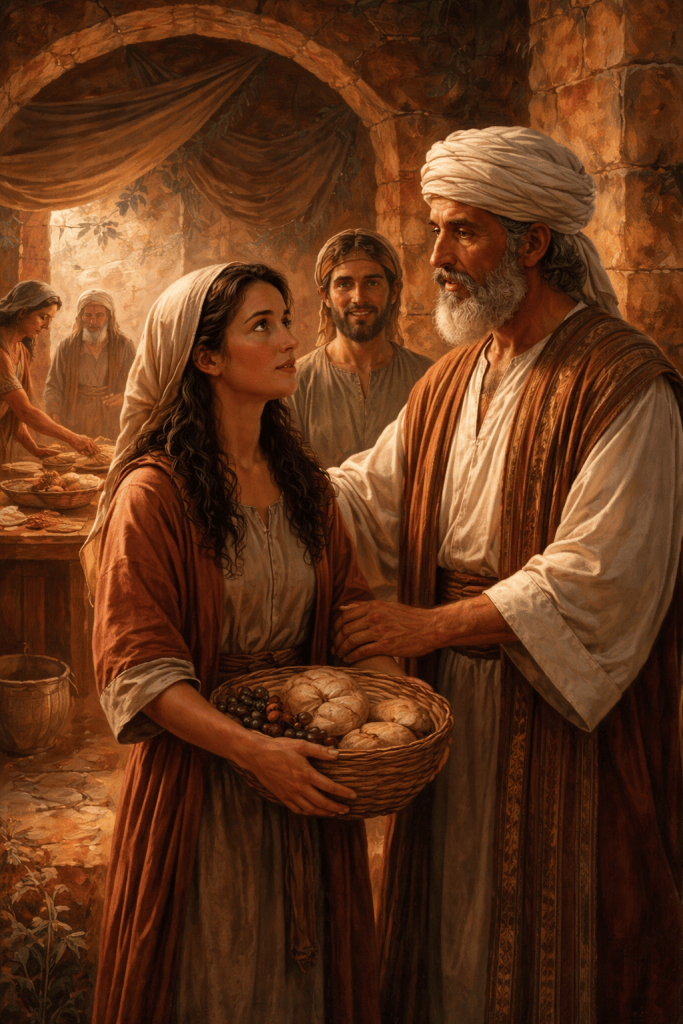
This covenant law gives her:
• the right to be redeemed,
• protection from being sold into human trafficking,
• full family status if married to the master’s son,
• guaranteed food, clothing, and marital rights,
• freedom without ransom if these protections are denied.
This is profound — God legislates not to codify exploitation but to push back against it, providing redemptive restraint and justice.
  🤔 🪞 💡 God’s protective laws for female servants in Exodus 21 teach us that true justice is covenantal, not transactional. The covenant life God calls us into is not measured by efficiency or tradition, but by how the weakest and most vulnerable are treated. In the ancient world, power oppressed; in the covenant community, power was restrained by divine justice.

When Scripture limits male authority in order to safeguard a woman’s dignity, it points forward to the ultimate liberation found in Christ: where every child of God — male and female — is equally beloved and endowed with worth (Galatians 3:28). God’s heart is for a people who embody His justice, where rights outweigh privilege, compassion outweighs custom, and human dignity outweighs cultural convenience.
🎬🔛 Historical Real Event :
The Case of Mary Slessor (Nigeria, 19th Century)
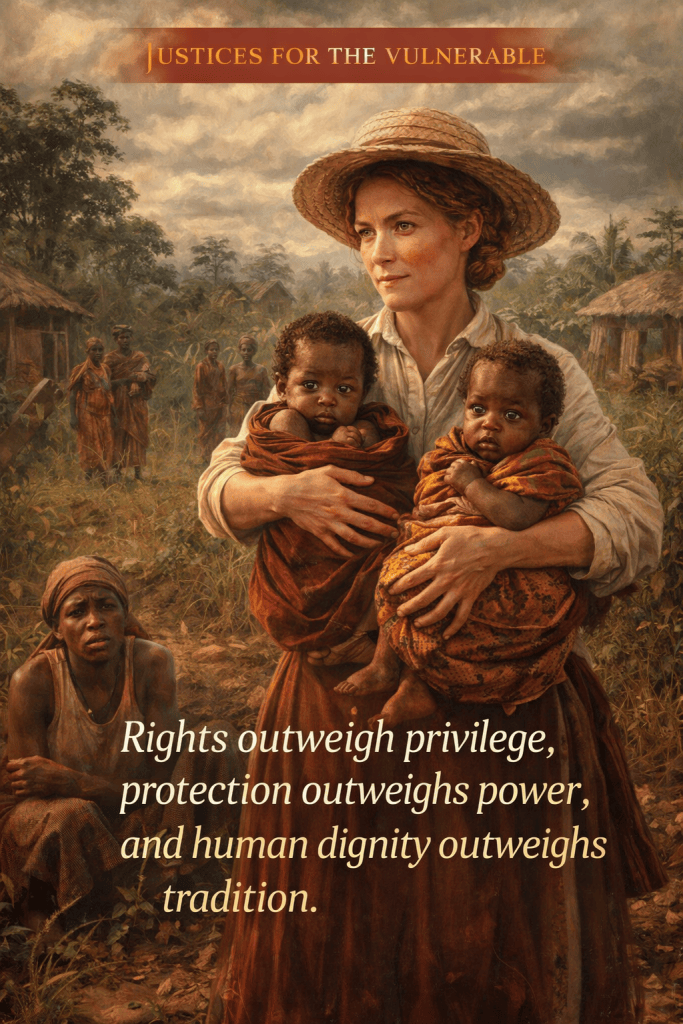
In the late 1800s, Scottish missionary Mary Mitchell Slessor (1848–1915) served among the Efik people in Calabar, Nigeria. Before her arrival, it was common for twins to be abandoned due to cultural belief that one twin carried evil — especially if the parents were powerless or afraid of tribal taboos. Babies were left to die or were discarded in rough bushland. Slessor was horrified.
Before:
• Twins were abandoned or killed due to superstition and social fear.
• Women had little voice in tribal decisions regarding child survival.
• Cultural norms permitted cruelty toward the vulnerable.
After:
Mary Slessor adopted abandoned twins into her own home, advocated fiercely against infanticide, confronted village chiefs, and helped rewrite community norms. Her presence led to:
• A dramatic decline in twin abandonment in Ekpene Obom and surrounding regions.
• A cultural transformation — respect for all children.
• Empowerment of women to care for their children without fear.
Her life reflects the same divine justice we see in Exodus 21: a commitment to protect human dignity over exploitative tradition.
Source: Mary Slessor of Calabar by Talbot Mundy (1913) and the Christian History Institute archive —
https://christianhistoryinstitute.org/magazine/article/mary-slessor/
⚒️🎯 As followers of Jesus, we are called to carry forward this same justice into our everyday life. We must ask ourselves whether our speech, our workplaces, our church communities, or even our homes protect the vulnerable or exploit them. God’s law was designed not merely to regulate what was culturally acceptable, but to reshape hearts toward divine compassion and covenant responsibility. When we understand God’s heart for the marginalized — children, women, the economically weak, the powerless — we begin to mirror His justice. We embrace equity over advantage, protection over power, and love in action over tradition in pattern.
🙏 🕯️ Prayer: Heavenly Father, Open our eyes to see what You see — the worth of every life, especially the vulnerable. Give us hearts shaped by Your covenant justice. Teach us to protect, to defend, and to uphold dignity in our families, communities, and world. May we reflect Your compassion in concrete action, not just words. In Christ’s name, Amen.


Leave a comment