📖 ✝️ Scripture Reading: Exodus 20:25
“And if you make Me an altar of stone, you shall not build it of hewn stone; for if you use your tool on it, you have profaned it.”
Exodus 20:25 NKJV
“True devotion is not shaped by our hands — but offered from our hearts.”
— Unknown Christian Theologian
🎬🔛 The Iconoclast Reformation in Neuchâtel, Switzerland (1530)
In the early years of the Protestant Reformation, the city of Neuchâtel became a dramatic scene of spiritual renewal and confrontation. Under the preaching of William Farel, the citizens experienced a powerful move of the Gospel that called them back to pure worship rooted in Scripture alone — free from what the Reformers saw as human traditions that obscured God’s Word.
To be continued…
💒 🕊️ ✨ After God gave the Ten Commandments to Moses and the Israelites at Mount Sinai, He spoke again with specific instructions for worship. The people had seen God’s voice and presence from heaven itself — an encounter of awe, reverence, and fear. Rather than allowing their own human shaping of sacred things, God commanded that if an altar of stone is to be made, it must be built without hewn stones—no cutting, polishing, or sculpting with tools.
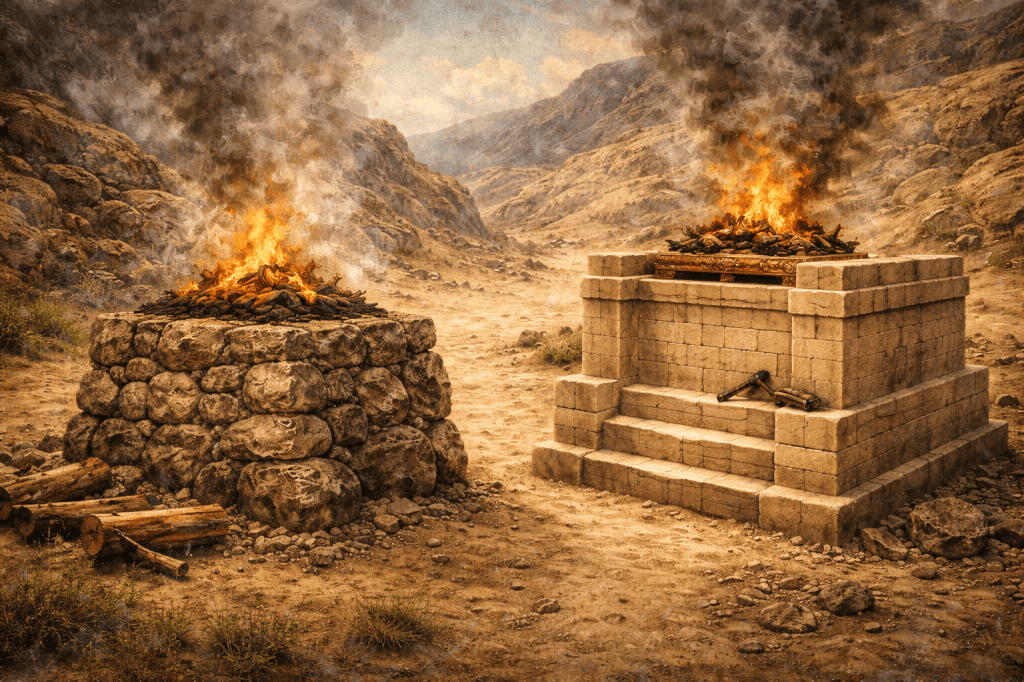
In the ancient world, stone altars were often ornately carved and displayed artistic prowess, religious sophistication, and human pride. But God wanted His people to learn that true worship is not about human grandeur, craftsmanship, or control. If tools of human construction were used, it would defile the altar — turning an instrument of worship into a monument to human effort. God calls for simplicity, humility, and obedience in His worship—recognizing His holiness beyond our crafts and inventions.
This instruction wasn’t merely about how altars looked — it was an invitation for the Israelites to understand worship as relational surrender to God’s Word, not human modification of divine revelation.
  🤔 🪞 💡 Exodus 20:25 teaches a profound spiritual principle: God’s acceptance of worship depends not on human artistry but on obedience and humility before Him. Hewn stones represent human shaping, control, and pride — the desire to fashion divine worship in our own terms. God’s command to avoid tools on the altar symbolizes a rejection of replacing divine holiness with human achievement.

In the same way that the Israelites were not to use tools on their altars, we today must guard our hearts against substituting our own ideas, methods, preferences, or traditions for the worship that God desires. If we rely on our own wisdom or creativity to define worship — even with good intentions — we risk profaning what God has set apart.

This passage calls us to return again and again to the simplicity of obedience: worship God because He is God, offer ourselves without reservation, and let go of anything that tries to shape or control our devotion apart from God’s Word.
🎬🔚 End of the story :
On October 23, 1530, after Farel’s sermon, the people of Neuchâtel made a historic decision: they openly renounced worship practices that involved elaborate altars, images, statues, and liturgical forms they believed had become obstacles to true devotion. In a remarkable display of unity and conviction, they dismantled altars, destroyed religious images, and cast them down from the cathedral terrace, declaring that such objects no longer had a place in their worship. They even inscribed on a stone pillar:
“On the 23rd October, 1530, idolatry was overthrown and removed from this church by the citizens.”
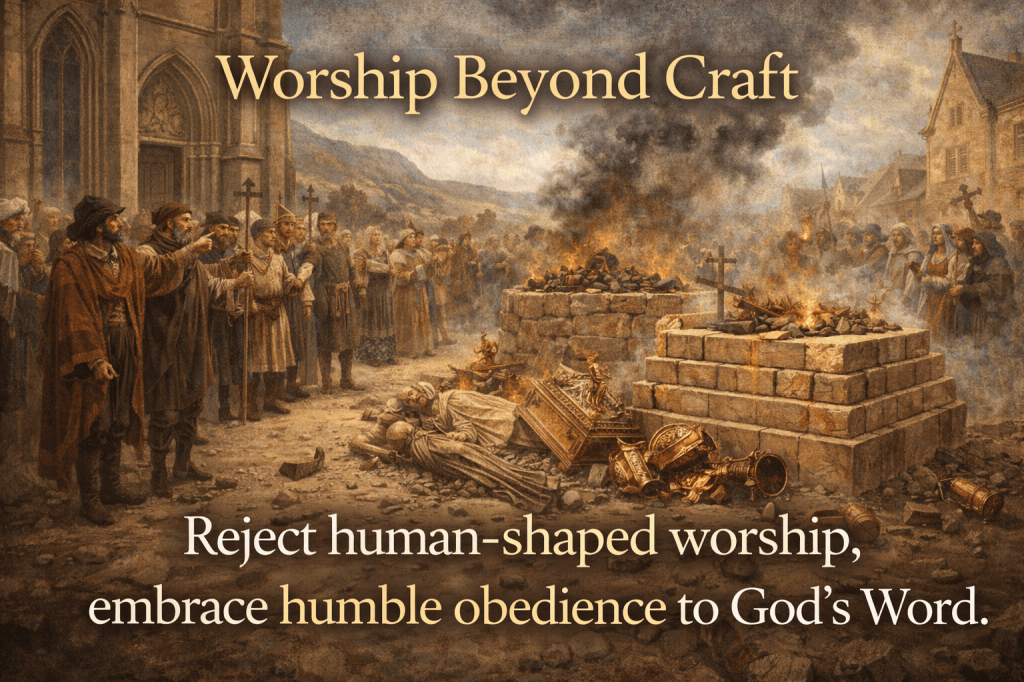
Before this moment, worship in Neuchâtel was heavily shaped by tradition, imagery, and human construction that many felt drew focus away from Christ alone. After their reformation, worship shifted toward Scriptural centrality, simplicity, and heart devotion — not objects or rituals. This powerful transformation illustrated the same spiritual principle found in Exodus: true worship rejects mere human shaping in favor of obedience to God’s Word alone.
✔ Source: Historical account of the Neuchâtel Reformation and removal of altars and images, 1530.
⚒️🎯 In our lives, we often bring God a version of worship shaped by our own preferences, talents, cultural forms, or spiritual aesthetics — tools we use to “improve” our devotion. Yet God’s Word confronts us here: when we bring worship crafted by our own hands, intentions, or pride, we profane what should be sacred. We are invited back to a posture of humble obedience, surrendering not only our actions but our heart attitudes — acknowledging that God, not our designs, determines what is acceptable worship. As a community of believers, we must remove the “cut stones” of self-reliance and preference, allowing God alone to shape our devotion.
🙏 🕯️ Prayer: Lord God, strip away every human tool and preference that stands between us and You. Teach us to worship with humble hearts and obedient spirits. May we bring devotion purified by Your Word alone — not shaped by self, tradition, or pride. Amen.


Leave a comment