
📦 When the Need Exceeds the Resources
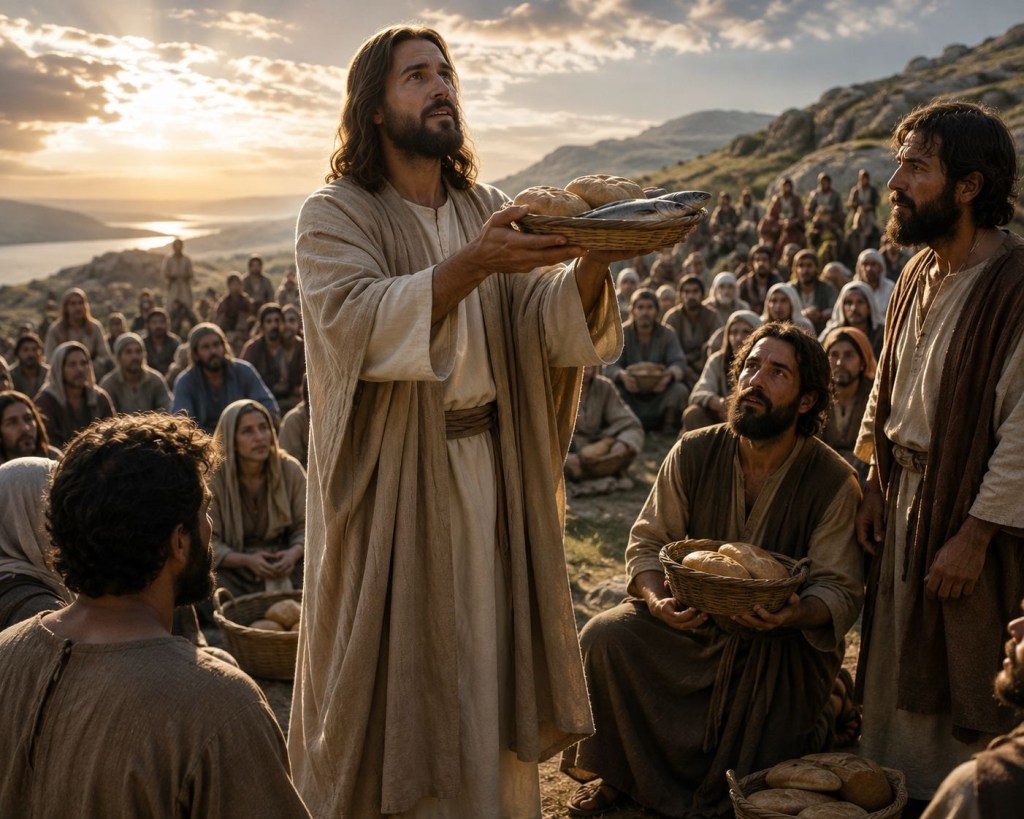
Workplace demands often exceed the people, budget, equipment, and time available. Leaders may postpone action until more resources arrive, while teams become discouraged by what they lack. Yet scarcity does not remove responsibility. When Jesus fed five thousand, He began by identifying what was present, organizing the people, involving His disciples, and ensuring that nothing useful was wasted.
📖 Five Loaves Placed in the Hands of Jesus
Main Passage: Mark 6:35–44
Key Verse: “And when he had taken the five loaves and the two fishes, he looked up to heaven, and blessed, and brake the loaves, and gave them to his disciples to set before them.” — Mark 6:41, KJV
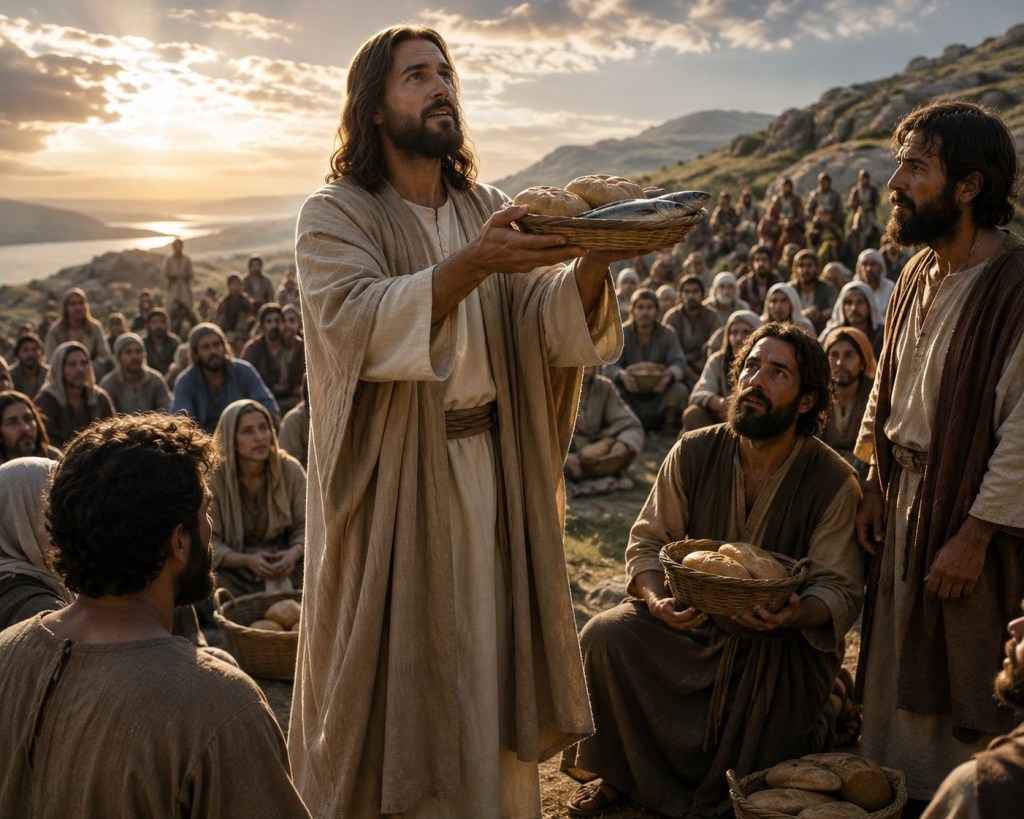
The crowd was large, the place remote, and the available food plainly insufficient. Jesus received what was available, gave thanks, and worked through His disciples to feed the people. Afterward, they collected twelve baskets of fragments.
✨ When Limited Resources Meet the Lord of Provision
The disciples saw a shortage and proposed dismissing the crowd. Jesus instead told them, “Give ye them to eat,” and then asked how many loaves they possessed. He did not ignore the limitation; He directed them to assess what was actually available.
Jesus commanded the people to sit in organized groups. He blessed and broke the food, then entrusted distribution to His disciples. The miracle belonged to Christ, but the disciples participated through investigation, organization, and service. When everyone had eaten, the remaining fragments were gathered rather than discarded.
This passage is not a promise that every insufficient budget will miraculously increase. It reveals Jesus as the compassionate Messiah and Lord whose provision surpasses human ability. It also presents a practical pattern without reducing the miracle to management technique: begin with what is available, bring it before Christ, establish order, involve others, and practise responsible stewardship.
For professionals, scarcity can expose either helplessness or wisdom. Strategic faith does not deny constraints. It prayerfully evaluates resources and uses them faithfully. Multiplication remains God’s work; stewardship is our responsibility.
Because Christ is Lord over our work, limited resources are not excuses for disorder. They are invitations to seek His wisdom, serve people, delegate responsibly, and guard against waste.
⚙️ Organizing Scarcity With Wisdom
Resource organization matters because unstructured effort can waste even adequate provision. Wise professionals define the need, inventory available assets, assign clear responsibilities, and monitor what remains.
Jesus did not perform every distribution task personally. He involved His disciples. Christian leadership similarly joins competence with trust: leaders provide direction, empower people to serve, and remain accountable for careful use of what has been entrusted.
💼 Put Available Resources to Faithful Use
- List the people, time, tools, and budget already available before requesting more.
- Divide a large assignment into clear responsibilities with named owners.
- Review unused materials and unfinished work before purchasing replacements.
💬 Wisdom About the Work of Our Hands
“The blessing of the Lord finds expression in the work of your hand.”
— Maxwell E. Ogaga
This statement reminds us that prayerful dependence does not replace diligent work; God’s gifts should be expressed through faithful, responsible action.
🏥 When One Bed Became a Ministry of Healing
After confronting the shortage of medical care available to Indian women, Ida Sophia Scudder trained as a physician and returned to India in 1900. In Vellore, she opened a one-bed clinic for women. By 1902, a forty-bed hospital had followed.
Her work developed through organized medical service, training, fundraising, and sustained Christian compassion. The small clinic eventually grew into Christian Medical College Vellore, combining patient care with the education of medical professionals. This development occurred over decades, not through instant expansion.

Practical Takeaway: Start small, organize well, and let service grow responsibly.
Further Reading: https://vellorecmc.org/about/cmc-history/
🏢 Multiply Faithfulness at Your Workplace
- Complete a fifteen-minute inventory of resources for one current project.
- Delegate one clearly defined task, deadline, and expected result today.
- Identify one source of waste and reduce it measurably this week.
🤔 Questions for Responsible Stewardship
- Am I neglecting available resources while waiting for ideal conditions?
- Do I delegate to serve the mission or merely escape responsibility?
🙏 Lord, Teach Me Faithful Stewardship
Father, thank You for every person, ability, tool, and opportunity entrusted to me. Give me wisdom to recognize what is available and humility to depend upon Christ. Teach me to organize carefully, delegate responsibly, work diligently, and prevent waste. Guard me from fear, pride, and careless decisions. Form integrity, courage, and servant leadership within me, so that my work serves others faithfully and brings honour to the Lord Jesus Christ. Amen.


Leave a comment