
📖 Scripture Anchor
“Moreover it is required in stewards, that a man be found faithful.”
— 1 Corinthians 4:2, KJV
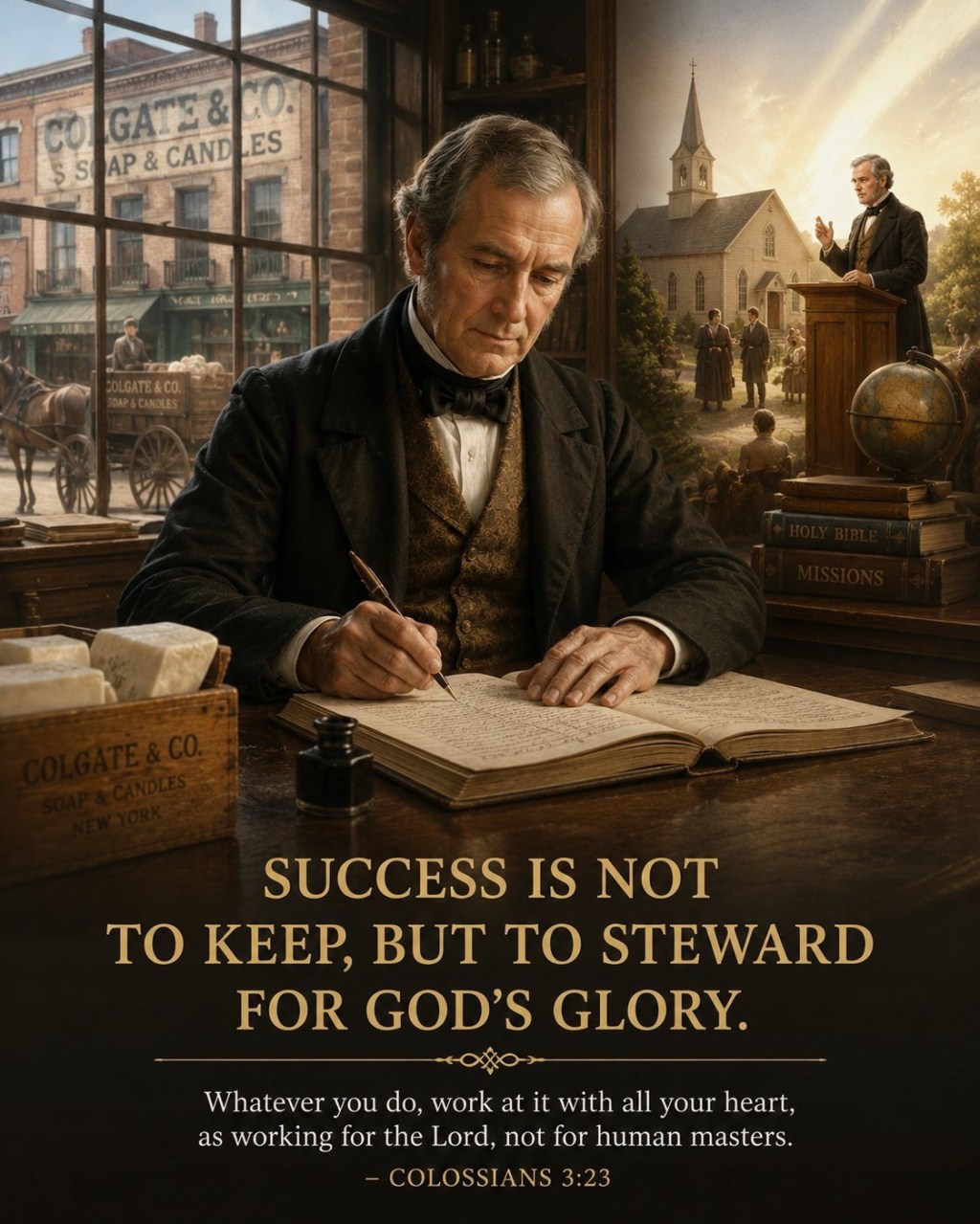
This verse emphasizes faithfulness rather than status or achievement. William Colgate’s story reminds us that Christian stewardship begins with faithfully managing the opportunities, responsibilities, and resources God places before us.
✨ Short Introduction
Many believers wonder whether ordinary work can truly matter to God.
William Colgate’s life provides a helpful answer. His story is not merely about building a successful business, but about recognizing that everyday work can become an opportunity for faithful service to Christ.
His example encourages Christians to view their profession as stewardship rather than ownership.
🏭 Background: Learning Through Everyday Business
William Colgate was born in England in 1783 and later immigrated with his family to the United States. During his early years, he gained practical exposure to the soap and candle trade. Historical records indicate that he worked as an apprentice in New York City before establishing his own business.
As a young worker, Colgate observed examples of poor management and ineffective business practices. Rather than ignoring these lessons, he learned from them. The available historical record suggests that these experiences helped shape his understanding of responsible business leadership.
At that stage, there was no indication that his business would eventually become a widely recognized company. Like many professionals today, he was learning through ordinary work, daily responsibilities, and practical experience.
💡 Turning Point: Viewing Business as Stewardship
Historical accounts show that William Colgate became a committed Baptist believer and was baptized in 1808. He later served as a deacon and actively supported Christian ministry throughout his life.
A significant feature of Colgate’s life was his understanding that business could be used in service to God. Rather than separating faith from work, he appears to have viewed his profession as an area in which Christian character, integrity, generosity, and responsibility could be practiced.
This was not a dramatic event recorded as a single moment of crisis or miracle. Instead, it was a sustained commitment to live out biblical principles in daily work. As opportunities grew, Colgate increasingly devoted resources and influence toward Christian causes, education, and mission efforts.
His story points beyond business achievement to a deeper conviction: everything ultimately belongs to God and should be managed faithfully for His glory.
🌿 Transformation: Success Reframed by Service
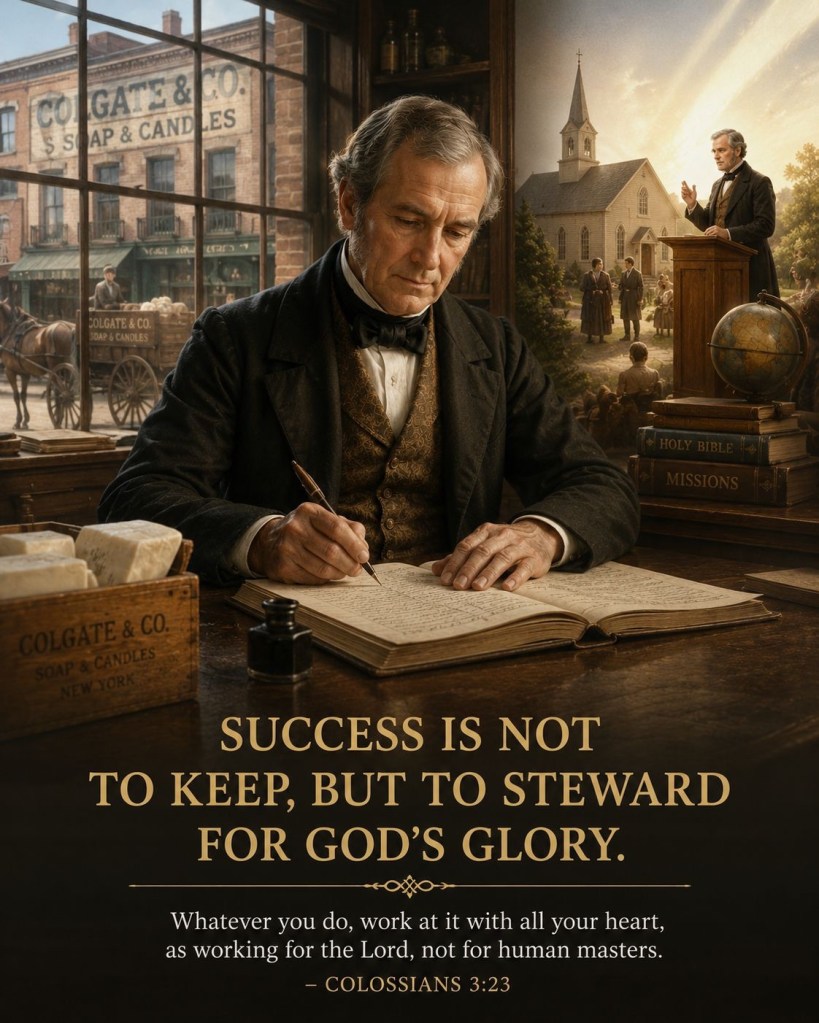
William Colgate eventually founded the business that developed into what is known today as Colgate-Palmolive. Historical records acknowledge his reputation as a respected businessman and generous Christian supporter.
Yet the most meaningful aspect of his story is not commercial success. The available evidence highlights his commitment to serving the church, supporting missions, and using his resources to advance Christian ministry.
His life suggests that professional growth and Christian faithfulness can work together when success is viewed as a responsibility rather than a personal possession.
🔎 Source and Historical Verification
Primary Source:
William Colgate – Wikipedia
https://en.wikipedia.org/wiki/William_Colgate
Additional Source:
Deacon William Colgate, Baptist History Homepage
https://baptisthistoryhomepage.com/ny.colgate.wm.bio.html
💬 Related Christian Quote
“God entrusts us with what we have, not merely for ourselves, but for His purposes.”
— Paraphrased summary of biblical stewardship
William Colgate’s life illustrates how resources and influence can be viewed as trusts from God rather than personal achievements.
🕊️ Spiritual Reflection and Lessons
William Colgate’s testimony reminds us that God often works through ordinary responsibilities. Many believers wait for extraordinary opportunities while overlooking the stewardship already placed in their hands.
His story points us toward Jesus Christ, who teaches that faithfulness in small matters matters to God. Christians are called to serve Him not only in church activities but also in workshops, offices, factories, businesses, and homes.
When circumstances seem routine, Christ invites us to remain faithful. Our unseen obedience can become a testimony of His grace.
Key Lessons:
- Faithfulness often begins with ordinary responsibilities.
- Professional skill should be guided by Christian character.
- Stewardship means using resources for God’s purposes.
💙 Closing Encouragement
If your work feels ordinary today, remember that God frequently uses ordinary circumstances to accomplish lasting purposes. Keep looking to Jesus Christ. Continue serving faithfully, acting with integrity, and trusting Him with results that remain beyond your control.
🙏 Prayer
Heavenly Father, thank You for the opportunities You place before us each day. Help us to be faithful stewards of our work, resources, skills, and influence. Give us wisdom to serve with integrity, humility to depend on Christ, and courage to obey Your will. May our daily responsibilities honor You and reflect the character of Jesus. Amen.


Leave a comment