
📖 Scripture Anchor
“He that is faithful in that which is least is faithful also in much.”
— Luke 16:10, KJV
Jesus taught that faithfulness in apparently small responsibilities reveals character. Mary Slessor’s years of ordinary labor did not guarantee later influence, but they formed habits of endurance and service that remained important throughout her missionary work.
✨ Short Introduction
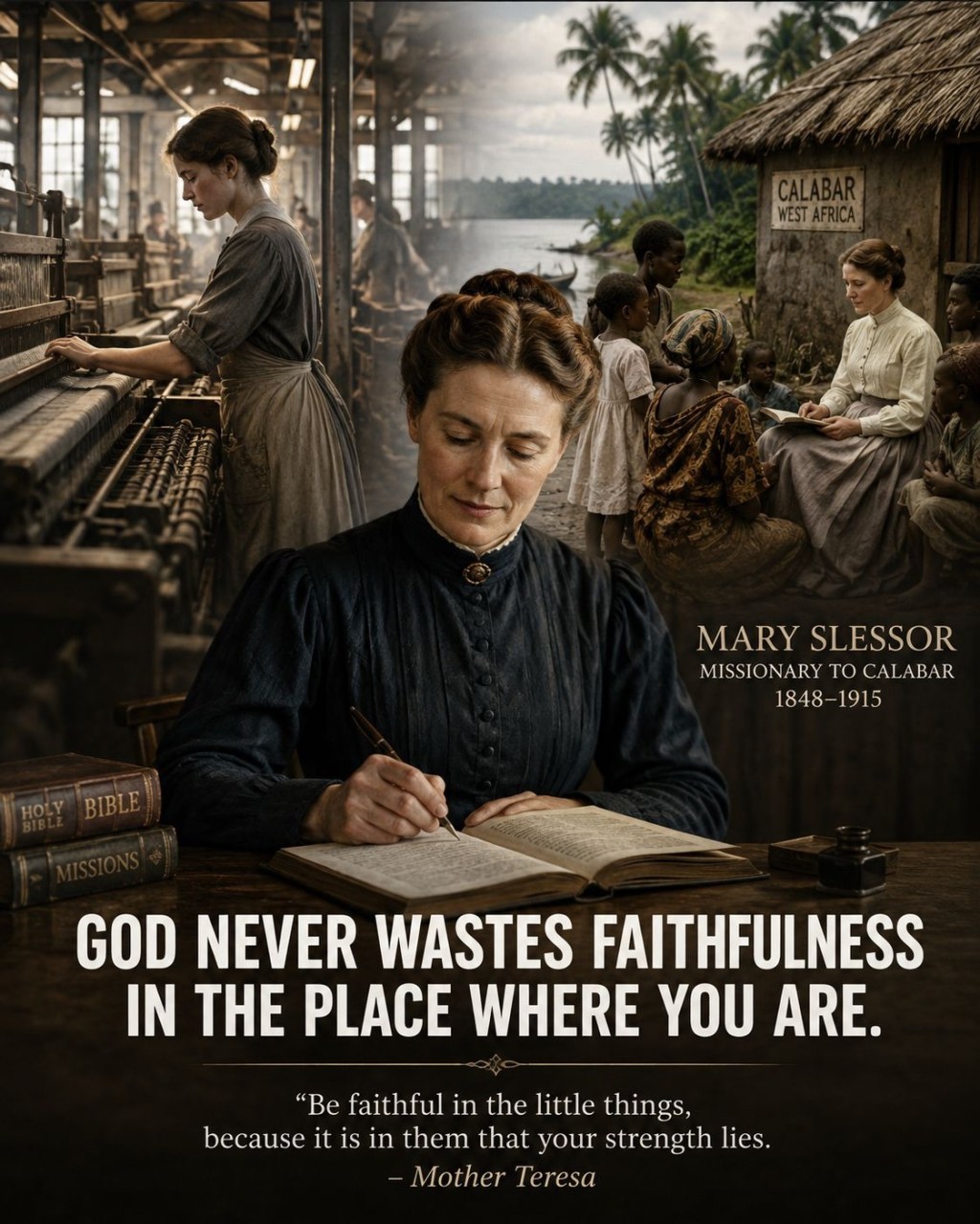
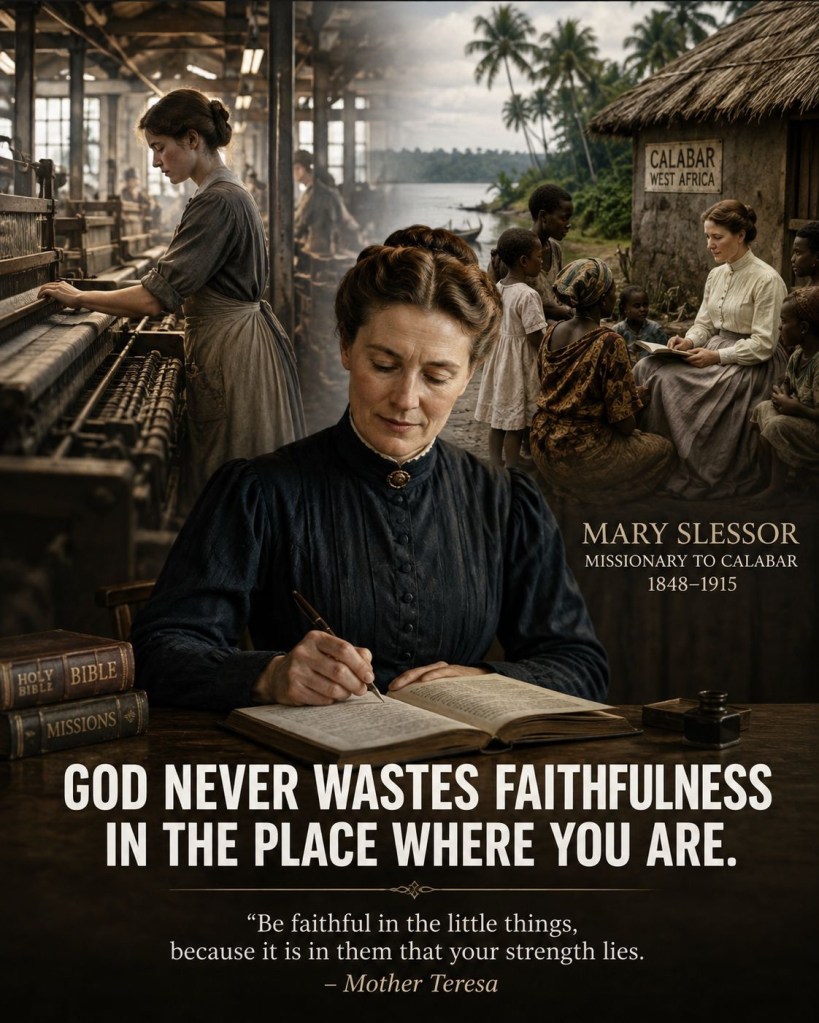
Before Mary Slessor became known for missionary service in Calabar, she spent years working long hours in Dundee’s mills.
Her early circumstances included poverty, family responsibility, demanding labor, and limited educational opportunities. Yet those ordinary years became a setting in which discipline, compassion, learning, and Christian service steadily developed.
🏙️ Background: Poverty and Responsibility in Dundee
Mary Mitchell Slessor was born in Aberdeen, Scotland, in 1848. Her working-class family later moved to Dundee in search of employment. Financial hardship required Mary, her mother, and an older brother to work in the city’s mills to support the household.
At about eleven, Mary began as a half-time worker in the Baxter Brothers’ mill, dividing her time between employment and education. By fourteen, she had become a skilled power-loom weaver. The work involved long days, but she continued reading whenever opportunity allowed, sometimes positioning a book near her loom.
These difficult circumstances should not be romanticized. Poverty and child labor imposed heavy responsibilities. Nevertheless, the available historical record indicates that the mill years helped develop habits of endurance, practical ability, learning, and perseverance.
🙏 Turning Point: Faithfulness Beyond the Factory
Slessor’s life was not limited to factory work. Her mother’s Presbyterian faith and interest in missions helped shape the spiritual atmosphere of their home. While still living in Dundee, Mary also became involved in local Christian service among people in disadvantaged neighborhoods.
In 1876, she traveled to Calabar in West Africa as a missionary with the United Presbyterian Church. The move did not erase the lessons of her earlier responsibilities. The patience required for learning, the endurance formed by long working days, and the willingness to serve in overlooked places remained relevant.
Her example does not mean every difficult workplace is preparation for a more visible calling. It shows that faithfulness to Christ in present responsibilities is never wasted. God can form humility, practical wisdom, courage, and compassion through work that appears repetitive or unnoticed.
The factory was not the final destination of Slessor’s service, but neither was it disconnected from the servant she was becoming.
🌿 Transformation: Years of Courageous Service
In Calabar, Slessor learned the Efik language, taught within local communities, promoted the welfare of women, and cared for vulnerable children. Living among the people helped her understand local circumstances and gradually gain trust.
Her influence developed through years of sustained service rather than immediate public recognition. Historical accounts particularly remember her work protecting abandoned children, including twins whose lives were endangered by local beliefs and practices.
The lasting lesson is not that hardship automatically produces leadership. Hardship can also wound and exhaust. Slessor’s story instead demonstrates how faith in Christ, disciplined habits, continued learning, and compassionate obedience can work together over time. The mill girl did not suddenly become courageous; courage was exercised through repeated acts of faithful service.
🔎 Source and Historical Verification
Primary Source:
Dundee Years | The Mary Slessor Foundation
http://maryslessor.org/category/about-mary/dundee-years/
Additional Source:
Mary Slessor: Biography | Undiscovered Scotland
https://www.undiscoveredscotland.co.uk/usbiography/s/maryslessor.html
💬 Related Christian Quote
“Expect great things; attempt great things.”
— William Carey
The earliest well-supported form of Carey’s missionary watchword joins hopeful expectation with obedient action. It reminds believers that dependence upon God should lead to faithful service, not passive waiting. [content.cb…minary.org], [Expect Gre…eat Things]
🕊️ Spiritual Reflection and Lessons
Jesus Christ is Lord over both visible ministry and ordinary labor. The workplace you occupy today may not be where you expected to serve, but it can still become a place of faithful formation.
Do not confuse obscurity with uselessness. Practise diligence, receive instruction, serve others, and remain close to Christ. Present hardship does not guarantee future recognition, yet nothing offered faithfully to the Lord is insignificant.
Key Lessons:
- Ordinary work can form enduring Christian character.
- Faithfulness matters before recognition or influence arrives.
- Courage grows through repeated acts of obedient service.
💙 Closing Encouragement
If your present work feels repetitive, exhausting, or unnoticed, bring it honestly to Jesus Christ. Ask Him for strength to serve faithfully today. Learn what you can, care for those around you, and trust His wisdom without demanding a more visible assignment.
🙏 Prayer
Heavenly Father, thank You for being present in every season of work. Forgive us when we despise ordinary responsibilities or seek recognition more than faithfulness. Give us endurance, humility, wisdom, courage, and compassion. Use our present duties to form Christlike character within us. Help us serve others sincerely and obey Jesus Christ wherever You have placed us. May our lives bring glory to Your name. Amen.


Leave a comment