
📖 Scripture Anchor
“For what shall it profit a man, if he shall gain the whole world, and lose his own soul?”
— Mark 8:36, KJV
Jesus warned that gaining what the world values cannot compensate for spiritual loss. This verse does not condemn honest business; it places every opportunity and financial decision beneath the greater value of faithfulness to Christ.
✨ A Policy That Cost a Day’s Revenue
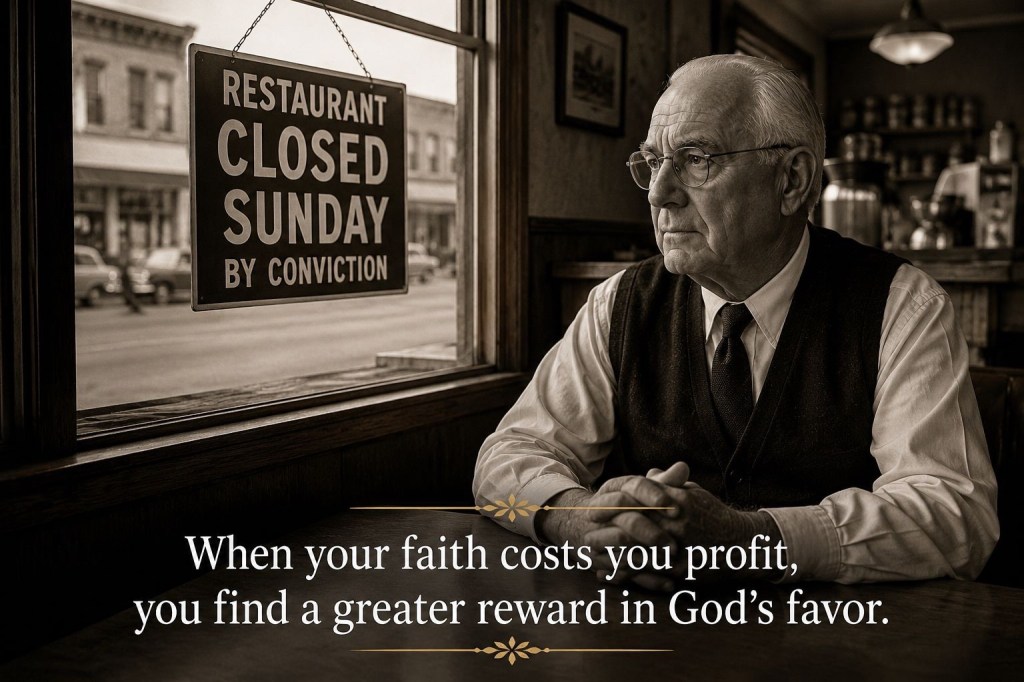
In 1946, S. Truett Cathy and his brother Ben opened a small restaurant in Hapeville, Georgia. Restaurant work required demanding hours, yet Cathy adopted a policy that appeared commercially costly: the business would remain closed every Sunday.
That decision became an enduring expression of conviction rather than a temporary marketing strategy.
🍽️ Background: Long Hours in a Small Restaurant
After serving in the United States Army during the Second World War, Cathy returned to Georgia and entered the restaurant business. He and Ben opened the Dwarf Grill near an automobile assembly plant and the Atlanta airport. The restaurant was small, but its operating demands were considerable.
The brothers worked long shifts to keep the establishment serving customers. The business began years before Chick-fil-A became a recognised restaurant chain. At that stage, each trading day mattered, and surrendering one day’s sales was a meaningful operational decision.
Cathy had been raised in a Baptist family and remained closely involved in Christian service. He later taught a teenage Sunday-school class for decades. His faith was not separated from his understanding of work, rest, family, and responsibility.
🚪 Turning Point: Closing the Doors Every Sunday
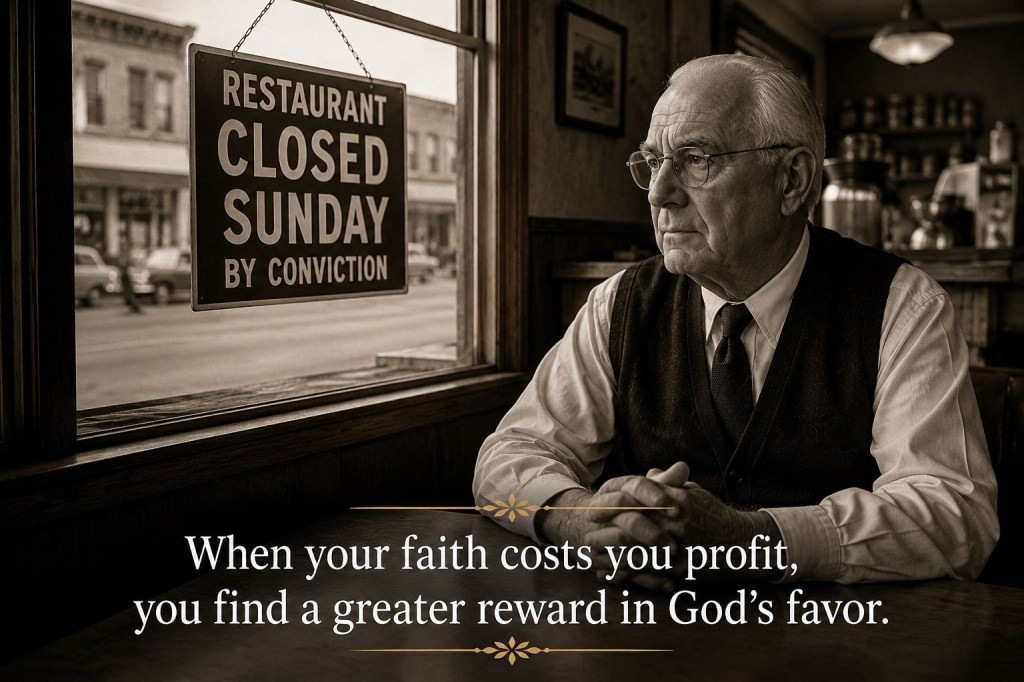
When the Dwarf Grill opened, Cathy chose to close it on Sundays. Chick-fil-A’s official account explains that, after working seven-day schedules in restaurants operating around the clock, he recognised the importance of setting aside one day for rest.
The policy gave Cathy and his employees time to rest, spend time with family and loved ones, or worship if they chose. It did not require all employees to use the day identically, but it protected the time by placing a boundary within the operating schedule.
Closing the restaurant meant refusing possible Sunday revenue. Cathy could not know in 1946 what the business would later become. The decision was therefore not a response to commercial security; it was made during the company’s modest beginning.
His conviction moved beyond private belief and became an operating policy.
🌿 Transformation: Conviction Built Into the System
The Dwarf Grill eventually contributed to the development of Chick-fil-A, whose first dedicated restaurant opened in Atlanta in 1967. As the company expanded, the Sunday-closing practice continued across its locations.
The company’s later growth must not be presented as a guaranteed financial reward for obedience. Scripture does not promise that every values-based policy will produce commercial success. Cathy’s example instead shows that conviction becomes credible when it shapes calendars, staffing, customer expectations, and revenue decisions.
Faith moved from personal profession into organisational practice. Sunday closure established a boundary before financial pressure could redefine the value.
🔎 Source and Historical Verification
Primary Source:
Why Is Chick-fil-A Closed on Sunday?
https://www.chick-fil-a.com/customer-support/who-we-are/our-culture-and-values/why-is-chick-fil-a-closed-on-sunday
Additional Source:
Truett Cathy, Georgia Historical Society
https://www.georgiahistory.com/bio/truett-cathy/
💬 Scripture as a Guide for Life
“The Bible is my guidebook for life.”
— S. Truett Cathy
Cathy’s statement explains why faith could not remain separate from operating decisions. A guidebook matters only when its direction influences the road actually taken.
🕊️ Conviction Must Shape Policy
Christian values lose credibility when they appear only in mission statements. Faithful leadership translates conviction into fair pricing, honest reporting, safe work, employee care, truthful advertising, appropriate rest, and refusal to exploit trust.
Key Lessons:
- Establish ethical boundaries before financial pressure arrives.
- Let policies protect people instead of serving profit alone.
- Never use Christian language to disguise unfair business practices.
💙 Let Christ Govern the Schedule
A conviction may cost revenue, convenience, or approval. Bring the decision honestly before Christ. Seek wise counsel, examine Scripture, and obey without assuming a particular financial result. A faithful policy may remain unseen, but the Lord values obedience that reaches beyond words into daily practice.
🙏 Lord, Make My Convictions Credible
Lord Jesus, keep my faith from becoming empty language. Give me wisdom to build truthful policies and courage to preserve them when obedience is costly. Guard me from exploiting customers, employees, or trust for gain. Teach me to value people, practise fairness, provide appropriate rest, and remain accountable. May every decision honour Your lordship and reflect faithful love for my neighbour. Amen.


Leave a comment