

“God has not called me to be successful; He has called me to be faithful.”
— Mother Teresa
📖 SCRIPTURE PASSAGE
"Let no man despise thy youth; but be thou an example of the believers, in word, in conversation, in charity, in spirit, in faith, in purity.   Till I come, give attendance to reading, to exhortation, to doctrine."
(1 Timothy 4:12–13, KJV)
🏢 OPENING WORKPLACE CONNECTION
In today’s professional world, many individuals—especially young professionals—struggle to prove their value. Despite having skills and dedication, they face doubt, limited trust, and delayed recognition. Questions often arise: Does my age limit my influence? Will my efforts truly matter?
At the same time, even experienced professionals face the challenge of remaining consistent. Repetitive responsibilities, pressure, and slow progress can lead to discouragement. It is easy to chase quick results instead of long-term faithfulness.
In such environments, responsibility becomes a burden rather than a calling.
But God’s perspective is different.
He values consistency over speed, character over visibility, and faithfulness over recognition. The life of Timothy reminds us that success in God’s kingdom comes through dependable, consistent stewardship.
👨💼 A Young Leader Shaped by Faithfulness
Timothy was a young believer who became one of the most trusted leaders in the early church under Apostle Paul.
He was not naturally bold or confident. Scripture suggests he struggled with fear (2 Timothy 1:7). Yet he had something more important—a sincere and genuine faith.
Paul describes his faith as “unfeigned”. The Greek word “anupokritos” means sincere, without hypocrisy—authentic before God.
Timothy’s professional and spiritual strengths included:
Leadership development through mentorship
Strong teaching ability
Pastoral care for people
Consistency in responsibility
He grew not through sudden promotion, but through steady obedience and learning.
Timothy shows us that leadership is not determined by age—but by faithfulness.
📜 Raised Through Responsibility: Timothy’s Journey
Timothy’s story begins in Lystra (Acts 16:1), a small town under Roman rule. His mixed background—Jewish mother and Greek father—placed him between cultures.
Before Paul chose him, Timothy was already respected among believers. This shows that his faithfulness began long before recognition.
The early church was expanding but faced persecution, false teachings, and leadership shortages. Reliable leaders were needed.
Acts 16 introduces Timothy during Paul’s second missionary journey. This marks the beginning of his leadership development.
Timothy traveled extensively with Paul, facing hardships and responsibility. He was sent to strengthen churches and represent Paul’s authority.
Paul writes in Philippians 2:20 that Timothy had a genuine concern for others. The Greek word “gnēsios” highlights sincerity and authenticity in care.
One major challenge Timothy faced was youth. In that culture, young leaders were often overlooked.

That is why Paul instructs:
“Let no man despise thy youth…”
Instead of demanding respect, Timothy was called to earn it through:
Godly speech
Consistent behavior
Love and compassion
Strong faith
Pure character
God develops leaders through responsibility and faithfulness—not through position alone.
Like David (1 Samuel 16) and Joseph (Genesis 39), Timothy was prepared in hidden seasons before public leadership. This reflects Luke 16:10—faithfulness in small things leads to greater trust.
Timothy’s life reminds us that dependable people become instruments of God’s greater work.
🌍 Arthur Guinness: Faithful Stewardship in Business (Ireland, 1759)
In 1759, Arthur Guinness, a young Irish entrepreneur, stepped into a risky opportunity. With limited means, he leased a declining brewery in Dublin—with a bold 9,000-year lease.
The business environment was uncertain. Profit-driven competition was high, and many focused on quick gains.
But Arthur Guinness approached work differently.
As a committed Christian, he believed business was not just about earning money—it was about faithful stewardship before God.
Instead of rushing for success, he built his business gradually:
Maintaining consistent product quality
Practicing integrity in decisions
Staying faithful in daily responsibilities
What made Guinness exceptional was his character.
He treated employees with fairness and dignity—rare for his time. He improved working conditions and ensured better care for his workforce.
He also invested in community welfare—supporting social causes and helping those in need.
His leadership was not loud or ambitious—it was steady, faithful, and principled.
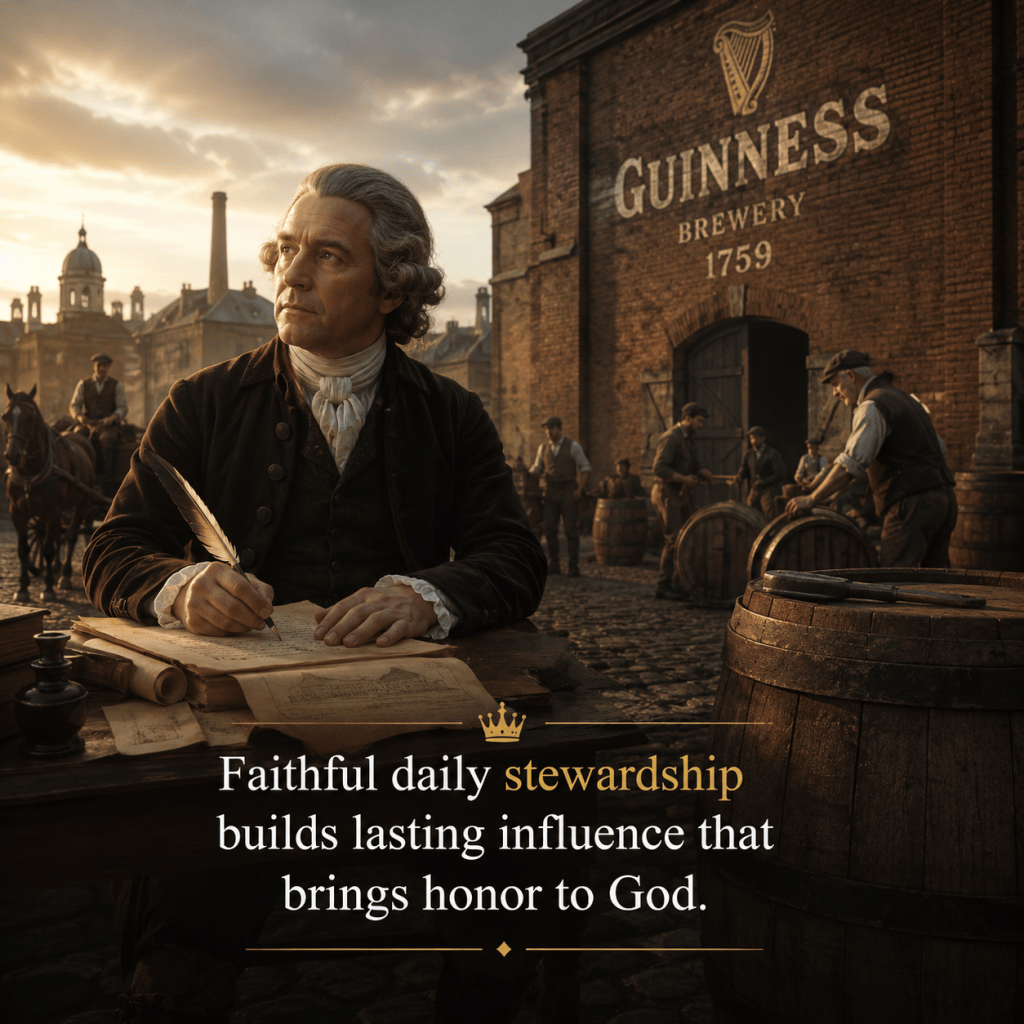
Over time, his small brewery grew into a globally respected brand.
But his true legacy was not just business success—it was faithfulness lived out daily.
Takeaway:
Faithfulness in responsibility—day by day—creates long-term influence that honors God.
🏭 WORKPLACE LESSONS FOR TODAY
Timothy and Arthur Guinness teach us that:
Consistency builds credibility over time
Faithfulness in small tasks prepares for greater roles
Integrity creates lasting trust
Age or position does not define impact—character does
Mentorship and learning accelerate growth
Whether you are an engineer, doctor, teacher, business owner, or government professional—your daily faithfulness matters.
🔥 SPIRITUAL INSIGHT
Faithfulness reflects God’s own nature. He is consistent, dependable, and trustworthy.
Work is not just duty—it is stewardship entrusted by God.
Timothy did not chase recognition—he pursued obedience. Arthur Guinness did not chase success—he practiced responsibility.
The Holy Spirit empowers believers not only with gifts but with endurance.
True success in God’s kingdom is measured by consistency, not speed.
When you remain faithful, God entrusts more in His perfect timing.
🤔 REFLECTION QUESTIONS
1. Am I faithful in my responsibilities even when unnoticed?
2. What fears or limitations are holding me back from growing?
3. How can I develop consistency and integrity in my daily work?
🙏 PRAYER:
Lord, help me to remain faithful in every responsibility You have given me. Teach me patience in growth and strength in daily work. Build my character in truth and humility. Let my work reflect Your glory. In Jesus’ name, Amen.


Leave a comment