“Small things done with great love can change the world more than great things done without love.”
— Mother Teresa
📖 MAIN SCRIPTURE PASSAGE
"Now there was at Joppa a certain disciple named Tabitha, which by interpretation is called Dorcas: this woman was full of good works and almsdeeds which she did.  And it came to pass in those days, that she was sick, and died: whom when they had washed, they laid her in
Acts 9:36–39, KJV
🏢 OPENING WORKPLACE CONNECTION
In many workplaces today, people feel undervalued, especially those whose work seems “ordinary.” Whether designing systems, managing data, stitching garments, or handling administrative tasks, professionals often wonder: Does my work really matter?
Recognition usually goes to visible achievements—promotions, large projects, or leadership roles. But what about quiet service? What about the consistent, behind-the-scenes contributions that uplift others?
Over time, this lack of recognition can lead to discouragement. People may begin to believe that their skills are insignificant unless they lead to status or financial success.
Yet the Bible introduces us to Dorcas—a woman whose practical skills transformed lives. Her story challenges the modern mindset and reminds us that no skill used in love is ever small in God’s eyes.
👨💼 Faithful Hands, Lasting Impact
Dorcas, also called Tabitha, lived in Joppa—a coastal city active in trade and daily commerce. Though not a ruler or public leader, she was deeply influential through her work.
Her skill was simple yet powerful: sewing garments.
But what made her exceptional was not just her ability—it was her heart.
Scripture says she was “full of good works.” The Greek word “plērēs” means completely filled or abundant—showing consistency, not occasional effort.
Her work reflected:
Compassionate service
Generosity toward the needy
Faithfulness in daily tasks
Deep concern for widows and the poor
Dorcas didn’t just sew clothes—she restored dignity. She met real needs using practical skills.
Her life shows that excellence is not only in complex achievements—but in faithful, loving service through everyday abilities.
📜 A Life That Could Not Be Ignored
In Acts 9, Luke narrates a powerful moment in the early church.
Joppa was a busy port city, influenced by trade and diverse cultures. Widows were among the most vulnerable people in society, often lacking financial and social support.
This story comes after Saul’s conversion and before Peter’s interaction with Cornelius, showing how the gospel was expanding and impacting communities deeply.
Dorcas becomes seriously ill and dies—a sudden and devastating loss.
Her body is laid in an upper room. But something unexpected happens—mourning widows gather around Peter when he arrives.
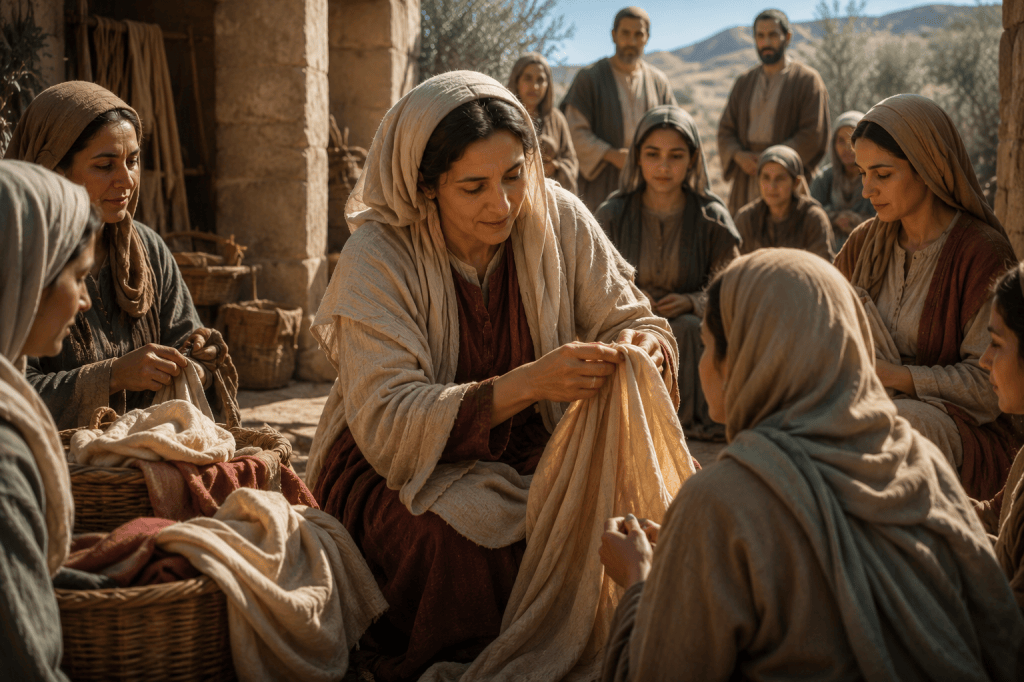
They don’t just cry—they show him garments Dorcas had made.
This detail is deeply emotional.
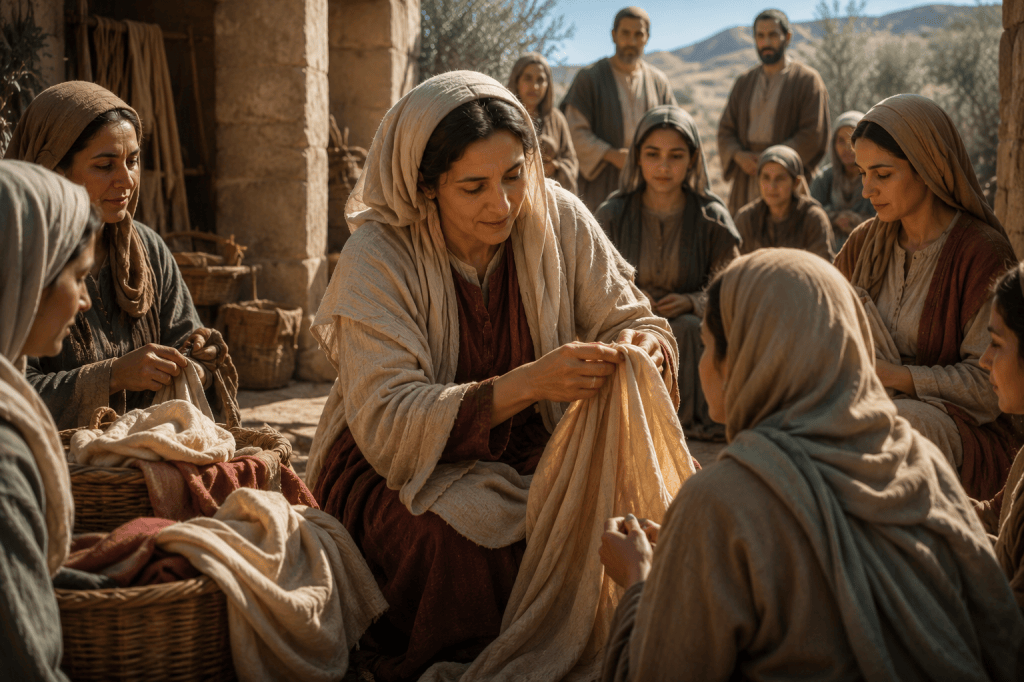
The garments were evidence of her love. Her work had left visible, tangible impact.
The Greek word used for “good works” (“agatha erga”) emphasizes actions that benefit others. Dorcas lived a life of active faith—her deeds reflected Christ’s compassion.
Peter is moved.
He sends everyone out, kneels, and prays. Then he says, “Tabitha, arise.” (Acts 9:40)
She opens her eyes.
This miracle is not just about resurrection—it is about the value God places on a life devoted to service.
Her story reflects Proverbs 31:20—“She stretcheth out her hand to the poor.” It aligns with Jesus’ teaching that serving “the least” is serving Him (Matthew 25:40).
God honors lives poured out in love. He sees what others overlook.
Dorcas’s story reminds us: faith expressed through practical service has eternal significance.
🌍 Hannah More: Using Skills to Uplift Communities (England, 1780s)
In 18th-century England, Hannah More was a writer and educator who lived during a time of social inequality and widespread poverty.
Though she had the opportunity to live comfortably among elites, her Christian conviction led her to use her skills differently.
She began writing simple, affordable educational booklets aimed at poor and working-class families. At that time, many people lacked access to education, literacy, and moral guidance.
Her writings were not academic or complex—just practical, understandable, and deeply rooted in Christian values.
She also started schools for children in poor communities—especially those who had no opportunity for formal learning.
Like Dorcas, Hannah used her practical skills (writing and teaching) to serve others.
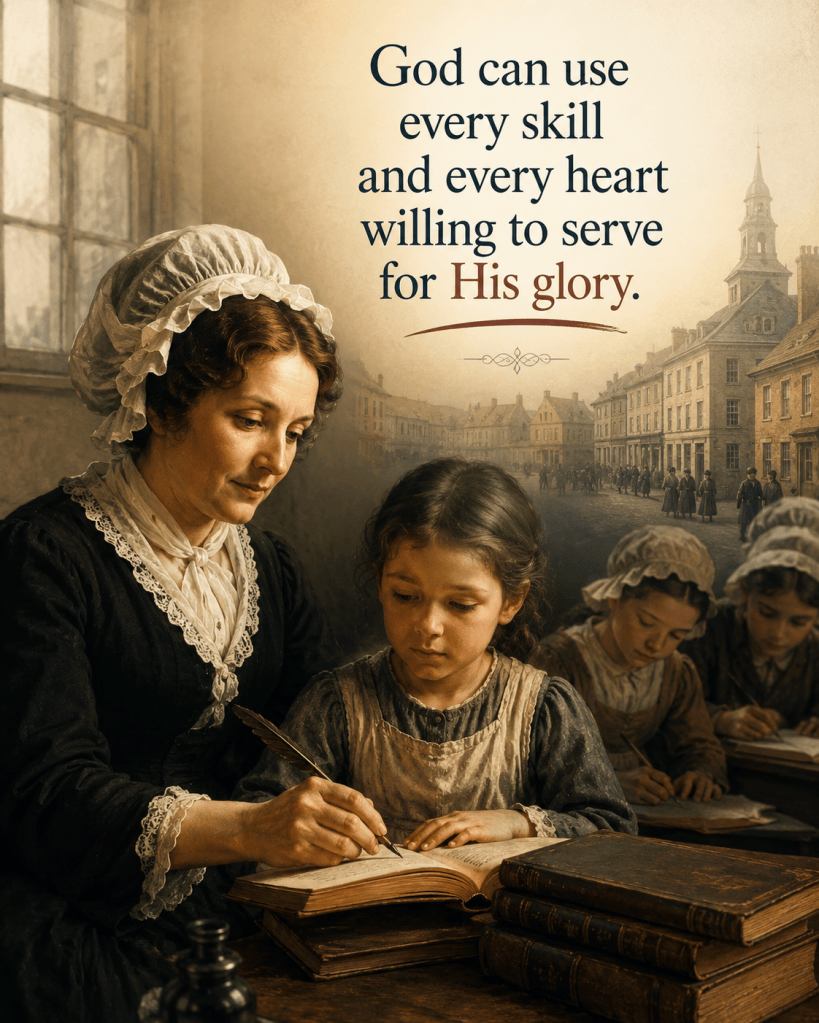
Her work was not glamorous. It required patience, humility, and consistency.
But over time, her efforts transformed entire communities—improving literacy, character, and spiritual awareness.
Takeaway:
Simple skills, when surrendered to God, can impact generations.
🏭 WORKPLACE LESSONS FOR TODAY
Dorcas teaches us that no skill is insignificant when used with purpose and love.
Value your skills: Whether technical or practical, they can serve others
Serve beyond profit: Impact matters more than recognition
Stay consistent: Regular small acts create lasting change
Use compassion in work: Every profession serves people
Excellence in basics matters: Faithfulness in small tasks builds trust
In any field—engineering, healthcare, education, or business—your daily work can uplift lives when done with care and intention.
🔥 SPIRITUAL INSIGHT
Work becomes powerful when it reflects Christ’s heart. Dorcas did not preach sermons—but her life was a living testimony.
Skill is not just ability—it is stewardship.
God does not measure importance the way the world does. He sees faithfulness, love, and intention.
The Holy Spirit empowers even ordinary work to produce extraordinary impact when it is surrendered to Him.
Your work can become worship when it flows from love, humility, and obedience to God.
🤔 REFLECTION QUESTIONS
1. Am I using my skills to serve others or only for personal gain?
2. How can I bring compassion into my daily work routine?
3. What small act of service can I consistently offer this week?
🙏 PRAYER
Lord, help me to use my skills with love and purpose. Teach me to serve faithfully even in small tasks. Fill my work with compassion and excellence. Let my hands reflect Your heart. In Jesus’ name, Amen.


Leave a comment