
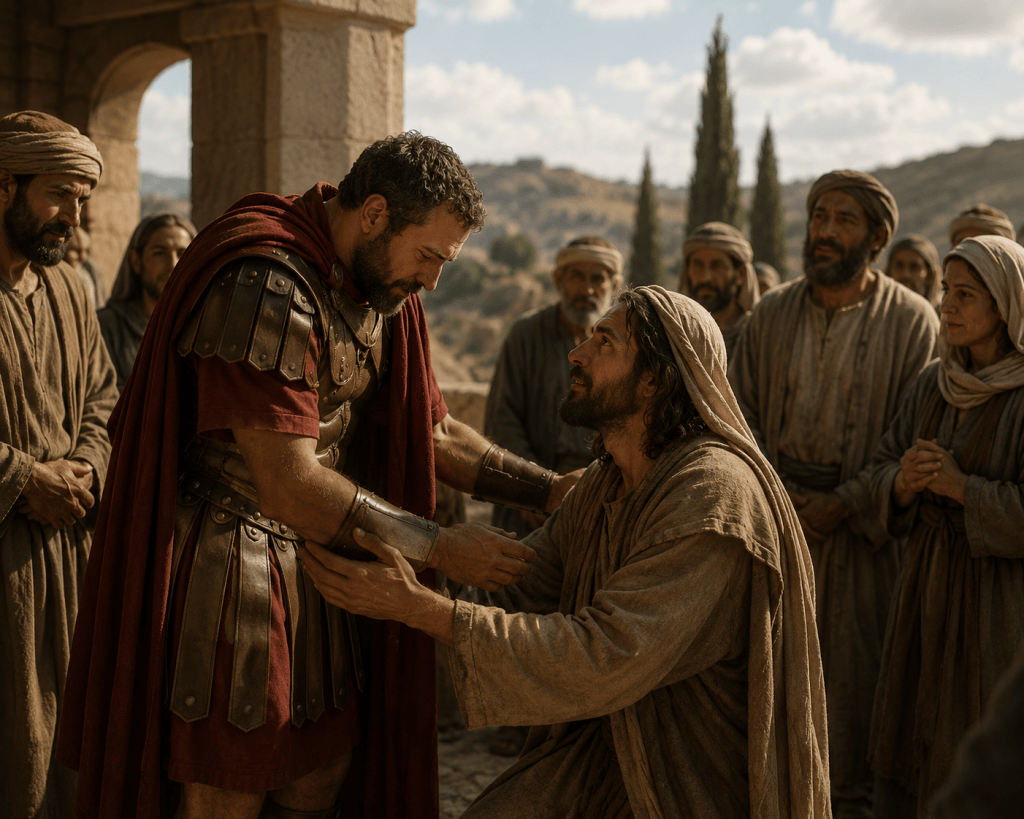
“God has a larger purpose for your leadership than your success—He desires your surrender.”
— John Piper
📖 Main Scripture Passage
"There was a certain man in Caesarea called Cornelius, a centurion of the band called the Italian band,
A devout man, and one that feared God with all his house, which gave much alms to the people, and prayed to God alway." (Acts 10:1–2, KJV)
🏢 Opening Workplace Connection
Leadership in today’s workplace often comes with invisible pressure. Whether managing a team, leading projects, or handling technical responsibilities, professionals are constantly balancing authority with expectations. Deadlines demand results. Teams depend on decisions. Stakeholders look for confidence.
In this environment, humility can feel like a weakness. Many leaders fear that being too compassionate may reduce authority or affect performance. So leadership becomes task-driven rather than people-centered.
But over time, this creates a disconnect. Teams may obey—but not trust. Work gets done—but relationships weaken. Influence becomes positional, not relational.
Deep down, many professionals sense that leadership should carry more meaning. It should inspire, uplift, and reflect deeper values. The Bible introduces Cornelius—a man who held authority, yet led with humility, compassion, and reverence for God.
👨💼 A Leader Respected by All
Cornelius was a Roman centurion—a mid-level officer commanding roughly 100 soldiers. In the disciplined and hierarchical Roman military system, centurions were known for their leadership, strategy, and strict accountability.
Yet Cornelius stood apart.
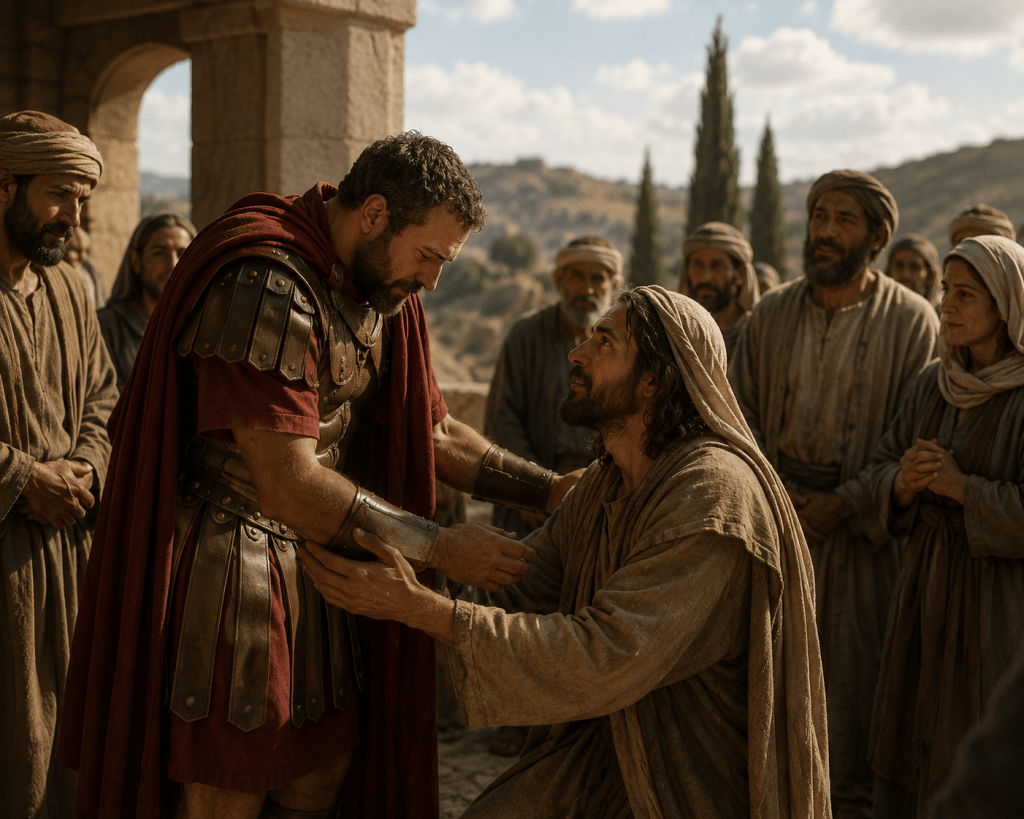
He is described as “devout” and “one that feared God.” The Greek word “phoboumenos ton Theon” implies deep reverence, not fear of punishment but respect for God’s authority. This is significant because Cornelius was a Gentile living in a pagan Roman environment.
Professionally, Cornelius demonstrated:
Military leadership excellence
Responsibility in authority
Generosity toward people
Influence over his household
Consistency in prayer and devotion
He not only managed soldiers—he led people with integrity. His life proves that humility does not weaken leadership—it strengthens influence and earns lasting respect.
📜 God Honors a Humble Leader
The story of Cornelius unfolds in Acts 10, a pivotal chapter in the expansion of the early Church.
Cornelius lived in Caesarea, a key Roman administrative capital in Judea. At this time, Jews and Gentiles lived with deep cultural divisions. Jews avoided Gentiles due to ceremonial and religious purity laws.
Before Acts 10, the gospel had mainly reached Jewish communities. This chapter marks a turning point—God extending salvation officially to Gentiles.
One afternoon, during the ninth hour (3 PM)—a traditional Jewish prayer time—Cornelius receives a vision. An angel calls him by name and says:
“Thy prayers and thine alms are come up for a memorial before God.” (Acts 10:4)
The Greek word “mnēmosynon” (memorial) suggests something remembered and honored before God—like a spiritual offering. Cornelius’s life was seen, valued, and acknowledged by God.
He is instructed to send for Peter.
Meanwhile, Peter receives his own vision—challenging Jewish boundaries. God declares, “What God hath cleansed, that call not thou common.” (Acts 10:15)
This prepares Peter to enter Cornelius’s home—something culturally unthinkable.
When Peter arrives, Cornelius does something remarkable—he falls at Peter’s feet in humility (Acts 10:25). A Roman officer lowering himself before a Jewish preacher reveals his heart posture.
He gathers his family and friends and says:
“Now therefore are we all here present before God, to hear all things that are commanded thee of God.” (Acts 10:33)
Cornelius uses his influence not for control, but to create an environment where others encounter God.
As Peter begins to preach, he declares:
“God is no respecter of persons.” (Acts 10:34)
This statement breaks societal barriers. Then the Holy Spirit falls upon all who are listening—even Gentiles.
This fulfills God’s promise in Genesis 12:3—that all nations would be blessed through His plan. It also aligns with Jesus’s command in Acts 1:8 to reach all people.
God responds not just to position—but to humility, sincerity, and faith. Cornelius’s leadership became a gateway for divine impact.
🌍 Ole Kirk Christiansen: Building with Faith and Humility (Denmark, 1930s)
In 1930s Denmark, during the economic hardship of the Great Depression, a carpenter named Ole Kirk Christiansen faced devastating professional losses. His business, focused on building homes and furniture, began collapsing as customers could no longer afford his services.
Then disaster struck—his workshop burned down, destroying tools, materials, and years of effort.
Many would have chosen shortcuts to recover—cheap products, compromised standards, or abandoning their craft entirely. But Christiansen was a man of deep Christian conviction.
He believed his work was ultimately accountable to God.
Instead of lowering his standards, he made a defining decision: “Only the best is good enough.”
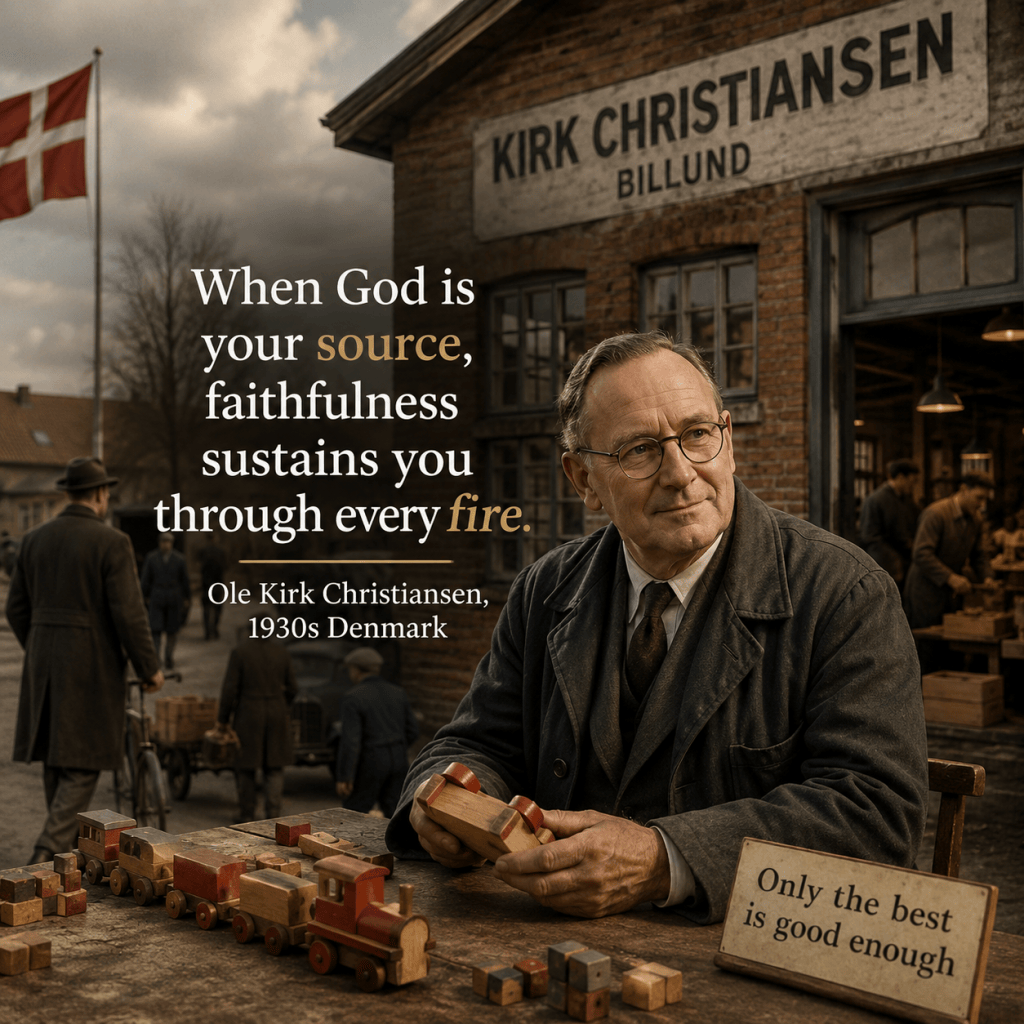
Even when financially strained, he refused to produce inferior quality products. He shifted to crafting wooden toys—simple, durable, and carefully designed. His leadership was quiet yet influential, guiding a small team through discouragement with integrity and perseverance.
When another fire destroyed his factory years later, he did not lose hope. Instead, he rebuilt again—stronger and wiser.
His humility shaped his leadership:
He valued people over profit
He maintained excellence under pressure
He trusted God through uncertainty
He led by example, not authority alone
This small workshop later became the foundation of what we now know as LEGO—one of the most respected brands globally.
Christiansen’s story mirrors Cornelius’s heart: leadership shaped by humility, sustained by faith, and expressed through consistent excellence.
Takeaway:
True leadership is not defined by titles or success—but by character, endurance, and faith in difficult seasons.
🏭 Workplace Lessons for Today
Cornelius and Christiansen teach us that leadership is more than authority—it is influence rooted in character.
Lead with humility: Authority earns respect, but humility earns trust
Maintain excellence under pressure: Hard seasons reveal true standards
Care for people: Teams respond to leaders who value them
Stay spiritually grounded: Prayer strengthens decision-making
Be consistent: Faithfulness over time builds credibility
Whether in engineering, healthcare, education, business, or public service, your leadership becomes meaningful when it combines competence with compassion.
🔥 Spiritual Insight
Work is not separate from faith—it is an expression of it. Cornelius did not separate military leadership from spiritual devotion. Christiansen did not separate craftsmanship from calling.
God honors those who see their work as worship.
Excellence is stewardship. Leadership is responsibility. Influence is a platform for God’s purpose.
True success is not measured by position—but by faithfulness. When humility shapes authority, God entrusts greater impact.
Your daily work, decisions, and interactions are part of a bigger calling—to reflect Christ in every sphere of life.
🤔 Reflection Questions
1. Am I leading with authority alone, or with humility and compassion?
2. How can I maintain excellence even when facing pressure or setbacks?
3. In what ways can my workplace influence draw others closer to God?
🙏 Prayer
Lord, help me lead with humility and strength. Teach me to honor You through my work, decisions, and relationships. Give me wisdom, integrity, and perseverance. Let my leadership reflect Your heart and bring glory to Your name. Amen.


Leave a comment