
“Great things are not done by impulse, but by a series of small things brought together.”
— Vincent Van Gogh
📖 Main Scripture Passage
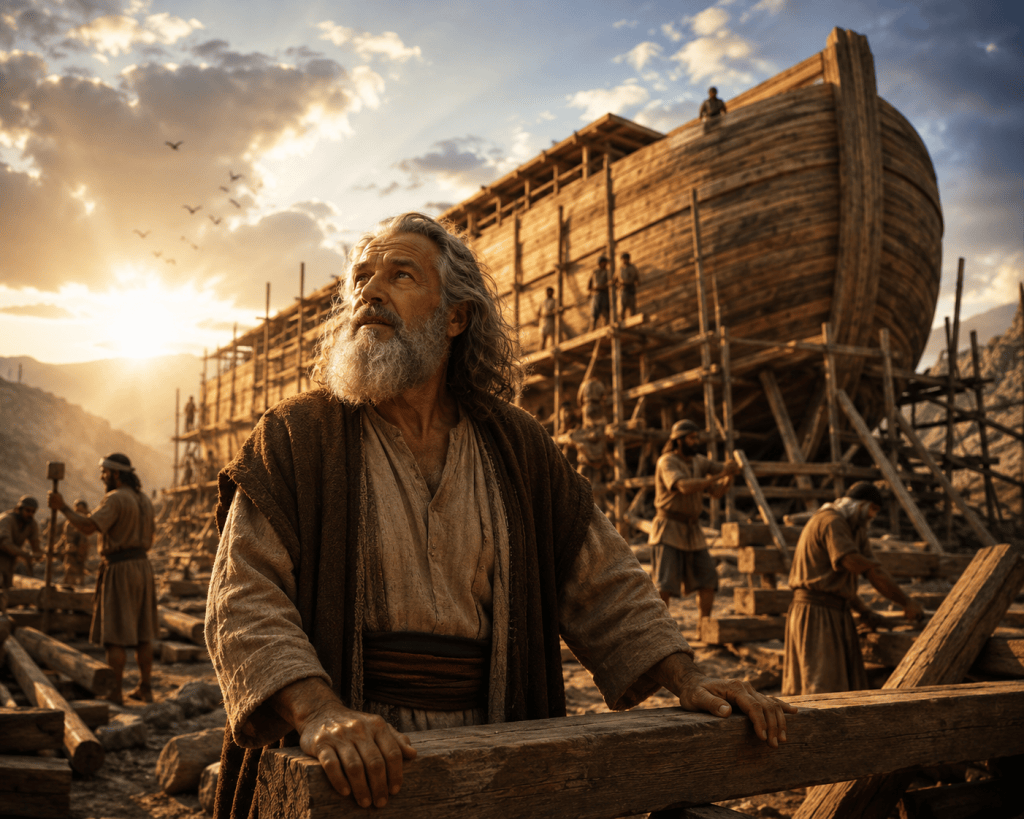
“Thus did Noah; according to all that God commanded him, so did he.”
Genesis 6:22 (KJV)
Noah’s obedience was not momentary enthusiasm but long-term faithfulness. He completed a massive assignment through perseverance, trust, and careful obedience to God’s direction.
🏢 Faithfulness When Progress Feels Slow
Many professionals spend years working on projects that feel invisible. Engineers labor over infrastructure before the public ever sees results. Healthcare workers serve tirelessly through exhausting shifts with little recognition. Teachers invest in students whose growth takes years to appear. Business owners build slowly through setbacks and uncertainty. Ministry workers sow seeds without immediate visible fruit.
Long-term work often tests the soul more than short-term pressure.
The hardest part is not usually starting a project — it is remaining faithful when progress feels slow, repetitive, and unnoticed. Delays, criticism, financial limitations, leadership pressure, and emotional fatigue can slowly weaken motivation. Some workers quietly wonder whether their efforts truly matter.
In such moments, Noah’s story becomes deeply relevant. His life reminds us that God values steady obedience even when results are delayed for years. Faithfulness in hidden seasons matters greatly in the kingdom of God.
👨💼 Noah: A Builder Who Trusted God’s Direction
Noah stands in Scripture not merely as a survivor of the flood but as a faithful worker who obeyed God over many years. Genesis describes him as “a just man and perfect in his generations,” meaning he lived with integrity in a corrupt society.
Professionally, Noah demonstrated extraordinary perseverance and construction leadership. God entrusted him with an unprecedented engineering assignment: building an ark large enough to preserve life through divine judgment. The task required planning, physical labor, resource management, patience, and unwavering trust.
The Hebrew word often associated with Noah’s obedience carries the idea of walking consistently with God. Noah did not obey partially or emotionally; he obeyed carefully and continually.
His excellence included:
• Long-term perseverance
• Technical obedience
• Attention to divine instructions
• Leadership under ridicule
• Discipline during uncertainty
• Faithfulness without immediate reward
Noah’s generation likely mocked the project. Rain on such a catastrophic scale had never been experienced before. Yet Noah continued building because he trusted the word of God more than public opinion.
His life reveals an important truth for modern professionals: obedience often requires consistency long before visible success appears.
📜 Building the Ark in an Unbelieving World
Genesis 6 unfolds during one of the darkest moral periods in early human history. Humanity had become deeply violent and corrupt. Scripture says that “every imagination of the thoughts of his heart was only evil continually.” Society had normalized wickedness, selfishness, and rebellion against God.
Yet in the middle of widespread corruption, Noah found grace in the eyes of the Lord.
Historically, the ancient world depended heavily upon agriculture, craftsmanship, and family labor systems. Large-scale construction required enormous endurance and coordination. Noah’s assignment was not a symbolic religious exercise; it was a real engineering project involving measurements, materials, structural planning, and long-term labor.
God instructed Noah to build the ark from gopher wood and provided exact dimensions. The literary structure of Genesis emphasizes Noah’s precise obedience repeatedly. The phrase “according to all that God commanded him” appears multiple times, highlighting that Noah’s success was rooted not in creativity alone but in faithful adherence to God’s direction.
Imagine the emotional burden Noah carried.
Year after year, the ark stood as a visible testimony against a rebellious culture. People likely mocked him, questioned his sanity, and rejected his warnings. Building such a structure required immense perseverance before any evidence of coming judgment appeared.
The New Testament deepens this picture. Hebrews 11 describes Noah as a man who was “warned of God of things not seen as yet.” Faith enabled him to act before visible proof existed. His obedience flowed from reverence toward God rather than human approval.
Theologically, Noah’s story reveals both judgment and salvation. The ark becomes a powerful biblical picture of refuge and deliverance. Just as Noah entered the ark and was saved through judgment waters, believers find salvation through Christ. The apostle Peter later connects the flood narrative to themes of redemption and new creation.
The ark also demonstrates that God values skilled labor used for righteous purposes. Noah’s craftsmanship became part of God’s redemptive plan for humanity. Work itself became an instrument through which life was preserved.
Canonically, Noah’s obedience points forward to Christ, who perfectly obeyed the Father even through suffering and rejection. Noah preserved temporary human life; Christ provides eternal salvation.
After the flood, Noah stepped into a cleansed world under God’s covenant promise. His long years of hidden obedience ultimately protected future generations.
Many modern professionals experience similar seasons. Some projects take years before their value becomes visible. Infrastructure engineers, researchers, educators, healthcare workers, civil servants, ministry leaders, and skilled craftsmen often labor quietly without immediate recognition.
Noah’s story reminds us that delayed visible results do not mean wasted obedience.
🌍 James Cash Penney: Faithfulness Through Long-Term Integrity
In 1902, James Cash Penney opened a small retail store in Kemmerer, Wyoming, USA. Unlike many business owners focused only on profit, Penney believed that business should operate according to Christian principles of honesty, service, and stewardship.
His early years were extremely difficult. Financial uncertainty, market competition, and economic downturns repeatedly threatened the company’s survival. During the Great Depression, Penney suffered severe emotional stress and financial pressure. At one point, the burden became so overwhelming that his health collapsed, and he was hospitalized.
While recovering, Penney heard believers singing the hymn “God Will Take Care of You” during a chapel service. That moment deeply renewed his trust in God’s faithfulness.
Rather than abandoning his convictions, Penney continued leading with integrity, fairness toward employees, and commitment to customer trust. He believed lasting success required patience, disciplined work, and moral responsibility.
Over time, the company grew into one of America’s largest retail businesses: J.C. Penney.
Like Noah, James Cash Penney learned that faithful long-term work often requires perseverance through seasons of uncertainty. His testimony reminds modern professionals that integrity and steady obedience matter even when progress feels slow or difficult.
His life also demonstrates that leadership rooted in faith can influence workplaces, employees, and communities for generations.
🏭 Workplace Lessons for Today
Noah’s story teaches that faithfulness matters especially during long and demanding assignments. Many professionals desire quick results, but meaningful work often develops slowly over time.
Engineers may spend years completing infrastructure projects. Healthcare workers serve through exhausting routines. Teachers shape lives gradually. Business owners build stability patiently. Government leaders manage responsibilities whose results may not appear immediately.
Long-term excellence requires:
• Perseverance during slow progress
• Integrity without recognition
• Consistency under pressure
• Careful attention to details
• Trust in God during uncertainty
• Commitment to responsibilities over emotions
Noah demonstrates that obedience is not merely starting well but continuing faithfully. God often works through people who quietly remain steady in their calling over many years.
🔥 Spiritual Insight
Noah’s ark reminds believers that faithful work can become an act of worship. God values perseverance even when others fail to understand our obedience.
Modern culture often celebrates speed, visibility, and immediate success. Yet Scripture repeatedly honors endurance, patience, and steadfast faith. Noah worked for years before seeing fulfillment of God’s promise.
Spiritually, the ark points toward Christ as humanity’s true refuge from judgment and sin. Salvation itself is rooted not in human effort but in God’s gracious provision.
For believers today, work becomes spiritually meaningful when it is surrendered to God. Skill is stewardship. Perseverance reflects faith. Integrity honors Christ.
The Holy Spirit empowers believers not only for church ministry but also for daily responsibilities, difficult projects, ethical leadership, and quiet faithfulness.
Success without character fades quickly. But faithful obedience leaves lasting impact for generations.
🤔 Reflection Questions
1. Where is God calling me to remain faithful despite slow progress?
2. Do I value steady obedience more than visible recognition?
3. How can my long-term work become an act of worship to God?
🙏 Prayer
Lord, give me perseverance like Noah to remain faithful in long seasons of work. Strengthen me when progress feels slow and unseen. Help me obey You with integrity, patience, and excellence. Use my daily labor to honor Christ and bless others faithfully. In Jesus’ name, Amen.


Leave a comment