
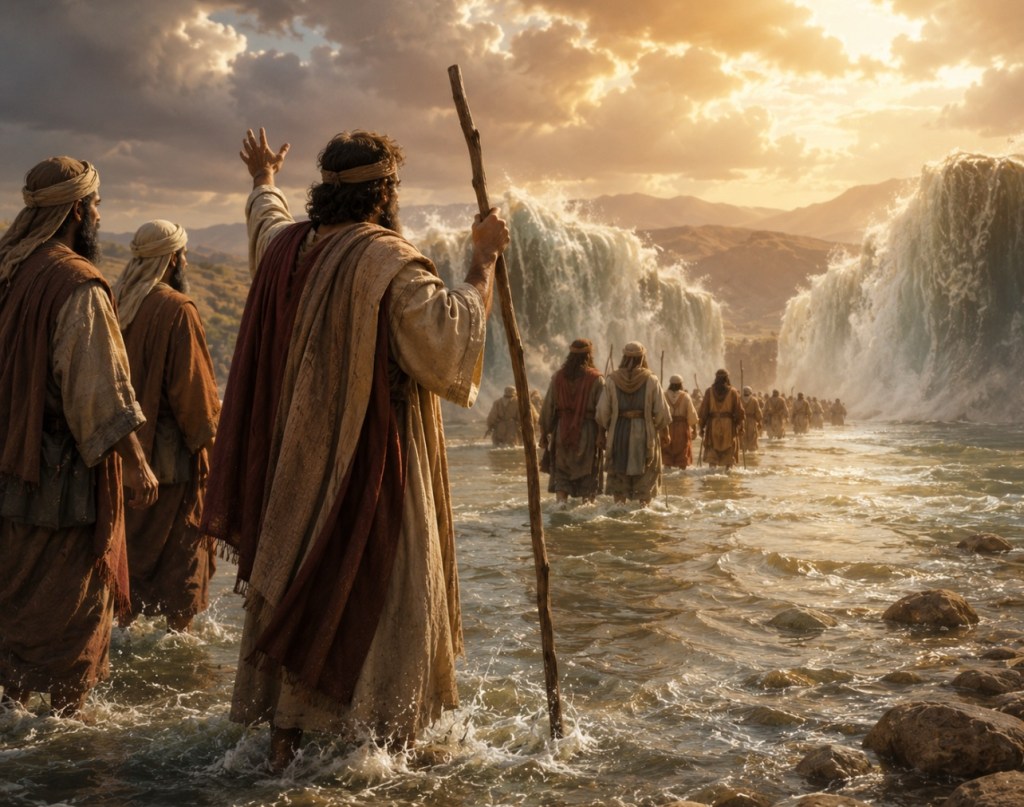
“Courage is fear that has said its prayers.”
— Dorothy Bernard
📖 Main Scripture Passage
“Only be thou strong and very courageous, that thou mayest observe to do according to all the law… Have not I commanded thee? Be strong and of a good courage; be not afraid, neither be thou dismayed: for the LORD thy God is with thee whithersoever thou goest.”
Joshua 1:7–9 (KJV)
🏢 Leading When the Future Feels Uncertain
Many professionals today lead under uncertainty. A manager must guide a struggling team through organizational change. An engineer carries responsibility for critical infrastructure decisions without knowing every future risk. A doctor faces life-and-death pressure during exhausting shifts. Business owners make strategic decisions amid financial instability. Government officers and ministry leaders often carry the emotional weight of public expectations while navigating limited resources.
Leadership frequently demands movement before complete clarity.
Most people assume courageous leaders feel no fear. But in reality, leadership often feels lonely, overwhelming, and uncertain. Deadlines continue. Expectations increase. Teams look for confidence even when leaders themselves wrestle internally with doubt.
The workplace rewards visible strength, but Scripture reveals a deeper truth: true courage is not self-confidence. It is obedience rooted in confidence in God.
This is why the story of Joshua remains profoundly relevant for modern professionals and leaders today.
👨💼 From Assistant to National Leader
Joshua first appears in Scripture not as a famous leader, but as Moses’ servant and military commander during Israel’s wilderness journey. Long before he led nations, he learned faithfulness in hidden responsibility.
Professionally, Joshua demonstrated remarkable leadership capability. He coordinated military strategy against Amalek in Exodus 17, served faithfully within Moses’ leadership structure, and developed endurance through decades of wilderness challenges. He was disciplined, observant, teachable, and spiritually grounded.
Yet Joshua was also deeply human.
After Moses’ death, Joshua inherited enormous responsibility. He would lead millions of Israelites into Canaan against fortified cities, trained armies, and intimidating political powers. The leadership transition itself carried emotional pressure. Moses was Israel’s greatest prophet and national leader. Joshua would constantly face comparison.
What made Joshua exceptional was not natural fearlessness, but obedient dependence on God.
The Hebrew word repeatedly used in Joshua 1 for “courage” is chazaq, meaning “to strengthen, harden, or become firm.” Biblical courage is not emotional excitement; it is steadfast strength rooted in God’s presence.
Joshua teaches modern professionals that leadership excellence grows where spiritual faithfulness and disciplined preparation meet together.
📜 Crossing the Jordan into the Unknown
The book of Joshua opens during one of Israel’s most emotionally fragile moments. Moses is dead. Forty years of wilderness wandering have ended. Ahead lies the Jordan River and the heavily fortified land of Canaan.
Historically, this period likely occurred during the Late Bronze Age when Canaan consisted of independent city-states protected by military alliances and defensive walls. Israel itself possessed no established monarchy, centralized military infrastructure, or permanent homeland. Humanly speaking, they appeared unprepared.
Literarily, Joshua continues directly from Deuteronomy. Moses had prepared the people covenantally, but Joshua would lead them practically into inheritance. The biblical narrative shifts from wilderness survival to covenant fulfillment.
The atmosphere was filled with tension.
The previous generation had died in the wilderness because of unbelief after the spies’ report in Numbers 13–14. Only Joshua and Caleb remained as living witnesses of courageous faith. Now Joshua faced the pressure of leading a fearful people into territory their fathers had refused to enter.
Again and again, God tells Joshua:
“Be strong and of a good courage.”
This repetition reveals something important theologically: God’s commands often address the very fears leaders secretly carry.
The Hebrew phrase “be not dismayed” comes from chathath, meaning shattered, terrified, or broken in spirit. God was not merely commanding outward bravery; He was strengthening Joshua internally against discouragement.
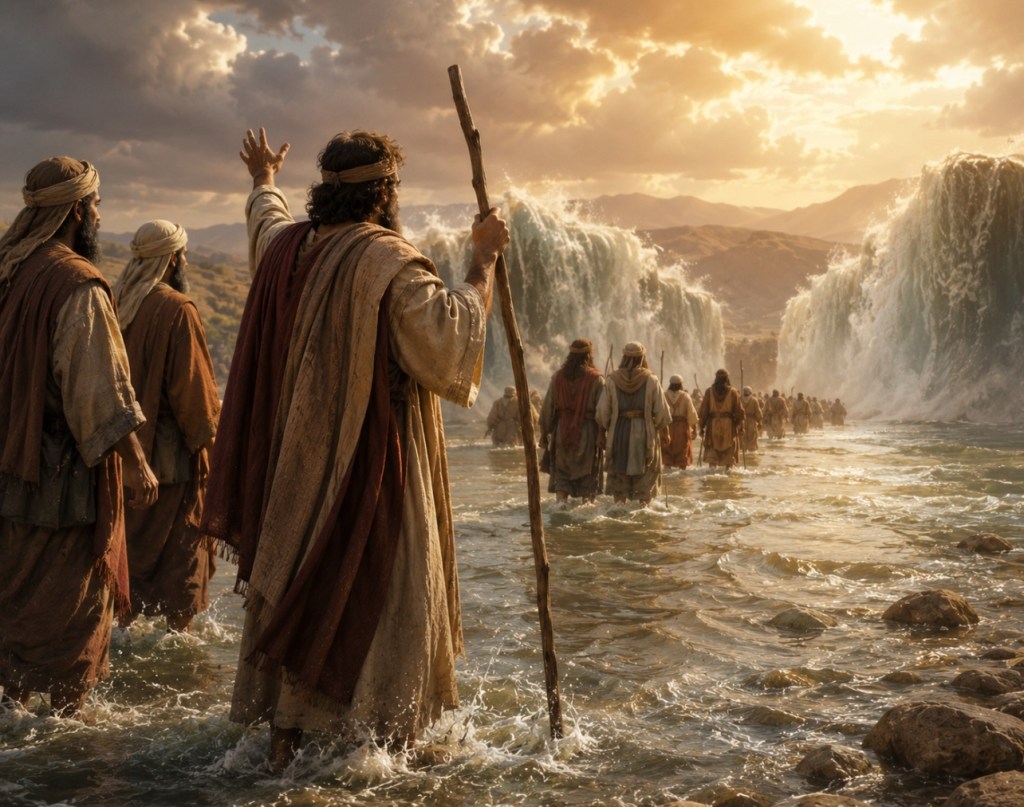
Then came the impossible obstacle: the Jordan River at flood stage.
Priests carrying the Ark of the Covenant stepped into dangerous waters before the river opened. Faith moved before visible certainty.
This principle echoes throughout Scripture. Abraham left home before seeing the promise fulfilled. David faced Goliath before victory appeared possible. Peter stepped onto water before understanding how Christ would sustain him.
Joshua’s leadership required strategic execution, but strategy alone was insufficient. Military skill had to remain submitted to divine instruction.
At Jericho, God commanded an unconventional strategy: marching silently around the city. From a human military perspective, the plan seemed irrational. Yet Joshua obeyed precisely.
The narrative emphasizes that victory belonged ultimately to God.
Canonically, Joshua also foreshadows Christ. The Hebrew name “Joshua” (Yehoshua) shares its root with the name Jesus — “The LORD saves.” Joshua led Israel into earthly inheritance; Jesus leads believers into eternal inheritance through salvation and the Kingdom of God.
Theologically, Joshua reveals a God who calls imperfect people into overwhelming assignments while promising His presence. Leadership in Scripture is never merely about talent. It is about faithful obedience under God’s authority.
Joshua’s courage did not eliminate uncertainty. It enabled obedience despite uncertainty.
That truth speaks powerfully into modern workplaces today.
🌍 The Missionary Pilot Who Flew Through Impossible Mountains
Nate Saint’s Courageous Leadership — Ecuador, 1950s
In the 1950s, deep within the dangerous jungles and mountains of Ecuador, many isolated tribal communities remained completely unreachable by ordinary transportation. Dense forests, violent weather, steep valleys, and lack of roads made travel extremely risky. Missionaries attempting to reach these regions often faced disease, accidents, and deadly opposition.
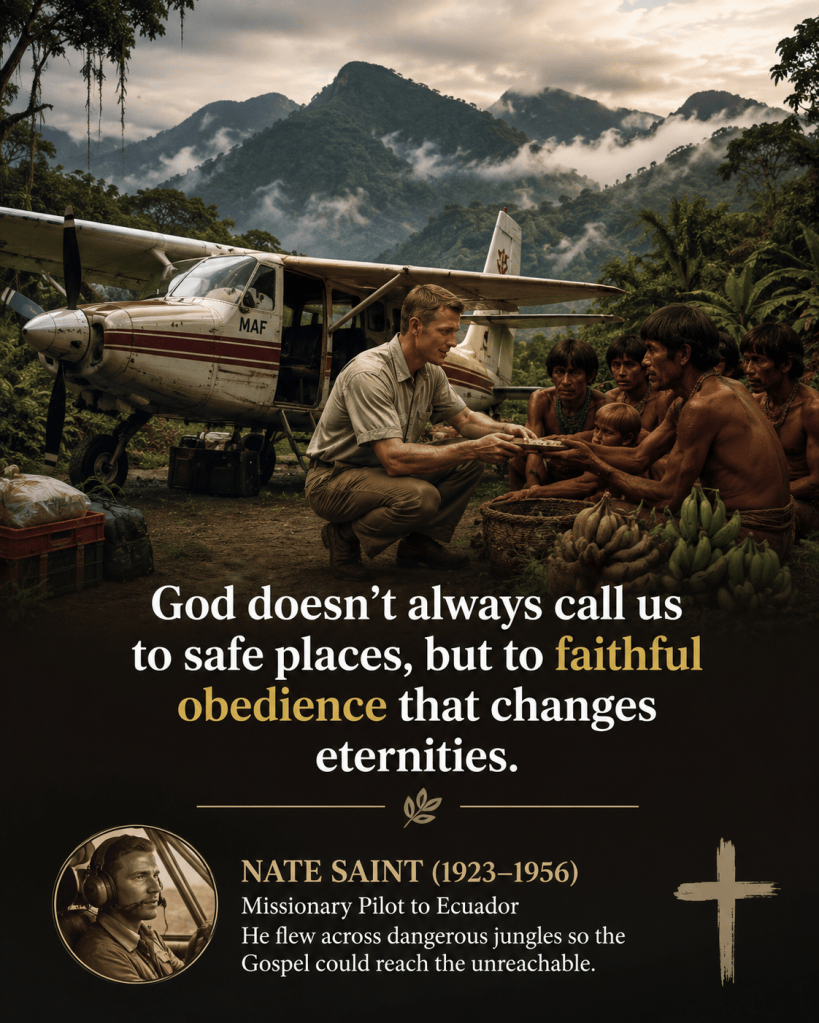
Among those serving there was a young Christian missionary pilot named Nate Saint.
Before entering missionary work, Nate had developed exceptional aviation skills through military and technical training. He understood aircraft mechanics, navigation, and jungle aviation better than many pilots of his time. Yet he believed his professional abilities were not merely for career success — they were gifts to serve God’s Kingdom.
At that time, the Huaorani tribe in Ecuador was known outside the jungle for violence and hostility toward outsiders. Many feared contact with them. Several attempts to approach the tribe had failed because of danger and mistrust.
Still, Nate Saint believed the Gospel should reach even the most isolated people.
The challenge required enormous courage. Jungle flying was unpredictable. Aircraft frequently faced sudden storms, mountain winds, and emergency landings. Every mission flight carried real risk. Yet Nate continued serving faithfully, often flying medical supplies, missionaries, and practical aid into remote areas.
Then came the defining moment.
In 1956, Nate Saint and four other missionaries decided to make peaceful contact with the Huaorani people. Instead of approaching with weapons or force, they approached with prayer, patience, gifts, and humility. Their desire was not conquest but Christlike love.
Many people warned them not to go.
Humanly speaking, the mission seemed reckless and uncertain.
Yet Nate believed obedience to God mattered more than personal safety. Like Joshua stepping toward the Jordan River before seeing the waters divide, Nate moved forward despite uncertainty.
During the mission attempt, all five missionaries were killed by tribal warriors.
At first, the tragedy shocked the Christian world. Many questioned why God would allow such sacrifice.
But the story did not end there.
Over time, the courageous witness of these missionaries deeply impacted the Huaorani tribe. Years later, some tribe members came to faith in Jesus Christ through continued ministry by surviving family members, including Rachel Saint and Elisabeth Elliot.
The very people once known for violence experienced transformation through the Gospel.
Nate Saint’s story demonstrates that courageous leadership is not measured merely by visible success or immediate results. Sometimes courage means faithful obedience even when outcomes remain uncertain.
His life reflected a deeply biblical truth: God often uses ordinary professional skills — engineering, aviation, medicine, teaching, administration, or leadership — for extraordinary Kingdom purposes.
Like Joshua, Nate Saint moved forward trusting God’s presence more than human certainty.
🏭 Workplace Lessons for Today
Joshua teaches modern professionals that leadership often requires movement before complete certainty arrives. Many workplace decisions must be made without possessing every answer.
Engineers must take responsibility during technical uncertainty. Healthcare professionals make urgent decisions under emotional pressure. Entrepreneurs launch initiatives before guarantees exist. Teachers invest in students without immediate results. Ministry leaders continue serving even during discouragement.
Courage does not mean ignoring fear; it means refusing to let fear control obedience.
Joshua also demonstrates the importance of preparation. Before leading publicly, he served faithfully privately. Great leadership is often formed through years of unnoticed discipline, learning, and consistency.
Professionals must balance strategic excellence with spiritual dependence. Skill matters. Planning matters. But lasting influence flows from integrity, humility, and faithfulness under pressure.
🔥 Spiritual Insight
Joshua’s story ultimately points believers toward Jesus Christ, the greater Joshua who leads His people into God’s eternal promises.
Human leadership will always encounter limitations, uncertainty, and fear. But Christ remains faithful in every season of responsibility.
Work itself becomes holy stewardship when submitted to God’s purposes. The Holy Spirit empowers believers not only in worship gatherings but also in boardrooms, laboratories, classrooms, factories, engineering sites, and government offices.
God often calls people into assignments larger than their natural confidence so they learn dependence upon Him.
Success without obedience becomes dangerous. But courage rooted in God’s presence produces lasting spiritual influence.
Joshua reminds believers that God does not promise easy leadership. He promises His presence within it.
🤔 Reflection Questions
1. What leadership responsibility currently requires courage from me before certainty?
2. Am I relying more on personal confidence or God’s presence?
3. How can I develop faithfulness privately before seeking greater influence publicly?
🙏 Prayer
Lord, strengthen my heart to lead faithfully even during uncertainty. Give me wisdom, courage, humility, and integrity in every responsibility You entrust to me. Help me trust Your presence more than my fears, and let my work reflect excellence that honors Christ. Amen.


Leave a comment