
📖 Scripture Anchor
“And whatsoever ye do, do it heartily, as to the Lord, and not unto men; Knowing that of the Lord ye shall receive the reward of the inheritance: for ye serve the Lord Christ.”
Colossians 3:23–24 KJV
✨ Short Introduction
Many workplaces are built on pressure, profit, and performance. But history also remembers leaders who treated people with dignity and compassion because of their faith in Christ.
The story of George Cadbury reminds believers that business can become a place of kindness, justice, and godly influence. His life shows that Christian leadership is not weakness — it is strength guided by the character of Christ.
⏳ Factories Filled with Exhaustion
In late nineteenth-century England, the Industrial Revolution had transformed cities into centers of manufacturing and trade. Large factories produced wealth for business owners, but many workers lived under extremely difficult conditions.
Factory employees often worked 12 to 16 hours daily in unhealthy environments filled with smoke, dangerous machinery, poor ventilation, and overcrowding. Child labor was common. Many workers lived in dirty neighborhoods without sanitation, clean water, or medical care. Poverty, sickness, and exhaustion shaped daily life for countless families.
During this period, chocolate manufacturing was becoming a growing industry in Britain. The Cadbury business, founded by a Quaker Christian family, expanded rapidly. Yet as the company grew, George Cadbury faced a deeper question beyond profit:
What should a Christian businessman do with influence and wealth?
George Cadbury had personally witnessed the suffering of workers in industrial cities. He believed that employees were not merely tools for production, but human beings created in the image of God.
This conviction separated him from many industrial leaders of his generation.
Still, compassion in business was often criticized. Investors usually expected factory owners to reduce costs and maximize profits. Providing better living conditions for workers was viewed as financially impractical. Many believed kindness would weaken business efficiency.
George Cadbury lived in the tension between economic pressure and Christian conviction.
Would he follow the patterns of industrial culture, or would he allow biblical faith to shape business leadership?
🔥 Building Bournville for Human Dignity
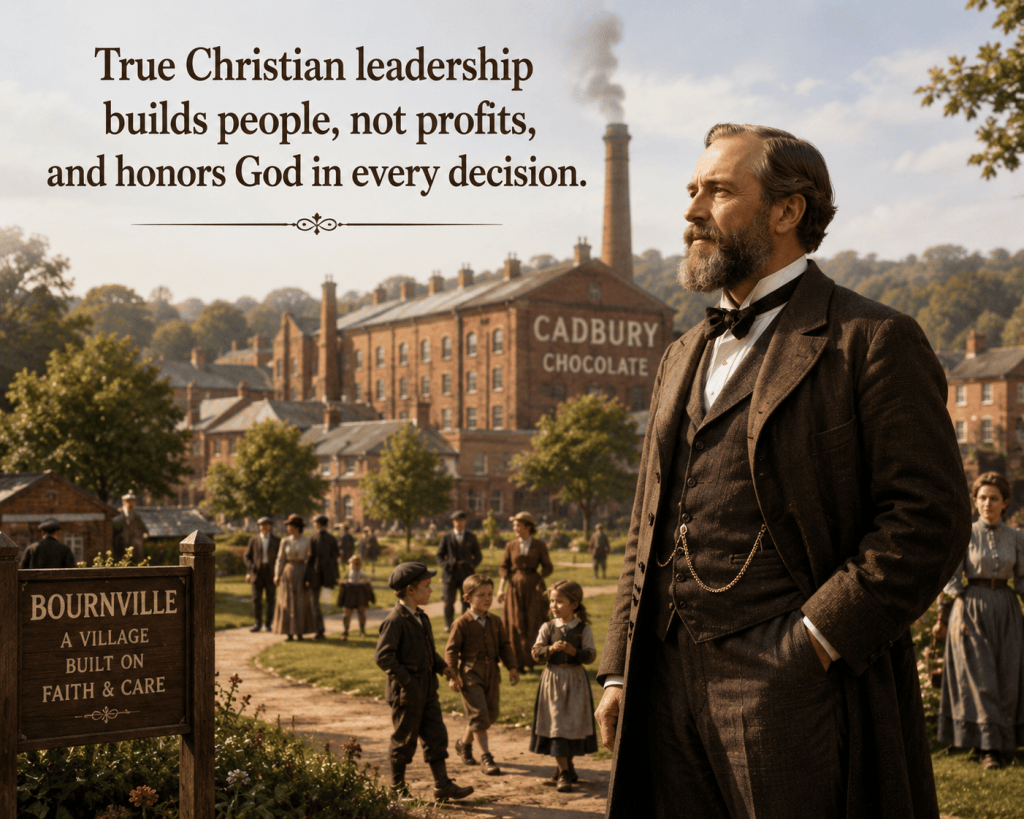
George Cadbury’s Christian faith deeply influenced his decisions. As a Quaker believer, he valued simplicity, honesty, justice, and human dignity. Rather than separating faith from business, he believed Christ should shape every part of leadership.
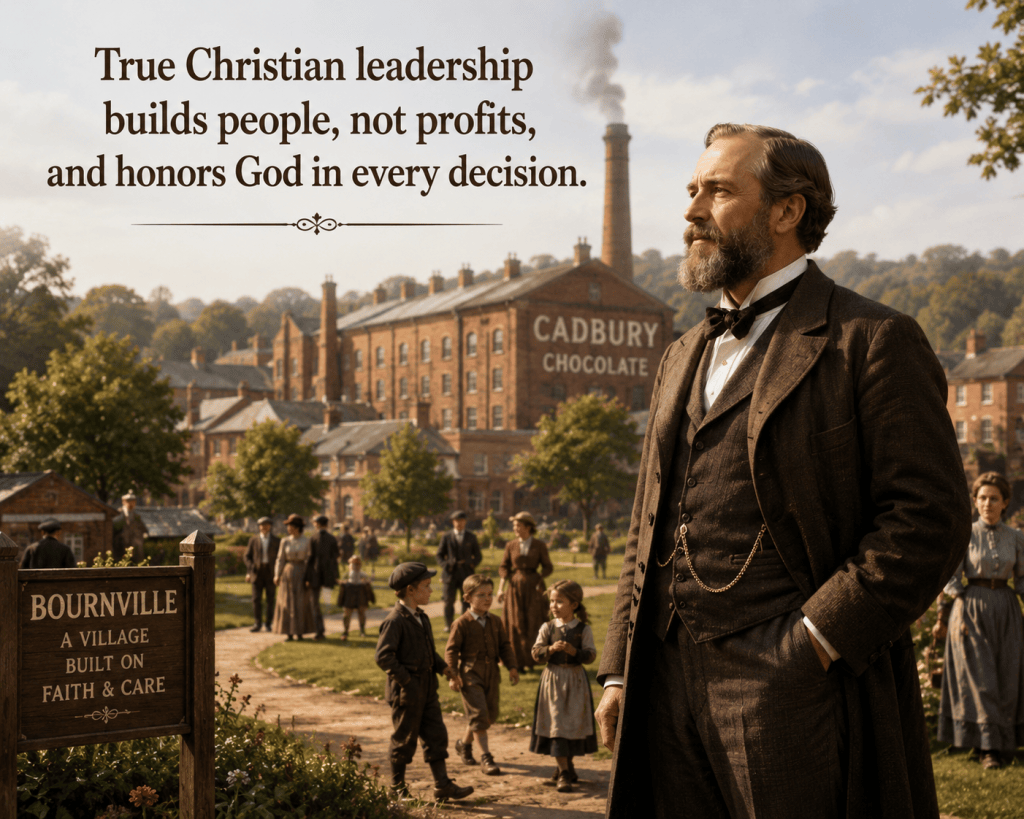
In 1879, the Cadbury company moved its factory outside Birmingham to a healthier rural location that later became known as Bournville.
But Cadbury did something unusual.
Instead of building only factories, he built homes, parks, schools, healthcare facilities, and recreational spaces for workers and their families. Streets were designed with gardens and open areas because Cadbury believed healthy environments mattered for human flourishing.
At a time when industrial exploitation was normal, he intentionally created working conditions that valued people.
Employees were encouraged to pursue education and personal growth. Cleanliness, fair treatment, and community welfare became part of company culture. George Cadbury believed business leadership carried moral responsibility before God.
His actions reflected biblical principles similar to those seen in the story of Boaz. Like Boaz protecting Ruth in the harvest fields, Cadbury used authority to serve rather than dominate.
Many business leaders questioned his methods. Some thought such generosity would damage long-term profits.
Instead, the company flourished internationally.
More importantly, countless workers experienced dignity, stability, and care during a harsh industrial era.
Cadbury’s life demonstrated that Christian faith could influence economics, leadership, and workplace culture in deeply practical ways.
🌿 Success Guided by Christian Conviction
The legacy of Bournville still stands today as one of history’s most influential examples of compassionate business leadership.
George Cadbury’s greatest achievement was not merely building a successful chocolate company. It was demonstrating that business success and Christian ethics do not need to be enemies.
His leadership transformed workplace culture by showing that employees should be valued as people, not simply labor resources.
Many workers experienced improved health, safer living conditions, education opportunities, and stronger family stability because one businessman chose to follow biblical conviction instead of cultural norms.
Cadbury’s faith also challenged future generations of Christian professionals. His example reminds believers that the workplace can become a place of ministry, justice, kindness, and witness.
Even today, his story encourages Christian engineers, doctors, teachers, government officers, entrepreneurs, and managers to lead with integrity and compassion.
The greatest transformation was not only external business success, but the spiritual conviction that leadership is stewardship before God.
🕊️ Spiritual Reflection
George Cadbury’s story teaches believers that God cares deeply about how people are treated in workplaces.
This testimony reminds us that leadership is not only about authority, productivity, or financial growth. Biblical leadership reflects the character of Christ — compassion, justice, dignity, and truth.
The story also challenges modern believers to examine their own attitudes toward people under their responsibility. Do we value individuals only for performance, or do we recognize them as image-bearers of God?
Cadbury’s life demonstrates that faith should not remain limited to church services or personal devotion. The gospel must shape business decisions, workplace ethics, and leadership behavior.
For struggling believers, this story offers encouragement: God can use ordinary professions for extraordinary Kingdom influence.
The Lord often works through daily faithfulness more than public recognition.
You may never build a global company like George Cadbury, but every believer has influence somewhere — an office, classroom, hospital, workshop, ministry, or business.
💬 Closing Encouragement
Small acts of integrity, kindness, fairness, and compassion can reflect Christ powerfully in dark environments.
Do not underestimate what God can do through a leader whose heart is surrendered to Him.
🙏 Prayer
Lord, help me lead with compassion, integrity, and wisdom. Teach me to value people the way You value them. Let my work reflect the character of Christ, and use my influence to bring dignity, encouragement, and hope to others. In Jesus’ name, Amen.


Leave a comment