
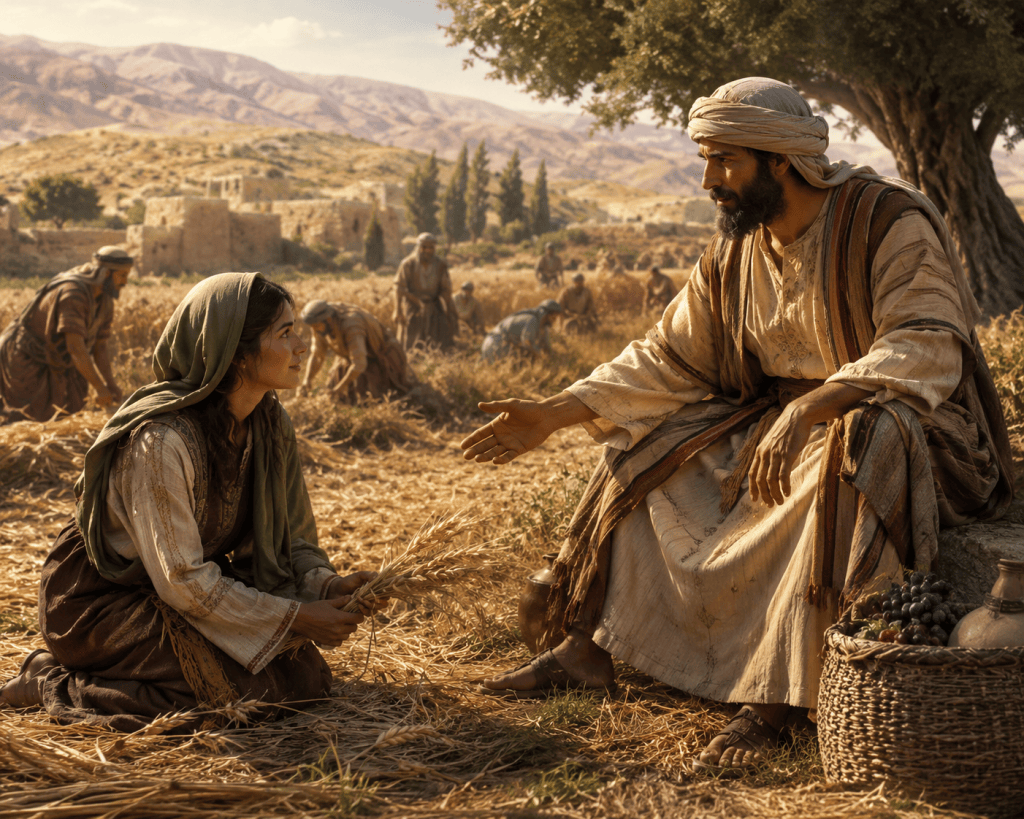
“A true leader has the confidence to stand alone, the courage to make tough decisions, and the compassion to listen to the needs of others.”
— Douglas MacArthur
📖 Main Scripture Passage
“Then said Boaz unto Ruth, Hearest thou not, my daughter? Go not to glean in another field… The LORD recompense thy work, and a full reward be given thee of the LORD God of Israel, under whose wings thou art come to trust.”
Ruth 2:8–12 (KJV)
🏢 Leading Under Pressure
Modern workplaces often celebrate results more than relationships. Managers are pressured to meet targets, business owners face financial uncertainty, and supervisors carry the weight of deadlines, staffing shortages, and competition. In such environments, leadership can slowly become harsh, transactional, and emotionally distant.
Many professionals know the tension of balancing productivity with compassion. Should leaders prioritize efficiency or people? Can kindness survive in competitive industries? In factories, hospitals, classrooms, government offices, startups, engineering firms, and ministry organizations, leaders often fear that compassion may weaken authority.
Yet the Bible presents a different model.
Long before leadership books were written, a wealthy landowner named Boaz demonstrated that strength and kindness are not enemies. In a difficult economic season marked by poverty and uncertainty, Boaz managed resources wisely, led workers effectively, protected vulnerable people, and honored God through ethical leadership.
His story reminds us that godly leadership is not merely about power. It is about stewardship, integrity, and compassionate influence.
👨💼 Boaz: A Leader Who Saw People
Boaz appears in the book of Book of Ruth as a wealthy landowner during the period of the Judges — a chaotic era in Israel’s history marked by political instability, moral compromise, and spiritual decline. While many leaders pursued selfishness, Boaz stood out as a man of wisdom and character.
Professionally, Boaz was highly competent. He managed agricultural operations during harvest season, supervised laborers, protected company resources, and maintained order in a demanding economic system. Harvest management in ancient Israel required organization, workforce coordination, land stewardship, and fair treatment of workers. This was not passive wealth; it was active leadership.
But Boaz’s greatest strength was not merely business success. It was integrity.
When he greeted his workers in Ruth 2:4 saying, “The LORD be with you,” we see a workplace culture shaped by faith and respect. His employees responded with honor because leadership flowed from character, not fear.
Boaz noticed Ruth not merely as a laborer, but as a person. He used his authority to protect rather than exploit. His kindness was not weakness; it was mature strength under God’s wisdom.
📜 The Harvest Field of Redemption
The story unfolds during a famine-shadowed season in Bethlehem. Naomi had returned from Moab grieving the loss of her husband and sons. Beside her walked Ruth, a Moabite widow — poor, vulnerable, and socially marginalized.
According to Israelite law in Leviticus 19:9–10, landowners were commanded not to reap the corners of their fields completely so the poor could glean leftover grain. This revealed God’s concern for justice and dignity. Ancient Israel’s workplace laws carried theological meaning: business practices were meant to reflect God’s compassion.
Ruth entered Boaz’s field simply seeking survival.
The Hebrew word often associated with Boaz’s attitude is “hesed” — covenantal loving-kindness, loyal mercy expressed through action. This word carries deeper meaning than ordinary kindness. It reflects faithful love rooted in God’s own character.
Boaz immediately noticed Ruth. In the cultural context of the ancient Near East, wealthy landowners often held enormous social power. Foreign widows had little protection. Ruth could easily have faced harassment, exploitation, or rejection.
Instead, Boaz spoke words of dignity.
He instructed his young men not to touch her. He ensured she had access to water. He invited her to eat alongside workers. He even ordered extra grain to be intentionally left behind for her gathering. This was radical generosity within an economically competitive society.
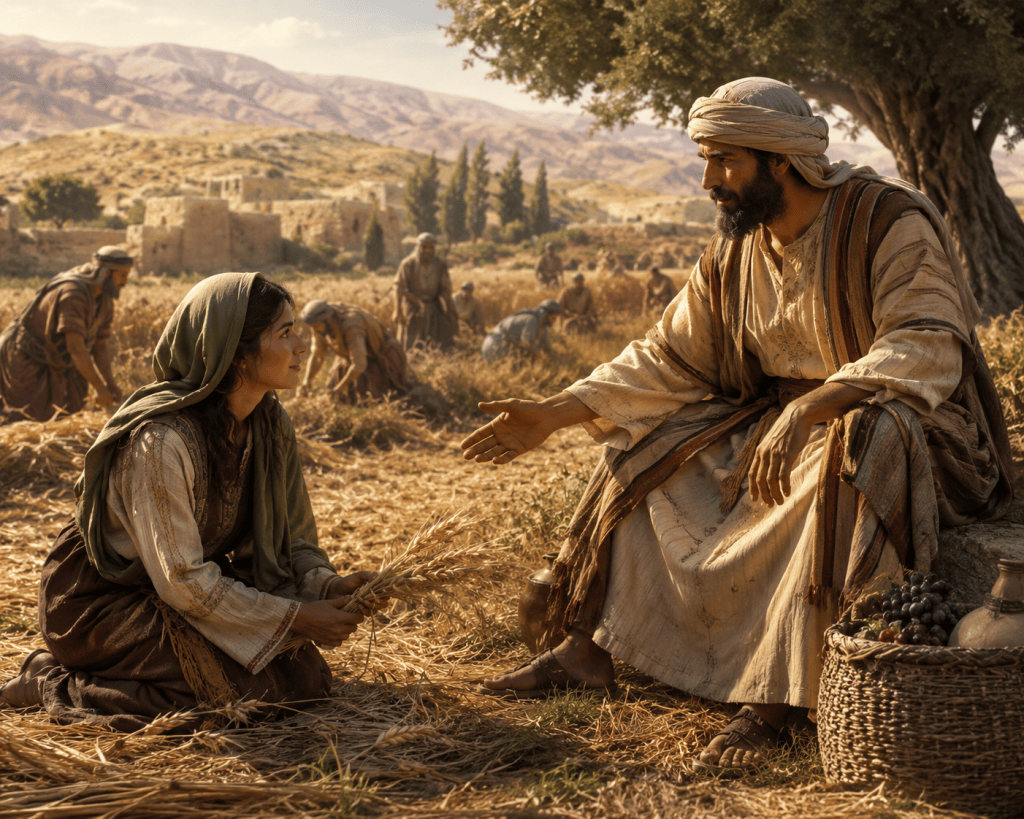
Literarily, the book of Ruth sits after Judges for a reason. Judges repeatedly declares, “every man did that which was right in his own eyes.” Ruth presents a contrast — ordinary people quietly living faithfully amid national chaos.
Boaz becomes a picture of righteous leadership in dark times.
Theologically, the story points beyond agriculture and management. Boaz acts as a “kinsman-redeemer,” or in Hebrew, goel — one who restores family inheritance and rescues vulnerable relatives. This role ultimately foreshadows Christ Himself.
Just as Boaz welcomed Ruth the outsider, Jesus Christ welcomes sinners into God’s covenant family. Ruth, a Gentile woman, eventually becomes part of the lineage of King David and ultimately of Jesus Christ (Matthew 1). God was already revealing His redemptive plan for all nations through this story.
Boaz’s field became more than farmland. It became a place of redemption.
This changes how Christians should view workplaces today. Offices, workshops, hospitals, classrooms, engineering sites, corporate boardrooms, and government departments are not spiritually neutral places. They can become environments where dignity, justice, compassion, and godly influence flourish.
Boaz teaches that leadership is revealed not merely in how leaders increase profit, but in how they treat people who cannot repay them.
His prosperity was connected not only to wealth, but to wisdom shaped by reverence for God.
🌍 George Cadbury’s Chocolate Factory That Changed Its Workers
In industrial England during the late nineteenth century, factory workers often endured exhausting hours, unsafe conditions, and extreme poverty. Many business owners viewed workers merely as production tools.
But George Cadbury, a Christian businessman and co-owner of the Cadbury chocolate company, believed business should reflect the character of Christ.
Driven by his Quaker Christian convictions, Cadbury transformed the workplace culture of his factories in Birmingham, England. Instead of maximizing profit at the expense of employees, he built the village of Bournville — a community with clean housing, parks, healthcare, education, and fair working conditions for factory workers and their families.
At a time when industrial exploitation was normal, Cadbury insisted that leadership included compassion. He reduced unhealthy workplace practices, encouraged education, and created environments that treated employees with dignity rather than disposable labor.
Many investors criticized such generosity as financially impractical. Yet the company flourished internationally.
Cadbury believed business success and Christian ethics should never be separated.
His leadership reflected a deeper theological conviction: people are made in the image of God.
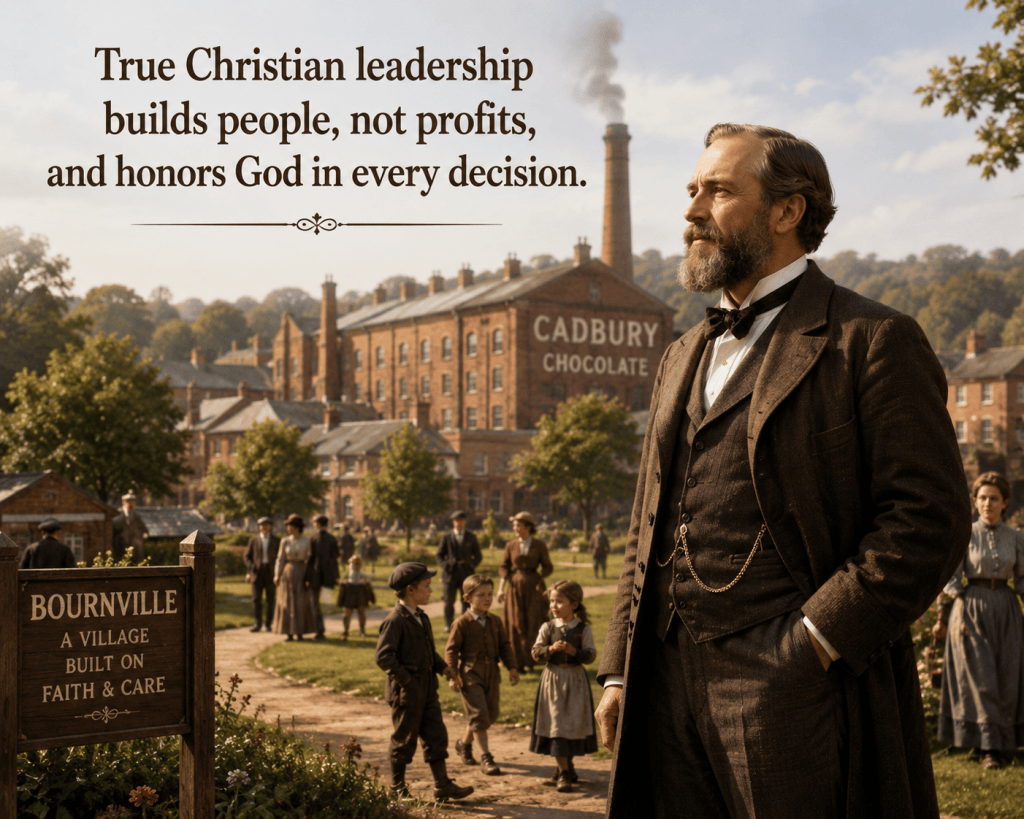
Like Boaz, Cadbury used influence not to dominate but to uplift others. His faith shaped hiring practices, business ethics, and employee care. Long before “corporate social responsibility” became popular language, Christian conviction inspired compassionate leadership.
The legacy of Bournville still stands today as evidence that kindness and excellence can coexist powerfully in leadership.
🏭 Workplace Lessons for Today
Boaz reminds modern professionals that leadership is not measured only by authority, technical expertise, or business growth. True leadership is revealed in how people are treated under pressure.
Engineers can lead teams with patience instead of arrogance. Doctors can preserve compassion despite exhaustion. Teachers can nurture students beyond performance metrics. Government officers can exercise authority with integrity. Business leaders can pursue profit without sacrificing ethics.
Kindness does not weaken leadership; it strengthens trust.
Boaz also demonstrates attentive leadership. He noticed Ruth when others overlooked her. Great leaders see people clearly — junior employees, contract workers, interns, struggling team members, and unseen contributors.
Professional excellence and spiritual maturity must grow together. Competence without compassion creates fear. Compassion without wisdom creates disorder. Godly leadership requires both.
🔥 Spiritual Insight
The story of Boaz ultimately points toward the heart of Christ.
Jesus is the greater Redeemer who welcomes outsiders, restores dignity, and provides grace for the vulnerable. Boaz’s field foreshadows the Kingdom of God, where mercy and righteousness meet together.
Work itself becomes sacred when it reflects God’s character.
Leadership is not merely about achieving influence; it is about stewarding influence faithfully. The Holy Spirit empowers believers not only in church ministry, but also in project meetings, factory floors, classrooms, construction sites, hospitals, and offices.
God cares deeply about how Christians lead people.
Success without integrity eventually collapses. But leadership shaped by humility, justice, wisdom, and compassion leaves generational impact.
Boaz teaches us that kindness rooted in godliness can transform entire environments.
🤔 Reflection Questions
1. How do I treat people who cannot advance my career or reputation?
2. Is my leadership shaped more by pressure or by God’s character?
3. What practical step can I take this week to lead with compassion and integrity?
🙏 Prayer
Lord, teach me to lead with wisdom, strength, and compassion. Help me reflect Your character in every workplace responsibility. Guard my heart from pride, harshness, and selfish ambition. Fill me with integrity, humility, and excellence so that my work and leadership may honor Christ and bless others. Amen.


Leave a comment