
“God calls us to faithfulness where we are before He calls us elsewhere.”
— Elisabeth Elliot
📖 Main Scripture Passage
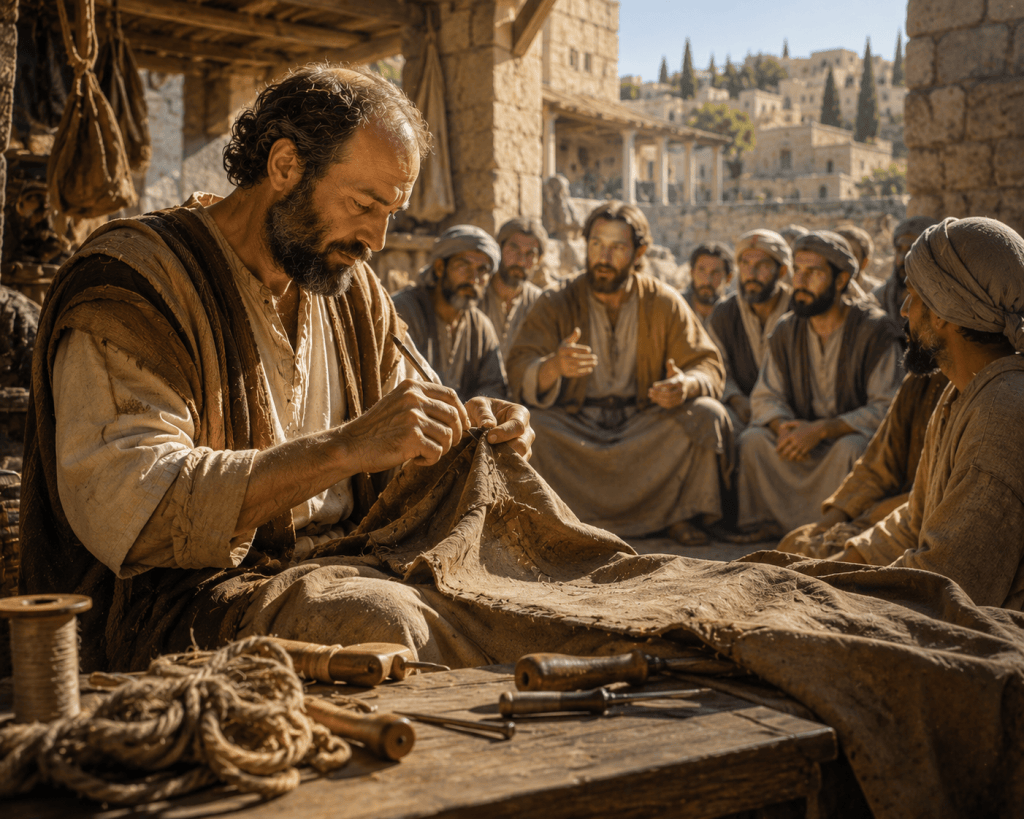
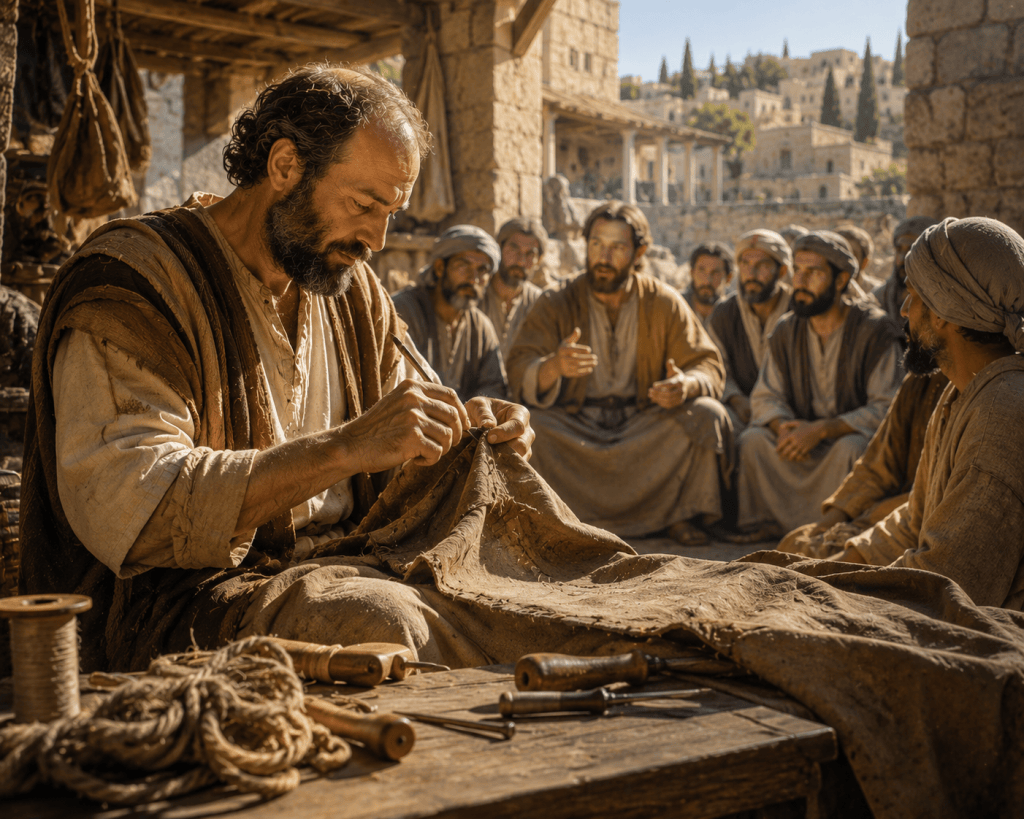
“And because he was of the same craft, he abode with them, and wrought: for by their occupation they were tentmakers.
And he reasoned in the synagogue every sabbath, and persuaded the Jews and the Greeks.” Acts 18:3–5 (KJV)
These verses reveal how Paul balanced professional labor with spiritual calling, showing that ordinary work and Kingdom ministry can function together powerfully under God’s purpose.
🏢 When Work Feels Heavy but Calling Still Remains
Many professionals today live between responsibility and calling.
An engineer spends long hours solving technical problems while quietly carrying a burden to disciple younger believers. A teacher manages exhausting classroom pressure while still serving faithfully in church. A business owner worries about salaries, deadlines, and financial survival while longing to remain spiritually effective. Healthcare workers, government employees, entrepreneurs, and ministry leaders often feel stretched between professional demands and spiritual responsibilities.
Some believers quietly wonder whether their daily work truly matters to God.
Modern culture often separates “spiritual work” from “ordinary work,” making many Christians feel that only pastors or missionaries serve God meaningfully. Others struggle with burnout because they attempt to carry ministry without healthy balance or practical wisdom.
The life of Paul the Apostle speaks directly into this tension.
Paul demonstrates that professional excellence, faithful labor, and spiritual calling can work together beautifully when surrendered to Christ. God can use both our hands and our hearts for His Kingdom.
👨💼 The Tentmaker Who Carried the Gospel Across Nations
Paul the Apostle was not only a preacher and theologian but also a skilled worker. According to Acts 18, Paul practiced tentmaking while serving in ministry. In the Roman world of the first century, tentmaking involved working with leather, woven goat hair fabric, and durable materials used for travel shelters and commercial coverings.
Jewish culture highly valued practical skills. Many rabbis learned trades alongside religious education because labor was considered honorable. Paul, raised in Tarsus and trained under Gamaliel, combined intellectual excellence with practical craftsmanship.
Paul’s professional discipline shaped his ministry deeply.
He understood perseverance, physical exhaustion, financial pressure, teamwork, and responsibility. Rather than depending entirely upon financial support, Paul sometimes worked manually to avoid burdening struggling believers and to maintain credibility among skeptical communities.
Paul combined:
• Spiritual authority
• Practical skill
• Intellectual depth
• Emotional endurance
• Leadership wisdom
• Financial responsibility
• Mission-focused discipline
His life reveals that God often uses ordinary professions as platforms for extraordinary Kingdom influence.
Paul did not view work as a distraction from ministry. He viewed faithful labor itself as part of serving Christ.
📜 Building Churches While Carrying Workplace Responsibilities
Paul ministered during the height of Roman power, a politically complex period marked by emperor worship, economic inequality, religious pluralism, and social instability. Travel across the empire exposed him to danger, persecution, imprisonment, riots, and constant uncertainty.
Literarily, Acts 18 follows Paul’s difficult season in Corinth after experiencing opposition in several cities. Corinth itself was a wealthy commercial center known for trade, immorality, and cultural diversity. Into this spiritually complicated environment, Paul arrived tired, financially limited, and under pressure.
Instead of withdrawing, Paul began working alongside Aquila and Priscilla, fellow tentmakers who had recently arrived after Emperor Claudius expelled many Jews from Rome.
The Greek term used for “wrought” in Acts 18:3 carries the idea of continual labor. Paul did not occasionally work; he labored consistently while simultaneously preaching, discipling, and planting churches.
This balance required extraordinary endurance.
By day, Paul likely handled physically demanding craftsmanship. By Sabbath, he taught Scripture publicly and reasoned persuasively concerning Jesus Christ as Messiah. Later passages reveal nights without sleep, seasons of hunger, and emotional burdens for growing churches.
Yet Paul never separated theology from daily life.
Canonically, Paul’s life reflects the broader biblical pattern that work itself possesses dignity. From Genesis, humanity was designed to cultivate, build, manage, and steward creation under God’s authority. Paul later reinforced this principle in Colossians 3:23, teaching believers to work heartily “as to the Lord.”
Theologically, Paul’s example reveals several important truths.
First, grace does not eliminate responsibility. Though called powerfully by Christ, Paul still labored diligently. Second, spiritual maturity includes faithful stewardship of practical responsibilities. Third, the Gospel transforms how believers view work itself.
Paul’s tentmaking also protected ministry integrity. In cities where traveling philosophers often manipulated people financially, Paul’s willingness to work demonstrated sincerity and sacrificial leadership.
Emotionally, Paul remained deeply human.
He experienced loneliness, disappointment, physical suffering, criticism, and exhaustion. Yet God sustained him through ordinary faithfulness rather than constant visible success. In Corinth, the Lord later encouraged Paul through a night vision, saying, “Be not afraid, but speak” (Acts 18:9 KJV).
Paul’s life demonstrates that God often advances His Kingdom through believers who faithfully balance daily labor with spiritual obedience.
🌍 John Wanamaker: Business Integrity and Kingdom Purpose
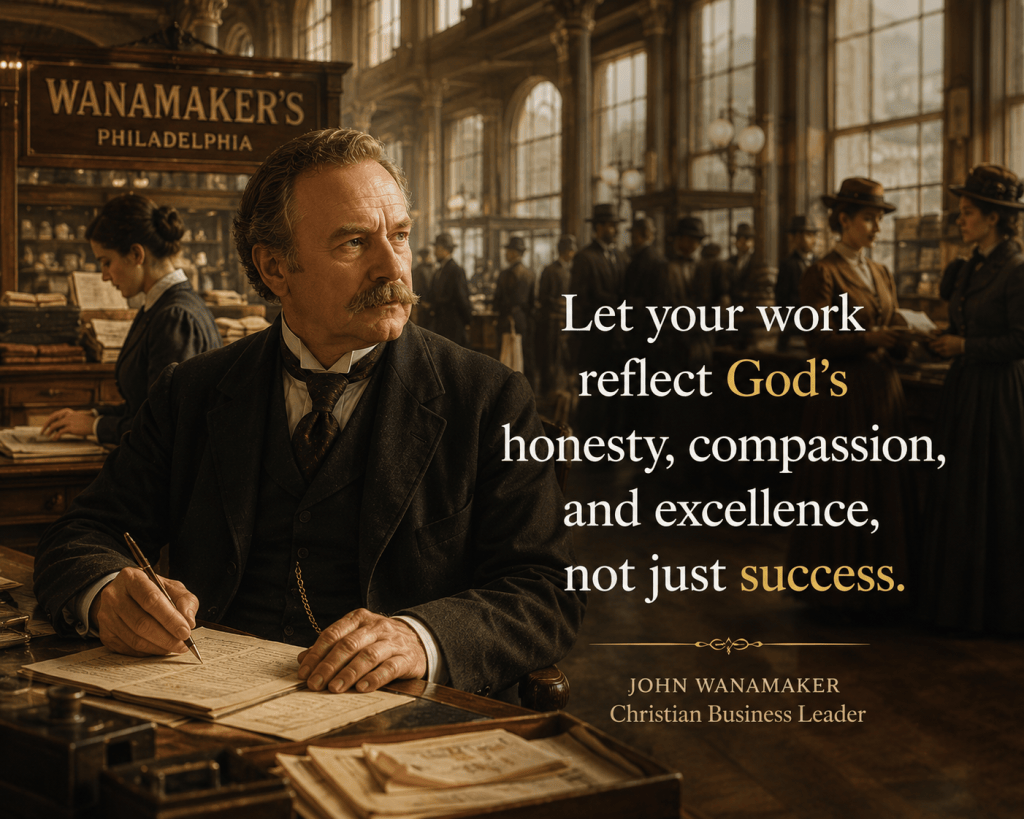
In late nineteenth-century America, John Wanamaker built one of the largest retail businesses in Philadelphia while remaining deeply committed to Christian faith and ethical leadership.
Before his success, Wanamaker came from a modest background and worked long hours as a young employee in the clothing business. During that period, dishonest pricing, misleading advertising, and poor treatment of workers were common in many commercial environments. Customers often distrusted businesses because hidden pricing and unethical practices were widespread.
Wanamaker believed Christian faith should shape professional conduct completely.
As he gradually built his department store business, he introduced practices considered revolutionary for that era: fixed pricing, truthful advertising, customer guarantees, organized employee training, and respectful workplace standards. Rather than exploiting confusion for profit, he believed integrity honored both God and people.
Balancing business leadership with spiritual responsibility was not easy.
Managing large operations required exhausting schedules, financial risk, leadership decisions, staffing challenges, and constant innovation. Wanamaker also remained actively involved in Sunday school ministry and Christian outreach while overseeing growing commercial responsibilities.
Many people viewed business success and spiritual devotion as separate worlds.
Yet Wanamaker believed professional excellence itself could become Christian witness when guided by honesty, stewardship, compassion, and service.
Over time, his ethical leadership transformed customer trust and influenced modern retail practices internationally. His business success created opportunities for philanthropy, Christian ministry support, educational efforts, and civic improvement projects.
Like Paul the Apostle, John Wanamaker demonstrated that professional work and spiritual calling can function together powerfully. His life showed that integrity, diligence, and faithfulness in ordinary work can create influence far beyond financial success alone.
🏭 Workplace Lessons for Today
Paul’s life speaks directly to modern professionals balancing career responsibilities with spiritual purpose.
First, daily work possesses spiritual value. Whether designing infrastructure, treating patients, teaching students, managing businesses, writing software, or serving in public administration, believers can honor God through faithful excellence.
Second, practical skills can expand ministry opportunities. Paul’s tentmaking created relationships, credibility, and sustainability during difficult seasons. Skill development is not separate from God’s calling.
Third, healthy balance requires wisdom. Paul worked diligently while remaining spiritually grounded through prayer, Scripture, fellowship, and mission focus.
Fourth, integrity matters deeply. Paul’s willingness to labor honestly protected the credibility of his message.
Modern believers must resist both career idolatry and spiritual neglect. God calls Christians to faithful stewardship in both professional responsibilities and Kingdom influence.
🔥 Spiritual Insight
Paul’s story reminds believers that work itself can become worship when surrendered fully to Christ.
The Gospel does not remove believers from ordinary responsibilities; it transforms the purpose behind them. Through Christ, workplaces become places of witness, integrity, service, and spiritual influence.
Paul also demonstrates that calling is not always glamorous. Much of his ministry happened through exhaustion, manual labor, suffering, and unseen perseverance. Yet the Holy Spirit worked powerfully through ordinary faithfulness.
Profession alone cannot satisfy the human heart, and ministry without dependence upon God eventually produces burnout. True balance comes when identity remains rooted in Christ rather than performance.
God still uses teachers, engineers, doctors, administrators, technicians, business owners, researchers, and skilled workers to strengthen His Kingdom today.
Faithful work done for God’s glory carries eternal significance.
🤔 Reflection Questions
1. Are you viewing your daily work as part of God’s calling or merely survival?
2. How can your professional skills become instruments of service and witness?
3. Are you maintaining healthy spiritual priorities while carrying workplace responsibilities?
🙏 Prayer
Heavenly Father, help me balance my work and calling with wisdom, humility, and faithfulness. Teach me to honor You through diligence, integrity, and compassionate service. Strengthen me when responsibilities feel heavy, and let my daily work become a testimony of Christ’s grace and truth. Amen.


Leave a comment