
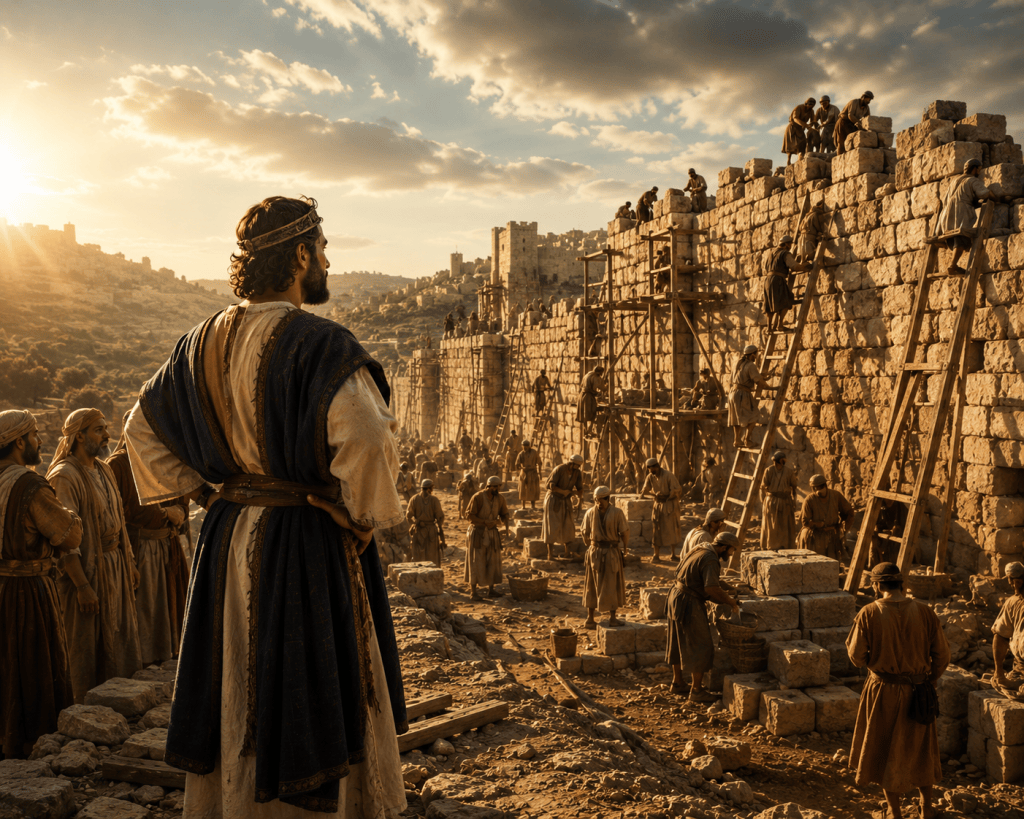
“Vision is the ability to see God’s presence, to perceive God’s power, to focus on God’s plan in spite of obstacles.”
— Charles R. Swindoll
📖 Main Scripture Passage
“Then I told them of the hand of my God which was good upon me; as also the king’s words that he had spoken unto me. And they said, Let us rise up and build. So they strengthened their hands for this good work.”
Nehemiah 2:18 (KJV)
🏢 Pressure, Deadlines, and the Weight of Leadership
Modern workplaces often resemble construction zones under pressure. Projects fall behind schedule. Teams struggle with poor communication. Budgets tighten while expectations increase. Leaders face criticism from above and frustration from below. Engineers manage technical risks. Business owners navigate uncertainty. Government officials carry public responsibility. Healthcare administrators coordinate exhausted teams. Many professionals quietly carry overwhelming pressure while trying to hold organizations together.
In such moments, leadership becomes more than authority; it becomes the ability to restore vision during discouragement.
Many leaders today know what it feels like to rebuild something broken — a damaged system, a struggling company, a divided team, a failing project, or even personal confidence after disappointment.
The story of Nehemiah speaks powerfully into such environments. His leadership demonstrates that godly project management requires prayer, planning, courage, teamwork, and unwavering dependence upon God.
Nehemiah shows that spiritual maturity and professional excellence can work together powerfully.
👨💼 The Cupbearer Who Became a Builder
Before Nehemiah became known as Jerusalem’s rebuilder, he served as cupbearer to King Artaxerxes in the Persian Empire during the 5th century BC. This role was far more significant than simply serving wine. Cupbearers were trusted government officials responsible for protecting the king from assassination attempts. They required wisdom, loyalty, emotional intelligence, and political discernment.
Nehemiah worked within one of the world’s most powerful empires.
Professionally, he understood administration, risk management, communication, and leadership under pressure. Yet despite serving in a prestigious position, Nehemiah remained deeply burdened for God’s people and Jerusalem’s ruined condition.
When he heard that Jerusalem’s walls remained broken and its gates burned, he did not respond with passive concern. He prayed, fasted, planned carefully, and sought God’s direction.
What made Nehemiah exceptional was not merely organizational skill but spiritual dependence.
He combined:
• Strategic planning
• Emotional resilience
• Team coordination
• Courageous leadership
• Practical execution
• Persistent prayer
Nehemiah teaches modern professionals that godly leadership requires both competence and character. Vision without execution fails. Planning without prayer becomes prideful. But when wisdom and dependence upon God work together, broken things can be rebuilt.
📜 Rebuilding Jerusalem Amid Opposition and Fear
The events of Nehemiah occurred after the Babylonian exile when many Jews had returned to Jerusalem under Persian rule. Although the temple had been rebuilt earlier through the ministries of Zerubbabel and Ezra, Jerusalem itself remained vulnerable because its protective walls still lay in ruins.
In the ancient world, walls represented security, stability, identity, and national dignity. A city without walls was exposed to danger, shame, and political weakness.
When Nehemiah received this report, Scripture says he “sat down and wept, and mourned certain days” (Nehemiah 1:4). His emotional response reveals genuine spiritual burden. Leadership in Scripture often begins with compassionate concern before practical action.
Literarily, the book moves from burden to prayer, then from prayer to organized action. Nehemiah did not rush impulsively into leadership. He first sought God privately before speaking publicly.
His famous prayer in Nehemiah 1 reflects covenant theology deeply rooted in Israel’s history. He remembered God’s promises given through Moses and confessed the nation’s sins honestly. Biblical leadership begins with humility before authority.
After months of prayer, God opened a providential opportunity. King Artaxerxes noticed Nehemiah’s sadness and allowed him to travel to Jerusalem with official authority, timber supplies, and military protection.
This moment demonstrates divine favor working through ordinary governmental systems.
Once arriving in Jerusalem, Nehemiah displayed remarkable project-management wisdom. Before announcing his plans publicly, he inspected the walls quietly at night. Effective leaders gather accurate information before mobilizing teams.
The Hebrew concept behind “build” in Nehemiah carries the idea of restoration and strengthening, not merely construction. Nehemiah was rebuilding people’s confidence as much as physical walls.
Opposition emerged immediately.
Sanballat, Tobiah, and Geshem mocked, threatened, and politically resisted the work. Fear spread among the workers. Some families became discouraged because the rubble remained overwhelming.
Yet Nehemiah responded with both prayer and practical strategy.
He stationed guards, organized families by sections of the wall, delegated responsibilities carefully, and encouraged the people spiritually:
“Be not ye afraid of them: remember the Lord, which is great and terrible…” (Nehemiah 4:14 KJV).
One of the most powerful leadership details appears in Nehemiah 4:17:
“Every one with one of his hands wrought in the work, and with the other hand held a weapon.”
The workers combined vigilance with productivity.
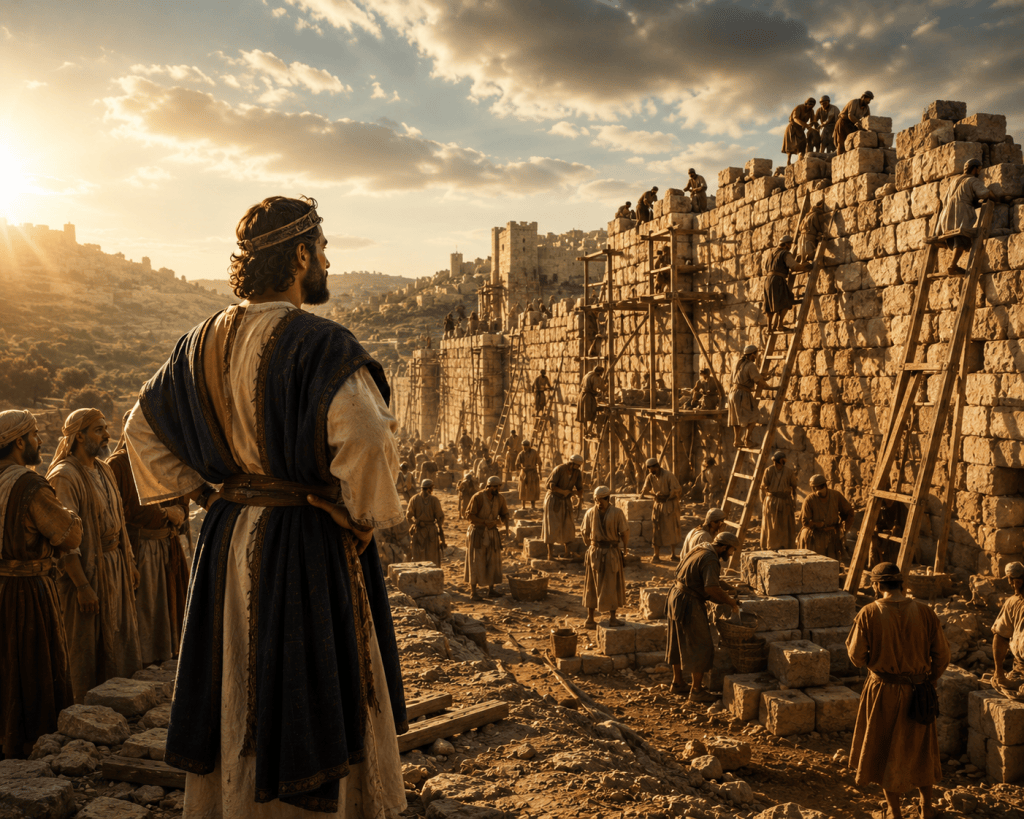
Historically, rebuilding Jerusalem’s walls in only 52 days was extraordinary considering the political tension, damaged infrastructure, limited resources, and external threats.
Theologically, Nehemiah reveals God as One who restores broken places through faithful leadership and unified labor. The rebuilding also pointed forward to God’s greater redemptive work fulfilled ultimately through Christ, who restores spiritually broken people into God’s covenant community.
Nehemiah’s leadership reminds believers that prayer and professionalism are not enemies. God works through organized planning, wise delegation, courageous communication, and faithful perseverance.
🌍 Sir Thomas Lipton and Leadership Through Persistence
In late 19th-century Scotland, Sir Thomas Lipton built one of the world’s most influential tea businesses from humble beginnings. Before becoming successful, Lipton worked tirelessly in grocery stores and small retail environments, learning customer service, logistics, pricing, and business discipline firsthand.
Unlike many businessmen of his era, Lipton focused heavily on organization, efficient systems, and accessible pricing for ordinary people. He believed large goals required coordinated teamwork and disciplined execution.
During economic difficulties and intense market competition, many doubted whether his business model could succeed. Supply chains were difficult. International transportation carried risks. Financial pressures remained constant.
Yet Lipton continued improving systems patiently.
Though known globally as a businessman, Lipton also demonstrated strong values of fairness, worker care, and perseverance. His leadership showed that large-scale success often depends upon careful planning, practical execution, and the ability to unite people toward a shared mission.
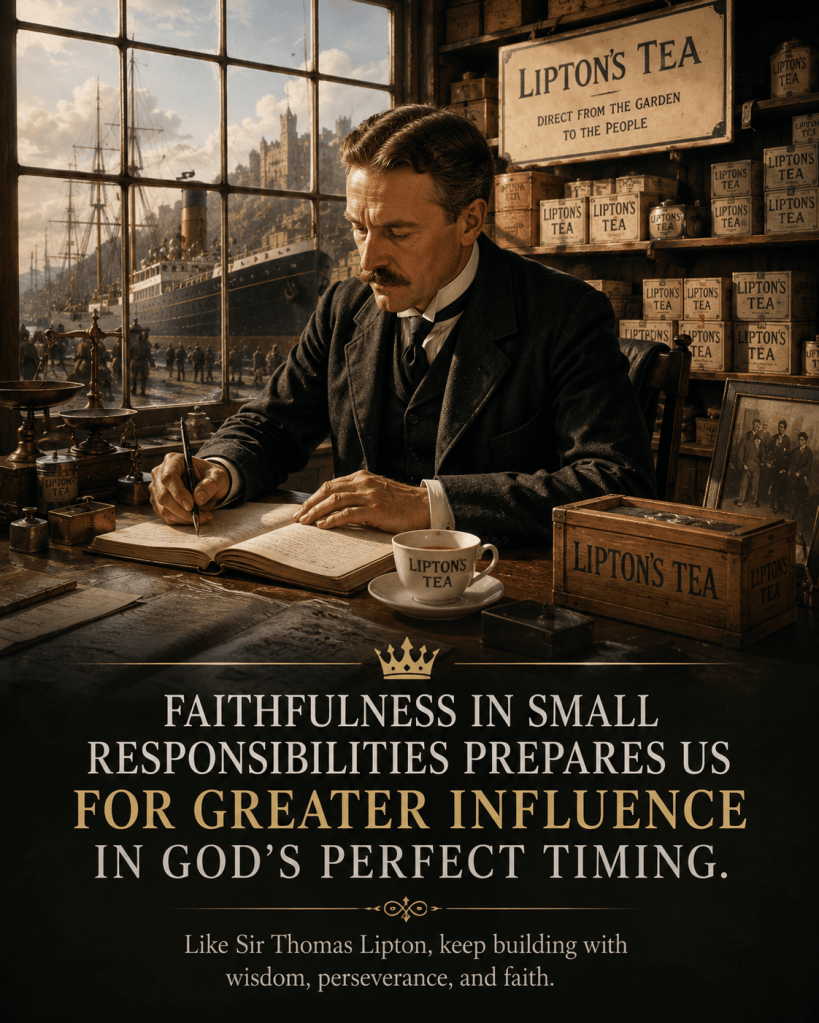
Like Nehemiah, he understood that vision alone is insufficient. Leaders must organize resources wisely, communicate clearly, and continue steadily even during criticism and obstacles.
His story reminds modern professionals that sustainable leadership is built through discipline, persistence, and coordinated teamwork over time.
🏭 Workplace Lessons for Today
Nehemiah’s story offers profound guidance for modern professionals across engineering, healthcare, education, ministry, business, and public administration.
First, effective leadership begins with burden and responsibility. Nehemiah cared deeply before he acted publicly. Great leaders do not ignore broken systems; they prayerfully engage them.
Second, planning matters spiritually and professionally. Nehemiah prayed intensely, but he also inspected walls, organized workers, delegated assignments, and prepared for opposition. Prayer does not replace preparation.
Third, opposition should not destroy focus. Modern professionals often face criticism, office politics, delays, and discouragement. Nehemiah teaches leaders to remain calm, adaptable, and mission-focused.
Finally, teamwork multiplies impact. The wall was rebuilt because families and workers united around shared vision. Healthy workplaces require collaboration, communication, and mutual responsibility.
God often rebuilds broken environments through faithful leaders willing to combine wisdom, courage, humility, and perseverance.
🔥 Spiritual Insight
Nehemiah’s story ultimately points beyond construction toward spiritual restoration.
Human hearts, relationships, organizations, and societies all experience brokenness because of sin. Yet God remains a Restorer who rebuilds what appears ruined.
Nehemiah demonstrates that work itself can become ministry when surrendered to God’s purposes. Leadership is stewardship, not self-glory. Skill is a gift entrusted by God for serving others faithfully.
The rebuilding of Jerusalem’s walls also foreshadows Christ’s greater mission. Through the gospel, Jesus Christ restores spiritually broken people into fellowship with God. He rebuilds identity, purpose, hope, and community.
Spiritually mature professionals understand that success without character becomes dangerous. Nehemiah’s strength came not merely from strategy but from dependence upon God’s presence.
The same God who strengthened Nehemiah still gives wisdom, endurance, favor, and courage to believers today.
Broken walls can rise again when God’s people work faithfully under His guidance.
🤔 Reflection Questions
1. What broken situation might God be calling you to help rebuild?
2. Are you balancing prayer with practical preparation in your leadership?
3. How can you strengthen teamwork and encouragement within your workplace?
🙏 Prayer
Heavenly Father, give me wisdom to lead faithfully and courage to rebuild what is broken. Teach me to combine prayer with disciplined action, humility with strength, and vision with perseverance. Help me serve others with integrity and honor You through excellent work. In the name of Jesus Christ, Amen.


Leave a comment