
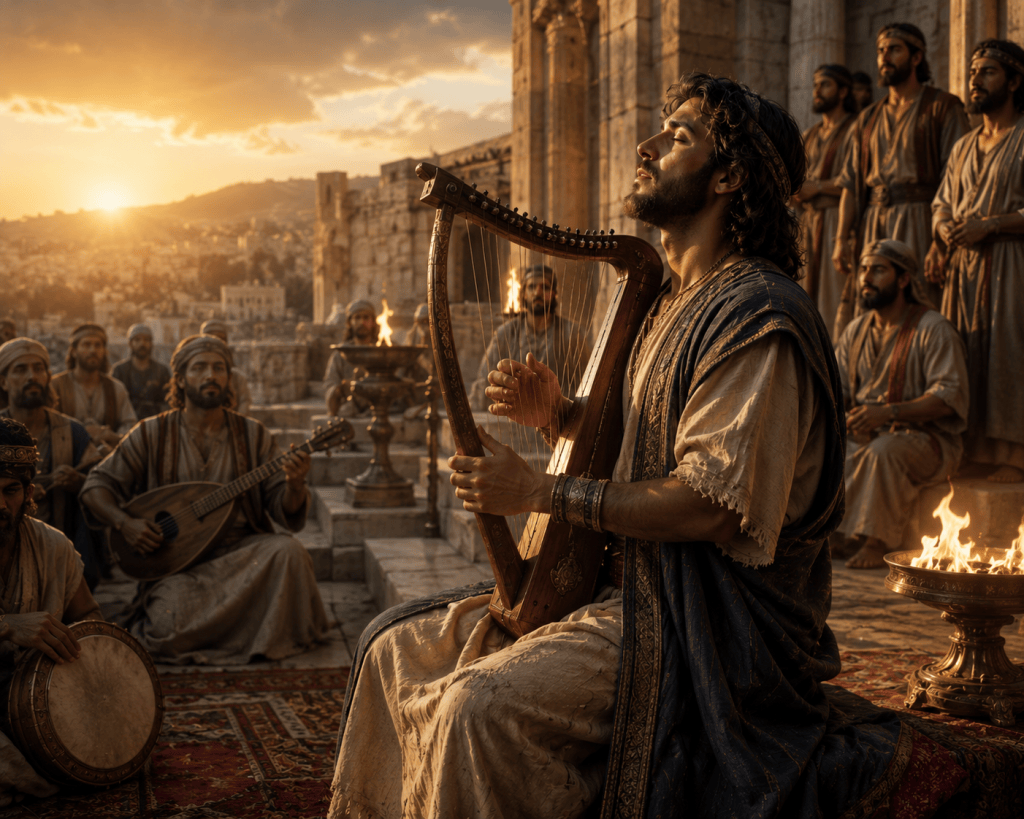
“Music is one of the fairest and most glorious gifts of God.”
— Martin Luther
📖 Main Scripture Passage:
“Then answered one of the servants, and said, Behold, I have seen a son of Jesse the Bethlehemite, that is cunning in playing, and a mighty valiant man, and a man of war, and prudent in matters, and a comely person, and the LORD is with him.” 1 Samuel 16:18 (KJV)
🏢 Creativity Under Pressure
Many professionals quietly struggle to keep creativity alive under constant pressure. Designers work through exhaustion. Worship leaders serve while emotionally drained. Teachers repeat routines without passion. Content creators chase trends instead of truth. Musicians compare themselves endlessly with others online.
Modern work culture rewards speed, visibility, and performance, but often neglects the soul. Over time, people can become productive without being spiritually alive. Their work may remain technically excellent while their hearts slowly grow empty.
Yet Scripture shows that creativity is not merely artistic ability—it can become a spiritual gift when surrendered to God.
The life of David reveals that worship, leadership, and creativity can work together for God’s glory. His songs comforted troubled hearts, united a nation in worship, and continue strengthening believers thousands of years later.
👨💼 The Shepherd Musician God Raised
Before David became king, he was a shepherd serving quietly in Bethlehem. Hidden from public attention, he learned responsibility, courage, and dependence on God while caring for sheep in lonely fields.
Those hidden seasons shaped both his character and creativity.
Scripture describes David as skillful in music. The Hebrew expression implies disciplined excellence, not casual talent. David developed his musical ability faithfully before anyone celebrated him publicly.
Eventually his gift opened unexpected doors. David was brought into King Saul’s court to play the harp and soothe the king’s troubled spirit. Long before David led armies, he ministered through creativity.
Later, as king, David organized worship throughout Israel, appointed musicians, composed psalms, and established structured worship before the Lord. He combined artistry with leadership, excellence with humility, and creativity with devotion.
David’s greatness was not simply talent. It was a heart continually turning toward God.
📜 Songs Born from Worship and Wilderness
David lived during one of Israel’s most politically unstable eras around 1000 BC. Saul’s leadership was deteriorating, enemies surrounded the nation, and internal conflict filled the kingdom. In that atmosphere, David emerged not only as a warrior and leader but also as a worshiper and songwriter.
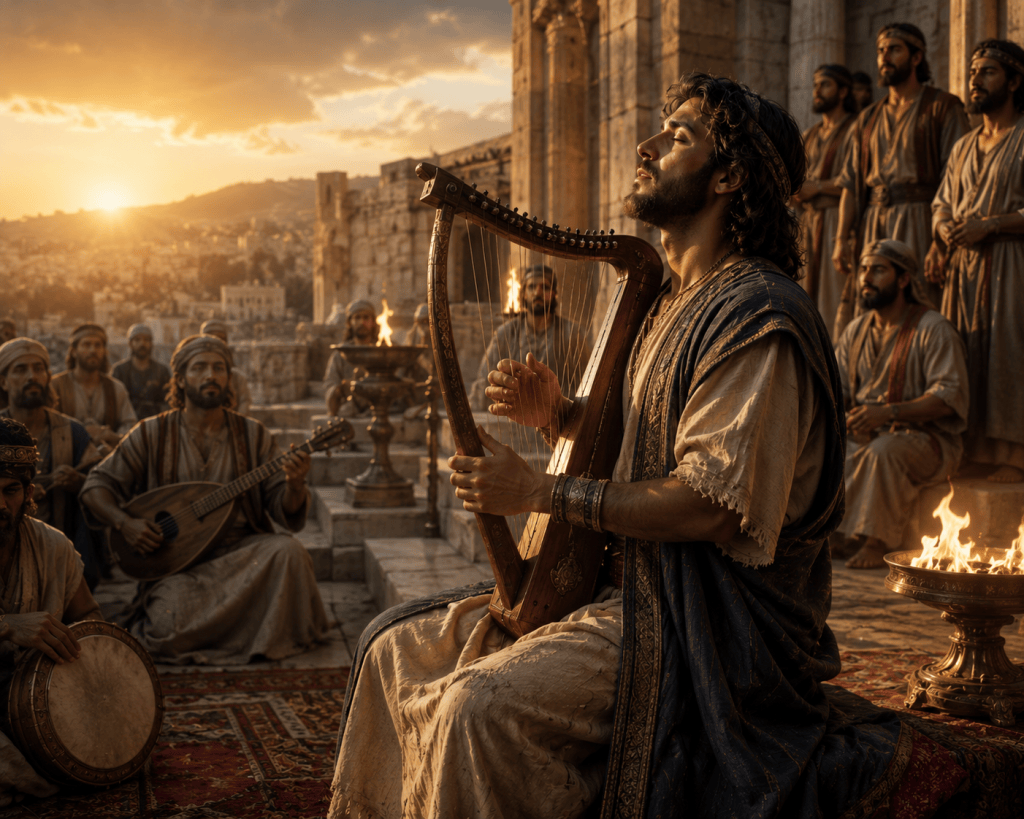
Many of David’s psalms were written during emotionally painful seasons. Some came from caves while hiding from Saul. Others came after betrayal, grief, repentance, or exhaustion. Psalm 51 emerged after David’s repentance over sin. Psalm 57 came during a season of hiding and fear. Psalm 23 reflected the quiet trust he learned as a shepherd.
David did not separate worship from real life.
The Hebrew word often used for psalm is mizmor, referring to songs accompanied by instruments. Worship in Israel was deeply connected to truth, remembrance, prayer, and community life. Music was not entertainment alone—it shaped spiritual identity.
David understood this deeply.
In 1 Chronicles 23–25, David organized musicians carefully for temple worship. Worship required preparation, structure, teamwork, and discipline. Creativity was Spirit-led, but it was also developed faithfully through responsibility and excellence.
David’s story also points beyond himself toward Jesus Christ. Many psalms contain prophetic themes fulfilled in Christ. Psalm 22 reflects the suffering of the crucifixion. Psalm 110 reveals the coming eternal King. David’s creative ministry became part of God’s redemptive plan across Scripture.
Theologically, David’s life reveals that God values creativity when surrendered for His purposes. The Spirit of God empowered David not only for leadership and battle but also for music, poetry, and worship.
This remains important for modern believers.
Creative work is not spiritually inferior to engineering, leadership, administration, or business. God can work powerfully through songs, writing, teaching, design, communication, craftsmanship, and storytelling.
Some of the deepest spiritual influence in history has come through faithful creativity offered to God.
Even today, David’s psalms continue comforting grieving believers, strengthening worship gatherings, guiding prayer, and teaching generations about repentance, trust, and praise.
🌍 Johann Sebastian Bach and Music Written for God’s Glory
In 18th-century Leipzig, Johann Sebastian Bach served as a church musician, composer, and music director during a demanding season of European church history. Though today he is recognized as one of history’s greatest composers, his daily life was filled with pressure, deadlines, criticism, and exhausting responsibility.
As music director at St. Thomas Church, Bach trained choir students, composed music regularly for worship services, taught classes, and managed demanding administrative duties. Some weeks required entirely new compositions while balancing family responsibilities and church expectations.
Yet Bach believed music existed primarily for God’s glory.
Many of his manuscripts carried the initials “S.D.G.” — Soli Deo Gloria, meaning “To God Alone Be Glory.” He intentionally dedicated his creative work to God rather than personal recognition.
Despite extraordinary talent, Bach experienced criticism and seasons of professional limitation. Some church leaders disliked his complex musical style. Financial rewards were often modest. At times he served without widespread appreciation.
Still, he continued creating faithfully.
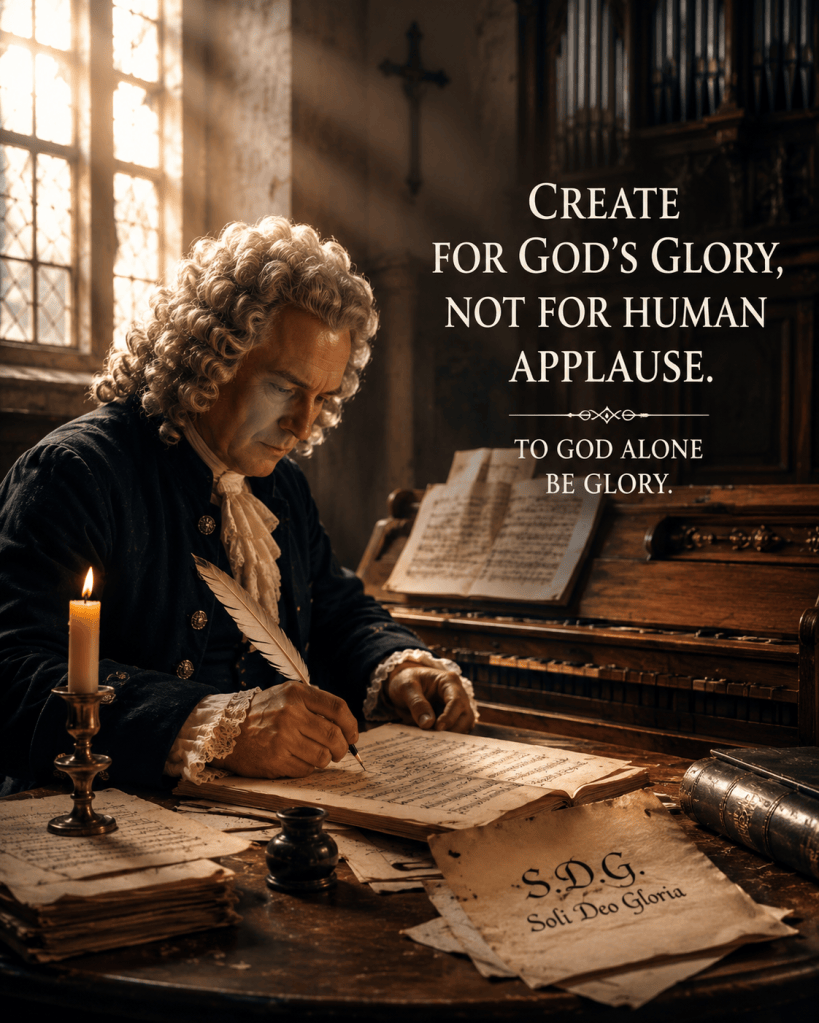
What made Bach remarkable was not merely technical brilliance but spiritual devotion. His music carried theological depth, reverence, discipline, and emotional honesty. Through composition and worship leadership, he helped people reflect deeply on Scripture and the greatness of God.
Centuries later, his music still influences churches, musicians, and worship leaders around the world.
Bach’s life reflects an important spiritual truth: creativity becomes ministry when fully surrendered to God. Faithful creative work may not receive immediate recognition, but what is offered to God can influence generations.
Modern professionals often feel pressure to create for applause, visibility, or social approval. Yet Bach reminds believers that the highest purpose of creativity is worship.
When creativity flows from devotion rather than ego, it leaves lasting spiritual impact.
🏭 Workplace Lessons for Today
David’s life teaches professionals that creativity is not secondary work—it is stewardship entrusted by God. Whether someone writes code, teaches students, designs systems, leads worship, develops businesses, or creates art, creativity can glorify God when guided by truth and integrity.
Professionals should develop their gifts intentionally rather than casually. Excellence requires practice, discipline, humility, and spiritual maturity. David practiced privately before ministering publicly.
Creative workers must also guard against pride, comparison, and performance-driven identity. Modern culture often pushes people to create mainly for visibility. But biblical creativity serves others and reflects God’s character.
Leaders can also learn from David’s structured worship leadership. Spirit-led creativity still requires preparation, responsibility, and consistency.
🔥 Spiritual Insight
David’s story reveals that worship is not limited to church services. Worship shapes how believers create, lead, communicate, and serve daily.
The Holy Spirit empowers more than preaching or leadership. He also strengthens creativity surrendered to God. A song can comfort wounded hearts. Wise communication can guide discouraged people. Creative excellence can point others toward truth and beauty.
David’s psalms also reveal the importance of honesty before God. He worshiped through fear, repentance, joy, grief, and weakness. His relationship with God remained genuine rather than performative.
In Christ, believers are invited to use every skill—creative, technical, intellectual, or organizational—for God’s glory. Success without spiritual depth eventually becomes empty. But creativity shaped by worship can leave eternal influence.
🤔 Reflection Questions
1. Am I using my creative or professional gifts mainly for recognition or for God’s glory?
2. How can I faithfully develop my skills with greater discipline and humility?
3. Does my work reflect worship, integrity, and spiritual maturity?
🙏 Prayer
Lord, thank You for every creative and professional gift You have given me. Fill my work with wisdom, humility, worship, and excellence. Help me use my abilities faithfully to serve others and glorify You. May my work reflect Your truth and bring lasting encouragement to others. In Jesus’ name, Amen.


Leave a comment