
📖 Scripture Anchor
“And whatsoever ye do, do it heartily, as to the Lord, and not unto men;”
Colossians 3:23 (KJV)
✨ Short Introduction
Many people use creativity to gain recognition, success, or applause. Yet history shows that some of the most powerful creative works were born from humble devotion to God rather than personal ambition.
The life of Johann Sebastian Bach reminds believers that professional excellence and deep worship can walk together. His story encourages Christians to offer their talents faithfully to God, even when recognition is delayed or difficult seasons continue.
⏳ Background — Pressure Behind the Music
In early 18th-century Leipzig, church life carried enormous responsibility. Worship services required constant preparation, and church musicians were expected to maintain high standards while serving demanding congregations and leaders.
Johann Sebastian Bach worked during this intense environment as music director at St. Thomas Church. His responsibilities were overwhelming. He trained choir students, composed music regularly for worship gatherings, taught lessons, organized performances, and managed administrative duties.
Some weeks required entirely new musical compositions within only a few days.
Despite his remarkable skill, Bach did not always receive appreciation. Certain church leaders criticized his music because they considered it too complex or difficult. Financial rewards were often limited. Administrative conflicts created stress. Large family responsibilities added further pressure.
At times Bach likely felt exhausted, misunderstood, and professionally restricted.
Yet he continued faithfully.
Instead of creating music mainly for public admiration, Bach viewed music as an offering to God. In an age where recognition and reputation mattered deeply, he chose devotion over self-promotion.
His struggle was not merely professional pressure—it was the daily challenge of remaining spiritually faithful while carrying heavy responsibility.
Many modern professionals understand similar emotions today:
working hard without recognition, balancing responsibilities, facing criticism, and quietly carrying emotional exhaustion while still trying to honor God faithfully.
🔥 Turning Point — “To God Alone Be Glory”
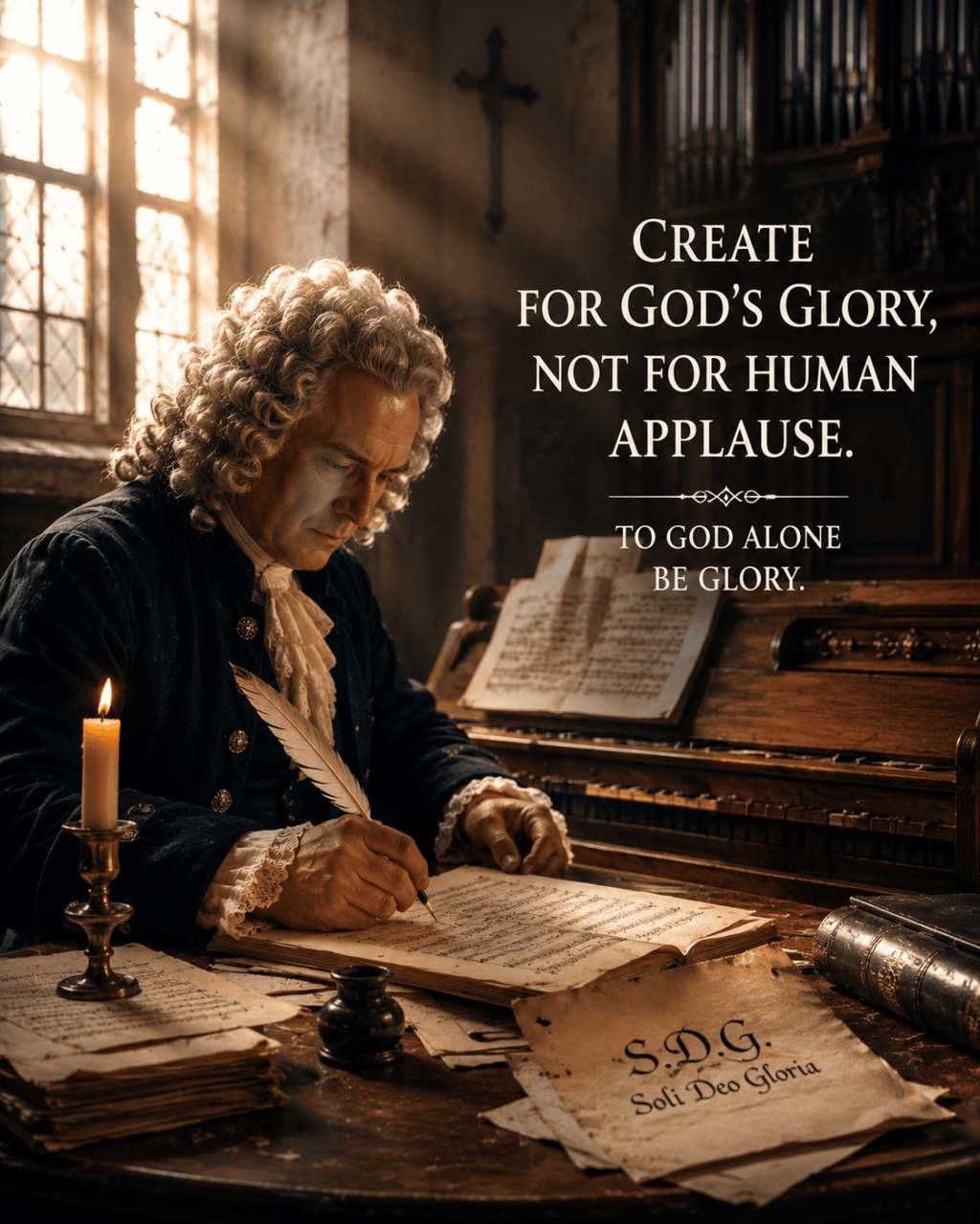
One of the clearest windows into Bach’s spiritual life appears in the small letters he often placed on his manuscripts:
“S.D.G.” — Soli Deo Gloria
Meaning: “To God Alone Be Glory.”
These words became more than a phrase. They reflected the direction of his heart.
Bach believed music was not ultimately for applause, prestige, or personal fame. He believed creativity itself was a gift entrusted by God and should therefore point back to God’s glory.
This perspective transformed how he approached his work.
Even when criticism came, Bach continued composing faithfully. Even when appreciation was limited, he continued serving the church through music. His worship was not dependent on recognition.
Rather than becoming bitter or prideful, Bach disciplined his creativity through devotion, excellence, and perseverance.
His music carried theological depth because it flowed from a spiritually rooted life. Many of his compositions were directly connected to Scripture readings and church worship themes. He desired listeners not merely to admire music but to reflect on the greatness of God.
God’s intervention in Bach’s life was not sudden fame or an easy path. Instead, God sustained him with purpose, endurance, discipline, and a worship-centered vision.
Sometimes God changes circumstances dramatically. Other times He transforms the heart so believers can remain faithful inside difficult circumstances.
Bach’s life demonstrates the second kind of miracle.
🌿 Transformation — A Legacy Beyond Recognition
By the end of his lifetime, Bach was respected in certain circles but was not universally celebrated as history’s greatest composer. In fact, after his death in 1750, parts of his music were temporarily forgotten by wider society.
Yet what was faithfully offered to God continued bearing fruit long after his lifetime ended.
Centuries later, Bach’s music influences churches, musicians, worship leaders, orchestras, educators, and composers across the world. His compositions continue helping listeners experience beauty, reverence, emotional honesty, and reflection on God’s greatness.
More importantly, his life demonstrates that true success is not measured only by immediate applause.
Bach’s heart remained anchored in worship.
His story teaches believers that faithfulness matters more than visibility. Work surrendered to God may continue influencing lives long after earthly recognition fades.
For modern Christians, this is deeply encouraging. Not every faithful season receives quick rewards. Not every servant receives public recognition. Yet God sees work done sincerely for His glory.
Bach’s life also reminds believers that creativity itself can become ministry when surrendered fully to Christ.
🕊️ Spiritual Reflection / Lesson
Bach’s story teaches that God values faithfulness more deeply than public recognition. Creative gifts are not merely tools for success; they are opportunities to glorify God and serve others.
Spiritual Insights
• Pride and self-centered ambition can slowly corrupt creativity and ministry.
• God can use ordinary daily work as worship when surrendered to Him.
• Faithfulness during hidden seasons still matters deeply to God.
• Excellence and humility can exist together.
• Spiritual influence often grows quietly over time.
Personal Reflection Questions
What attitudes should I avoid or confess?
Seeking approval more than God’s glory, comparison, pride, bitterness, and discouragement.
What promise can I trust?
God sees faithful labor done for Him, even when people overlook it.
What example should I follow?
Bach’s perseverance, disciplined excellence, and worship-centered creativity.
What command should I obey?
“Do it heartily, as to the Lord.” — Colossians 3:23
What does this reveal about God?
God values sincere worship, hidden faithfulness, and work offered with humility. He gives gifts not merely for personal success but for His glory and the strengthening of others.
Key Learnings
• Creativity becomes ministry when surrendered to God.
• Excellence without humility becomes empty.
• Hidden faithfulness can produce eternal impact.
• Worship should shape professional life, not remain separate from it.
💬 Closing Encouragement
Perhaps you are serving faithfully without much appreciation. Maybe your work feels unnoticed, repetitive, or emotionally exhausting. Bach’s story reminds us that God sees every quiet act of faithfulness.
You may never fully know how your work, creativity, encouragement, leadership, or service influences others.
But when your gifts are surrendered to Christ, your labor carries eternal value.
Continue serving faithfully. Continue creating sincerely. Continue glorifying God even in unseen seasons.
What is offered to God is never wasted.
🙏 Prayer
Lord, help me use every gift and skill for Your glory rather than my own recognition. Give me faithfulness during difficult seasons, humility in success, and perseverance under pressure. Let my work reflect worship, excellence, and devotion to You. In Jesus’ name, Amen.


Leave a comment