
“Any work done faithfully reveals God’s glory, no matter how small or great.”
— Elisabeth Elliot
📖 Main Scripture Passage
1 Kings 3:12 (KJV)
“Behold, I have done according to thy words: lo, I have given thee a wise and an understanding heart; so that there was none like thee before thee, neither after thee shall any arise like unto thee.”
🏢 The Pressure of Building Something That Lasts
Many professionals spend years building something important—companies, infrastructure, ministries, teams, software systems, hospitals, educational institutions, or even families. Yet the pressure can become overwhelming. Deadlines increase. Expectations rise. Resources become limited. People criticize leadership decisions. Fatigue quietly grows beneath outward success.
A project may begin with excitement but continue with stress, sacrifice, and uncertainty. Leaders often carry invisible burdens: making difficult decisions, managing people wisely, protecting integrity, and ensuring excellence under pressure.
In today’s professional world, many people are building impressive careers while privately wondering if they possess enough wisdom to sustain what they started.
King Solomon understood this burden deeply. Though remembered for wealth and greatness, Scripture first presents him as a young leader overwhelmed by responsibility. Before he became famous for magnificent achievements, he recognized his desperate need for God’s wisdom. That wisdom later shaped one of history’s most extraordinary construction projects—the Temple of the Lord.
👨💼 Solomon: The Visionary Builder King
Solomon was not merely a king enjoying luxury. He was a national leader responsible for administration, diplomacy, workforce organization, architecture, finance, worship systems, and long-term nation-building. His leadership required both spiritual discernment and practical competence.
The Hebrew word often connected with Solomon’s wisdom is ḥokmah, meaning skillful wisdom—wisdom applied practically in real life. In Scripture, wisdom is not merely intelligence; it is the God-given ability to lead, build, judge rightly, and act faithfully.
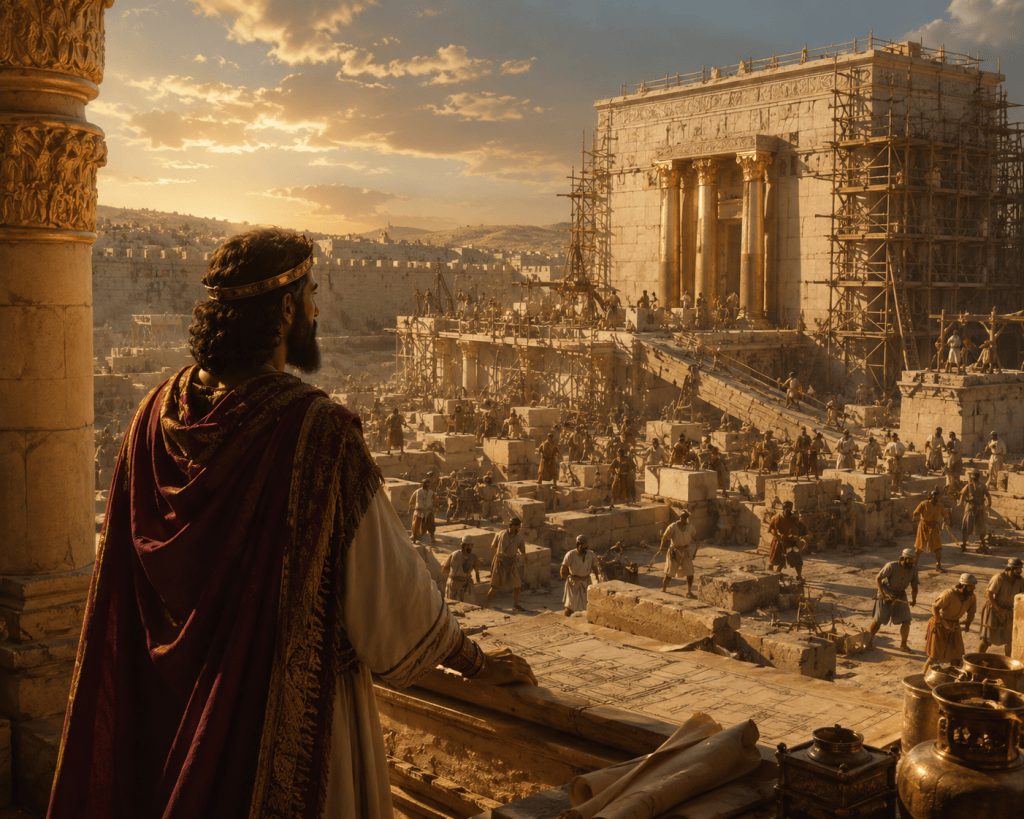
Solomon demonstrated remarkable organizational ability. He coordinated thousands of workers, managed international partnerships, supervised material transportation, and oversaw detailed craftsmanship during the construction of the Temple. His excellence was not accidental. It flowed from a heart that first sought God.
What made Solomon exceptional was not simply architectural brilliance. It was his recognition that human ability alone was insufficient for divine assignments. He understood that leadership without wisdom becomes dangerous.
Professionals today often focus heavily on talent, networking, and productivity while neglecting spiritual dependence. Solomon’s story reminds us that sustainable excellence requires both competence and character. God honors professionals who build with vision, humility, and reverence.
📜 The Temple Builder Under Divine Wisdom
When Solomon became king of Israel around the 10th century BC, the nation stood at a unique moment in history. His father, King David, had united Israel politically and militarily. The kingdom experienced relative peace and prosperity. Yet one major mission remained unfinished—the building of a permanent Temple for the worship of God in Jerusalem.
Before Solomon’s reign, Israel worshiped in the Tabernacle, a movable tent structure first established during Moses’ time in the wilderness. Though sacred, it reflected Israel’s earlier journey as a wandering people. Now the nation was settled. Jerusalem had become the political and spiritual center. A permanent Temple would symbolize God’s covenant presence among His people.
But Solomon was young and inexperienced. In 1 Kings 3, shortly after becoming king, he traveled to Gibeon to offer sacrifices. There God appeared to him in a dream and invited him to ask for anything. Instead of requesting military power, long life, or wealth, Solomon asked for “an understanding heart to judge thy people” (1 Kings 3:9).
This request revealed remarkable humility.
The phrase “understanding heart” carries the idea of a hearing heart—a leader able to listen carefully and discern wisely. Solomon recognized that leadership begins not with speaking, but with listening to God.
God was pleased with this request. The Lord granted Solomon wisdom beyond any ruler before him. This moment becomes foundational to understanding everything that follows in Solomon’s life, including the Temple construction.
In the literary flow of Kings, wisdom precedes building. Scripture intentionally shows that godly construction must begin with spiritual formation. Before Solomon built externally, God shaped him internally.
The Temple project itself was astonishing in scale. According to 1 Kings 5–7, Solomon organized tens of thousands of laborers. Cedar wood was transported from Lebanon through cooperation with King Hiram of Tyre. Skilled craftsmen worked with gold, bronze, stone, and precious materials. The project took approximately seven years.
Ancient Near Eastern kings often built monuments to glorify themselves politically. But Israel’s Temple carried covenant meaning. It symbolized God dwelling among His people. The structure reflected holiness, beauty, order, and worship.
The Temple also connected deeply with earlier biblical themes. The detailed artistic imagery of trees, flowers, and cherubim echoed Eden itself—the place where humanity originally enjoyed fellowship with God. In many ways, the Temple represented a restored meeting place between heaven and earth.
Yet Solomon’s story also carries caution.
Later in life, Solomon’s heart drifted from wholehearted devotion to God. His wisdom did not automatically protect him from compromise. This theological tension matters greatly for modern professionals. Skill, success, and influence are dangerous without continual spiritual surrender.
The Bible consistently teaches that wisdom must remain connected to obedience. Excellence without intimacy with God eventually collapses spiritually.
The Temple itself ultimately pointed beyond Solomon. In the New Testament, Jesus Christ declared Himself greater than the Temple (Matthew 12:6). Through Christ, God’s presence would no longer dwell merely in buildings made by human hands but within His people through the Holy Spirit.
This transforms the meaning of professional work today. Christians are not simply building careers or institutions. They are participating in God’s larger kingdom purposes. Whether designing infrastructure, teaching students, leading companies, writing software, managing teams, or serving patients, believers become instruments through whom God displays order, wisdom, and blessing in the world.
Like Solomon, professionals are called to build excellently. But unlike Solomon’s later failures, believers are invited to remain rooted continually in Christ—the true source of wisdom.
🌍 Sir Christopher Wren and the Vision Beyond Stone
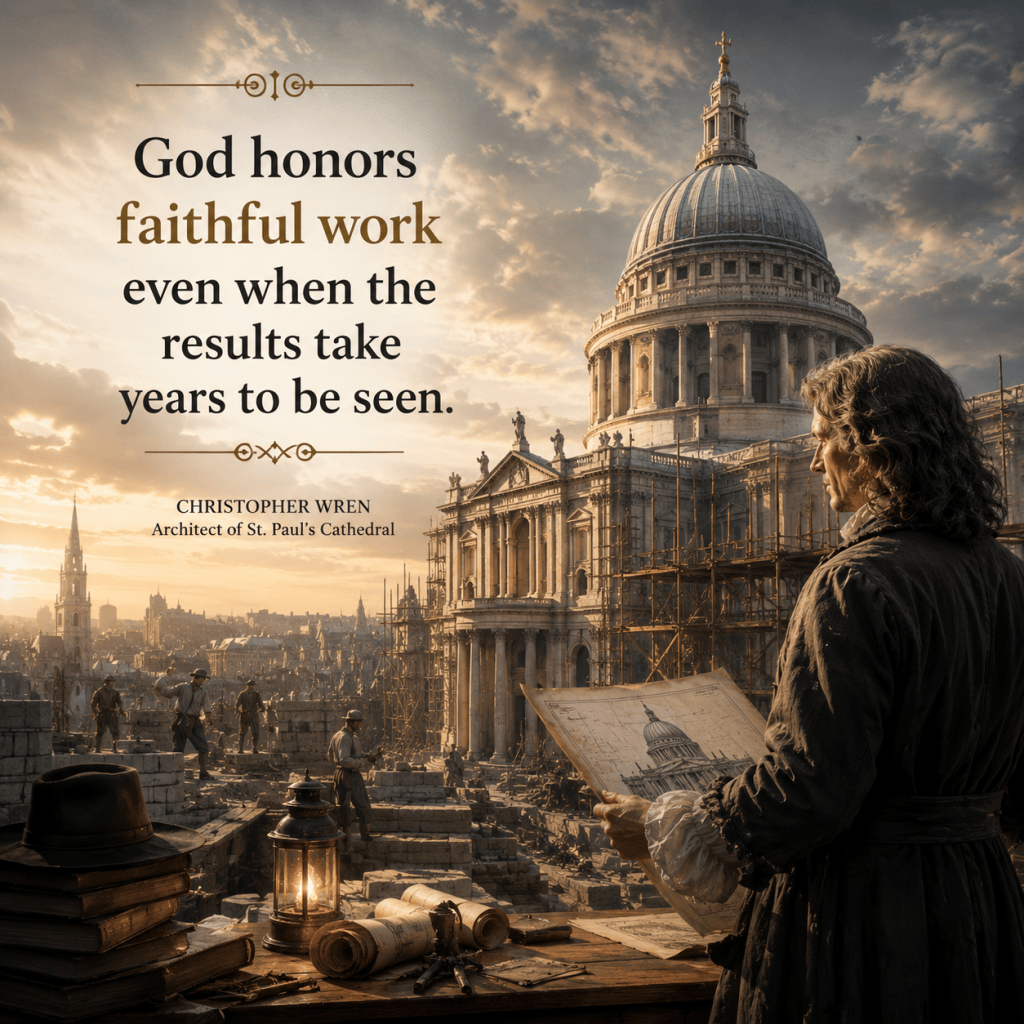
In 1666, the Great Fire of London destroyed much of the city, including the historic St. Paul’s Cathedral. England faced devastation, uncertainty, and enormous rebuilding pressure. Amid this crisis emerged Christopher Wren, a scientist, mathematician, and deeply thoughtful Christian architect.
Wren was entrusted with one of the greatest architectural responsibilities in English history: rebuilding St. Paul’s Cathedral and helping redesign London itself.
The task was overwhelming. Political disagreements delayed approvals. Financial struggles complicated progress. Public criticism frequently attacked his designs. Construction extended over decades. Yet Wren continued steadily with extraordinary discipline and long-term vision.
What made Wren remarkable was not only technical brilliance but patient perseverance. He believed architecture could reflect divine beauty and order. Rather than pursuing personal fame alone, he viewed his work as contributing to something lasting beyond his own lifetime.
When St. Paul’s Cathedral was finally completed in 1710, it became one of the most iconic structures in the world. Even centuries later, it still stands as a testimony to vision, precision, endurance, and craftsmanship.
An inscription inside the cathedral famously states: “If you seek his monument, look around you.”
Wren’s story reflects an important spiritual truth: faithful builders often labor for results they may not fully enjoy personally. Great work requires patience, humility, and commitment beyond temporary recognition.
Modern professionals live in a culture obsessed with quick success and immediate visibility. Yet kingdom-minded work often grows slowly through years of unseen faithfulness.
🏭 Workplace Lessons for Today
Solomon’s life teaches that excellence begins long before visible success. Modern professionals often focus only on outcomes, promotions, salaries, or recognition. But Scripture emphasizes wisdom, preparation, and character first.
Engineers and technology professionals build systems affecting millions of lives. Healthcare workers make decisions carrying emotional and ethical weight daily. Teachers shape future generations quietly through consistency. Business leaders influence families, economies, and workplace cultures. Government servants carry public responsibility requiring integrity under pressure.
In every profession, building well matters.
Solomon reminds us that large responsibilities require spiritual dependence. Technical expertise alone is insufficient. Professionals must cultivate discernment, humility, patience, and ethical clarity.
His story also teaches the importance of organized excellence. The Temple was not built carelessly. Planning, delegation, craftsmanship, and accountability mattered deeply. Christians should not treat excellence casually. Careful preparation honors God.
At the same time, Solomon’s later failures warn against allowing success to replace devotion. Promotions, influence, and achievement can slowly weaken spiritual vigilance if the heart drifts from God.
Faithful professionals pursue both excellence and intimacy with God together.
🔥 Spiritual Insight
The Temple Solomon built was magnificent, but it was temporary. Eventually it would face destruction. This reveals an important spiritual truth: every earthly achievement has limits.
Careers change. Businesses rise and fall. Technologies become outdated. Human recognition fades. Yet work done in obedience to God carries eternal significance.
The gospel transforms how believers view professional life. Work becomes more than survival or ambition. It becomes stewardship. God gives abilities, opportunities, influence, creativity, and leadership not merely for personal advancement but for kingdom purpose.
The Holy Spirit empowers believers to reflect God’s wisdom even in ordinary workplaces. A project manager can display Christ through integrity. A welder can honor God through precision and safety. A teacher can shape lives with patience and truth. A business owner can lead ethically with compassion and justice.
Scripture never separates spirituality from daily work. In fact, wisdom-filled work becomes part of Christian witness.
Yet Solomon’s life also reminds us that gifting is not enough. People may build impressive structures publicly while neglecting private devotion internally. True success requires continual surrender to God.
Ultimately, Jesus Christ is the greater Solomon—the perfectly wise King who builds not merely buildings, but transformed lives. When believers remain rooted in Him, their work gains eternal meaning beyond temporary achievement.
🤔 Reflection Questions
Am I building my professional life with wisdom or merely ambition? Where do I need greater dependence on God in leadership and decision-making? Does my work reflect excellence, integrity, and humility that honors Christ?
🙏 Prayer
Lord, grant me wisdom like Solomon to build faithfully and lead responsibly. Protect my heart from pride, compromise, and empty ambition. Help me pursue excellence with humility and integrity. May my skills, leadership, and daily work reflect Your character and bring glory to Christ. Strengthen me to build things that honor You eternally. Amen.


Leave a comment