
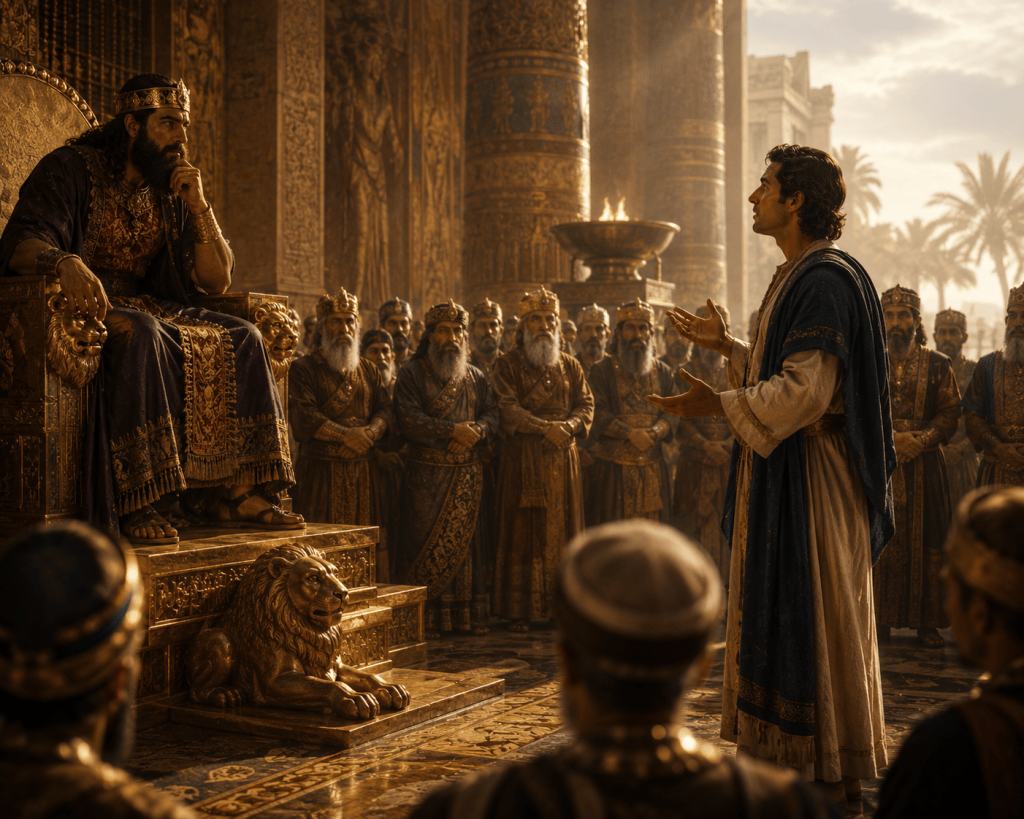
“Wisdom is the right use of knowledge.”
— Charles Spurgeon
📖 Main Scripture Passage
Daniel 2:20–22 (KJV)
“Daniel answered and said, Blessed be the name of God for ever and ever: for wisdom and might are his: and he changeth the times and the seasons: he removeth kings, and setteth up kings: he giveth wisdom unto the wise, and knowledge to them that know understanding: he revealeth the deep and secret things: he knoweth what is in the darkness, and the light dwelleth with him.”
Daniel 2:20-22 KJV
A project deadline suddenly collapses into chaos. Critical data is missing. Leadership demands immediate answers. Teams begin blaming one another. Anxiety spreads across departments because nobody fully understands the problem.
🏢 Opening Workplace Connection
Modern workplaces constantly face moments like these. Engineers face technical failures. Doctors confront difficult diagnoses. Business leaders make decisions with incomplete information. Government officials carry enormous responsibility during crises. Teachers and administrators navigate growing pressures with limited resources.
In many professional environments, the greatest pressure is not physical labor but the burden of solving problems no one else can solve.
Human expertise matters deeply. Education, preparation, research, and technical skill are gifts from God. Yet there are moments when experience alone feels insufficient. We need wisdom beyond intelligence. We need discernment beyond analysis.
Daniel’s story speaks powerfully into such moments. In the middle of political pressure, impossible expectations, and life-threatening uncertainty, God gave Daniel supernatural wisdom that elevated him from a captive exile to one of the most trusted advisors in Babylon.
👨💼 Daniel’s supernatural wisdom:
Daniel was not merely a prophet standing outside political systems. He was a highly trained governmental administrator serving within one of the most powerful empires in the ancient world.
After Jerusalem fell to Babylon around 605 BC, Daniel and other gifted young Jewish men were taken into exile under King Nebuchadnezzar. Babylonian culture valued education, administration, astronomy, literature, mathematics, and political strategy. Daniel was selected for elite leadership training within the royal court.
Scripture says God gave Daniel “knowledge and skill in all learning and wisdom” (Daniel 1:17). The Hebrew word for wisdom here carries the idea of discernment, practical understanding, and skillful judgment. Daniel combined intellectual excellence with spiritual dependence on God.
What made Daniel exceptional was not talent alone. Babylon had many intelligent advisors. Daniel’s distinction came from his reverence for God, disciplined character, humility, prayer life, emotional stability, and ability to seek divine wisdom during impossible situations.
He developed professionally while remaining spiritually faithful. His life demonstrates that godly wisdom does not oppose learning and expertise—it strengthens them.
📜 Mystery to Daniel in a vision
The city of Babylon stood as the center of global power in Daniel’s generation. Massive walls surrounded the city. Wealth flowed through its markets. Political authority, military dominance, and intellectual achievement filled the empire with pride.
Yet beneath the appearance of control stood a deeply troubled king.
Daniel 2 opens with King Nebuchadnezzar experiencing disturbing dreams. In the ancient Near East, dreams were often viewed as messages connected to divine realities or national destiny. Nebuchadnezzar sensed that his dream carried enormous significance, but fear and anxiety overwhelmed him.
He summoned Babylon’s wise men—the magicians, astrologers, sorcerers, and Chaldeans. These men represented the intellectual and spiritual elite of Babylonian society. They were trained advisors skilled in literature, astronomy, omens, political counsel, and religious interpretation.
But Nebuchadnezzar demanded something impossible.
He refused to reveal the dream itself and commanded the wise men not only to interpret the dream but first to tell him what he had dreamed. Failure meant execution.
The tension in the royal court became terrifying. The advisors understood the impossibility of the command. Their response exposed the limits of human wisdom:
“There is not a man upon the earth that can shew the king’s matter” (Daniel 2:10).
In anger, Nebuchadnezzar ordered the destruction of all the wise men of Babylon—including Daniel and his companions.
At this point, the narrative shifts dramatically.
Daniel responded differently from the other advisors. He did not panic. He did not manipulate. He did not pretend confidence he lacked.
Instead, Daniel sought time from the king and immediately gathered his companions—Hananiah, Mishael, and Azariah—to pray for mercy from “the God of heaven” (Daniel 2:18).
This phrase matters deeply. In a culture filled with territorial gods and pagan systems, Daniel acknowledged the sovereign Lord who rules heaven and earth. Babylon’s empire appeared powerful, but Daniel knew ultimate wisdom belonged to God alone.
During the night, God revealed the mystery to Daniel in a vision.
The Hebrew term often translated “mystery” in Daniel refers to hidden realities beyond human discovery unless revealed by God. Daniel understood something foundational: wisdom is not self-generated achievement; it is divine revelation received with humility.
Before appearing before the king, Daniel worshiped.
This moment reveals profound theological maturity. Daniel did not use God merely as a solution provider for career advancement. He recognized God as sovereign over kings, nations, history, and knowledge itself.
Daniel declared:
“He revealeth the deep and secret things: he knoweth what is in the darkness” (Daniel 2:22).
These words echo throughout Scripture. Joseph interpreted Pharaoh’s dreams in Egypt. Solomon asked God for wisdom to govern Israel. Later, Christ Himself would be called the wisdom of God (1 Corinthians 1:24). Daniel’s story fits within the broader biblical theme that true wisdom flows from relationship with God.
When Daniel finally stood before Nebuchadnezzar, he carefully refused personal glory:
“But there is a God in heaven that revealeth secrets” (Daniel 2:28).
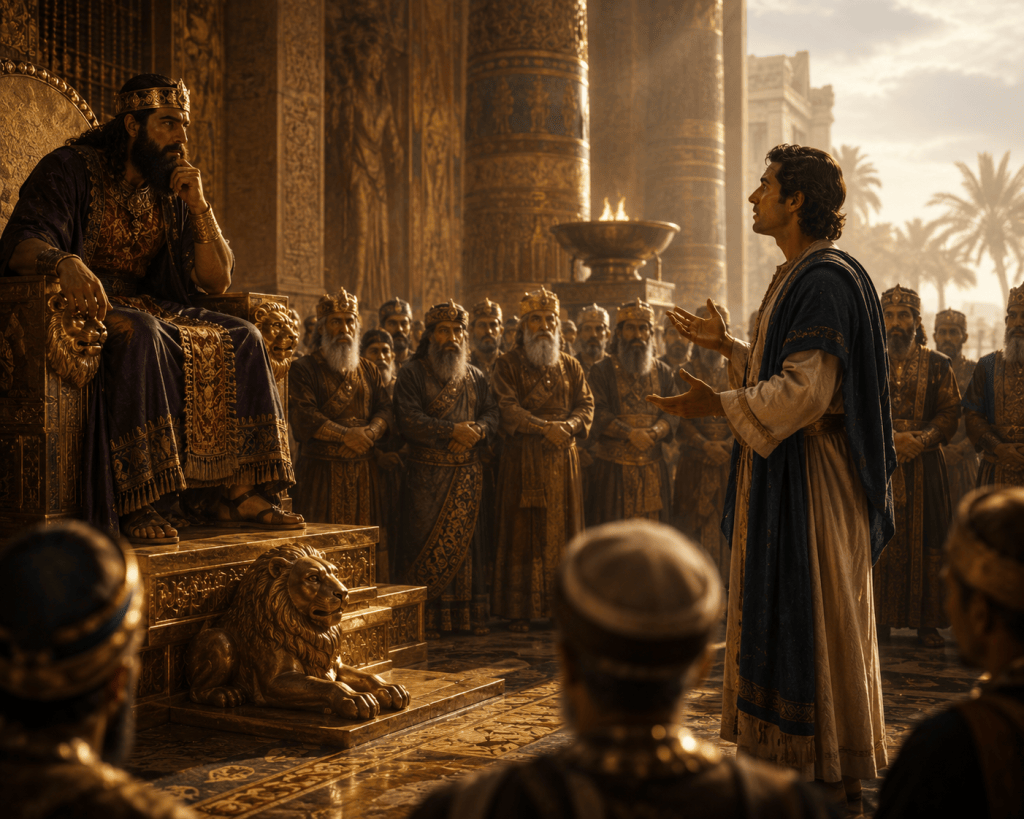
Daniel then explained the dream of the great statue representing successive kingdoms—Babylon, Medo-Persia, Greece, and Rome—before describing God’s eternal kingdom that would outlast all earthly powers.
The interpretation astonished the king.
Nebuchadnezzar recognized that Daniel possessed wisdom beyond human ability. Daniel was promoted over the province of Babylon and placed over many leaders within the empire.
An exiled Jewish captive became a trusted national advisor because God’s wisdom surpassed the limitations of earthly systems.
🌍 The Scientist Who Prayed Through Complexity — George Washington Carver, Alabama, Early 1900s
In the early twentieth century, much of the southern United States faced agricultural collapse. Years of continuous cotton farming had severely damaged the soil. Farmers lived in deep poverty, and many believed recovery was impossible.
George Washington Carver, born into slavery during the American Civil War, became one of the most respected agricultural scientists in American history. Yet behind his scientific brilliance stood a deeply committed Christian faith.
Carver worked at the Tuskegee Institute in Alabama under extremely limited conditions. Laboratories lacked advanced equipment. Funding was scarce. Racial discrimination remained severe throughout American society.
Yet Carver approached science as stewardship under God.
He often rose early in the morning to pray and study nature quietly before beginning laboratory work. Carver believed creation reflected the wisdom of its Creator. Rather than separating faith from science, he viewed scientific discovery as cooperation with God’s design.
One of the greatest agricultural problems involved exhausted farmland that could no longer sustain cotton production. Carver encouraged farmers to rotate crops and develop alternatives like peanuts, sweet potatoes, and soybeans to restore soil health.
At first, many resisted his ideas.
But Carver continued researching practical solutions that poor farmers could actually afford. Eventually, he developed hundreds of useful products derived from peanuts and other crops. His work transformed southern agriculture and helped countless struggling communities survive economically.
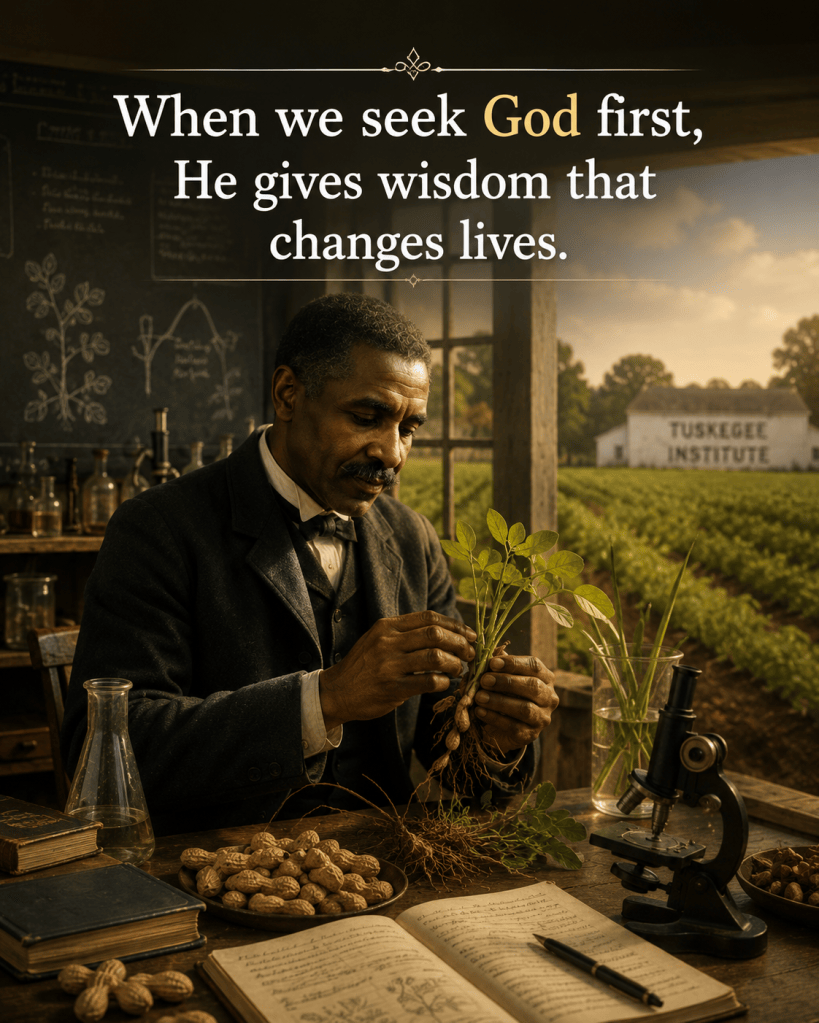
Despite growing fame, Carver remained humble. He refused opportunities for personal wealth because he believed his work belonged to God’s purpose.
Like Daniel, Carver combined disciplined learning with dependence on divine wisdom. He understood that human knowledge becomes most fruitful when surrendered to God.
His story reminds modern professionals that prayer and intellectual excellence are not enemies. God can guide minds, inspire creativity, and provide insight beyond ordinary expectations.
Further Reading:
The Henry Ford – George Washington Carver Biography
🏭 Workplace Lessons for Today
Daniel’s story speaks directly into today’s professional world where complexity, uncertainty, and pressure continue increasing across industries.
First, preparation matters. Daniel studied diligently in Babylon’s educational system while remaining faithful to God. Spiritual maturity should not produce professional laziness. Christians honor God through disciplined skill development, thoughtful learning, and responsible excellence.
Second, prayer must accompany expertise. Daniel did not reject education, but he understood its limits. Some workplace challenges require wisdom beyond technical knowledge alone. Leaders who pause to seek God often gain discernment others overlook.
Third, humility creates influence. Daniel consistently redirected glory toward God rather than himself. Professionals who remain teachable and humble build lasting trust within teams and organizations.
Fourth, calm leadership matters during crisis. While others panicked, Daniel responded with wisdom, patience, and spiritual clarity. Emotional stability becomes powerful leadership in stressful environments.
Finally, God can use believers inside secular systems. Daniel served faithfully within a pagan empire without compromising conviction. Christians today can influence corporations, hospitals, universities, factories, government offices, and businesses by demonstrating wisdom shaped by God’s presence.
🔥 Spiritual Insight
Daniel’s story ultimately points beyond professional success toward the deeper reality of God’s sovereign wisdom.
Human intelligence alone cannot solve the deepest mysteries of life. Technology advances, economies shift, governments rise and fall, but God alone fully understands history, humanity, and eternity.
The gospel reveals that true wisdom is ultimately found in Christ. Scripture calls Jesus “the wisdom of God” because through Him God reveals truth, salvation, righteousness, and eternal hope.
Daniel interpreted mysteries in Babylon, but Christ reveals the mystery of redemption itself.
This devotional also reminds us that work is spiritual stewardship. The Holy Spirit does not empower believers only inside churches. God strengthens teachers in classrooms, engineers solving infrastructure problems, doctors treating patients, administrators managing crises, and business leaders making ethical decisions.
Wisdom becomes holy when surrendered to God’s purposes.
At the same time, Daniel warns us about success without dependence on God. Babylon valued intelligence, power, and achievement, yet its wisdom remained incomplete apart from the Lord. Modern culture often celebrates expertise while ignoring spiritual truth.
But believers are called to combine competence with worship, excellence with humility, and influence with faithfulness.
God still reveals wisdom to those who seek Him sincerely.
🤔 Reflection Questions
1. Where in your professional life do you currently need God’s wisdom beyond your own expertise?
2. Do you seek God in pressure-filled decisions as consistently as Daniel did?
3. How can your workplace excellence become a testimony that points others toward Christ?
🙏 Prayer
Heavenly Father, grant me wisdom that goes beyond human understanding. Help me work with excellence, humility, and faithfulness in every responsibility You have entrusted to me. Teach me to seek You during difficult decisions and use my skills for Your glory and the good of others. May my work reflect the character of Christ each day. Amen.


Leave a comment