
📖 Scripture Anchor
“He that is faithful in that which is least is faithful also in much: and he that is unjust in the least is unjust also in much.”
Luke 16:10
✨ Short Introduction
Many business leaders measure success through profit, expansion, and influence. But history remembers certain individuals not only for what they built, but for how they treated people during difficult seasons.
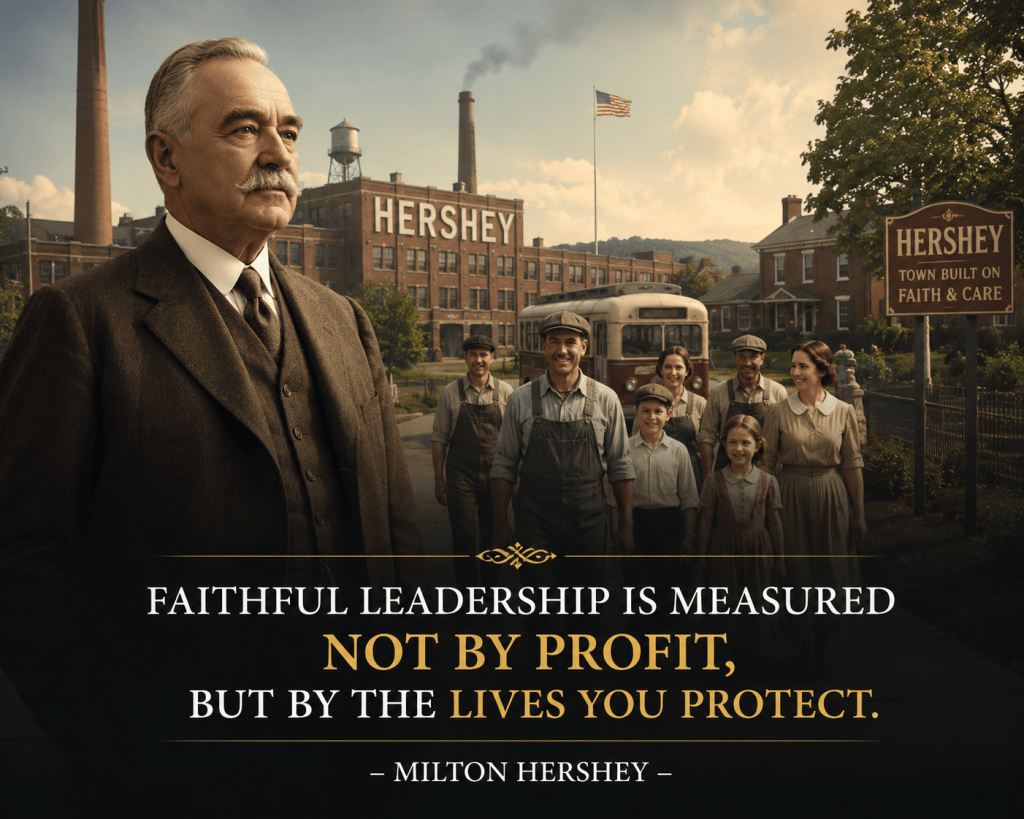
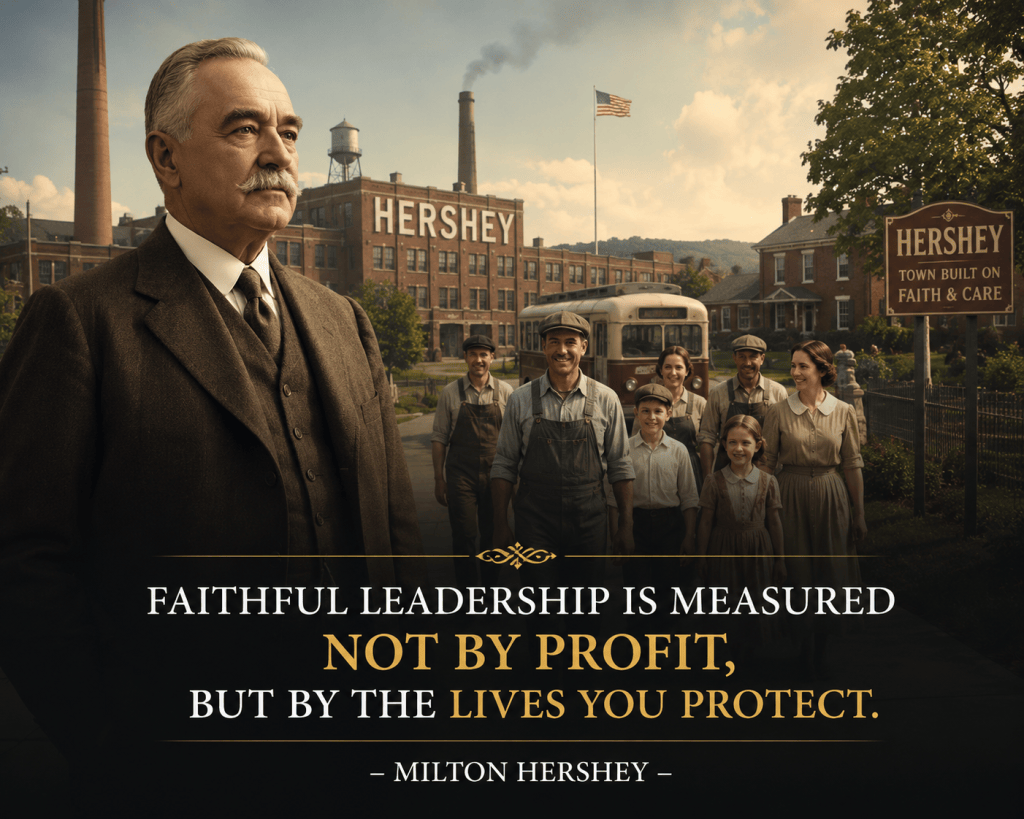
Milton Hershey became known not merely for chocolate production, but for demonstrating stewardship, compassion, and long-term responsibility during one of America’s darkest economic periods. His story reminds believers that Christian leadership must reflect God’s character even in business decisions.
⏳ Background : Before the Crisis Deepened
In the early 20th century, Milton Hershey had already become one of America’s most successful entrepreneurs. Through the growth of the The Hershey Company, he established a thriving chocolate industry in Hershey.
But Hershey’s vision extended far beyond manufacturing. He believed workers deserved dignity, stability, and care. At a time when many industrial towns were overcrowded and unhealthy, Hershey built homes, schools, public transportation systems, recreation areas, and medical facilities for employees and their families.
Yet the greatest challenge came after the stock market crash of 1929. The Great Depression devastated the United States. Factories closed. Banks failed. Businesses collapsed rapidly. Millions lost employment. Fear spread through homes and workplaces alike.
For many business owners, survival meant immediate layoffs and deep financial cuts. Executives across industries focused on preserving profits and protecting assets. Workers often became numbers rather than people.
Hershey faced the same economic pressures. Chocolate sales slowed. Financial uncertainty increased. Maintaining large workforces during economic collapse appeared risky and impractical. Human reasoning suggested reducing labor costs quickly.
Emotionally, communities across America experienced anxiety, hopelessness, and insecurity. Families feared hunger, homelessness, and unemployment. Parents wondered how they would provide for their children. Workers who had once lived with stability suddenly faced uncertainty about the future.
Hershey himself understood hardship personally. Earlier in life, he had experienced repeated business failures before eventually succeeding. Those painful experiences shaped his compassion and long-term thinking. He knew how quickly financial collapse could destroy human dignity and hope.
🔥 Turning Point (God’s Intervention)
Rather than responding with fear-driven decisions, Hershey chose a radically different path. Influenced by Christian moral conviction and stewardship principles, he believed wealth carried responsibility before God.
Instead of abandoning workers during the Depression, Hershey initiated major construction projects throughout the town of Hershey. These projects included community buildings, hotels, cultural centers, and expanded infrastructure. Significantly, many of these developments were not launched primarily for business expansion, but to create jobs and sustain families during economic crisis.
This decision required extraordinary foresight and courage. While countless companies reduced payrolls, Hershey intentionally kept people employed. He understood that wise stewardship meant protecting human lives, not merely preserving corporate margins.
One of the clearest examples of his faith-driven vision was the continued support of the Milton Hershey School. Founded originally for orphaned boys, the school was sustained through Hershey’s personal wealth and long-term planning structures. During unstable economic years, his commitment to vulnerable children did not disappear.
Although Hershey was not widely known for public preaching, his actions reflected biblical principles deeply consistent with Christian stewardship:
• Faithfulness during uncertainty
• Compassion over selfish preservation
• Long-term preparation rather than panic
• Responsibility toward people under his care
God’s intervention in this story is seen not through dramatic miracles, but through wisdom, conviction, provision, and courageous leadership during crisis. Sometimes the Lord works quietly through faithful decisions that protect others in difficult seasons.
🌿 Transformation / After Christ
The outcome of Hershey’s decisions extended far beyond temporary economic relief. While many communities suffered devastating unemployment, the town of Hershey experienced unusual stability compared to many other industrial regions. Families retained dignity through continued work opportunities.
More importantly, Hershey demonstrated that Christian values could influence business culture in deeply practical ways. His leadership showed that stewardship is not merely about accumulating wealth, but about managing resources in ways that honor God and serve people faithfully.
The Milton Hershey School continued growing long after his lifetime, eventually serving thousands of students from difficult backgrounds. The systems Hershey established decades earlier became channels of long-term blessing for future generations.
Spiritually, this story reminds believers that mature faith often appears through consistent obedience and responsible decisions rather than public recognition. Hershey’s greatest legacy was not simply chocolate production—it was compassionate stewardship shaped by moral conviction.
Even today, his story challenges Christian professionals to ask whether their leadership reflects the heart of Christ in seasons of pressure, uncertainty, and economic fear.
🕊️ Spiritual Reflection / Lesson
This testimony teaches that God cares deeply about how leaders treat people during difficult seasons. Christian faith should influence not only church worship, but financial decisions, workplace ethics, leadership attitudes, and long-term planning.
S.P.E.C.K. Insights
S — Sin to Avoid / Confess
Fear-driven selfishness, greed, and treating people merely as financial tools instead of individuals created in God’s image.
P — Promise to Claim
God honors faithful stewardship and wisdom used for the good of others. Faithful obedience produces lasting influence beyond one generation.
E — Example to Follow
Milton Hershey’s willingness to protect workers and care for vulnerable people during economic hardship reflects compassionate leadership worth following.
C — Command to Obey
Lead responsibly. Care for people faithfully. Use influence and resources with integrity and mercy.
K — Knowledge About God
God is compassionate, wise, and faithful. He values justice, stewardship, and care for people, especially during seasons of suffering and uncertainty.
Key Learnings
• Christian leadership must reflect compassion, not merely efficiency.
• Wise preparation protects future generations.
• Stewardship involves responsibility before God.
• Faith becomes visible through practical decisions.
• Integrity during crisis reveals true character.
💬 Closing Encouragement
You may never build a company like Hershey’s, but God still calls you to faithful stewardship in whatever responsibility He has entrusted to you.
Whether you lead a business, manage a small team, teach students, serve patients, design systems, or care for a family, your decisions matter deeply before God. The Lord often uses ordinary acts of wisdom, compassion, and integrity to become extraordinary blessings in other people’s lives.
Do not underestimate the spiritual impact of responsible leadership. Faithfulness in difficult seasons can become a testimony that points others toward Christ.
🙏 Prayer
Lord, help me to lead with wisdom, compassion, and integrity. Teach me to value people above selfish ambition. Give me courage to remain faithful during difficult seasons and use every responsibility You have entrusted to me for Your glory and the good of others. In Jesus’ name, Amen.


Leave a comment