📖 ✝️ Scripture Reading: Acts 2:1–13
“The Holy Spirit is not a luxury—it is a necessity for Christian living.”
— A.W. Tozer
💒 🕊️ ✨ Context (Story) :
The city of Jerusalem was alive with pilgrims.
It was the Feast of Pentecost—Shavuot, celebrated fifty days after Passover. Jews from across the Roman Empire had gathered: Parthians, Medes, Egyptians, Romans. The air buzzed with languages, cultures, and expectation. Yet beneath the celebration lay a deeper tension. Just weeks earlier, Jesus had been crucified under Roman authority—an event that shook the city. Rumors of His resurrection had spread. Then came His ascension. And now… silence.
But not for long.
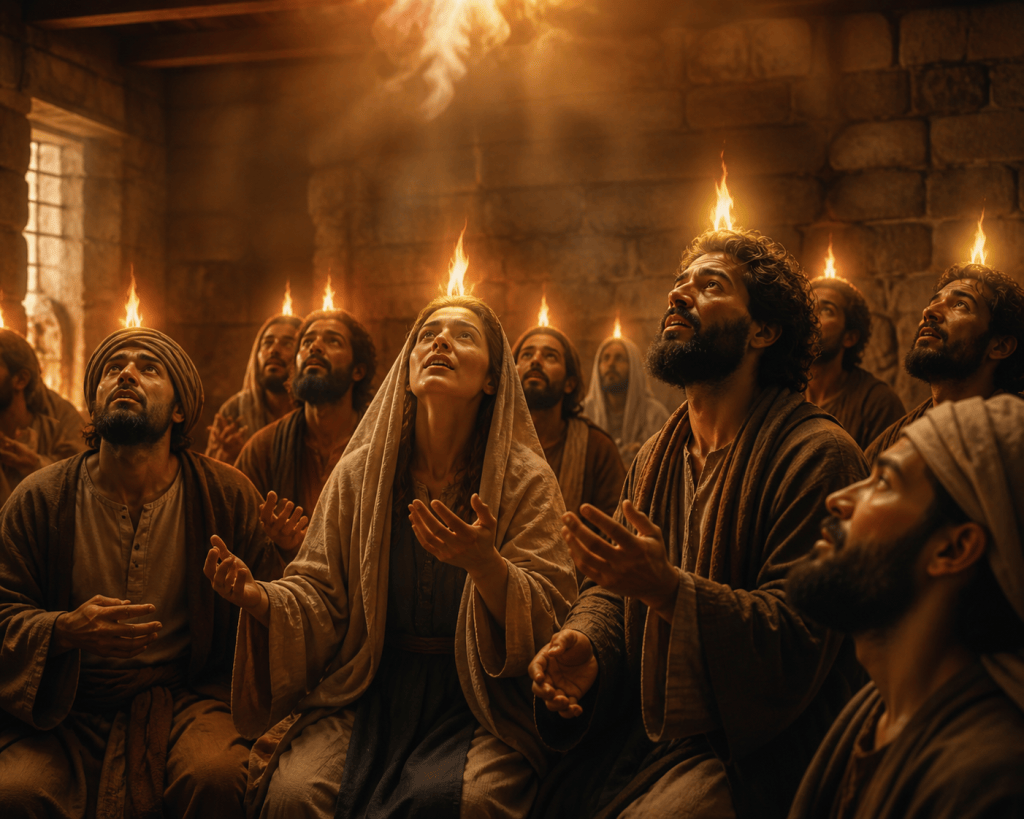
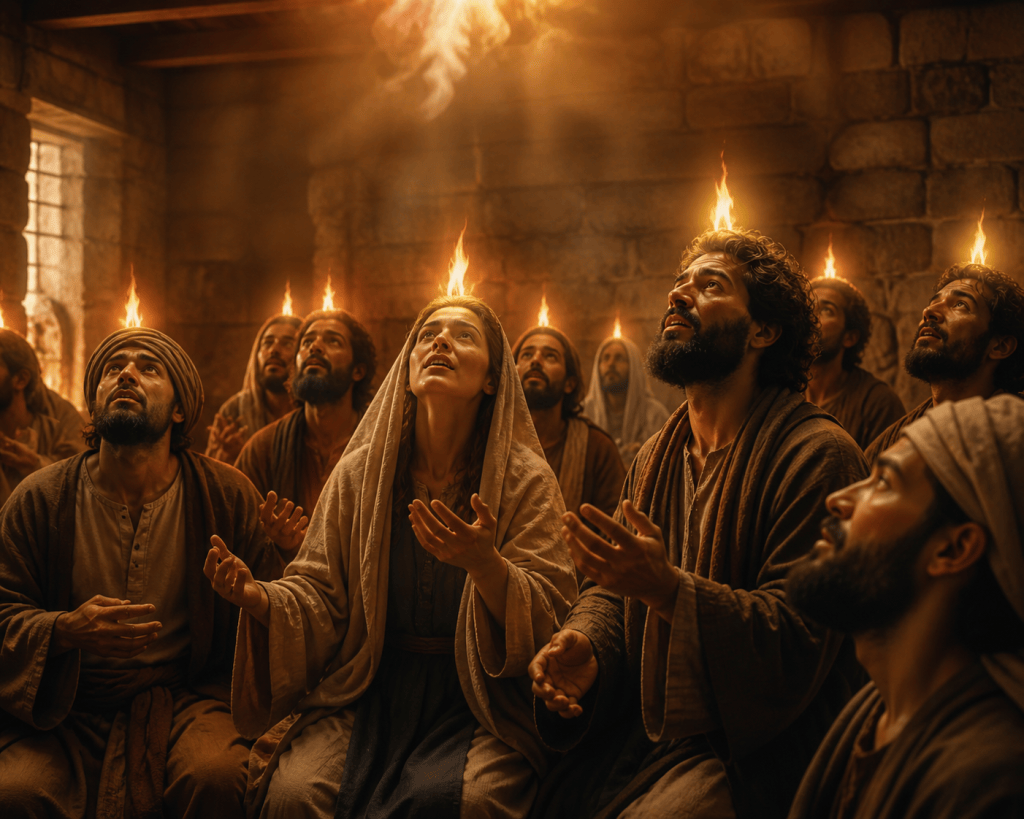
In an upper room, about 120 followers waited. This moment is deeply tied to the literary flow of Acts. In chapter 1, Jesus commands them to wait for the “promise of the Father.” Now, in chapter 2, that promise arrives.
Suddenly—Luke uses language of interruption and divine invasion—“a sound like a mighty rushing wind” fills the house. The Greek word for “wind” here is pnoē, echoing ruach (Hebrew for Spirit, breath, wind). This is not mere weather—it is the breath of God, reminiscent of creation in Genesis 2:7 and the valley of dry bones in Ezekiel 37.
Then comes fire.
“Divided tongues as of fire” rest on each person. Fire in Scripture often signals God’s presence—Sinai (Exodus 19), the burning bush (Exodus 3). But here, something radical happens: the fire does not remain distant. It rests on each believer individually. God is no longer confined to temple or mountain—He indwells His people.
And they begin to speak.
The Greek phrase glōssais heterais—“other tongues”—indicates known languages, not chaos but clarity. The miracle is not ecstatic confusion but supernatural communication. Jews from different nations hear the disciples declaring “the mighty works of God” in their own languages.
The crowd gathers, astonished.
“How is it that we hear, each of us in our own native language?” they ask. The list of nations emphasizes universality—the gospel is breaking ethnic and linguistic barriers. This moment fulfills prophecy. Joel 2:28–32 had promised: “I will pour out my Spirit on all flesh.”
But not everyone understands.
Some are amazed. Others mock: “They are filled with new wine.” This reveals a timeless human response—when confronted with divine power, some worship, others dismiss.
Pentecost is not just an event. It is the birth of the Church—the moment the mission of Jesus expands beyond geography into every nation.
🤔 🪞 💡 Reflection Thought:
Pentecost reveals a profound theological truth: God moves from being with His people to being within His people.

The Spirit’s coming marks a shift in redemptive history. In the Old Testament, the Spirit came upon select individuals—prophets, kings, priests—for specific tasks. But now, through Christ’s finished work—His death, resurrection, and ascension—the Spirit is poured out on all believers.

This moment cannot be separated from the journey of Jesus from Palm Sunday to Ascension. The King who entered Jerusalem humbly, who suffered on the cross, who rose in victory, now reigns by sending His Spirit. Pentecost is the continuation of Christ’s work, not its conclusion.

We also see the reversal of Babel (Genesis 11). At Babel, language divided humanity in judgment. At Pentecost, language unites humanity in grace. The gospel speaks every language because it is for every person.

The crowd’s divided reaction exposes the human heart. Some are spiritually awakened; others are spiritually blind. The same Spirit that empowers also confronts. The same message that saves can be rejected.

And the fire—resting on each believer—reminds us that faith is not passive. It is dynamic, alive, and empowered. The Church is not built on human strategy but divine presence.
🎬🔛 Historical True Event :
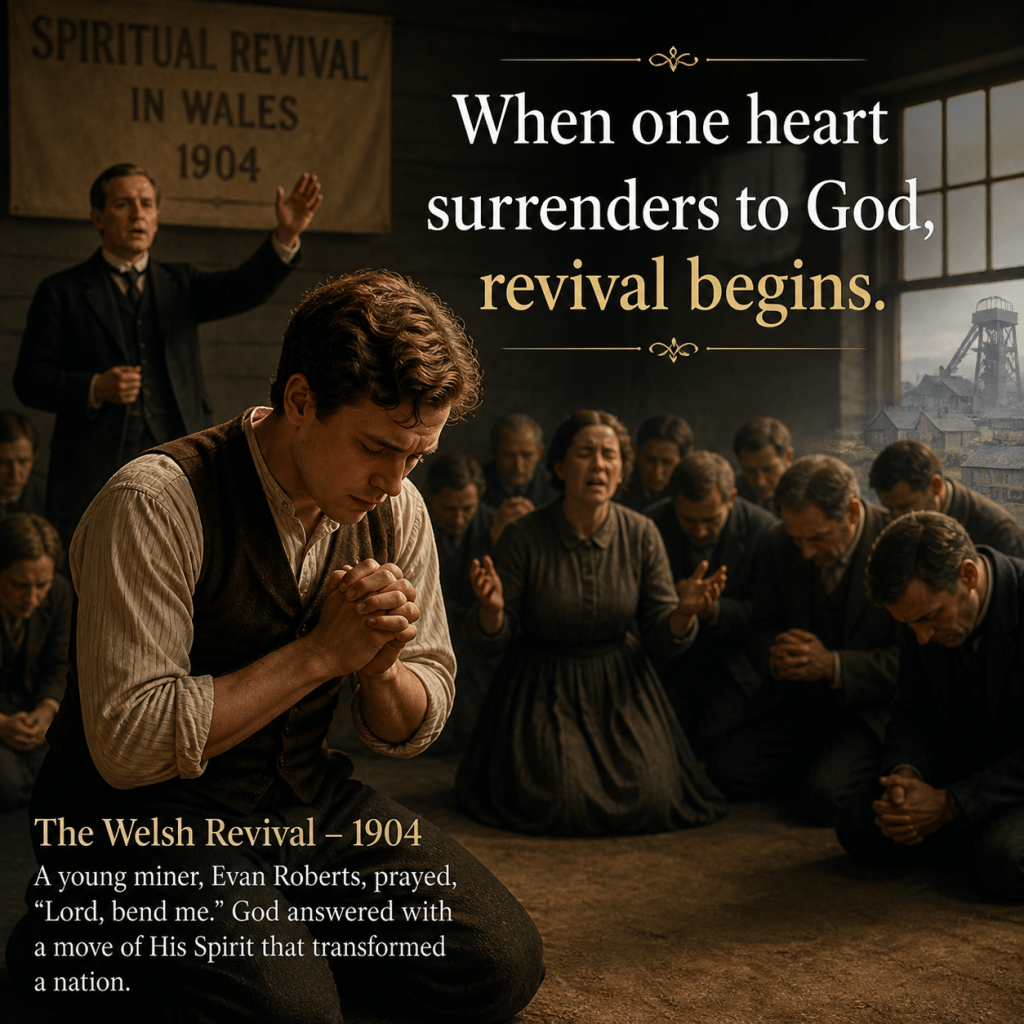
The Welsh Revival Fire – Evan Roberts (Wales, 1904)
In 1904, a young coal miner named Evan Roberts in Wales felt a deep stirring in his heart. For years, he prayed a simple prayer: “Lord, bend me.”
Wales at the time was spiritually dry. Churches were routine, faith was fading, and society was marked by moral decline. But Roberts believed the Holy Spirit could bring revival—not through programs, but through surrendered hearts.
One night, during a small prayer meeting, something changed.
The Spirit moved powerfully. People began confessing sins openly. Hardened hearts softened. Entire communities were transformed. Taverns emptied, crime rates dropped, and even judges noted fewer cases in court.
The revival spread like wildfire. Within months, over 100,000 people turned to Christ.
What made it remarkable was not preaching brilliance or organization—it was the overwhelming presence of the Holy Spirit.
Roberts later said, “It is not our work—it is the Spirit alone.”
Pentecost was not just history. It was repeating itself.
🔗 Source :
https://www.christianitytoday.com/history/issues/issue-38/welsh-revival.html
⚒️🎯 Personal Application:
Pentecost calls us to examine whether we are living in the power of the Spirit or merely in religious routine. We are not meant to follow Christ in our own strength. The same Spirit who filled the early believers lives in us today. This challenges us to surrender control, to depend on God daily, and to boldly live out our faith. We must ask ourselves: Are we open to the Spirit’s leading, or are we resisting His work? Our lives should reflect the transforming presence of God—not just in words, but in power, love, and obedience.
🙏 🕯️ Prayer:
Holy Spirit, fill us afresh today. Remove our fear, our pride, and our self-reliance. Teach us to depend on You and walk in Your power. Ignite our hearts to live boldly for Christ and to reflect Your presence in everything we do. Amen.


Leave a comment