
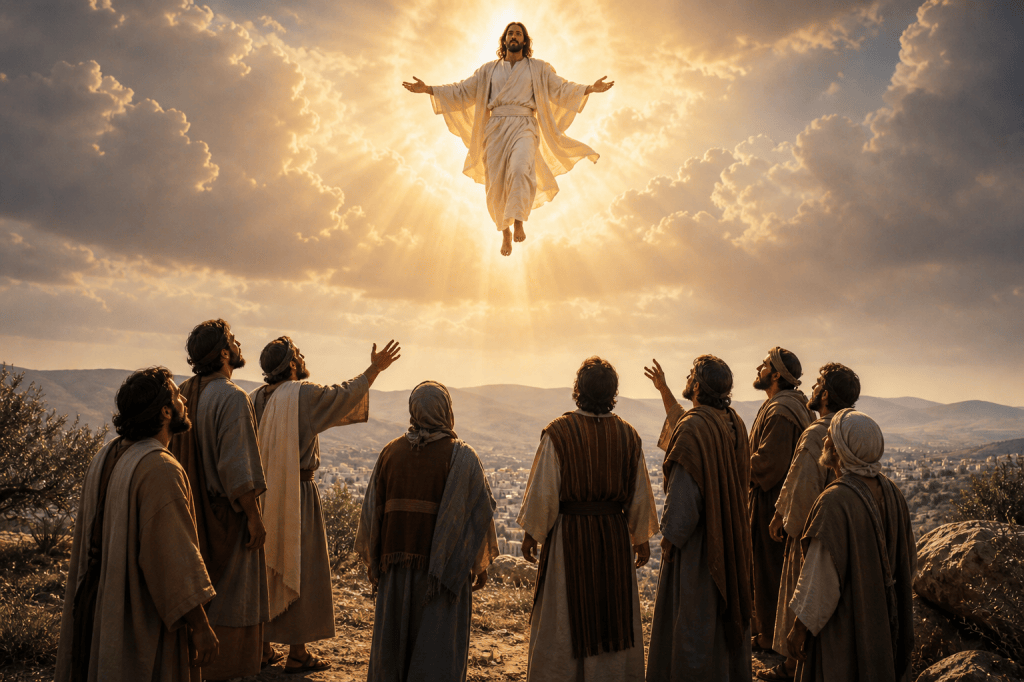
📖 ✝️ Scripture Reading:Acts 1:1–11
“The Spirit-filled life is not a special deluxe edition of Christianity. It is part and parcel of the total plan of God for His people.”
— A.W. Tozer
💒 🕊️ ✨ Context (Story) :
The story opens not with an ending, but with a continuation. Luke, the careful historian, writes again to Theophilus, reminding him of all that Jesus began to do and teach. The Gospel did not end at the resurrection—it moves forward into a living, expanding mission.
It has been forty days since the resurrection. Jesus has been appearing to His disciples—eating with them, speaking with them, proving beyond doubt that He is alive. In a land still under Roman rule, where political tension runs high and Jewish hopes for national restoration remain strong, the disciples gather with anticipation.
Jesus speaks to them about the kingdom of God. Not a political kingdom overthrowing Rome, but a spiritual reign that transforms hearts. Yet the disciples, still shaped by Jewish expectations, ask, “Lord, will you at this time restore the kingdom to Israel?” Their question reveals both hope and misunderstanding.
Jesus gently redirects them. “It is not for you to know the times or seasons.” The Greek word chronos (time) and kairos (season) indicate both duration and decisive moments. God’s plan is sovereign, not subject to human timelines.
But then comes the promise:
“You shall receive power when the Holy Spirit has come upon you.”
The word power here is dunamis—divine ability, supernatural strength. This is not human effort enhanced; it is heaven’s power imparted. And this power has a purpose:
“You shall be My witnesses…”
The word witnesses (martys) would later become synonymous with sacrifice—even martyrdom. Their calling is not comfort, but testimony.
The scope expands outward: Jerusalem, Judea, Samaria, and to the ends of the earth. This is the unfolding of God’s redemptive plan, echoing Isaiah 49:6—“a light for the Gentiles.”
Then, as they watch, something extraordinary happens.
Jesus is lifted up.
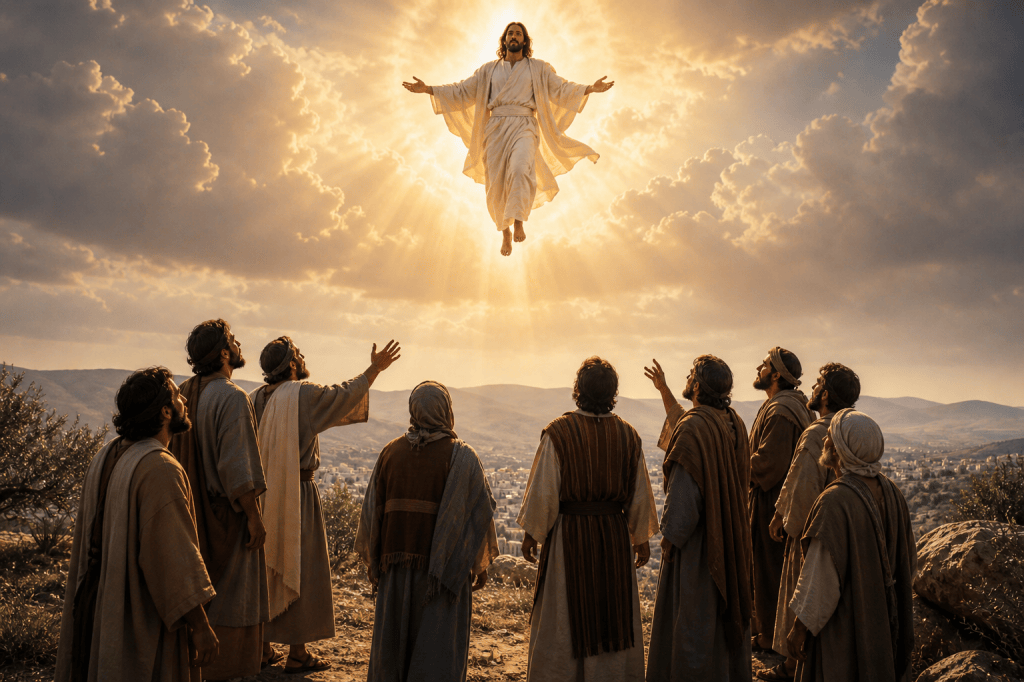
No chariot of fire, no dramatic storm—just a quiet, majestic ascension. A cloud receives Him out of their sight. In Scripture, the cloud often signifies God’s presence—seen in Exodus and at the Transfiguration. This is not disappearance; it is divine enthronement.
The disciples stand gazing into the sky, perhaps overwhelmed, perhaps confused. The One they followed, loved, and depended on is no longer physically present.
Then two men in white appear—angelic messengers.
“Why do you stand looking into heaven?”
It is both a gentle rebuke and a redirection.
“This same Jesus… will come in the same way.”
The ascension is not the end—it is a promise. Just as He ascended, He will return.
Between ascension and return lies a sacred space: waiting.
🤔 🪞 💡 Reflection Thought:
This passage reveals a profound truth about the nature of God’s work—He often calls us to wait before He calls us to act.

Jesus could have sent the disciples immediately. Instead, He commanded them to wait for the Holy Spirit. This waiting was not inactivity; it was preparation.

We see the heart of Christ here—He does not send His followers in their own strength. He provides His Spirit. The mission of God is sustained by the power of God.

There is also a shift in how Jesus relates to His followers. During His earthly ministry, He was physically present with them. Now, through the Holy Spirit, He will be present within them. This is deeper, more intimate, and more transformative.

The disciples’ question about restoring Israel reflects a common human tendency—we want clarity, control, and timelines. But Jesus redirects them from curiosity to calling.

Theologically, the ascension affirms Christ’s exaltation. He is not absent; He is reigning. Seated at the right hand of the Father, He intercedes and rules.

The promise of the Spirit reveals the Trinity in action—Father ordains, Son ascends, Spirit empowers.

And the command to be witnesses reminds us: faith is not private. It is proclaimed.
🎬🔛 Historical True Event :
Waiting That Sparked Revival: The Hebrides Awakening (Scotland, 1949)
In 1949, on the Isle of Lewis in Scotland, a spiritual dryness had settled over the land. Churches were empty, and faith seemed distant.
Two elderly sisters, Peggy and Christine Smith—aged 84 and 82—felt burdened to pray. Peggy was blind, Christine bent with arthritis, yet they believed God was not finished.
They began to pray faithfully, night after night, pleading for revival. They had no platform, no influence—only faith.
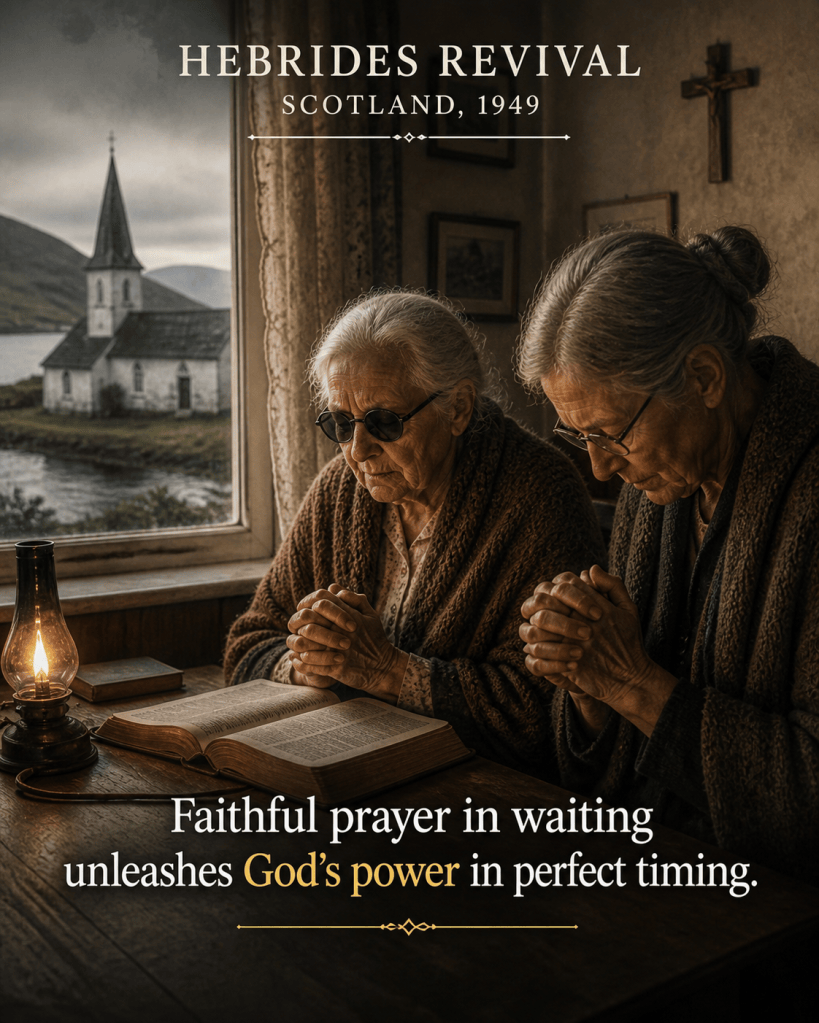
Months passed.
Nothing seemed to change.
But they continued waiting.
Then, in God’s timing, revival broke out. Churches filled. People wept over sin. Entire communities were transformed. The presence of God became so real that even those outside church buildings were convicted.
This movement became known as the Hebrides Revival.
What began in hidden waiting became visible power.
Their story reflects Acts 1—before power comes, there must be prayerful waiting.
🔗 Source :
https://www.christianitytoday.com/2001/04/revival-in-hebrides/
⚒️🎯 Personal Application:
We often struggle with waiting. We want immediate answers, quick direction, visible results. But this passage teaches us that waiting on God is not wasted time—it is sacred preparation. Like the disciples, we are called to trust His timing, depend on His Spirit, and focus on His mission. We are not sent in our own strength. The same Spirit who empowered the early church is at work in us today. So instead of rushing ahead or standing still in confusion, we are invited to wait with expectation, live with purpose, and witness with boldness.
🙏 🕯️ Prayer:
Lord Jesus,
Teach us to wait with faith and not with fear.
Fill us with Your Holy Spirit and empower us for Your mission.
Help us to trust Your timing and walk in obedience.
Make us bold witnesses in our daily lives.
Prepare our hearts for what You are about to do.
Amen.


Leave a comment