
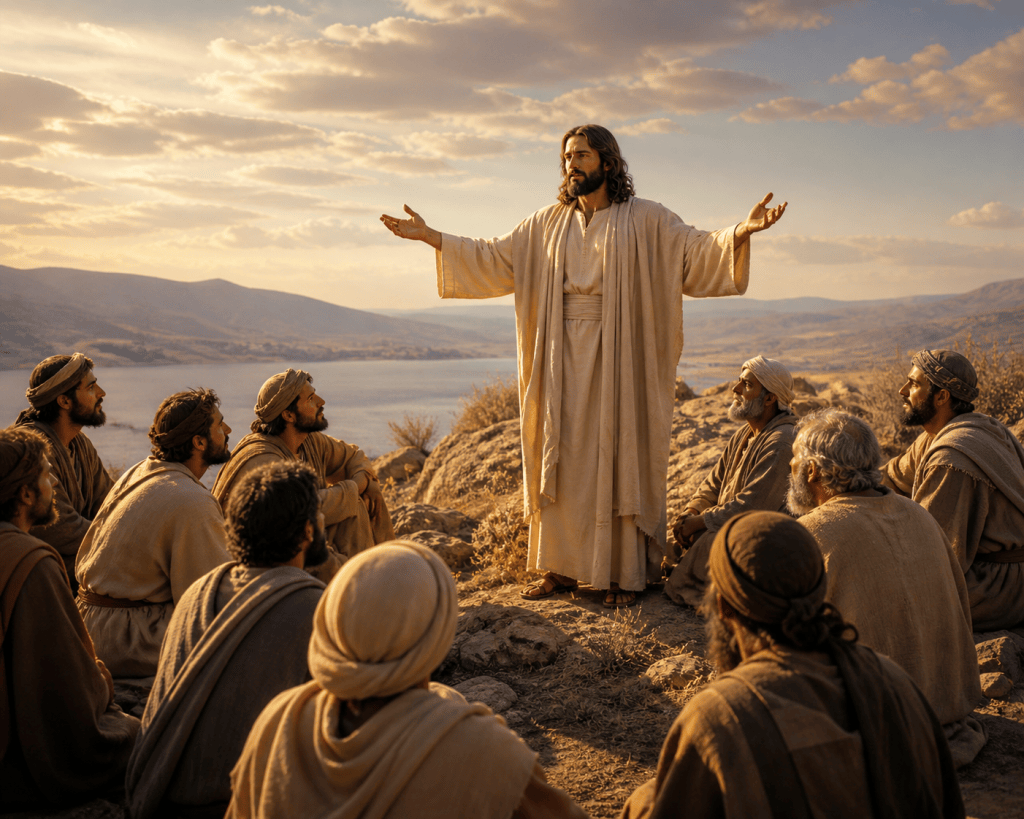
📖 ✝️ Scripture Reading:Matthew 28:16–20
“Only he who believes is obedient, and only he who is obedient believes.”
— Dietrich Bonhoeffer
💒 🕊️ ✨ Context (Story) :
The mountain in Galilee stands quiet, yet charged with divine anticipation. Just days earlier, Jerusalem roared with conflicting cries—“Hosanna!” on Palm Sunday, then “Crucify Him!” under Roman authority. The cross had seemed like the crushing end of messianic hope. But now, after the resurrection, the story turns with breathtaking authority.
The disciples gather where Jesus had directed them. Some fall in worship—others hesitate, caught between awe and lingering doubt. This mixture of faith and uncertainty reveals the raw humanity of those chosen to carry heaven’s message.
Jesus steps forward. There is no hesitation in Him. His first words are not comfort, but declaration: “All authority in heaven and on earth has been given to Me.” The Greek word for authority here is exousia—not mere power, but rightful dominion. This is the fulfillment of the vision in Daniel 7:14, where the Son of Man receives everlasting dominion over all nations. Rome may have exercised temporary rule, but Christ now proclaims eternal kingship.
This moment sits at the climax of Matthew’s Gospel. From the genealogy in chapter 1 to the resurrection, everything leads here. The One who taught with authority, healed with authority, and forgave sins with authority now declares universal sovereignty.
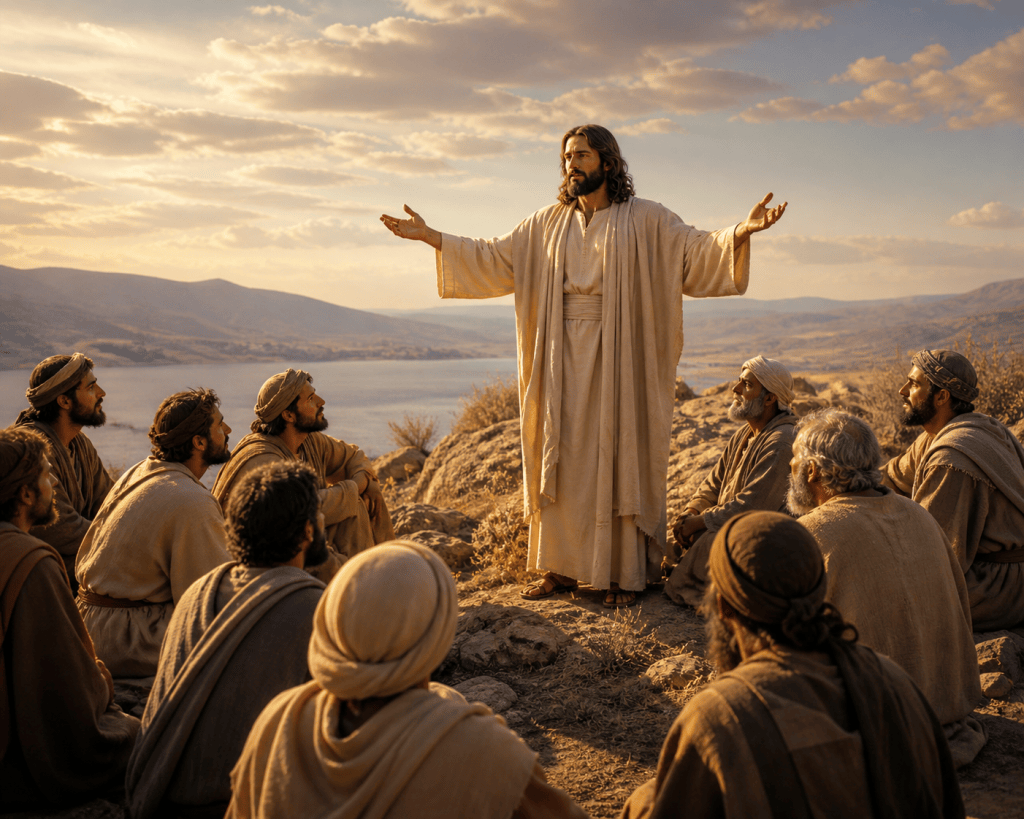
Then comes the command—not suggestion, but commission: “Go therefore and make disciples.” The Greek verb matheteusate (make disciples) is the central command, while “go,” “baptizing,” and “teaching” support it. This is not merely about conversion, but transformation—forming followers who live under Christ’s lordship.
“Of all nations”—this breaks Jewish expectation. Many had hoped for a Messiah who would restore Israel politically. Instead, Jesus expands the mission globally. This echoes God’s promise to Abraham in Genesis 12:3: “All peoples on earth will be blessed through you.”
“Baptizing them in the name of the Father and of the Son and of the Holy Spirit”—a Trinitarian declaration. One name, yet three persons. This reveals the fullness of God’s nature and invites believers into covenant identity.
“Teaching them to obey everything I have commanded you”—not partial obedience, but complete surrender. The Gospel is not information; it is formation.
Finally, Jesus ends not with a command, but a promise:
“And surely I am with you always, to the very end of the age.”
This echoes Emmanuel—“God with us” (Matthew 1:23). The Gospel begins with God’s presence and ends with it. From incarnation to ascension, the thread is unbroken: God is with His people.
🤔 🪞 💡 Reflection Thought:
The Great Commission reveals a Christ who is not merely risen—but reigning. His authority is not abstract; it is absolute. The same Jesus who rode humbly into Jerusalem on a donkey now stands as the King of heaven and earth.

Yet His kingship is expressed not through domination, but delegation. He entrusts fragile, imperfect disciples with a global mission. This reveals something profound about God’s character—He works through us, not because we are sufficient, but because He is.

The disciples’ mixed response—worship and doubt—mirrors our own hearts. Faith is often accompanied by hesitation. Yet Jesus does not withdraw the mission because of their doubt. Instead, He anchors it in His authority and sustains it with His presence.

There is also a striking contrast between human expectation and divine purpose. The people expected political liberation from Rome. Jesus brings spiritual liberation from sin. The kingdom He establishes is not limited by geography, culture, or empire—it transcends them all.

Theologically, this passage anchors the mission of the Church in the Trinity, the authority of Christ, and the promise of His presence. Salvation is not the end—it is the beginning of participation in God’s redemptive plan.
🎬🔛 Historical True Event :
A Call Beyond Borders: The Story of Sadhu Sundar Singh (India, Early 1900s)
In the early 20th century, in Punjab, India, a young man named Sundar Singh fiercely opposed Christianity. Born into a Sikh family, he burned a Bible in anger and rejected Christ completely.
But one night, at age 16, in deep despair, he decided to end his life. Before dawn, he prayed: “If there is a God, reveal Yourself.” In that moment, he experienced a vision of Jesus Christ—alive, radiant, and full of grace.
Everything changed.
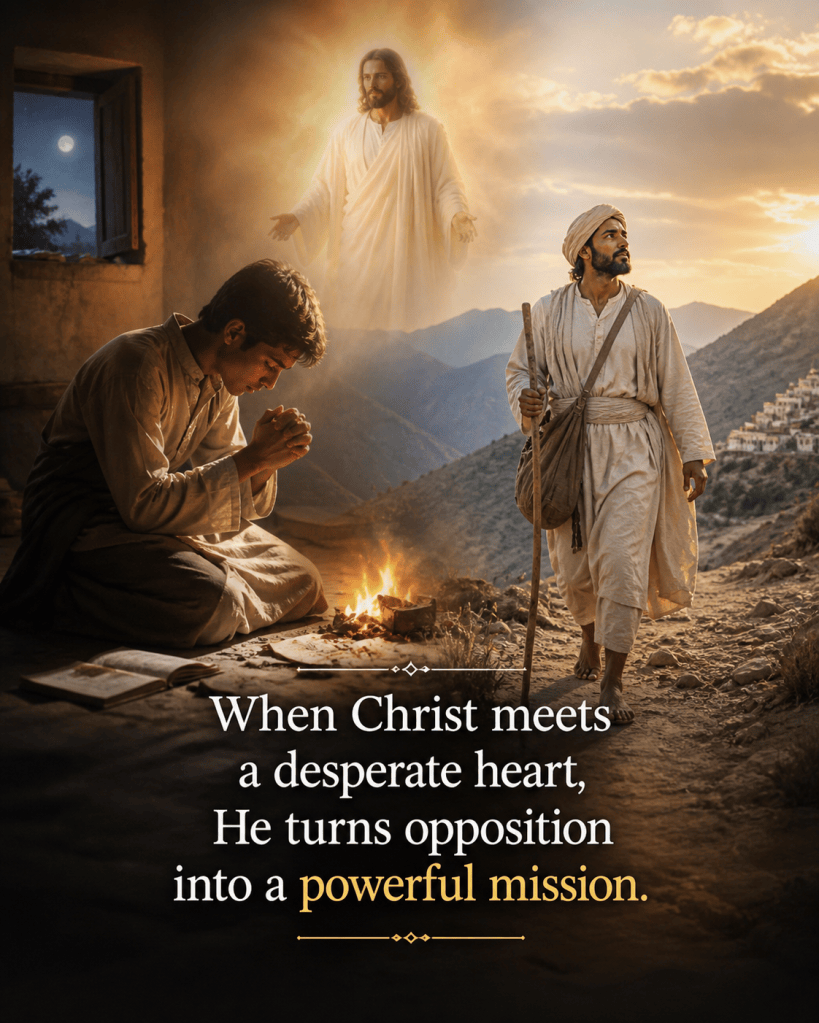
He left his home, faced rejection, and became a wandering missionary—barefoot, clothed in simple robes, carrying the message of Christ across India, Tibet, and beyond. He endured persecution, imprisonment, and hardship, yet continued boldly.
Why? Because he believed the Great Commission was personal.
He did not have institutional support or modern resources. But he had conviction: Christ has authority, and Christ is with me.
His life reflects the heart of Matthew 28—not comfort, but calling; not safety, but surrender.
🔗 Source :
https://www.wholesomewords.org/missions/biography/singh.html
⚒️🎯 Personal Application:
We are not spectators in this story—we are participants. The Great Commission calls us to move beyond passive faith into active obedience. It challenges our comfort, our priorities, and our vision. Are we making disciples, or merely maintaining routines? Are we living under Christ’s authority, or selectively obeying Him? As we go about our daily lives—at work, in family, in society—we are sent people. And we do not go alone. His presence is our strength, His authority our confidence, and His mission our purpose.
🙏 🕯️ Prayer:
Lord Jesus,
You have all authority, yet You call us to serve.
Help us to obey Your command with courage and faith.
Teach us to make disciples, not just live comfortably.
Remind us daily that You are with us.
Strengthen us to go wherever You lead.
Amen.


Leave a comment