
📖 ✝️ Scripture Reading:Luke 24:13–35
“Christ is not valued at all unless He is valued above all.”
— Augustine of Hippo
💒 🕊️ ✨ Context (Story) :
It is the third day after the crucifixion. Jerusalem is still trembling from the events of Passover week. The One many believed to be the Messiah has been executed under Roman authority, crucified as a political threat. Jewish expectations of a conquering king—rooted in prophecies like Isaiah 53 and Psalm 22—were misunderstood. Instead of overthrowing Rome, Jesus had been nailed to a cross.
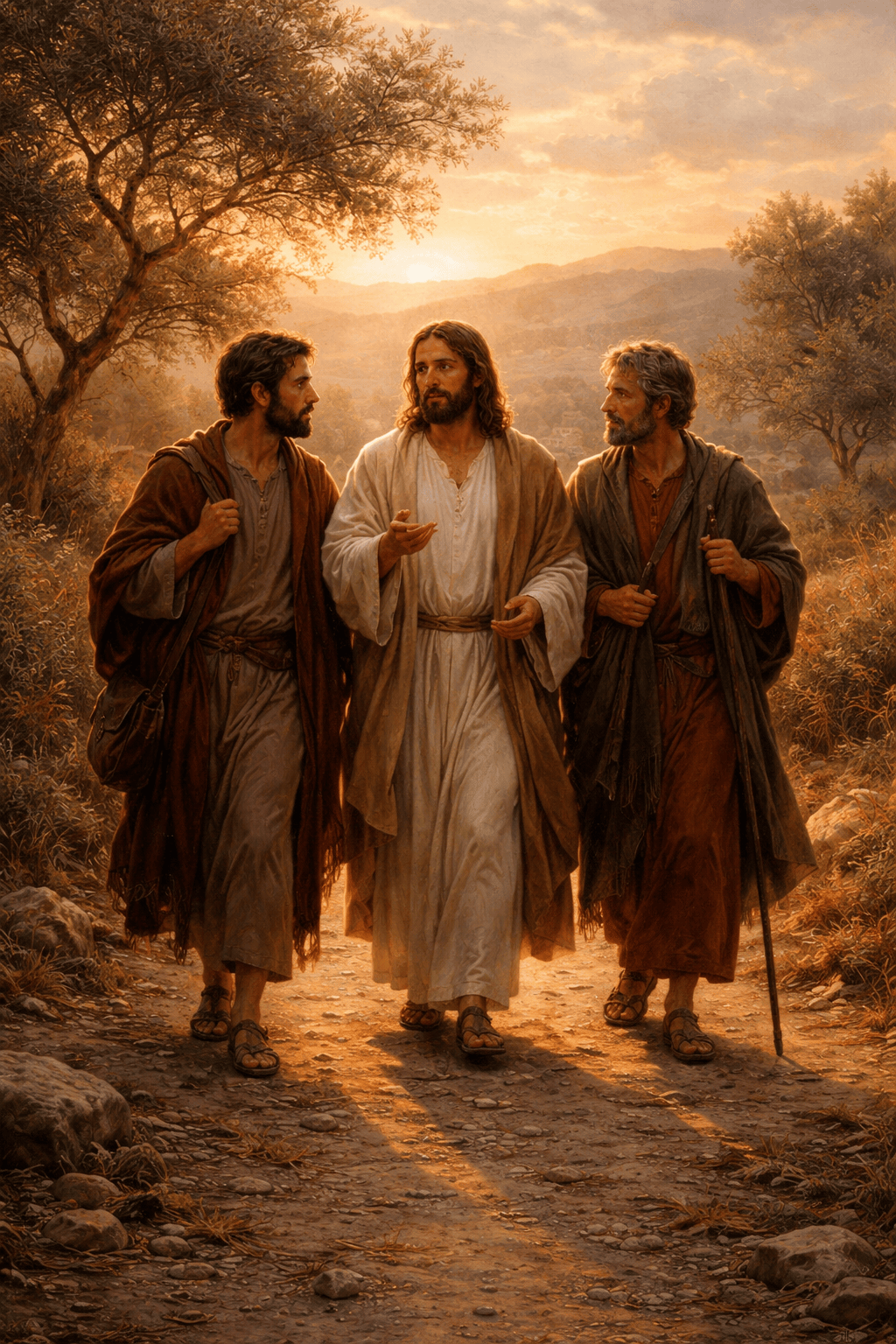
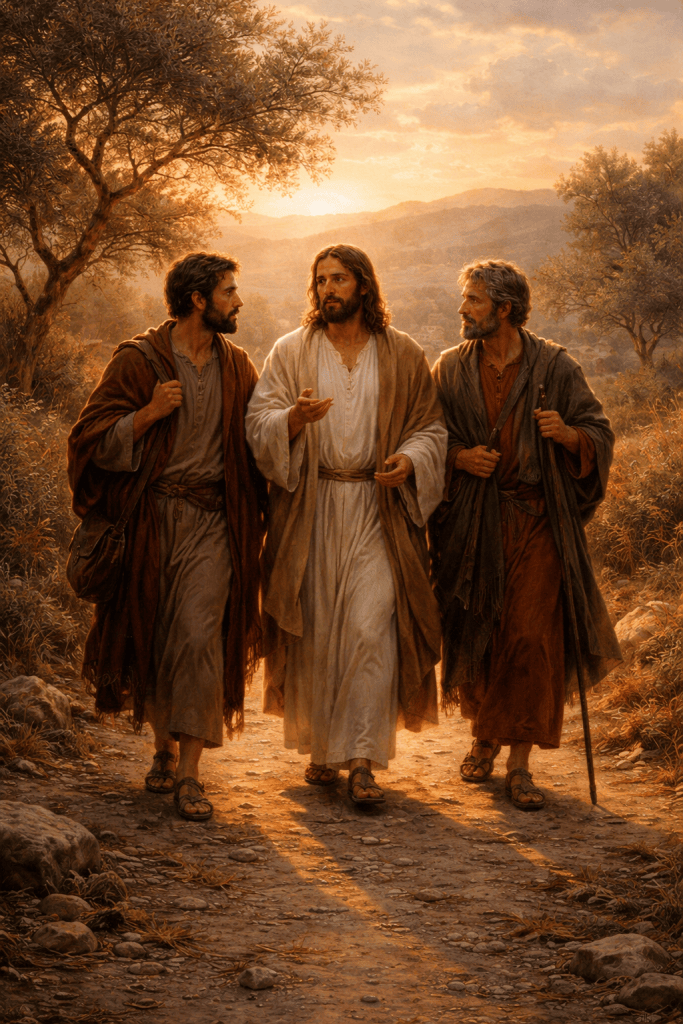
Two disciples walk away from Jerusalem toward Emmaus, about seven miles away. Their steps are heavy, their conversation filled with confusion and shattered hope. In the Greek text, the word used for their discussion is “ὁμιλέω (homileō)”—not casual talk, but deep, intense dialogue. They are trying to make sense of a story that no longer fits their expectations.
As they walk, a stranger joins them. It is Jesus—but “their eyes were kept from recognizing Him.” This phrase suggests divine restraint. Recognition is not merely physical; it is spiritual.
Jesus asks them what they are discussing. Their astonishment is almost ironic—how could anyone in Jerusalem not know? They recount the story: Jesus of Nazareth, a prophet mighty in deed, was crucified. They speak of lost hope: “We had hoped that He was the one to redeem Israel.” The Greek phrase “ἠλπίζομεν (ēlpizomen)” indicates a hope now fading.
They even mention the empty tomb, reported by women—yet they remain unconvinced. Information alone has not produced faith.
Then Jesus speaks. Not with spectacle, but with Scripture. Beginning with Moses and all the Prophets, He interprets (“διερμήνευεν – diermēneuō”, meaning to thoroughly explain) the things concerning Himself. He reveals that the Messiah must suffer before entering glory—aligning with the entire Old Testament narrative.
As they reach Emmaus, Jesus acts as if He will go further. This moment tests their desire. They urge Him to stay. Around the table, something profound happens. Jesus takes bread, blesses it, breaks it, and gives it to them.
This fourfold action echoes the Last Supper earlier in Gospel of Luke 22.
Suddenly, their eyes are opened.
They recognize Him.
And He vanishes.
Their response is immediate: “Did not our hearts burn within us…?” The burning heart reveals that truth had already been stirring within them before recognition came.
They rise that very hour, return to Jerusalem, and testify: “The Lord has risen indeed!”
🤔 🪞 💡 Reflection Thought:
This passage unveils the profound mystery of spiritual blindness and divine revelation. Jesus is present, walking beside them, yet unrecognized. This is not merely a failure of sight—it is a failure of expectation.

The disciples expected a conquering king, not a suffering servant. Their theology limited their vision. In this, we see a crucial truth: we often fail to recognize Christ when He does not fit our expectations.

The character of Christ here is deeply pastoral. The risen Lord does not rebuke harshly; He walks patiently, listens attentively, and teaches faithfully. He reveals Himself not through miracles first, but through Scripture. This highlights the authority of God’s Word as the primary means of revelation.

Theologically, this moment affirms that the cross was not a tragedy but a necessity. The phrase “it was necessary” (Greek: “δεῖ – dei”) emphasizes divine purpose. Suffering precedes glory. This pattern reflects not only Christ’s journey but also the pathway of discipleship.

The breaking of bread becomes a moment of revelation. Recognition happens in relationship and remembrance. It points toward the ongoing life of the Church—where Christ is known in Word and fellowship.

Canonically, this connects deeply with the whole biblical narrative—from the suffering servant of Isaiah to the risen Lord proclaimed in Acts of the Apostles. The Emmaus road becomes a bridge between despair and mission.
🎬🔛 Historical True Event :
Eyes Opened in the Himalayas – Sundar Singh’s Encounter (1905, India)
In 1905, a young Sikh man named Sadhu Sundar Singh was deeply hostile toward Christianity. Living in Punjab, he burned a Bible in anger and planned to end his life by throwing himself under a train.
Three days before his planned suicide, something unexpected happened.
Early in the morning, as he prayed—not to Christ but in desperation—he experienced a vision of Jesus. The figure spoke peace into his heart. Instantly, the anger, confusion, and darkness that clouded his mind disappeared.
Like the disciples on the road to Emmaus, Sundar Singh had known about Jesus—but did not recognize Him. That moment changed everything.
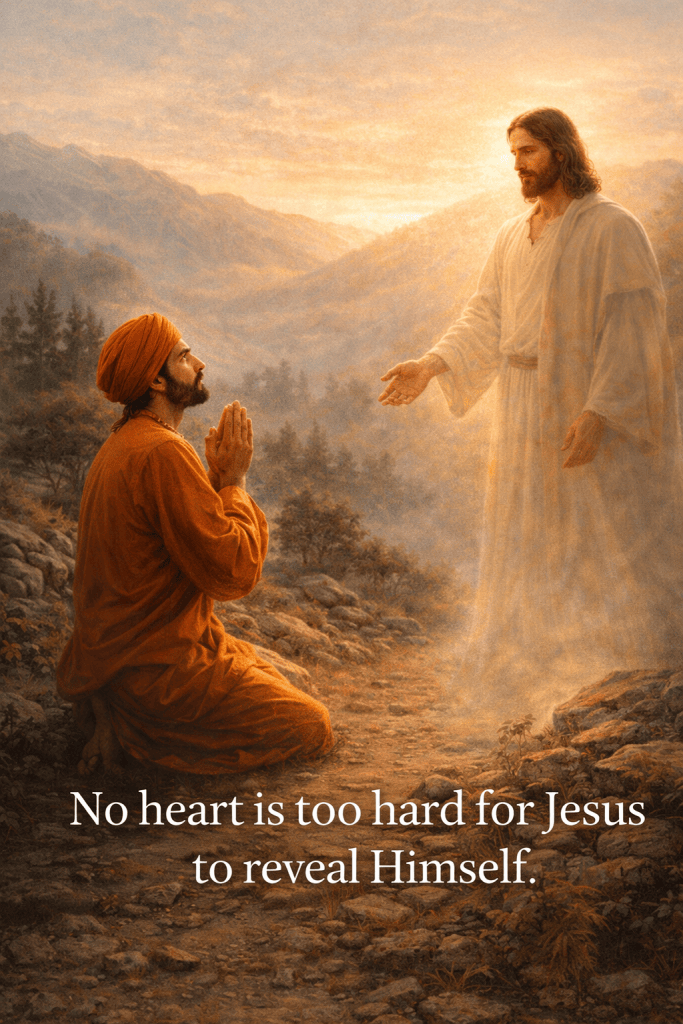
He became a wandering Christian ascetic, preaching Christ across India and Tibet, often facing persecution. His testimony was not built on argument, but on encounter—his “eyes were opened.”
His life echoed Emmaus: from blindness to recognition, from despair to mission.
🔗 Source :
https://www.wholesomewords.org/missions/biography_singh.html
⚒️🎯 Personal Application:
We often walk our own Emmaus roads—disappointed, confused, and questioning God’s plans. Like these disciples, we may know the facts about Jesus yet fail to recognize His presence in our daily lives. This passage calls us to open our hearts to Scripture, to invite Jesus into our ordinary moments, and to trust that even when we do not see Him clearly, He is walking beside us. When we allow Him to interpret our lives through His Word, our despair turns into burning hope, and our hesitation into bold witness.
🙏 🕯️ Prayer:
Lord Jesus,
Open our eyes to recognize You in our daily walk.
When our hearts are heavy and our understanding is dim,
teach us through Your Word and draw near to us.
Let our hearts burn with truth and our lives reflect Your resurrection power.
Amen.


Leave a comment