
📖 ✝️ Scripture Reading: Matthew 28:1–10
“Our Lord has written the promise of resurrection, not in books alone, but in every leaf in springtime.”
— Martin Luther
💒 🕊️ ✨ Context (Story) :
The Sabbath has passed. Jerusalem is quiet, yet restless. Just days earlier, the city echoed with cries of “Crucify Him!” Now, silence lingers over a sealed tomb. The One whom many hoped would redeem Israel lies buried—at least, that is what it seems.
Under Roman authority, the tomb has been secured. A large stone is rolled into place, and guards are stationed to prevent any interference. The religious leaders, remembering Jesus’ words about rising again, have taken no chances. In their minds, this is the end of a troubling prophet.
But early on the first day of the week, as dawn begins to break, two women—Mary Magdalene and the other Mary—make their way to the tomb. Their steps are heavy with grief, yet driven by love and devotion. In Jewish culture, such acts of mourning and care for the dead were deeply significant.
Suddenly, the earth trembles violently. A great earthquake shakes the ground. An angel of the Lord descends from heaven, his appearance like lightning, his clothing white as snow. The guards, trained Roman soldiers, tremble in fear and become like dead men. The power of God overwhelms human strength.
The angel rolls back the stone—not to let Jesus out, but to reveal that He is already gone.
Then comes the divine announcement:
“Do not be afraid… He is not here; for He is risen, as He said.”
The phrase “He is risen” comes from the Greek “ēgerthē” (ἠγέρθη)—a passive verb meaning “He has been raised.” This points to the act of God the Father raising the Son, affirming divine power over death.
The angel invites them to see the empty place where Jesus lay. The tomb is not just open—it is empty. Death has been defeated.
The women are then commissioned: “Go quickly and tell His disciples.” Fear and great joy fill their hearts—a profound mixture of awe and hope. This is the Gospel paradox: trembling yet rejoicing.
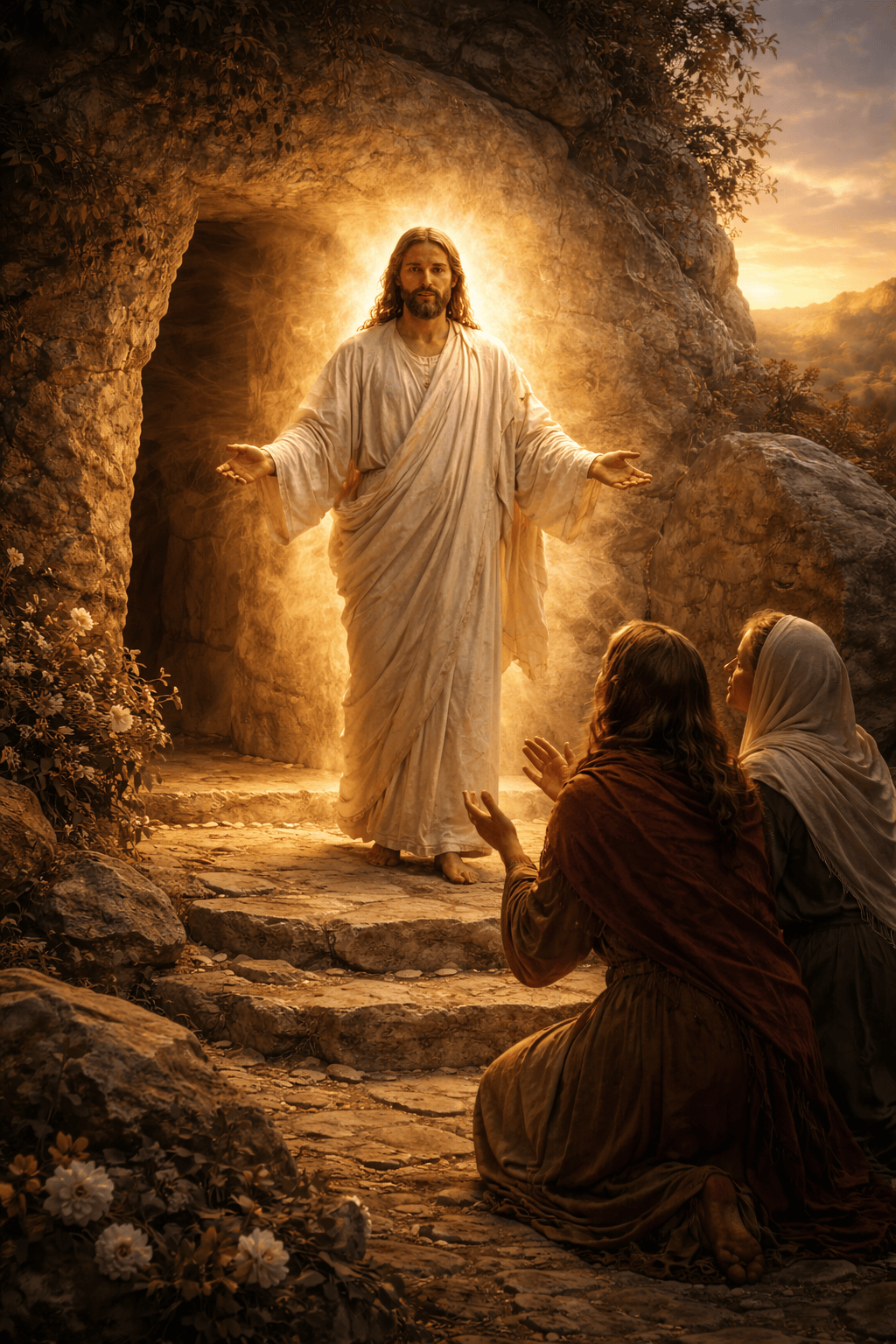
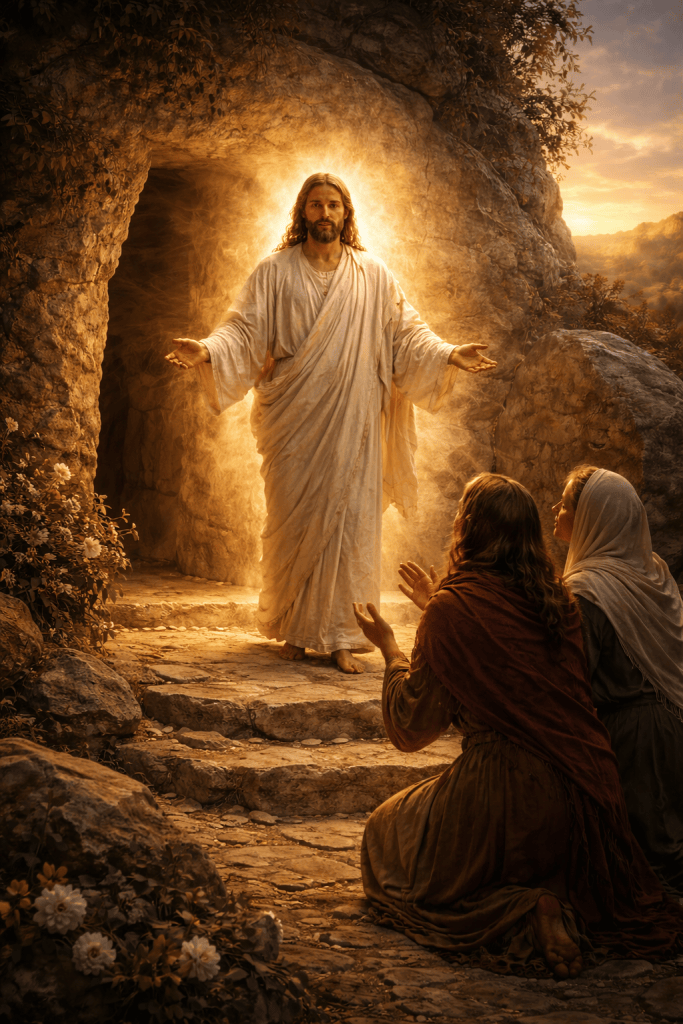
As they run to obey, Jesus Himself meets them.
“Greetings!” He says.
They fall at His feet, worshiping Him. The risen Christ is not a vision or a memory—He is alive, present, and worthy of worship. He reassures them again: “Do not be afraid.” Then He sends them with a message to His brothers.
This moment fulfills centuries of prophecy. From Psalm 16:10 (“You will not abandon my soul to Sheol”) to Isaiah 53, the promise of life beyond suffering is realized. What seemed like defeat at the cross is now revealed as victory.
The resurrection stands at the center of the Gospel narrative. Without it, the story ends in sorrow. But with it, everything changes.
🤔 🪞 💡 Reflection Thought:
The resurrection reveals the ultimate power and character of God. He is not only the God who suffers with us but the God who triumphs over death itself. In Christ, death is not the end—it is defeated.

We see contrasting human responses in this passage. The guards respond with fear that leads to paralysis. The women respond with fear that leads to worship and obedience. Both encounter the same power, yet their responses determine their experience.

This challenges us deeply. When we encounter the truth of Christ, do we resist, remain indifferent, or respond in faith?

Theologically, the resurrection confirms the completeness of Christ’s sacrifice. As Paul later writes, if Christ has not been raised, our faith is in vain (1 Corinthians 15:17). But because He lives, salvation is secured. Sin is forgiven. Death has lost its sting.

The resurrection also reveals Jesus as King. Not a political ruler overthrowing Rome, but the eternal King who conquers sin, Satan, and death. His kingdom is not limited to earthly power—it is eternal.

Matthew’s Gospel, as a narrative, builds toward this climactic moment. From the genealogy to the miracles, from the teachings to the cross, everything points here. The empty tomb is the turning point of history.

Spiritually, the resurrection calls us out of darkness into life. It invites us to move from despair to hope, from fear to faith, from death to life.
🎬🔛 Historical True Event :
From Death Sentence to New Life: Nicky Cruz’s Transformation (New York, 1958)
In the late 1950s, Nicky Cruz, a violent gang leader in New York City, was known for hatred, crime, and brutality. Raised in a deeply broken environment in Puerto Rico, he was rejected by his own family and grew up filled with anger.
By the time he led the Mau Maus gang, his life seemed destined for destruction. Violence defined him. Love was unknown.
Then, in 1958, a young preacher named David Wilkerson reached out to him with a simple message: “Jesus loves you.”
At first, Cruz rejected it, even threatening violence. But Wilkerson’s persistent love and the message of Christ began to break through his hardened heart.
One night, during a gospel meeting, Nicky Cruz encountered the power of the risen Christ. He surrendered his life to Jesus.
What followed was radical transformation. The man known for violence became a preacher of the Gospel. His life became a testimony that Jesus not only rose from the dead—but still brings dead lives back to life.
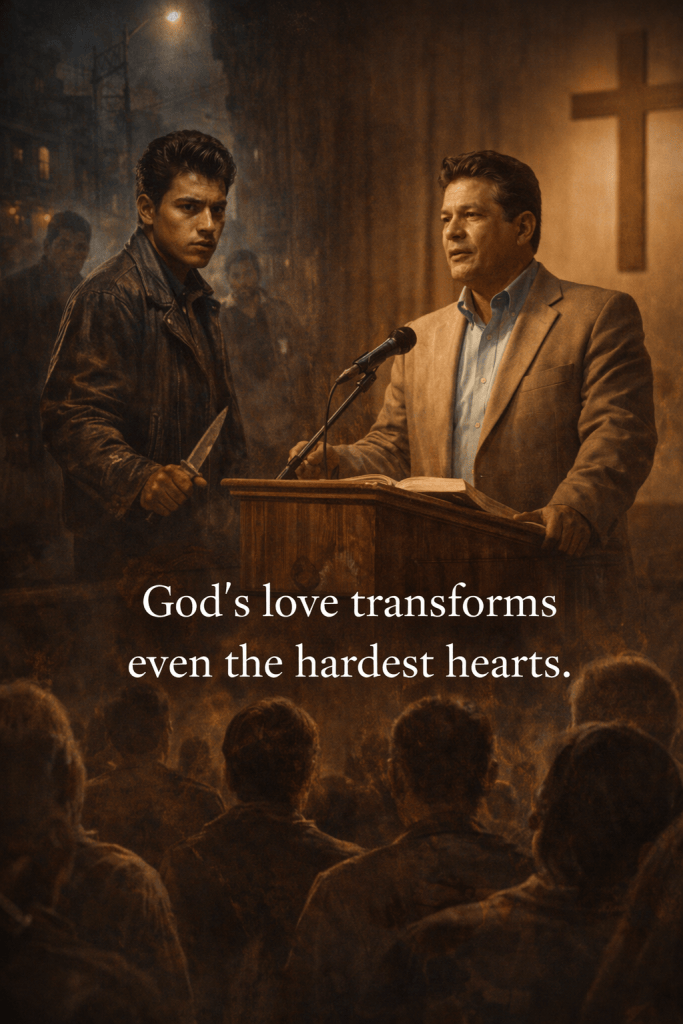
Today, his story continues to impact thousands, proving that resurrection power is not just historical—it is personal.
🔗 Source :
https://www.nickycruz.org/about/
⚒️🎯 Personal Application:
This passage calls us to live in the reality of the resurrection. We are reminded that no situation is beyond God’s power. Even when circumstances seem final, God can bring new life. Like the women, we are called to move from fear to faith and from sorrow to joyful obedience. Let us trust in the risen Christ, worship Him with our lives, and boldly share the hope we have received.
🙏 🕯️ Prayer:
Lord Jesus,
Thank You for rising from the dead and giving us new life.
Help us to live in the power of Your resurrection.
Turn our fear into faith and our sorrow into joy.
Use us to share Your hope with others.
Amen.


Leave a comment