
📖 ✝️ Scripture Reading: Matthew 27:27–31
“He who was crowned with thorns is the King of glory.”
— Matthew Henry
💒 🕊️ ✨ Context (Story) :
The verdict has already been delivered. Jesus has been condemned by Pontius Pilate, handed over to be crucified. But before the nails pierce His hands, another form of suffering unfolds—public humiliation.
Inside the Roman governor’s headquarters, the Praetorium, a cohort of soldiers gathers around Jesus. These are hardened men, trained for war, accustomed to violence. To them, Jesus is not a Savior—He is entertainment.
They strip Him.
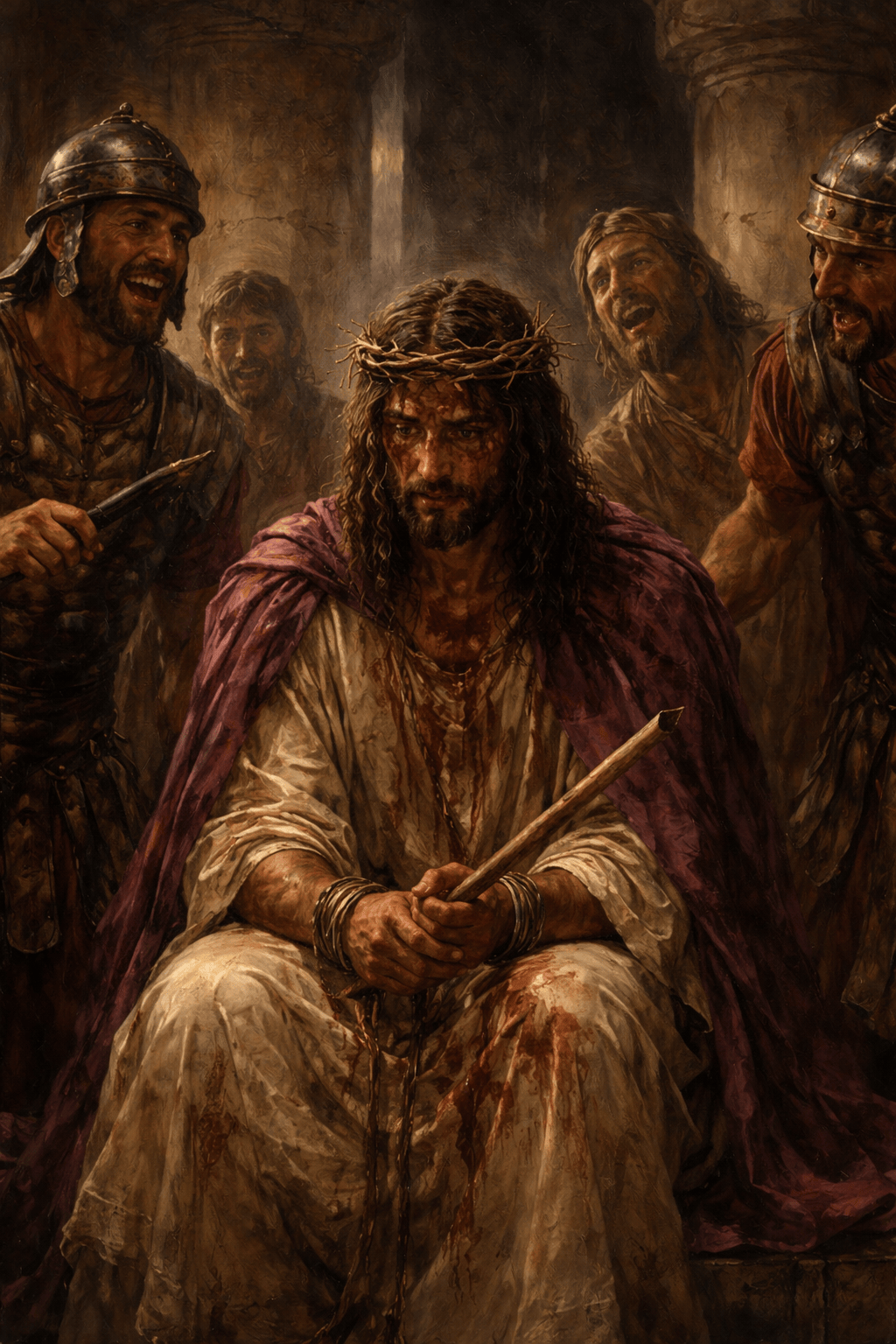
The One who clothed humanity with dignity in creation now stands exposed before sinful men. They drape a scarlet robe over His shoulders—a cruel parody of royal garments. The color suggests royalty, but this is mockery, not honor.
Then they twist together a crown of thorns and press it into His head.
The Greek word for “crown” (στέφανος – stephanos) often referred to a victor’s crown, a symbol of honor. Yet here, it becomes an instrument of pain. Thorns—first introduced in Genesis 3 as a result of sin—now pierce the brow of the One who came to bear the curse.
They place a reed in His right hand—a mock scepter. Then, kneeling before Him in exaggerated gestures, they jeer:
“Hail, King of the Jews!”
This is not worship—it is ridicule.
They spit on Him.
In Jewish culture, spitting was one of the deepest forms of insult. The Holy One of Israel is treated as worthless. The Creator of all things is despised by His own creation.
They take the reed and strike Him repeatedly on the head. The thorns press deeper. Blood begins to flow.
This scene echoes the prophecy of Isaiah 50:6:
“I gave my back to those who struck me, and my cheeks to those who pulled out the beard; I hid not my face from disgrace and spitting.”
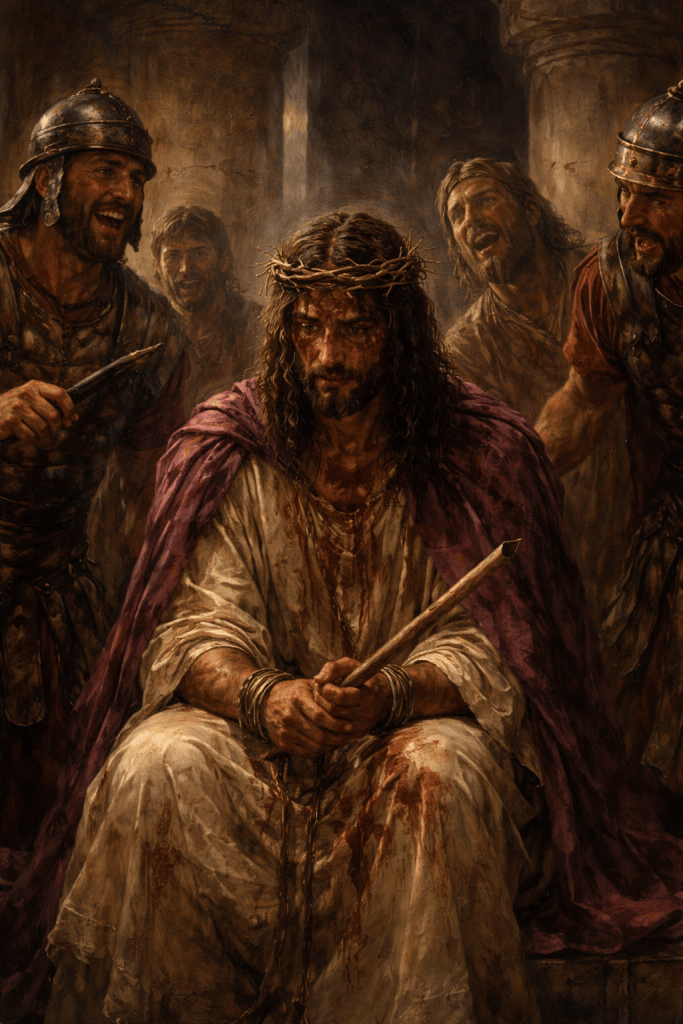
After they have finished mocking Him, they remove the robe, put His own clothes back on Him, and lead Him away to be crucified.
The King is mocked.
The Savior is humiliated.
The Lamb is led to slaughter.
Yet through it all—He remains silent.
This moment sits between the condemnation and the crucifixion. It is not accidental suffering; it is intentional submission. Jesus is not losing control—He is fulfilling the will of the Father.
In the Gospel narrative, this is the path to glory—not through power, but through suffering.
🤔 🪞 💡 Reflection Thought:
There is something deeply unsettling about this passage. Not just because of the physical suffering—but because of the mockery.

Humanity does not merely reject Jesus; it ridicules Him.

The soldiers unknowingly speak truth in their mockery—He is the King. But their hearts are blind. This is the tragedy of spiritual blindness: truth can be spoken, yet not believed.

Jesus accepts the crown of thorns so that we might receive the crown of life.

He bears shame so that we might be clothed in righteousness.

He is mocked so that we might be honored as children of God.

This reveals the heart of Christ—humble, obedient, and full of love even in suffering. He does not retaliate. He does not call down angels. He endures.

Why?

Because redemption requires sacrifice.

Because love chooses the cross.

Because the King came not to be served, but to serve—and to give His life as a ransom for many.

The world still mocks Christ today—sometimes openly, sometimes subtly through indifference. And yet, His kingdom continues to advance—not by force, but by grace.
🎬🔛 Historical True Event :
“The Prisoner Who Sang in Chains – Romania, 1960s”
In communist Romania during the 1960s, Richard Wurmbrand, a Christian pastor, was imprisoned for boldly preaching the Gospel.
Inside the prison, he faced relentless torture and mockery. Guards would ridicule his faith, beat him, and try to break his spirit. They mocked Christ in front of him, demanding that he deny his beliefs.
But instead of responding with anger, Wurmbrand responded with love.
Even in chains, he would softly sing hymns and pray for his persecutors.
Once, after being severely beaten, he told a guard, “You can kill me, but you cannot make me hate you.”
His quiet endurance and Christ-like love deeply impacted some of the very men who persecuted him.
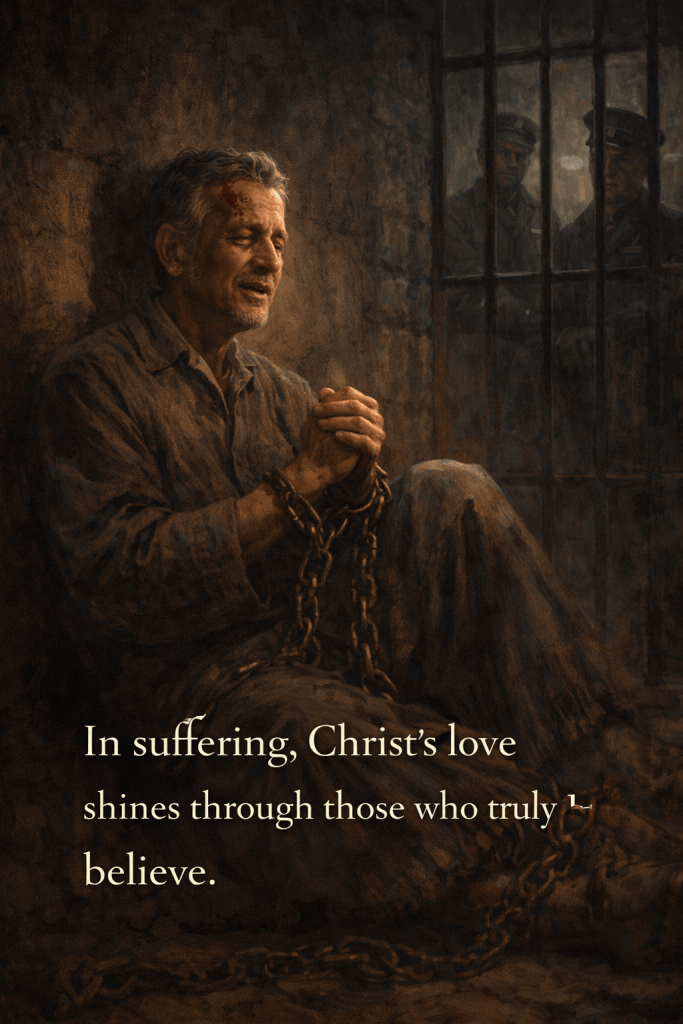
Like Jesus before the soldiers, he was mocked and humiliated—but he chose to reflect the character of Christ.
His suffering became a testimony, not of defeat, but of victorious faith.
🔗 Source :
https://www.persecution.com/richard-wurmbrand/
⚒️🎯 Personal Application:
This passage invites us to examine our own hearts. We may not openly mock Jesus like the soldiers, but do we dishonor Him through our actions, priorities, or silence? We are called not only to believe in Him but to honor Him as King in our daily lives. When following Christ brings discomfort or rejection, will we still stand for Him? Today, we are challenged to bow in true worship—not in mockery, but in surrender—recognizing that the One who was humiliated for us is worthy of all honor.
🙏 🕯️ Prayer:
Lord Jesus,
You endured mockery and shame for us.
Forgive us for the times we fail to honor You as King.
Give us strength to stand for You, even in difficulty.
Teach us to reflect Your humility and love in all circumstances.
Amen.


Leave a comment