
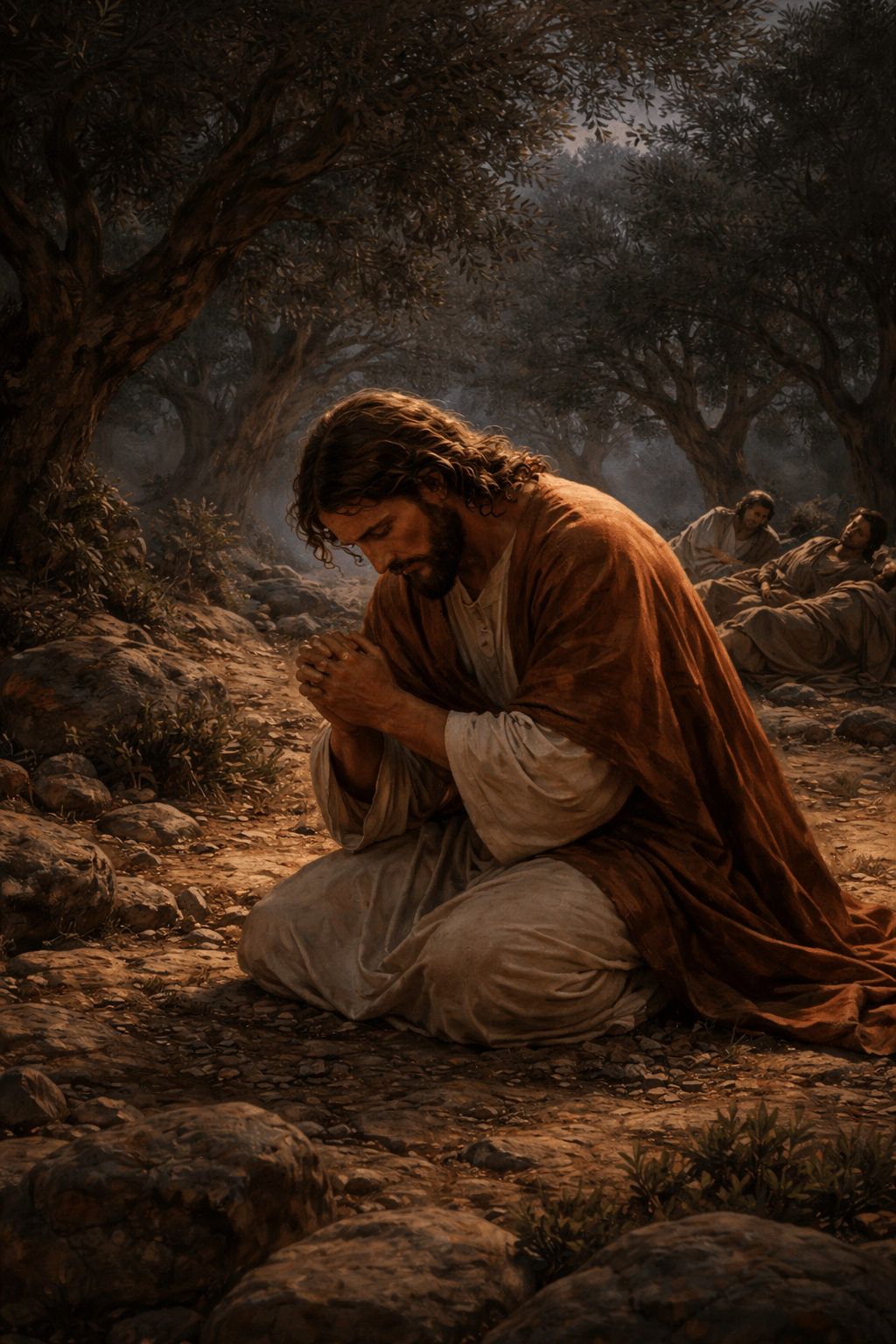
📖 ✝️ Scripture Reading: Matthew 26:36–46
“To be surrendered to God is to be free from the tyranny of self.”
— Elisabeth Elliot
💒 🕊️ ✨ Context (Story) :
The night in Jerusalem grows still, yet the weight of eternity presses in. The Passover meal has just concluded. The disciples have heard words of betrayal and denial, but perhaps they do not yet understand their depth. Under Roman occupation, tension fills the city. Religious leaders are plotting. The cross is now only hours away.
Jesus leads His disciples to a familiar place—the Garden of Gethsemane.
Gethsemane, meaning “oil press,” becomes the place where the Son of God is pressed under unimaginable spiritual weight.
This moment comes after the Upper Room discourse and before the arrest. It is a sacred pause—a window into the inner life of Christ before His suffering unfolds.
Taking Peter, James, and John aside, Jesus reveals His anguish.
“My soul is exceeding sorrowful, even unto death.”
The Greek word “perilypos” (περίλυπος) speaks of overwhelming grief—sorrow that engulfs from all sides. This is not mere anxiety; it is deep spiritual agony.
He steps further, falls on His face, and prays.
“O my Father, if it be possible, let this cup pass from me…”
The “cup” echoes Old Testament imagery of divine judgment (Isaiah 51:17). Jesus is not only facing physical pain but the full burden of sin and separation.
Yet, in the same breath, He submits:
“Nevertheless not as I will, but as thou wilt.”
Here lies the heart of surrender—not the absence of desire, but the yielding of it.
Returning, He finds His disciples asleep. Their weakness contrasts His watchfulness. “The spirit indeed is willing, but the flesh is weak,” He says—a timeless truth about human frailty.
Three times He prays. Three times He chooses surrender.
Luke records His sweat like drops of blood, revealing the intensity of His struggle.
Gethsemane becomes a silent battlefield where obedience triumphs over fear.
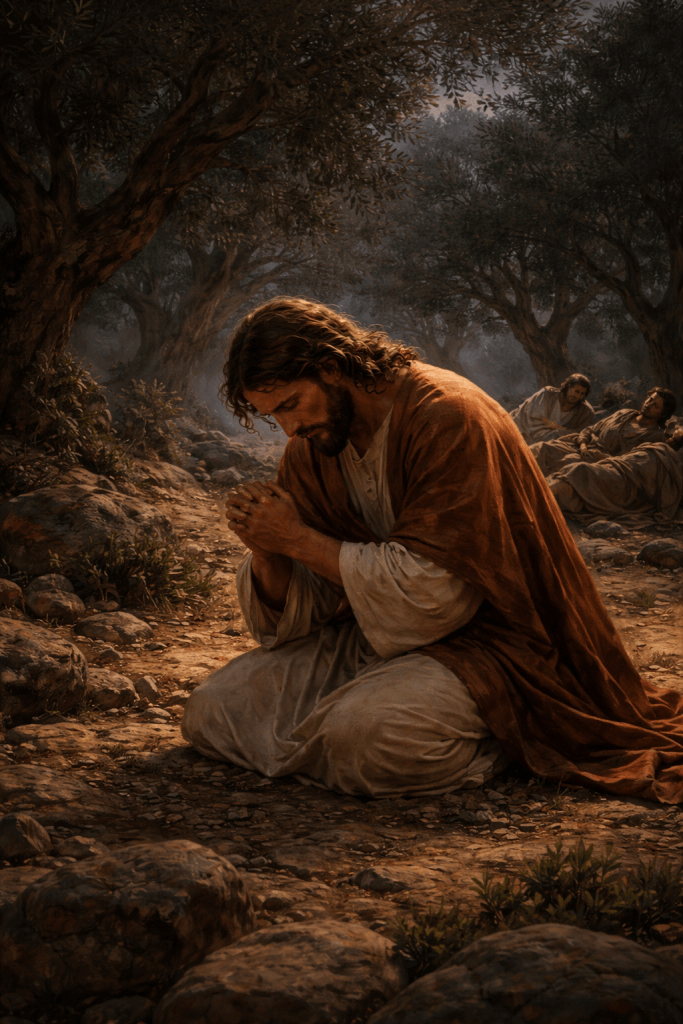
This moment fulfills the shadow of Isaiah 53—the suffering servant who willingly bears the sins of many.
At last, Jesus rises with calm resolve.
“Rise, let us be going…”
The decision is sealed. The cross is no longer a possibility—it is embraced.
🤔 🪞 💡 Reflection Thought:
Gethsemane reveals that surrender is not passive—it is deeply active and intentional.

In Christ, we see both full humanity and perfect obedience. He does not deny His anguish; He brings it honestly before the Father. This shows us that God invites our real emotions, not just our polished prayers.

Yet Jesus does not stop at expression—He moves to submission.

This is where many of us struggle. We pray, but we resist surrender.

The disciples reflect our condition. Even with good intentions, they fail to remain spiritually alert. Their weakness highlights our dependence on God’s strength.

Theologically, Gethsemane is where redemption is embraced before it is accomplished. Jesus willingly chooses the cross. Salvation is not forced—it is offered through obedience.

This passage reveals the nature of God’s will—it may involve suffering, but it always leads to greater glory.

The intimacy between the Father and the Son reminds us that surrender flows from relationship. Trust makes surrender possible.

Gethsemane teaches us that the greatest spiritual victories often happen in unseen moments—when we choose God’s will over our own.
🎬🔛 Historical True Event :
Surrender in Obedience: The Story of Gladys Aylward (China, 1930s)
In the 1930s, Gladys Aylward, a simple housemaid from England, felt a deep calling from God to go to China as a missionary. She had no formal training and was rejected by missionary organizations.
Everything in her circumstances said “no.”
Yet, like Jesus in Gethsemane, she chose to surrender her will to God’s calling.
With very little money and no guarantee of safety, she traveled alone across dangerous territories to reach China. The journey itself was filled with obstacles—political unrest, harsh conditions, and fear.
After finally arriving, she began serving in a remote village, sharing the Gospel and caring for children.
Then came a defining moment.
During the Japanese invasion of China, her village was in danger. Amid chaos and violence, she was responsible for over 100 orphaned children.
She faced an impossible decision—stay and risk death, or lead the children to safety through dangerous mountains.
In that moment, she chose to trust God completely.
With no strength of her own, she led the children on a long and exhausting journey to safety. There were moments of fear, hunger, and near collapse—but she continued, depending fully on God.
Miraculously, all the children reached safety.
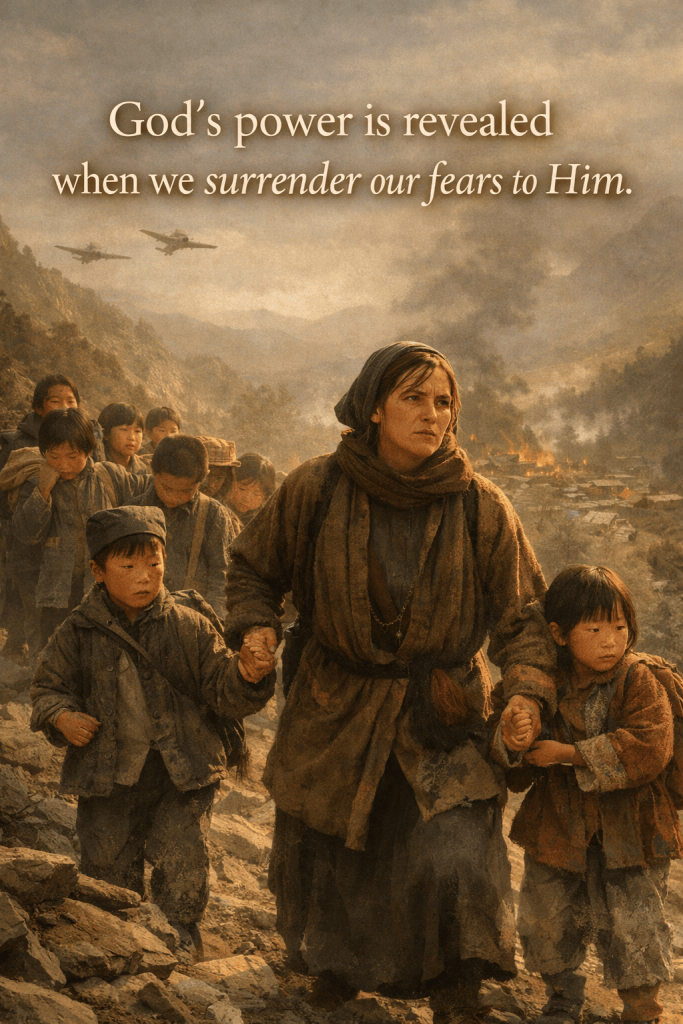
Her surrender did not eliminate fear—but it released God’s power through her obedience.
Gladys Aylward’s life became a testimony that when we say “yes” to God’s will, He provides strength beyond our ability.
🔗 Source :
https://www.christianitytoday.com/history/people/missionaries/gladys-aylward.html
⚒️🎯 Personal Application:
We all encounter moments where God’s will challenges our desires. In those moments, we must decide—will we hold on to control, or will we surrender? Like Jesus, we are invited to bring our fears honestly to God, but also to trust Him completely. True peace comes not when circumstances change, but when our hearts align with God’s purpose. Let us learn to say daily, “Not my will, but Yours be done,” and walk in obedience.
🙏 🕯️ Prayer:
Lord Jesus,
Teach us to surrender our will to You.
In moments of fear and uncertainty, help us to trust Your plan.
Give us strength to obey, even when the path is difficult.
Let our lives reflect Your faithfulness and love.
Amen.


Leave a comment