
📖 ✝️ Scripture Reading: Luke 22:1–6
“Sin will take you farther than you want to go.”
— Ravi Zacharias
💒 🕊️ ✨ Context (Story) :
The city of Jerusalem is swelling with pilgrims. The feast of Passover—rooted in the memory of Israel’s deliverance from Egypt—is about to begin. Lambs will be sacrificed. Songs of redemption will rise. But beneath the surface of celebration, something far darker is unfolding.
The religious leaders, threatened by the growing influence of Jesus Christ, are no longer simply debating Him—they are plotting His death. Under Roman rule, they cannot execute Him freely. They must be strategic, careful, and hidden. Fear grips them—not fear of God, but fear of the people who hang on Jesus’ every word.
Then, a chilling turn occurs.
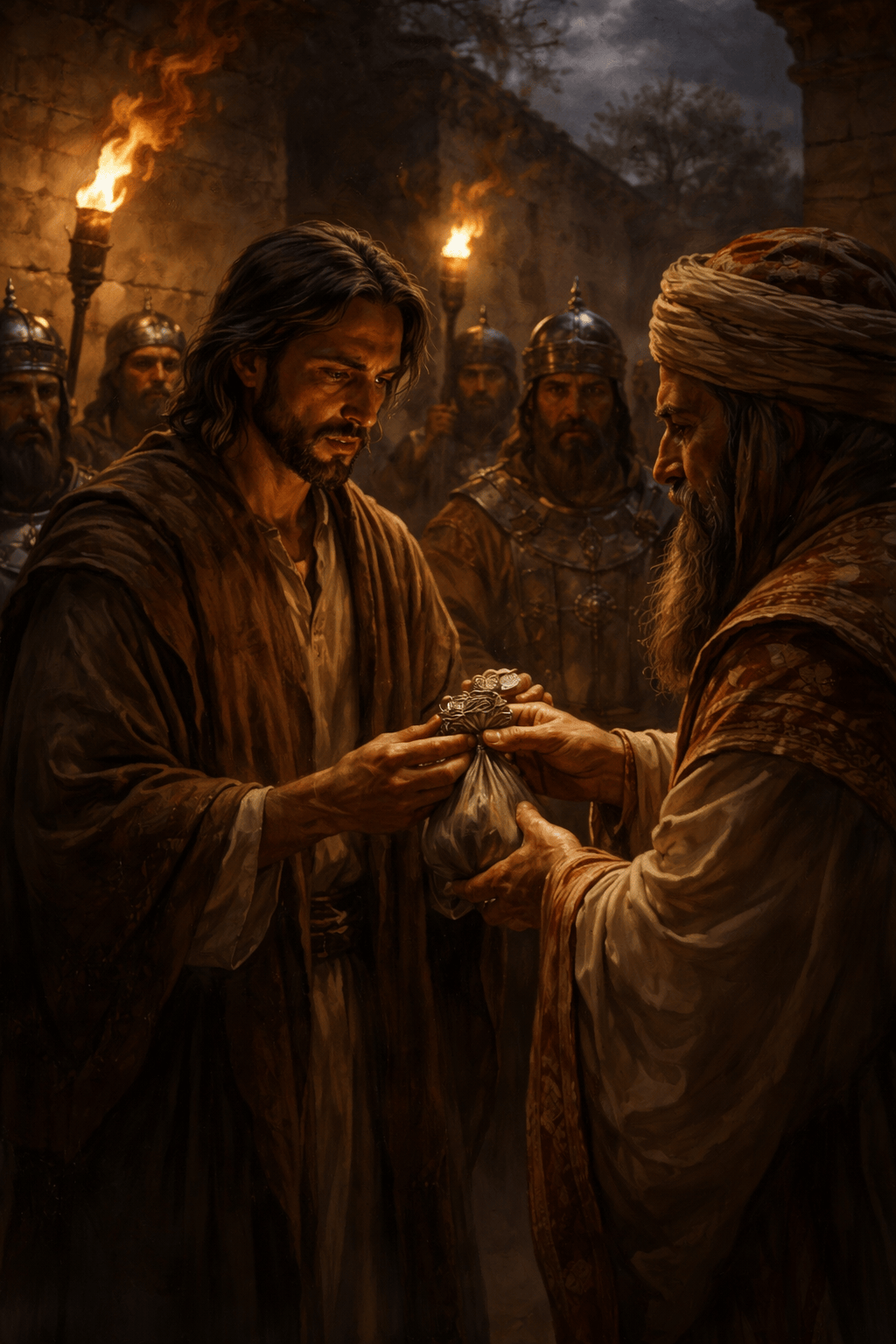
“Then Satan entered into Judas…”
The Greek word used here for “entered” (eisēlthen) conveys more than influence—it suggests a yielding, an opening of the heart. Judas Iscariot, one of the Twelve, walks away from the Light and into the counsel of darkness.
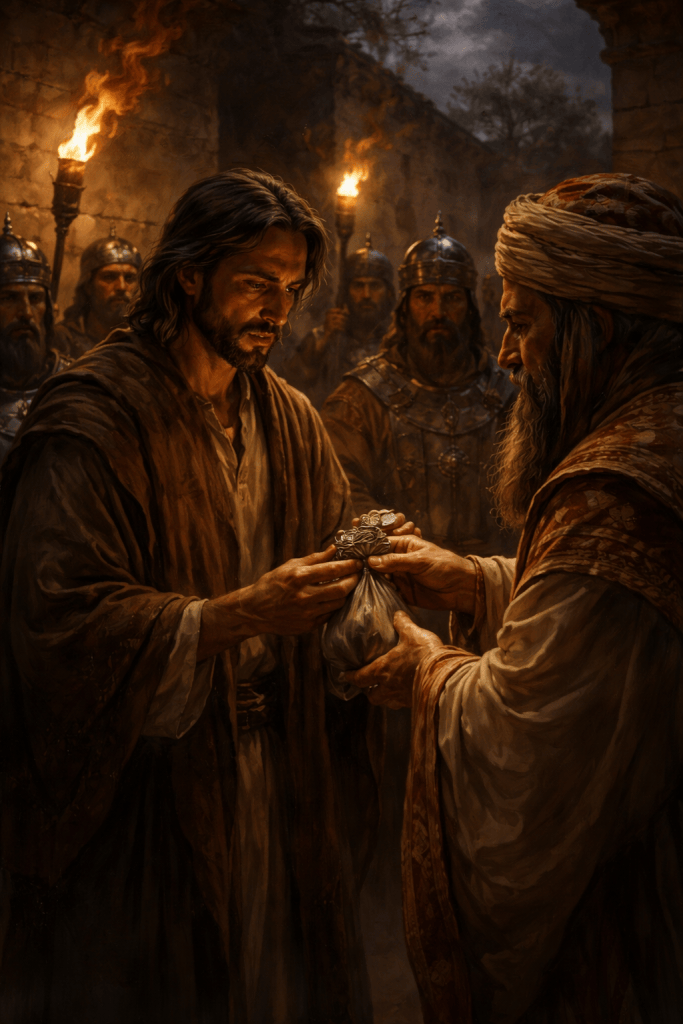
He approaches the chief priests and officers quietly. No crowds. No witnesses. Just whispers. They are delighted. Finally—an insider. Someone who knows Jesus’ movements, His quiet places of prayer, His moments of solitude.
Money is promised. A price is set.
This moment echoes ancient prophecy. In Book of Zechariah 11:12–13, the shepherd is valued at thirty pieces of silver—the price of a slave. Now, the Good Shepherd is appraised with the same contempt.
The Gospel narrative, as a genre, presents this not merely as history, but as unfolding divine purpose. What appears as betrayal is, in the mystery of God’s sovereignty, part of redemption’s path.
Literarily, this passage stands at the threshold of the Passion. Before the Last Supper, before Gethsemane, before the Cross—there is betrayal. The darkness intensifies before the Light is lifted up.
Judas consents. The Greek term (exomologeō) implies agreement, alignment of will. He begins to look for an opportunity—“in the absence of a crowd.”
Silence becomes the setting for treachery.
🤔 🪞 💡 Reflection Thought:
This passage reveals a sobering truth: proximity to Jesus does not guarantee loyalty to Jesus.

Judas walked with Christ, heard His teachings, witnessed miracles, yet his heart drifted. The tragedy is not sudden—it is gradual. Sin rarely explodes; it seeps in quietly. A love for money, a hidden disappointment, unmet expectations of a political Messiah—all become cracks through which darkness enters.

Theologically, we see the interplay between human responsibility and divine sovereignty. Judas chooses betrayal, yet God uses even this act to accomplish salvation. The Cross is not an accident—it is an appointment.

The character of Christ shines even here. He is not reacting in panic. He is moving forward in purpose. He knows betrayal is coming, yet He continues toward the Cross. This is not weakness—it is willing sacrifice.

Spiritual blindness is evident. The religious leaders, experts in Scripture, fail to recognize the fulfillment of prophecy before their eyes. Judas, a disciple, fails to recognize the worth of the One he follows.

And yet, redemption is being written.

The Lamb of God is being prepared—not just by divine plan, but through human brokenness. Even betrayal becomes a doorway to grace.
🎬🔛 Historical True Event :
Thirty Pieces Refused: The Story of Jan Sarkander (Moravia, 1620)
In the early 1600s, Europe was gripped by religious conflict and political instability. In Moravia, suspicion ran deep, and loyalty was constantly tested. In such a climate stood Jan Sarkander, a humble priest known for his integrity and devotion.
In 1620, he was arrested under suspicion of political betrayal. Authorities believed he held confidential information—secrets that could shift power if revealed. They pressured him relentlessly, offering relief from suffering if he would speak.
It was a quiet but powerful temptation: exchange faithfulness for freedom.
Day after day, the pressure intensified. Promises were made. Threats followed. Torture began.
Yet Sarkander refused.
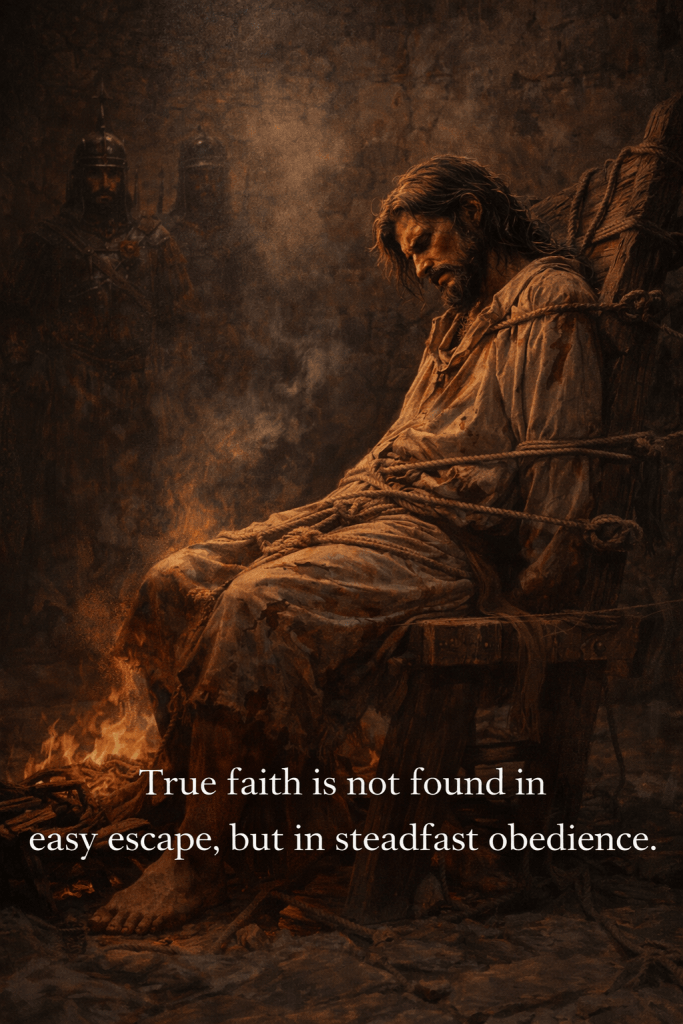
What had been entrusted to him, he would not betray. Even under severe physical agony—stretched, burned, and broken—he remained silent. He chose obedience over escape, truth over survival.
In March 1620, he died from the injuries inflicted during torture.
His death was not in vain. His faithfulness became a testimony across generations. Where Judas yielded to pressure for gain, Sarkander stood firm in conviction despite loss.
His life reminds us that betrayal often comes disguised as an easier path—but true faith chooses obedience, no matter the cost.
🔗 Source :
https://www.britannica.com/biography/Saint-Jan-Sarkander
⚒️🎯 Personal Application:
This passage confronts us deeply. We must ask ourselves: are we merely near Jesus, or are we surrendered to Him? We, too, can allow small compromises, hidden sins, or misplaced desires to distance our hearts from Christ. Let us examine where we may be “negotiating” with sin in secret. Today, we are called not just to follow Jesus outwardly, but to yield our hearts fully to Him, choosing faithfulness over convenience, and devotion over distraction.
🙏 🕯️ Prayer:
Lord Jesus, keep our hearts from drifting into compromise. Help us to remain faithful in both seen and unseen moments. Strengthen us to resist temptation and choose obedience. May we value You above all else. Amen.


Leave a comment