
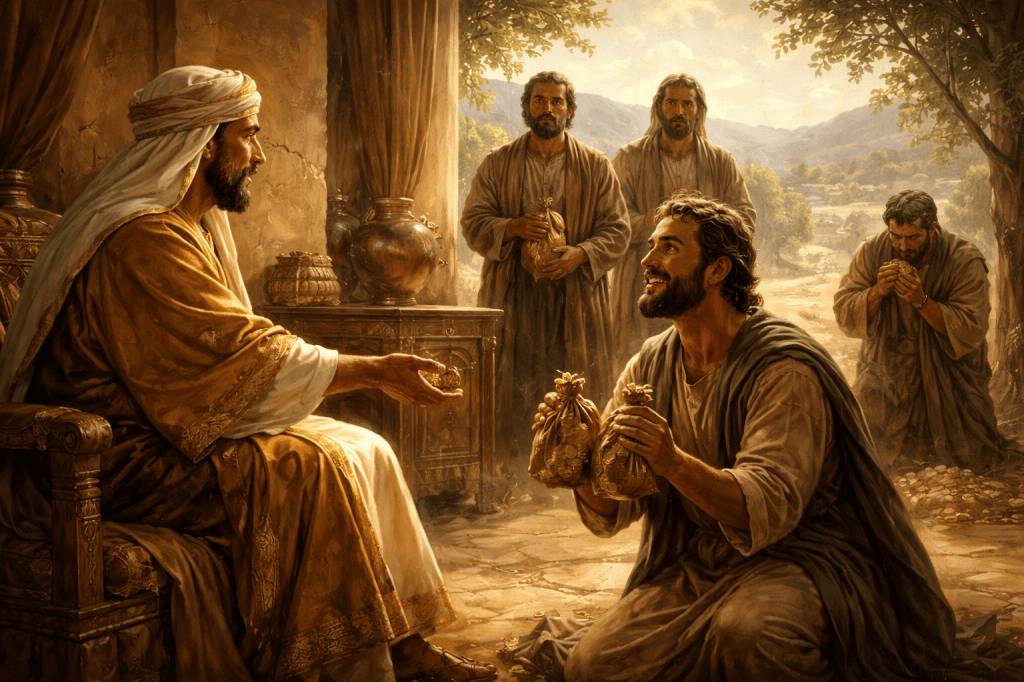
📖 ✝️ Scripture Reading: Matthew 25:14–30
“God has not given us equal gifts, but He has given us equal opportunity to be faithful.”
— Elisabeth Elliot
💒 🕊️ ✨ Context (Story) :
The air in Jerusalem is heavy with anticipation. This is the final week before the cross. Jesus has entered the city as King, yet rejection is already unfolding. The religious leaders are plotting, the crowds are divided, and His disciples are confused.
As He sits on the Mount of Olives, overlooking the temple, Jesus begins to speak—not in simple statements, but in parables filled with urgency. These are not casual teachings; they are end-time warnings. Just before this, He has spoken about the ten virgins—about readiness. Now, He turns to responsibility.
He tells of a wealthy master preparing for a long journey. In that culture, it was common for masters to entrust servants with responsibility in their absence. But this is no small task. He distributes “talents”—a term from the Greek word talanton, referring not to skills but to vast sums of money, possibly equivalent to years of wages.
To one servant he gives five, to another two, and to another one—“each according to his ability.” This reflects a deep understanding of stewardship: God’s assignments are intentional, not random.
Immediately, the first two servants act. There is urgency. They trade, invest, take risks. Their actions reflect trust in the master’s character. But the third servant withdraws. Fear grips him. Instead of engaging, he buries the talent—choosing safety over obedience.
Time passes. The master returns.
This moment echoes prophetic themes from the Old Testament—especially passages like Daniel 7, where the Son of Man returns in authority. It also aligns with the broader teaching of Jesus in Matthew 24–25: the certainty of His return and the accountability that follows.
The master calls each servant.
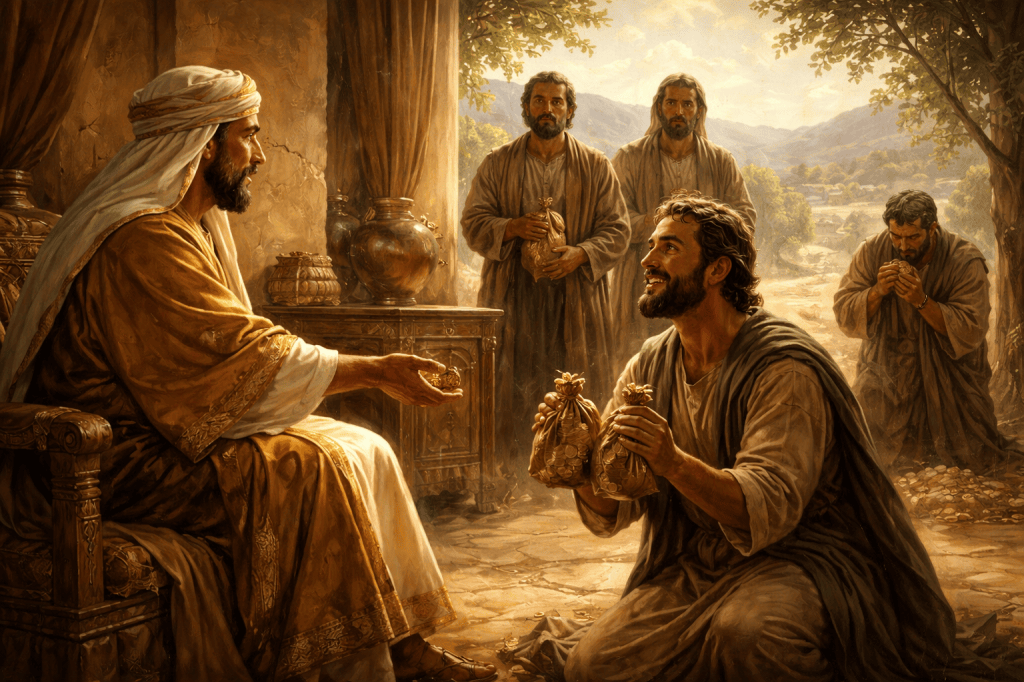
The first comes forward—not with anxiety, but with joy. “Lord, you entrusted me with five talents; see, I have gained five more.” The reward is not merely material—it is relational:
“Well done, good and faithful servant… enter into the joy of your master.”
The second hears the same words. Notice this: though he produced less in quantity, he receives equal affirmation. The Kingdom measures faithfulness, not comparison.
Then comes the third servant.
His words reveal his heart. He describes the master as harsh, demanding, unreasonable. His inaction was not due to lack of ability—but a distorted view of his lord. Fear led to paralysis.
The master responds sharply. The issue is not loss—it is neglect. Even minimal effort would have been acceptable. But burying the gift represents rejection of responsibility.
The consequence is severe. The talent is taken away, and the servant is cast into outer darkness—a phrase used in Matthew’s Gospel to describe separation and judgment.
This is not merely about money. It is about the Kingdom. Jesus is preparing His disciples for His departure—and warning them of His return.
🤔 🪞 💡 Reflection Thought:
This parable reveals the heart of Christ as both gracious giver and righteous judge.

First, we see His generosity. The master entrusts his wealth to servants. In theological terms, this reflects divine grace—God entrusting His resources, gospel, and mission to imperfect people. Like Adam in Genesis, humanity is given stewardship. Like Israel, called to be a light to nations, we too are entrusted with responsibility.

Second, we see human response. The first two servants act in faith. Their obedience flows from trust. The third servant reveals spiritual blindness. His perception of the master shapes his behavior. This connects deeply with Romans 1—how distorted views of God lead to distorted living.

Theologically, this parable speaks of the Kingdom as already entrusted but not yet fulfilled. Christ, the true Master, has ascended (Acts 1), and His return is certain. Until then, believers live in the tension of stewardship.

The phrase “well done, good and faithful servant” emphasizes faithfulness (pistos in Greek), meaning trustworthy, reliable, committed. God values consistency over charisma.

The judgment of the third servant is sobering. It challenges superficial faith. In Gospel narrative style, Jesus often uses stark contrasts to awaken His listeners. This is not merely a moral lesson—it is a call to examine whether our lives reflect genuine allegiance to the King.

Ultimately, this parable points to Christ Himself—the One who gave everything, who was faithful unto death, and who now calls His followers to reflect that same faithfulness.
🎬🔛 Historical True Event :
The Hidden Translator – William Carey’s Faithful Stewardship (India, 1800s)
In the late 18th century, William Carey, a simple cobbler from England, felt a burning conviction: the gospel must reach India.
At that time, missions were considered unnecessary by many Christians. Carey was even told, “If God wants to save the heathen, He will do it without you.”
But Carey refused to bury his “talent.”
In 1793, he arrived in India with little support. The early years were brutal. His son died. His wife suffered mental illness. He struggled financially. For seven years, he saw almost no converts.
Many would have given up.
But Carey remained faithful.
He began translating the Bible into local languages—Bengali, Sanskrit, and others. He worked tirelessly, often through the night. Then tragedy struck: a fire destroyed years of translation work.
Instead of quitting, Carey said, “The loss is heavy, but the work is the Lord’s.”
He started again.
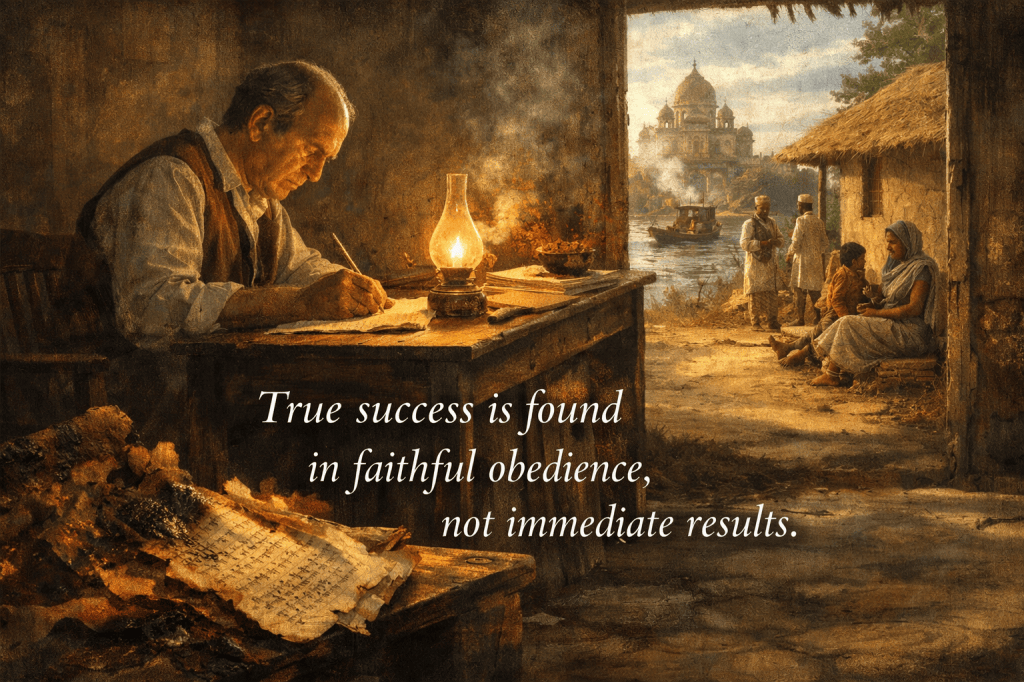
By the end of his life, he had helped translate the Bible into over 40 languages and dialects. His faithfulness sparked the modern missionary movement.
Carey did not see immediate success—but he invested what God gave him.
And history calls him: “The Father of Modern Missions.”
🔗 Source :
https://www.wmcarey.edu/carey-life
⚒️🎯 Personal Application:
This passage confronts us deeply. We are not passive spectators in God’s Kingdom—we are entrusted stewards. Each of us has received something: time, gifts, opportunities, the gospel itself. The question is not how much we have, but what we are doing with it. Fear, comparison, and comfort often tempt us to bury what God has given. But Jesus calls us to live boldly, faithfully, and expectantly. We are accountable to Him. Let us not waste what heaven has placed in our hands.
🙏 🕯️ Prayer:
Lord Jesus, You have entrusted us with so much more than we realize. Forgive us for the times we have lived in fear or buried what You have given. Teach us to be faithful, bold, and obedient. Help us to see You rightly and serve You wholeheartedly until You return. Amen.


Leave a comment