
📖 ✝️ Scripture Reading: Matthew 24:30–44
“Only one life, ’twill soon be past; only what’s done for Christ will last.”
— C.T. Studd
💒 🕊️ ✨ Context (Story) :
The tension in Jerusalem is rising. Just days after the triumphal entry, as the shadow of the cross draws near, Jesus now lifts His disciples’ eyes beyond immediate events to something far greater—the final return of the Son of Man.
Sitting on the Mount of Olives, overlooking the city, He speaks not only of destruction and suffering but of ultimate glory.
Then, suddenly, the tone shifts.
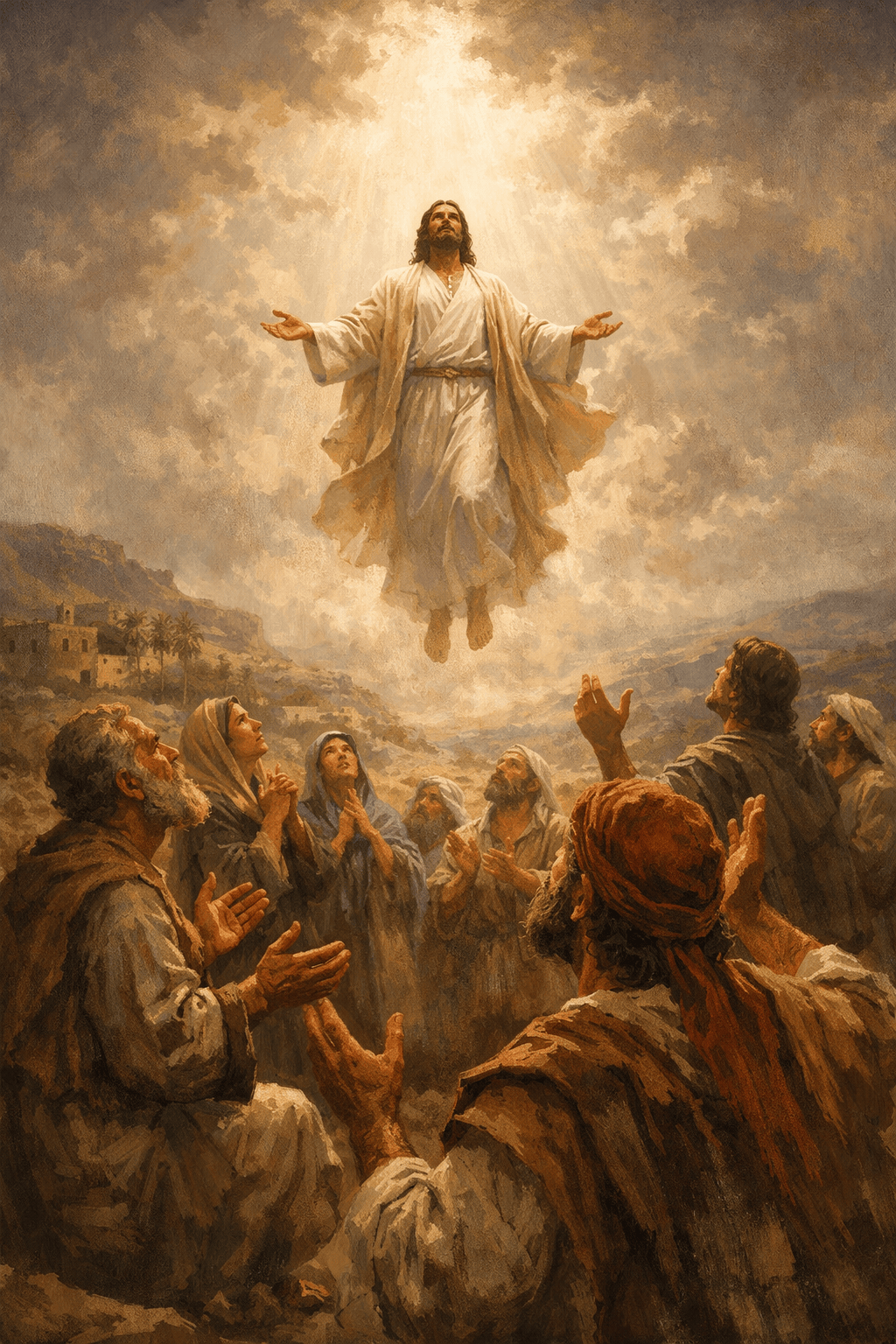
He declares that a sign will appear in heaven—the sign of the Son of Man. The language echoes the prophecy of Daniel, where one like a Son of Man comes with the clouds of heaven (Daniel 7:13). For first-century Jews living under Roman oppression, this was explosive imagery. They longed for deliverance, but Jesus reveals that His kingdom will come not through political revolt, but divine intervention.
“All the tribes of the earth will mourn.”
This mourning is not merely sorrow—it reflects realization. The Greek word κόψονται (kopsontai) implies deep lamentation, often associated with grief and repentance. The same world that rejected Him will now see Him in glory.
He comes “on the clouds of heaven with power and great glory.” Clouds in Scripture signify divine presence—seen in Exodus with God leading Israel. Now, Jesus claims that same authority.
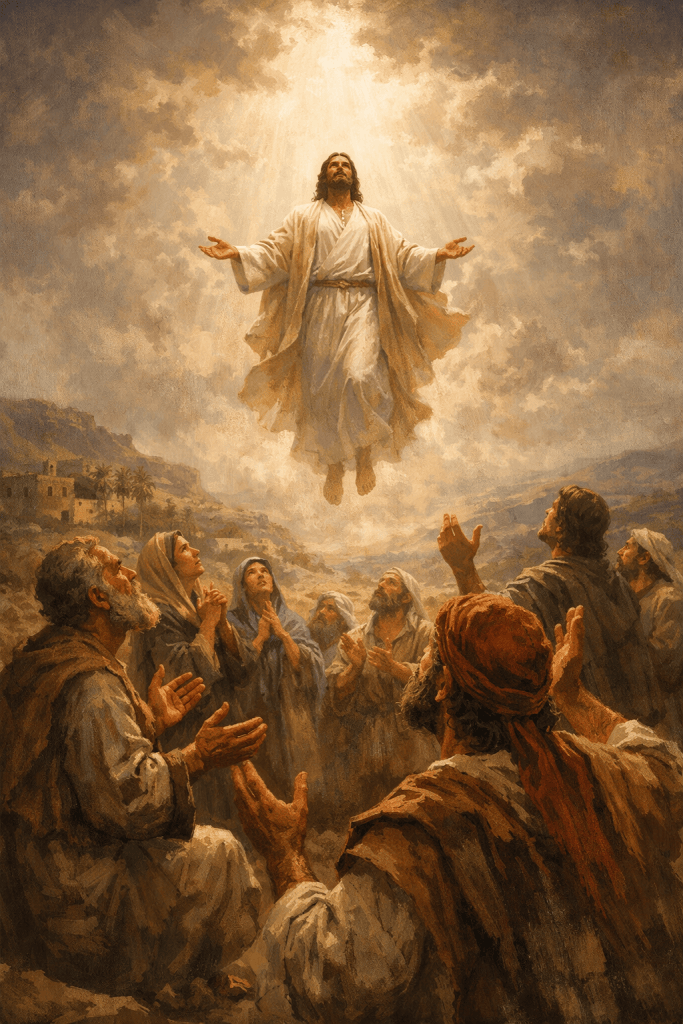
Angels are sent with a loud trumpet call, gathering His elect. This echoes Old Testament imagery (Isaiah 27:13), where God gathers His people. What seemed scattered and hidden will be brought together in a moment of divine fulfillment.
Then Jesus shifts from cosmic imagery to a simple illustration—the fig tree. When its branches become tender and leaves appear, you know summer is near. In the same way, He says, discern the times.
Yet, there is a tension:
“You do not know what day your Lord is coming.”
The Greek term γρηγορεῖτε (grēgoreite)—“watch”—means to stay awake, alert, spiritually attentive. This is not passive waiting; it is active readiness.
Jesus compares His coming to the days of Noah. Life went on as usual—eating, drinking, marrying—until the flood came suddenly. There was no outward warning that people took seriously.
Two men in a field—one taken, the other left. Two women grinding grain—one taken, the other left. The separation is sudden and decisive.
Then comes the final image: a homeowner who would have stayed awake if he knew when a thief was coming. The message is clear—be ready at all times.
This teaching stands at a crucial moment in Jesus’ journey. As He moves toward the cross, He prepares His followers not only for His death—but for His return.
🤔 🪞 💡 Reflection Thought:
This passage reveals Christ not only as the suffering Savior, but as the returning King. His first coming was marked by humility; His second will be marked by glory.

We see the heart of God’s redemptive plan—history is moving toward a divine climax. The same Jesus who was rejected will be revealed in power. His kingship will be undeniable.

Humanity’s response is deeply revealing. Many will mourn—not because they are surprised, but because they recognize too late what they have rejected. Spiritual blindness, when prolonged, leads to eternal loss.

Theologically, this passage reminds us that salvation is both already and not yet. Christ has secured redemption through the cross, but its full manifestation awaits His return.

The command to “watch” is not about fear—it is about faithfulness. True readiness is not anxiety about the future, but alignment with Christ in the present.

Canonically, this moment connects with Revelation 1:7—“every eye shall see Him”—and 1 Thessalonians 4:16–17, where the trumpet call and gathering of believers are described.

The Gospel genre here blends prophecy with pastoral exhortation. It is not merely predicting events—it is shaping disciples.

Christ is not only coming—He is coming for those who are ready.
🎬🔛 Historical True Event :
Ready at Midnight – The Story of John Harper (Titanic, 1912)
In April 1912, as the Titanic struck an iceberg and began to sink in the icy waters of the Atlantic, chaos and fear gripped the passengers.
Among them was John Harper, a Scottish Baptist pastor traveling to preach in Chicago.
As panic spread, Harper made a remarkable decision. Instead of seeking safety, he gave his life jacket to another man.
Moving from person to person in the freezing darkness, he asked a simple yet eternal question:
“Are you saved?”
Even as the ship went down, Harper continued to point people to Christ.
One survivor later testified that while clinging to debris in the freezing water, Harper approached him and urged him to trust in Jesus. That moment led to his salvation.
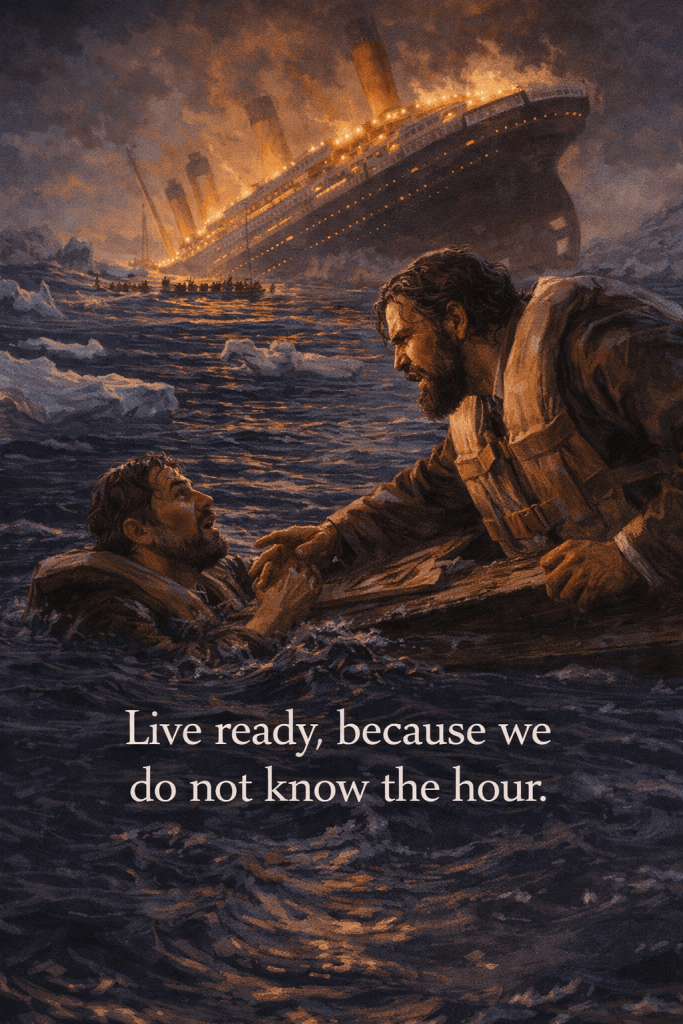
Harper did not survive.
But he was ready.
Before the disaster: a preacher of the gospel.
In the disaster: a witness until his final breath.
His life reflects the urgency of Jesus’ words—to live ready, because we do not know the hour.
🔗 Source :
https://www.gotquestions.org/John-Harper.html
⚒️🎯 Personal Application:
In our daily lives, it is easy to become distracted by routine, comfort, and temporary concerns. Like the days of Noah, we can live unaware of eternal realities. This passage calls us to examine whether we are spiritually awake or drifting. We are reminded to live with purpose, holiness, and expectation. Let us not delay obedience or take our faith casually. Instead, let us remain watchful, rooted in Christ, and ready at all times—because His return will be sudden, and His call will be final.
🙏 🕯️ Prayer:
Lord Jesus, help us to live watchful and ready for Your return. Keep our hearts awake and faithful in every moment. Remove distractions that pull us away from You. May we live each day prepared to meet You in glory. Amen.


Leave a comment