
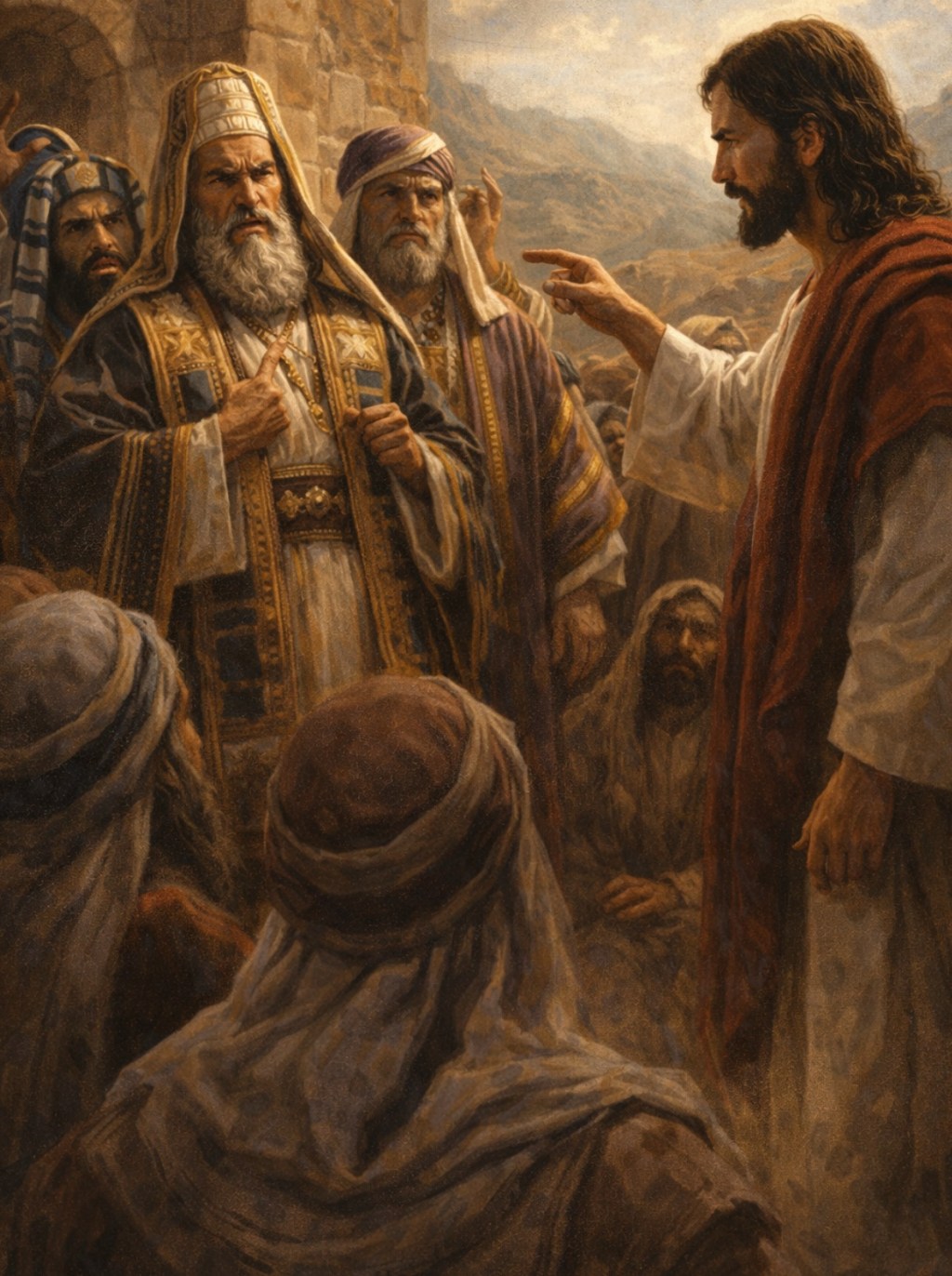
📖 ✝️ Scripture Reading: Matthew 23:13–36
“The greatest deception is not atheism but empty religion.”
— Aiden Wilson Tozer
💒 🕊️ ✨ Context (Story) :
It was the final week before the crucifixion.
After the triumphal entry into Jerusalem, tension filled the city. Religious leaders had repeatedly tried to trap Jesus Christ with difficult questions about authority, taxes, and the law. Each attempt had failed.
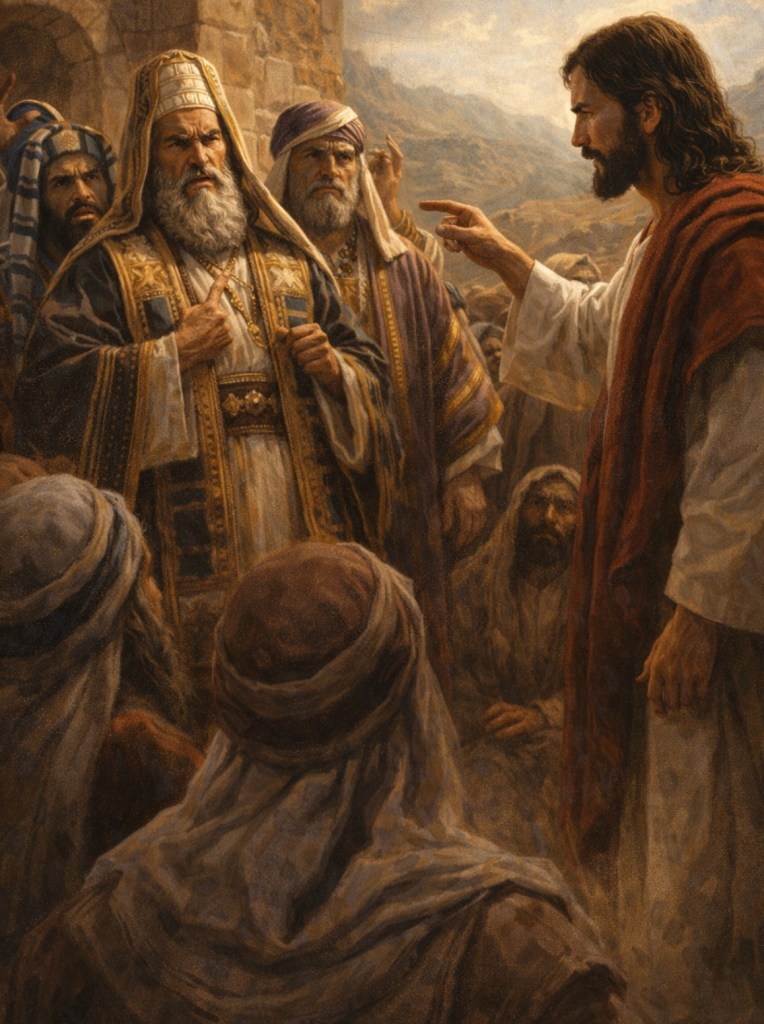
Now Jesus stood in the temple courts before a large crowd. His disciples were nearby, and the scribes and Pharisees—respected religious authorities—were also listening carefully.
What followed was one of the most powerful rebukes Jesus ever spoke.
Instead of parables, Jesus pronounced a series of “woes.”
The Greek word “ouai” (οὐαί) carries the meaning of grief, warning, and judgment. It is both a lament and a declaration of coming accountability.
The scribes and Pharisees were influential teachers of the law in Jewish society under Roman rule. The people looked to them for spiritual guidance.
Yet Jesus revealed a painful truth.
They were “shutting up the kingdom of heaven against men.”
Instead of helping people know God, their legalism and traditions created barriers. Their religious authority had become a gate that blocked others from entering God’s kingdom.
Jesus described how they traveled across land and sea to make converts, yet the result was tragic. Their converts became even more deeply trapped in a system of external religion.
Jesus then exposed their misuse of religious vows. They developed complicated rules about swearing by the temple or by the gold of the temple, creating loopholes that allowed dishonesty while appearing righteous.
At this point Jesus called them “blind guides.”
The phrase reveals a profound spiritual irony: those who claimed to guide others toward God were themselves spiritually blind.
The rebuke continued.
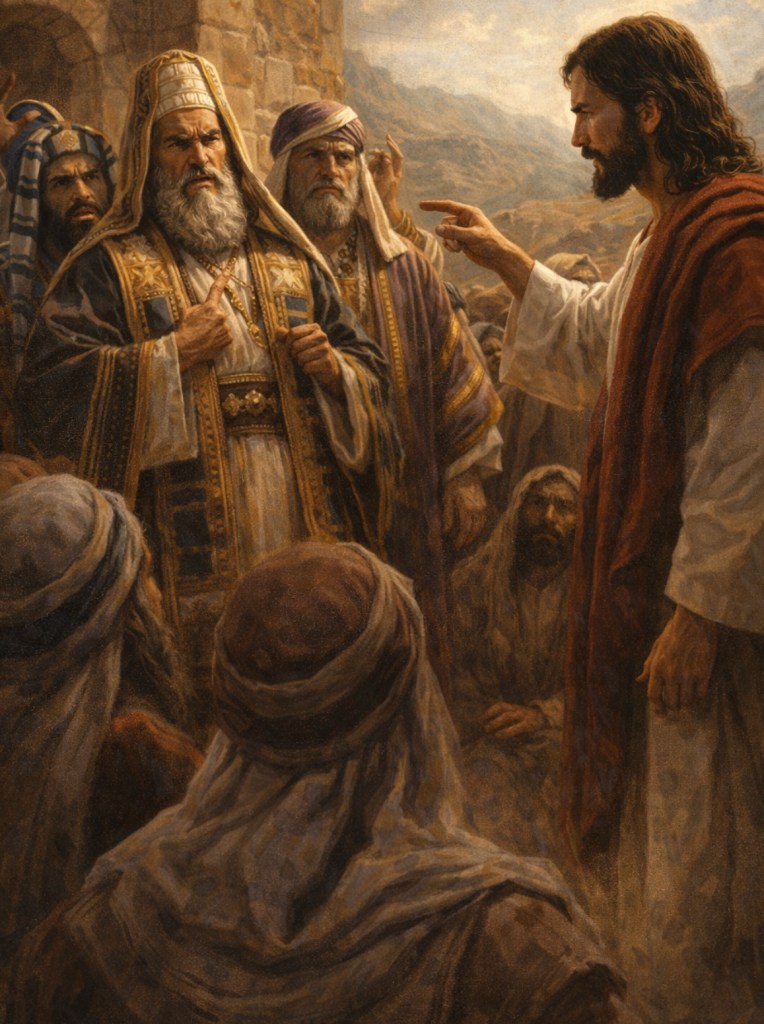
The Pharisees were meticulous about tithing tiny garden herbs such as mint, dill, and cumin. Yet they neglected the “weightier matters of the law.”
In Greek, the phrase “ta barytera tou nomou” refers to the deeper moral priorities of God’s law: justice, mercy, and faithfulness.
Their religion emphasized technical obedience but ignored God’s heart.
Jesus used vivid imagery that would have shocked the listeners:
“You strain at a gnat and swallow a camel.”
Both animals were considered unclean in Jewish law. The smallest impurity was carefully filtered out, yet the largest impurity was swallowed without concern.
The crowd likely felt the tension rising in the temple courts.
Then Jesus spoke one of the most memorable metaphors in the Gospel.
The religious leaders were like “whited sepulchres.”
In Jewish culture, tombs were whitewashed before major festivals so travelers would not accidentally touch them and become ceremonially unclean.
From the outside these tombs appeared clean and beautiful.
Inside they contained death.
Jesus declared that the religious leaders were the same—externally righteous but internally full of hypocrisy and corruption.
Finally, Jesus exposed their historical blindness.
They honored the prophets of the past by building monuments for them and claimed they would never have persecuted God’s messengers.
Yet they were preparing to reject and crucify the very Messiah those prophets had foretold.
This moment carried prophetic significance. The warnings of prophets like Isaiah and Jeremiah echoed through Jesus’ words.
The tension in the temple was unmistakable.
The religious leaders were publicly exposed.
The crowd heard the truth.
And the path toward the cross was becoming clearer.
🤔 🪞 💡 Reflection Thought:
This passage reveals the penetrating insight of Christ into the human heart.

Hypocrisy grows when religion becomes a performance instead of a relationship with God.

The Pharisees honored Scripture outwardly but pursued status, reputation, and control. Their spiritual life had become external—measured by rituals rather than obedience.

Jesus’ words reveal the character of God’s kingdom.

God desires hearts transformed by grace rather than appearances of righteousness.

The contrast between Jesus and the Pharisees is striking.

Though Jesus possessed ultimate authority as the Son of God, He lived with humility and compassion. He embodied the very virtues the law required—justice, mercy, and faithfulness.

This passage also reveals the tragedy of spiritual blindness. Knowledge of Scripture does not automatically lead to faith. Without humility, even religious leaders can miss the presence of God.

Ultimately this confrontation points toward the cross.

The same leaders who rejected Jesus’ warnings would soon conspire to crucify Him.

Yet through their rejection, God accomplished redemption.

The cross demonstrates the ultimate reversal of human pride: the humble suffering Messiah becomes the Savior of the world.
🎬🔛 Historical True Event :
The Hidden Conviction of Charles Colson – United States, 1973
In the early 1970s, Charles Colson was known as one of the most powerful men in Washington, D.C..
He served as a close advisor to President Richard Nixon and was famous for his ruthless political tactics. Colson once proudly said he would “walk over his grandmother” to achieve political victory.
Outwardly he appeared successful, respected, and influential.
But during the Watergate scandal, his life began to unravel. Investigations exposed corruption and deception within the administration.
In 1973 a friend gave Colson a copy of Mere Christianity by C. S. Lewis.
As he read the book and encountered the message of Christ, Colson became deeply convicted of his own hypocrisy. He realized that success and power had become substitutes for genuine faith.
One evening, while sitting in his car after speaking with a Christian friend, Colson broke down in tears and prayed for the first time with sincerity.
Soon afterward he was sentenced to prison for his role in the scandal.
Yet prison became the place where his faith matured.
After his release, Colson founded Prison Fellowship, a global ministry serving prisoners and their families. Millions of inmates around the world have since encountered the gospel through this work.
His story illustrates the transformation that occurs when outward success is replaced by authentic faith in Christ.
🔗 Source :
https://www.prisonfellowship.org/about/chuck-colson/
⚒️🎯 Personal Application:
This warning challenges us deeply today. We may attend church, read Scripture, and speak spiritual language while our hearts quietly seek recognition or approval. Jesus invites us to examine our motives. True faith grows when we pursue humility, justice, mercy, and sincere devotion. Authentic Christianity is not about appearing spiritual but about loving God with a transformed heart.
🙏 🕯️ Prayer:
Lord Jesus, protect our hearts from hypocrisy. Help us pursue genuine faith, humility, and obedience. Teach us to seek Your kingdom above recognition or reputation. Transform our hearts so that our lives reflect Your truth. Amen.


Leave a comment