
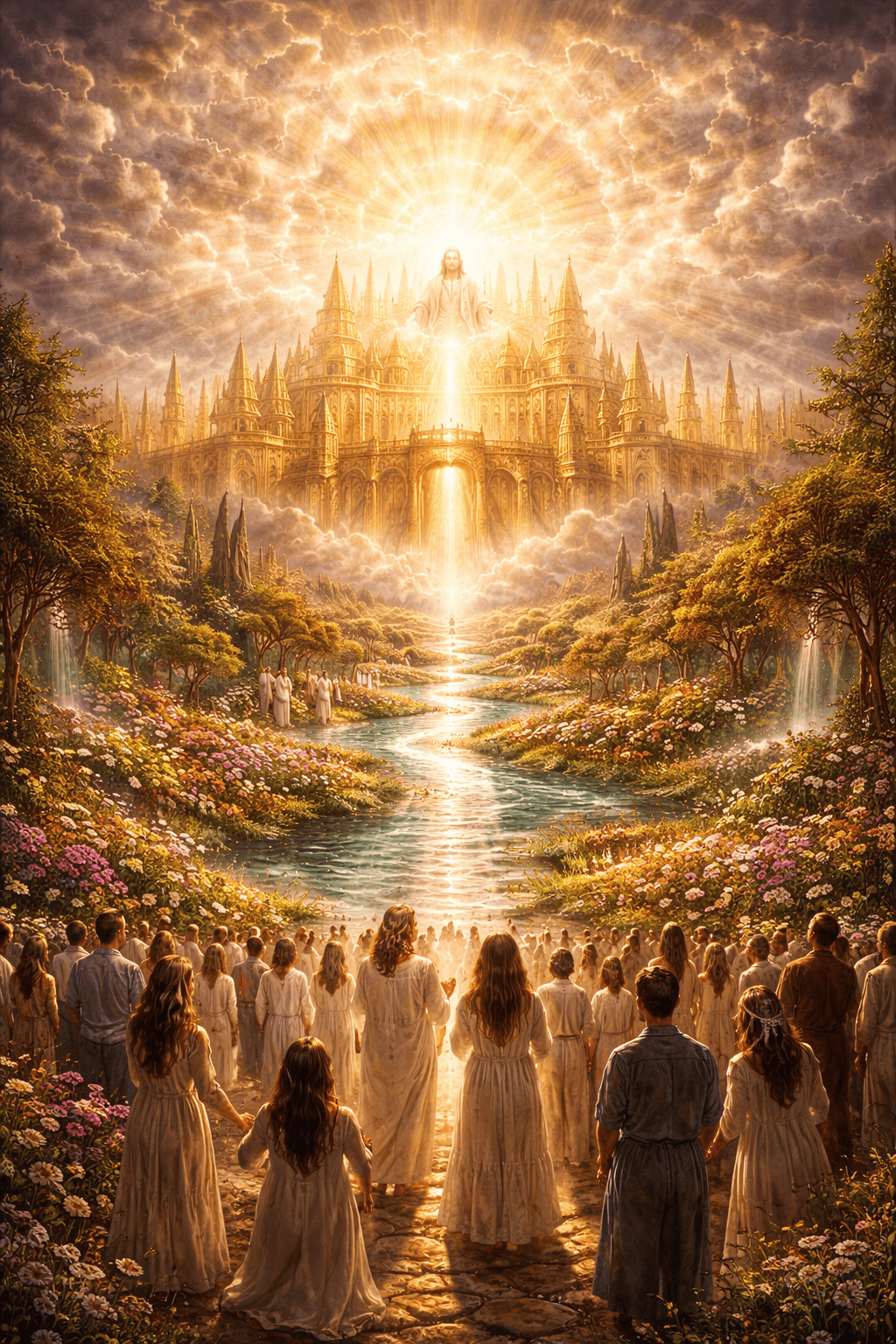
📖 Scripture Reading : Revelation 21–22
✨
— G.K. Chesterton
“Hope is the power of being cheerful in circumstances that we know to be desperate.”
⏳ Background:
By the time we reach Revelation 21, the story of Scripture has traveled through centuries of heartbreak. Creation began “very good” (Genesis 1:31), but rebellion fractured everything. Death entered (Genesis 3:19). Shame replaced innocence (Genesis 3:7). The ground itself was cursed (Genesis 3:17–18).
History unfolded as a long testimony to loss.
Israel knew exile. Jerusalem knew destruction. The prophets spoke of tears and ruin. The disciples knew betrayal and fear. The early church knew persecution. Humanity carried a shared inheritance: decay, grief, injustice, and graves.
Revelation does not ignore this suffering. It names it. There are plagues, martyrs, judgment, cosmic shaking. Evil appears entrenched. Death still claims bodies. Tears still fall. In Revelation 20:12–15, the final enemy—death—is still present. The human condition seems irreversible.
Emotionally, this is exhaustion. Spiritually, it is the weight of waiting. Creation itself “groans” (Romans 8:22). We recognize that groaning. It is the grief after a funeral. The silence after failure. The shame of sin we cannot undo. The broken relationship that seems beyond repair.
Human effort cannot reverse death. Reform cannot resurrect. Therapy cannot recreate Eden. No empire, no leader, no innovation can make all things new.
The Bible is painfully honest: we cannot fix what sin has broken.
🔥 Turning Point:
Then comes one of the most decisive sentences in Scripture:
“Then I saw a new heaven and a new earth” (Revelation 21:1).
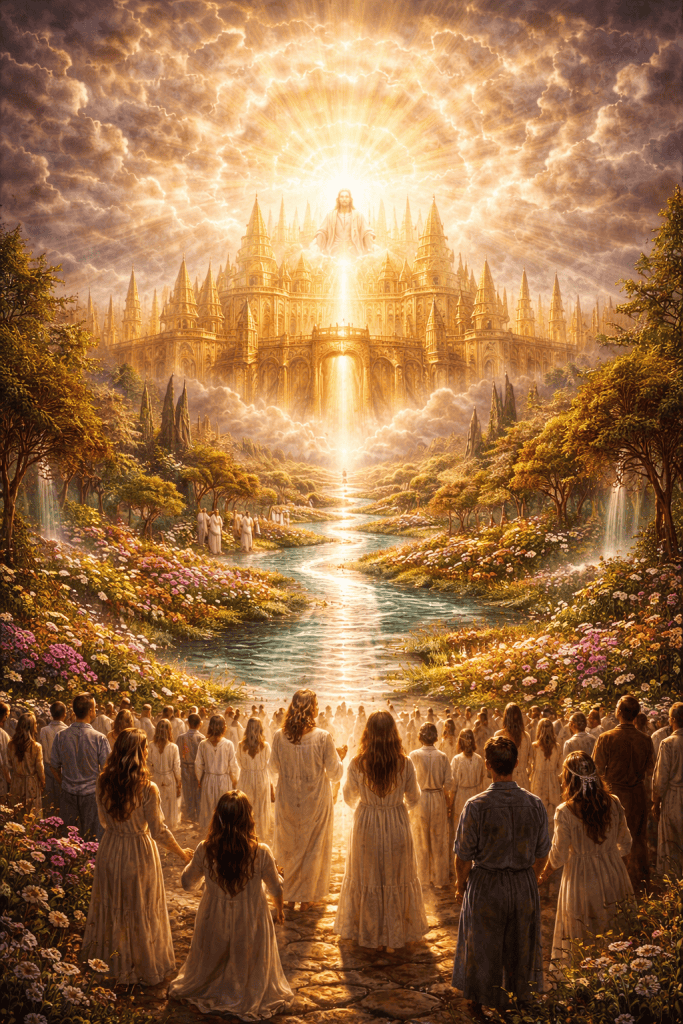
This is not human progress. It is divine initiative.
“And I heard a loud voice from the throne saying, ‘Behold, the dwelling place of God is with man’” (Revelation 21:3). The voice comes from the throne—symbol of absolute sovereignty. God Himself declares the reversal.
“He will wipe away every tear from their eyes, and death shall be no more” (Revelation 21:4).
Notice who acts: He will wipe. He will dwell. He will remove death.
Then the King speaks again: “Behold, I am making all things new” (Revelation 21:5). Not recycling. Not repairing. Making new.
The turning point is not that humanity improves. It is that God intervenes.
The One seated on the throne declares, “It is done!” (Revelation 21:6). The same authority that said “Let there be light” now declares the completion of redemption. The river of life flows (Revelation 22:1). The curse is no more (Revelation 22:3). The servants see His face (Revelation 22:4).
The final victory belongs to God.
🌿 Transformation:
What is restored?
Death—abolished.
Sorrow—removed.
Pain—erased.
Curse—lifted.
The dwelling of God is permanently with His people (Revelation 21:3). Separation ends. Night disappears (Revelation 22:5). Reign replaces ruin.
The transformation is total. Creation itself is renewed. The holy city descends, radiant like a bride (Revelation 21:2). What began in a garden (Genesis 2) ends in a garden-city filled with glory (Revelation 22:1–2).
And the greatest gift is not streets of gold—it is the presence of God. “They will see his face” (Revelation 22:4). Shame that began in Eden is undone. No hiding. No fear.
Even if suffering defines much of the present age, it does not define the final chapter.
Hopelessness does not have the last word. God does.
🕊️ Spiritual Reflection:
Revelation 21–22 teaches us that defeat is never ultimate when God is sovereign. The story of Scripture moves through fall, flood, slavery, exile, crucifixion—but always toward restoration. Loss is real, but it is not final.

God does not waste failure. He folds it into a larger redemptive arc. The cross looked like catastrophic defeat; it became cosmic victory. The empty tomb was not an isolated miracle—it was the first announcement of the coming renewal of all things.

Defeat often precedes transformation because it strips us of illusion. It teaches us dependence. It exposes the limits of human strength. Only then do we look to the throne and hear, “I am making all things new.”

What we cannot reverse, God can redeem.

From Eden lost (Genesis 3) to Eden restored (Revelation 22).
From curse pronounced to curse removed.
From separation to dwelling.
From death reigning to God reigning forever.

Christ bore the curse (Galatians 3:13).
Christ conquered death (1 Corinthians 15:54–57).
Christ prepares a place (John 14:2–3).
Christ returns to make all things new (Revelation 22:12).
💬 Closing Encouragement:
We know what it feels like to stand in ruins—after failure, after loss, after shame that clings to memory. We know the exhaustion of trying to repair what feels permanently broken. We are tempted to give up when prayers seem unanswered and circumstances unchanged. Yet Revelation reminds us that our story is not confined to present sorrow. The same God who promises a new heaven and new earth is already at work in us. When we surrender control, trust His sovereignty, and remain obedient in small faithfulness, we participate in a hope larger than our present pain. Our defeat is not final. Our loss is not wasted. Our future is not fragile. Therefore, we must not give up.
🙏 Prayer:
Father, when everything feels broken, anchor us in Your promises. When we see only loss, help us remember Your throne. Strengthen our faith in seasons that feel irreversible. Teach us to trust Your timing and Your power to restore. Make us steadfast until the day You make all things new. Amen.


Leave a comment