
📖 ✝️ Scripture Reading: Luke 20:1–8
“Christ is not valued at all unless He is valued above all.”
— Augustine of Hippo
💒 🕊️ ✨ Context ( Story ) :
Jerusalem was restless.
Only days earlier Jesus had entered the city riding on a donkey while crowds waved palm branches and shouted praises. The atmosphere of Passover week filled the city with religious passion and political tension. Thousands of pilgrims had come to remember Israel’s deliverance from Egypt, but under Roman rule, many secretly longed for another deliverance — freedom from Rome.
The Jewish leadership watched everything carefully.
The day before this moment, Jesus had done something shocking. He entered the temple courts and drove out the money changers, declaring that God’s house had become a den of thieves. That act publicly challenged the religious system that the priests controlled. Now the leaders were determined to confront Him.
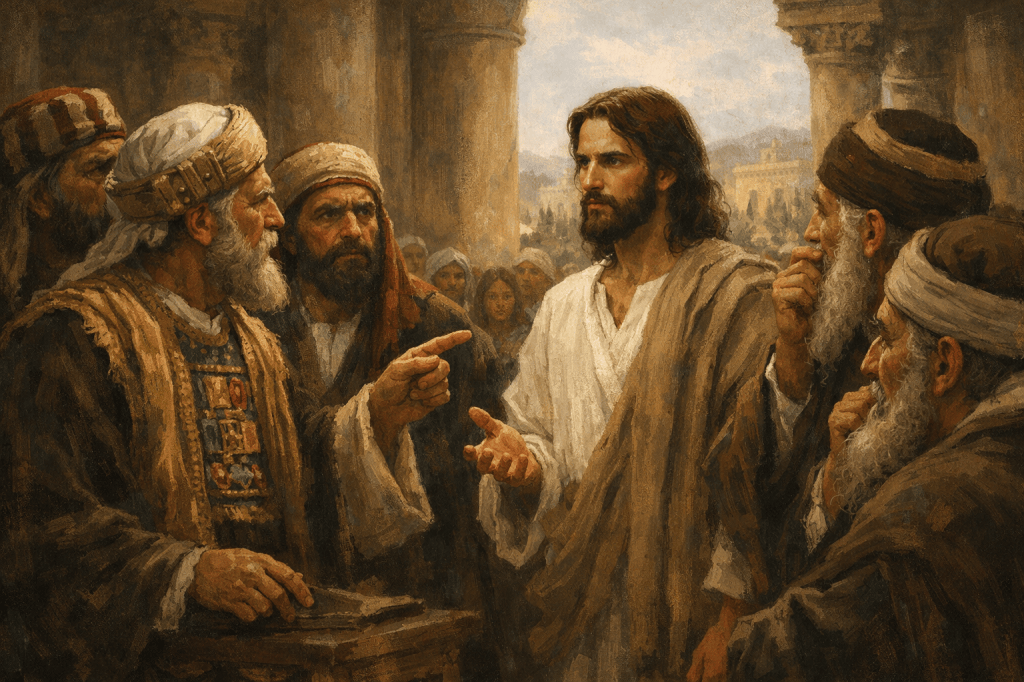
One day, as Jesus stood in the temple teaching people and proclaiming the good news, a group approached Him with authority and calculation — the chief priests, the scribes, and the elders. These men represented the religious power structure of Israel. In Jewish society they were the recognized guardians of doctrine and temple authority.
They interrupted Him with a sharp question:
“Tell us, by what authority are You doing these things? Who gave You this authority?”
At first glance the question sounded reasonable. In Jewish tradition, teachers were authorized by recognized rabbis or institutions. But their question was not sincere curiosity — it was a trap.
The Greek word used for authority here is “ἐξουσία (exousia)”, meaning divine right, power, or delegated authority to rule and act. The leaders were asking: Who gave you the right to challenge us?
If Jesus claimed authority directly from God, they could accuse Him of blasphemy. If He claimed human authority, they could dismiss Him publicly.
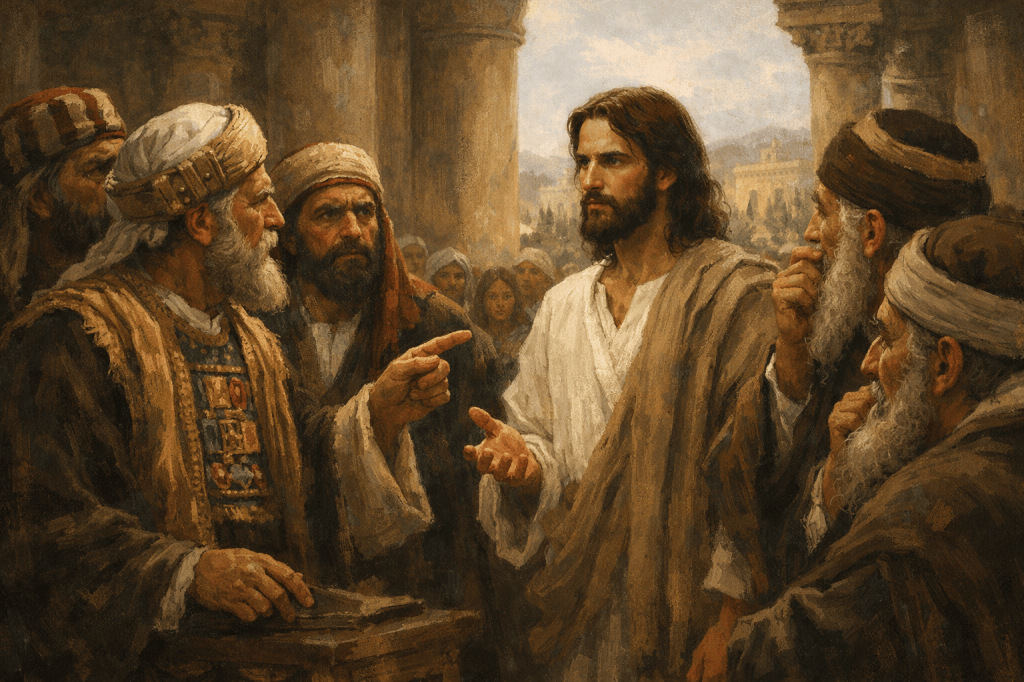
But Jesus answered with divine wisdom.
He responded with a question of His own:
“The baptism of John — was it from heaven, or from men?”
This question struck at the heart of the issue. John the Baptist had already declared Jesus to be the Messiah and the Lamb of God. If the leaders admitted John’s ministry was from God, they would have to accept Jesus as well.
Suddenly the religious authorities were trapped in their own scheme.
They whispered among themselves, calculating politically rather than spiritually.
“If we say ‘from heaven,’ He will ask why we didn’t believe John. But if we say ‘from men,’ the people will stone us because they believe John was a prophet.”
The tension in the temple courts must have been thick. The crowds were watching. The leaders were exposed.
Finally, the guardians of Israel’s religion answered with intellectual cowardice:
“We do not know where it came from.”
Their response revealed something tragic. These were men trained in Scripture, men who taught others about God, yet when confronted with truth standing before them, they chose self-preservation over honesty.
Jesus replied simply:
“Neither will I tell you by what authority I do these things.”
The irony was profound. The very Son of God, the promised Messiah foretold by the prophets, stood before them — yet they refused to recognize His authority.
This moment was not merely a debate. It was part of the growing confrontation that would lead to the cross.
The leaders questioned His authority, but in just a few days they would hand Him over to Rome to be crucified. Yet even that act would ultimately reveal His true authority — the authority to lay down His life and take it up again.
🤔 🪞 💡 Reflection Thought :
This passage reveals a deep spiritual battle between human authority and divine authority.

Jesus’ authority was not granted by human institutions, religious councils, or political rulers. His authority came directly from the Father. Throughout the Gospels, we see this same authority displayed: authority over demons, over sickness, over nature, over sin, and ultimately over death itself.

The religious leaders were not struggling with lack of evidence; they were struggling with unwilling hearts.

Their problem was not intellectual confusion but spiritual resistance.

Jesus exposed this through His question about John the Baptist. John had already pointed to Jesus as the Messiah. Accepting John would force them to surrender their control and acknowledge Christ’s kingship.

Instead, they protected their position.

The Greek word “exousia” reveals something profound. True authority is not merely power — it is rightful power. Jesus possessed rightful authority because He was the Son of God, the promised King from the line of David, fulfilling prophecies such as those in Psalm 110 and Daniel 7:13–14, where the Son of Man receives everlasting dominion.

The tragedy of this scene is that the leaders stood inches away from the fulfillment of centuries of prophecy, yet their hearts were blind.

This passage also reveals the character of Christ. Jesus does not argue defensively or react emotionally. Instead, He exposes truth with wisdom and calm authority. His response reveals both divine intelligence and divine patience.

The crowd in the temple represents another possible response. Many ordinary people recognized something extraordinary in Jesus. Their openness contrasts sharply with the leaders’ hardness.

This contrast runs throughout Scripture: humble hearts recognize God’s authority, while proud hearts resist it.

The same question still echoes today: Who truly rules our lives?

Is Jesus merely a teacher we admire, or is He the Lord whose authority shapes our decisions, values, and identity?
🎬🔛 Historical True Story :
The Surrender of C. T. Studd – England, 1885
In 1885, a famous English cricketer named Charles Thomas Studd shocked the world.
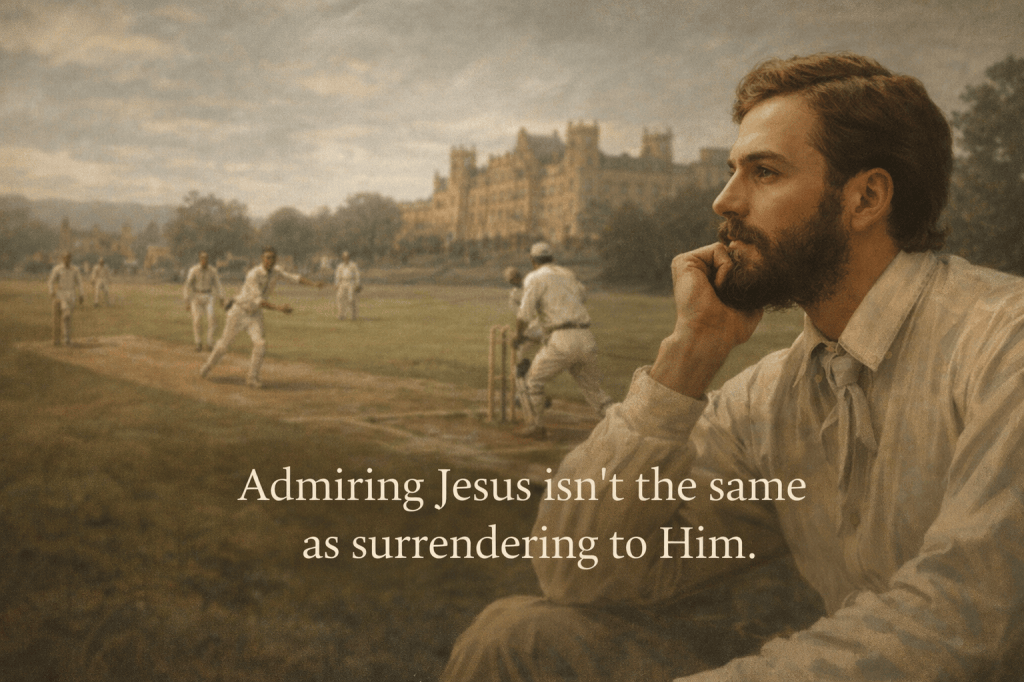
C. T. Studd was one of the greatest athletes in England and part of the celebrated Cambridge cricket team. He came from wealth and fame. His future seemed destined for sports glory and social prestige.
But everything changed when he heard a sermon by evangelist Dwight L. Moody in London.
Studd later wrote that one question pierced his heart:
“If Jesus Christ be God and died for me, then no sacrifice can be too great for me to make for Him.”
Studd realized he had admired Christ but had never truly surrendered to His authority.
Soon after, he made a radical decision. He gave away most of his inheritance and joined the China Inland Mission, leaving fame and comfort behind to serve Christ in China, India, and later Africa.
Many people questioned his decision. Some thought he was wasting his life.
But Studd famously replied:
“Only one life, ’twill soon be past; only what’s done for Christ will last.”
His surrender inspired generations of missionaries and believers worldwide.
🔗 Source:
https://www.christianitytoday.com/history/people/missionaries/ct-studd.html
⚒️🎯 Personal Application :
This passage challenges us to examine how we respond to Jesus’ authority. Like the religious leaders, we sometimes avoid surrender by hiding behind questions, doubts, or intellectual arguments. Yet deep within our hearts we know that Christ calls us to something greater — to trust Him, follow Him, and place every area of our lives under His lordship. When we truly recognize Jesus’ authority, our priorities shift, our obedience deepens, and our lives begin to reflect the rule of God’s kingdom.
🙏 🕯️Prayer:
Lord Jesus, You alone hold true authority over heaven and earth. Forgive us when we resist Your rule in our lives. Give us humble hearts that trust Your wisdom and obey Your voice. Help us surrender every part of our lives to Your lordship. Amen.


Leave a comment