
📖 Scripture Reading : 1 Samuel 30
✨
— Rabindranath Tagore
“Faith is the bird that feels the light and sings when the dawn is still dark.”
⏳ Background:
David was already living in tension. Anointed as king, yet hunted like a criminal. He had fled from Saul and taken refuge among the Philistines. Ziklag was not a palace—it was borrowed ground. Temporary. Fragile. Uncertain.
Then came the worst day.
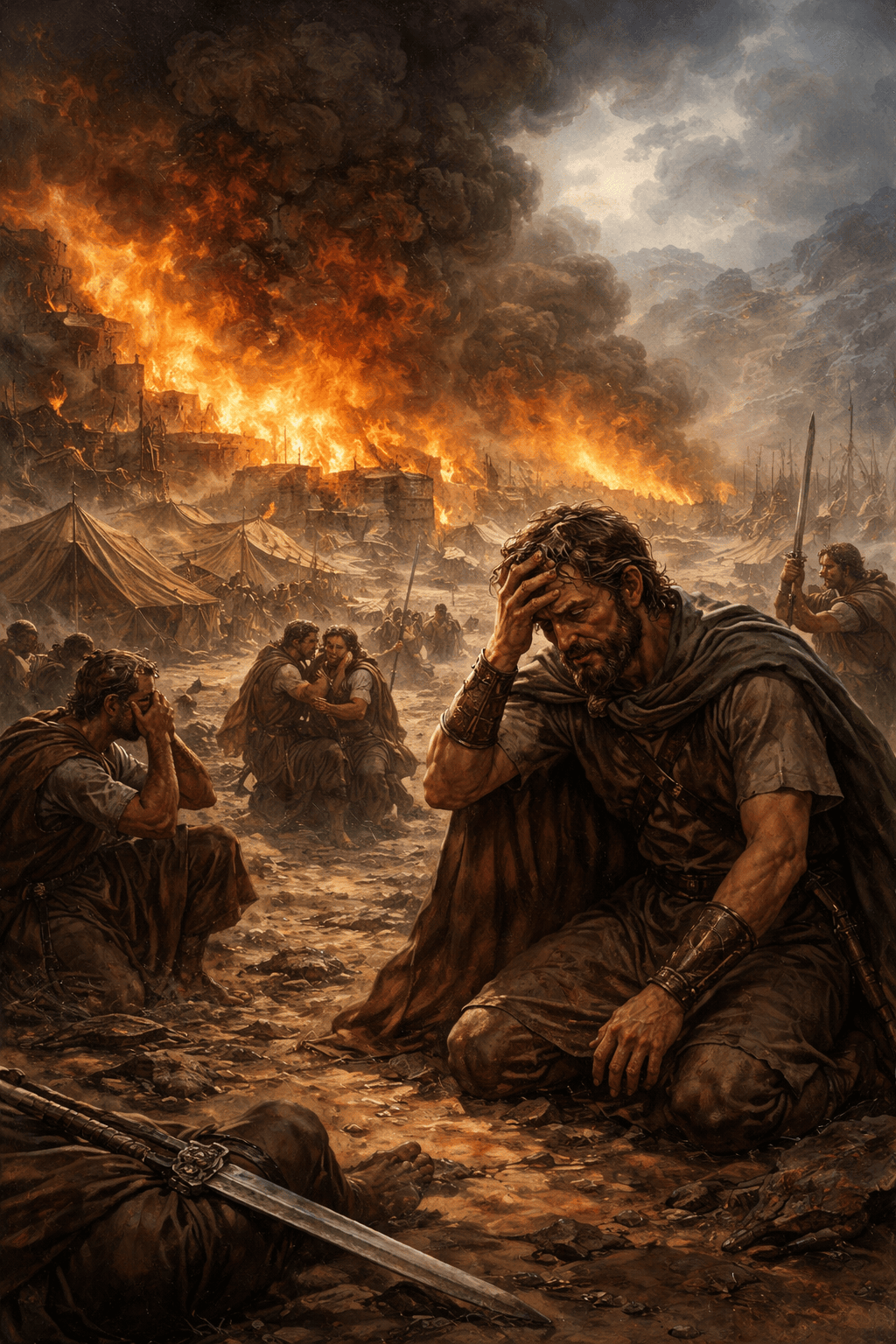
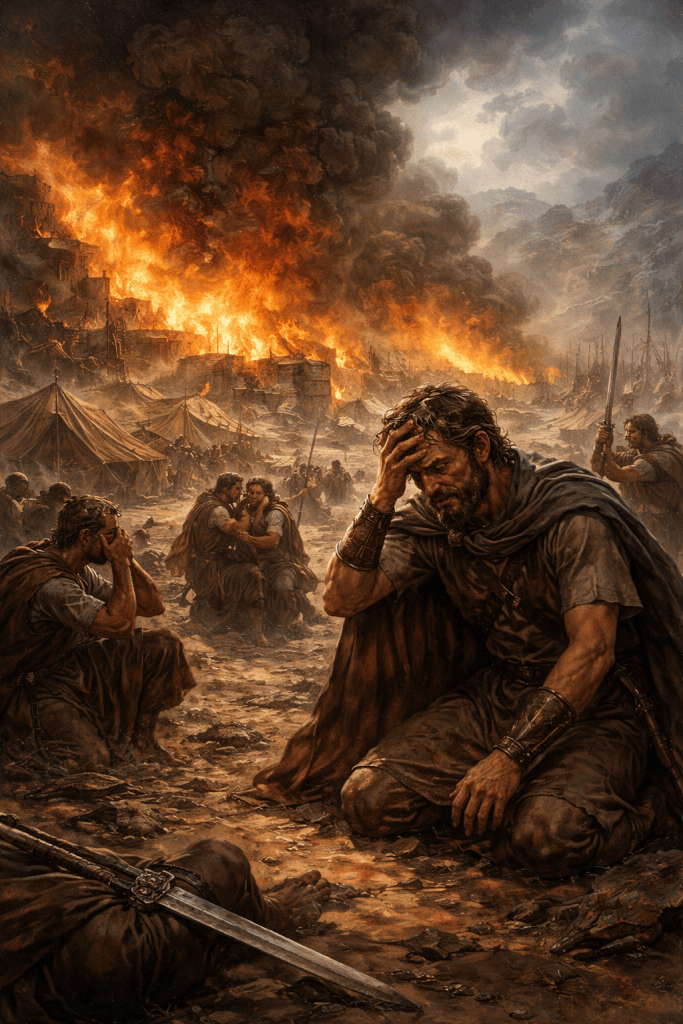
When David and his six hundred men returned from battle, they saw smoke rising from Ziklag. The city had been burned with fire. Their wives, sons, and daughters had been taken captive by the Amalekites (1 Samuel 30:1–3). Scripture says, “David and the people that were with him lifted up their voice and wept, until they had no more power to weep” (v.4).
This is not poetic sorrow. This is emotional collapse.
They were exhausted from war. Now they faced ashes where their homes once stood. No bodies. No closure. Just loss and uncertainty. The strong men who had followed David through caves and battlefields began to speak of stoning him (v.6). Leadership crumbled. Loyalty fractured. Blame surfaced.
David stood in the center of three unbearable realities:
• Personal grief
• Public shame
• Relational betrayal
He had lost home, security, reputation, and nearly his life. There is no strategic advantage here. No visible way forward. Only smoke and accusation.
🔥 Turning Point:
Then one quiet sentence changes everything:
“But David strengthened himself in the LORD his God.” (1 Samuel 30:6)
He did not strengthen himself in strategy.
He did not strengthen himself in pride.
He did not defend himself against his accusers.
He turned to God.
David called for Abiathar the priest and inquired of the Lord, saying, “Shall I pursue after this troop? Shall I overtake them?” (v.8). This is humility. This is dependence. A future king asking for direction.
And the Lord answered: “Pursue: for thou shalt surely overtake them, and without fail recover all.” (v.8)
Notice what God did:
• He spoke clarity into confusion.
• He gave command where there was paralysis.
• He promised restoration before any evidence appeared.
God also provided unexpected help. An abandoned Egyptian servant, left to die, became the guide who led David to the Amalekite camp (v.11–15). Divine timing. Divine direction. Divine provision.
The victory began not when David fought—but when David prayed.
🌿 Transformation:
The outcome is astonishing in its completeness:
“So David recovered all that the Amalekites had carried away… and there was nothing lacking to them, neither small nor great… David recovered all.” (v.18–19)
Nothing missing.
Families restored.
Possessions returned.
Enemy defeated.
Morale renewed.
But the deeper victory is spiritual.
David did not hoard the spoils. He shared them with those who were too exhausted to fight (v.24–25). He sent gifts to the elders of Judah (v.26). A broken, threatened leader became a generous, secure one.
Loss refined him. Crisis matured him. Dependence deepened him.
Ziklag was burned—but David’s faith was strengthened.
🕊️ Spiritual Reflection:
Defeat is often the furnace where sovereignty becomes personal.

God did not prevent Ziklag from burning. He allowed David to face public shame, leadership crisis, and emotional devastation. But the ashes were not abandonment—they were preparation.

In Scripture, we repeatedly see that God permits collapse before promotion. The loss strips away false securities. It exposes where we have leaned on reputation, resources, or relationships. When those supports are removed, we discover whether God Himself is enough.

David’s turning point was not military brilliance—it was theological clarity. He believed that even in apparent failure, the Lord was still his God.

That phrase matters: “the LORD his God.”

Not distant.
Not theoretical.
Personal.

God’s sovereignty means:
	•	No fire burns outside His knowledge.
	•	No enemy steals beyond His limit.
	•	No loss is beyond His power to redeem.

Sometimes restoration is immediate and visible, as at Ziklag. Sometimes restoration is internal before it is external. But the pattern remains: when we strengthen ourselves in the Lord, we are never strengthening ourselves in vain.

God specializes in total recoveries that seem impossible.
💬 Closing Encouragement:
There are seasons when we return home emotionally and find only ashes—dreams delayed, relationships fractured, reputations damaged, plans burned to the ground. We may feel blamed, misunderstood, or abandoned, and even those who once stood with us may withdraw. In those moments, we are tempted to surrender to despair or defend ourselves in anger. Yet like David, we are invited to strengthen ourselves in the Lord our God, to pause before reacting, to seek His direction before pursuing solutions. When everything visible collapses, faith becomes our lifeline. We may not see immediate answers, but we can choose obedience, prayer, and trust. The same God who restored David is able to redeem our losses, guide our steps, and turn devastation into testimony. We must not give up.
🙏 Prayer:
Lord, when everything feels burned and broken, be our strength when we have none left. Teach us to seek You before we act. Restore what is lost according to Your will. Give us courage to trust You for complete victory. Amen.


Leave a comment