
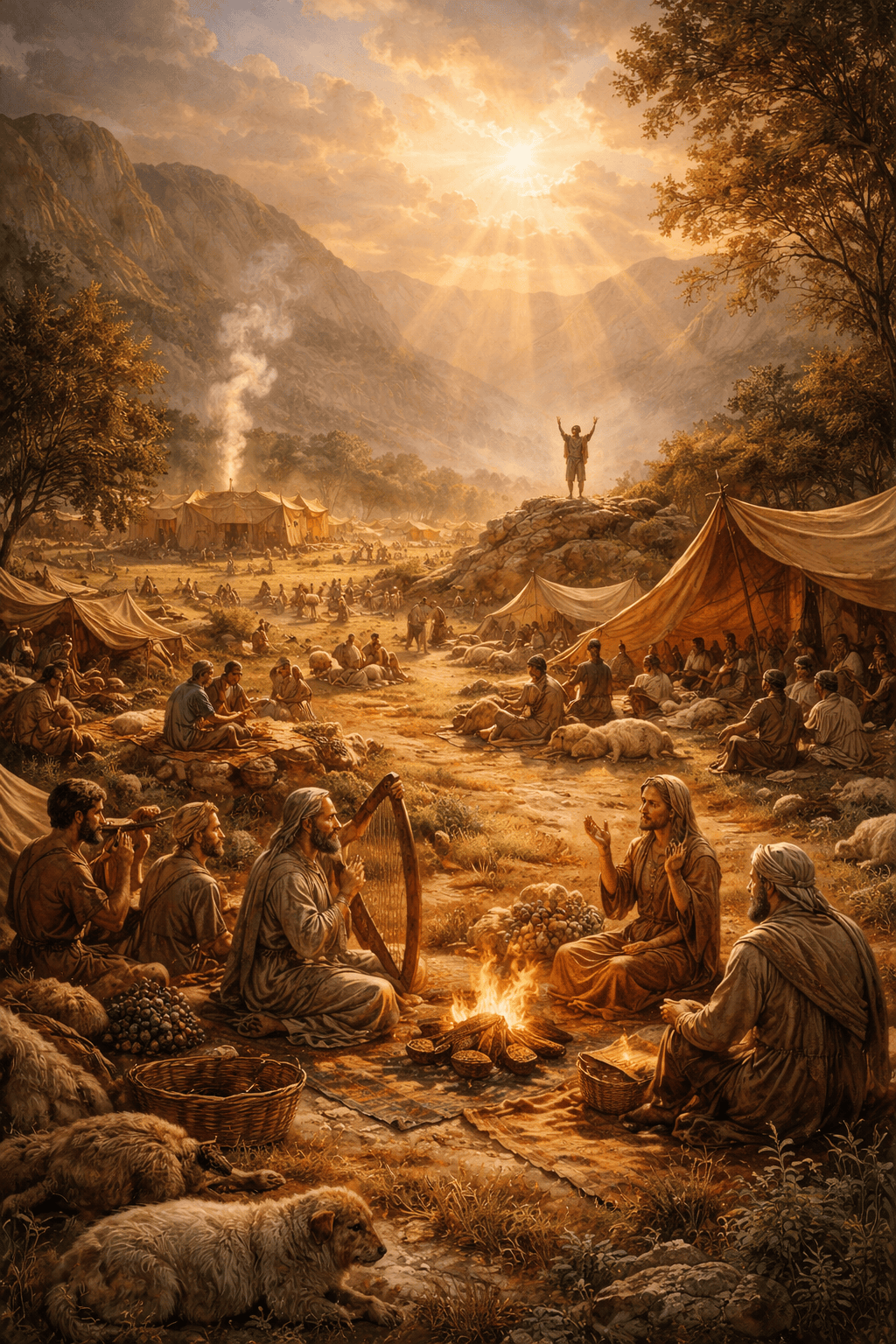
📖 ✝️ Scripture Reading:Exodus 23:10–13
“Six years you shall sow your land and gather in its produce, Six days you shall do your work, and on the seventh day you shall rest, that your ox and your donkey may rest, and the son of your female servant and the stranger may be refreshed.”
Exodus 23:10, 12 NKJV
“The Sabbath is a reminder that we are loved before we achieve.”
— Walter Brueggemann
💒 🕊️ ✨ Context ( Story ) :
Israel is no longer at Sinai hearing thunder; they are learning how covenant faith lives on ordinary soil. Exodus 23:10–13 comes at the close of the Book of the Covenant, where God translates commandments into daily rhythms. These verses answer a quiet but dangerous question: What happens to faith when life becomes routine?
Verse 10–11: The Land Learns to Rest
For six years Israel may sow, harvest, and plan. But the seventh year, the land must be released. Fields are left uncultivated. Control is surrendered. The Hebrew idea behind “let it rest” (shamat) means to drop, to release a grip. God teaches His people that provision does not finally come from mastery of soil but from trust in Him.
This rest has faces. The poor eat freely from what grows on its own. Animals feed without fences. Sabbath here is not sentimental—it disrupts economic systems and reorders priorities. God embeds mercy into agriculture itself.
Verse 12: People Learn to Breathe Again
The rhythm tightens from years to days. Six days of work are affirmed, not condemned. But the seventh day is guarded rest. Oxen, servants, and foreigners are explicitly named. God refuses a society where productivity consumes compassion.
Israel once labored without rest in Egypt. Now God ensures they never become Pharaohs to others. Sabbath becomes a weekly declaration: we will not recreate slavery.
Verse 13: Hearts Declare Allegiance
The final command shifts inward. Israel must not even name other gods. Sabbath is revealed as theological time—time that announces loyalty. To stop working is to say, “Yahweh provides.” To refuse rest is often to confess trust in another god—control, output, security.
Together, these verses tell one story: Sabbath trains Israel to trust God with land, labor, and loyalty.
🤔 🪞 💡 Reflection Thought :
The Sabbath principle in Exodus 23 is not about escape from responsibility but resistance against idolatry. God places rest where fear usually rules—fear of lack, fear of falling behind, fear of losing control. Defeat and exhaustion often come first because they expose the false gods we lean on. Sabbath interrupts that cycle. It re-centers life on God’s sufficiency, restores dignity to the vulnerable, and forms a people who believe that obedience is safer than endless striving. What feels like stopping is often the beginning of transformation.
🎬🔛 Historical True Story :
“The Race Eric Refused” – Paris, 1924
In the early 1920s, Eric Liddell, a Scottish Christian and Olympic sprinter, was known as Britain’s fastest man. As the 1924 Paris Olympics approached, he discovered that the qualifying heats for his strongest event—the 100 meters—were scheduled on a Sunday.
For Liddell, Sunday was not a personal preference but a conviction shaped by worship and rest. Despite immense pressure from British officials, public criticism, and the certainty that refusing would cost him gold, he withdrew. Newspapers mocked him. Teammates were stunned. A nation expected victory; he chose obedience.
Days later, unexpectedly entered into the 400 meters—a race he was not favored to win—Liddell ran with extraordinary calm and strength. He won gold, setting a new world record. His words later captured the heart of Sabbath faith: “God made me fast. And when I run, I feel His pleasure.”
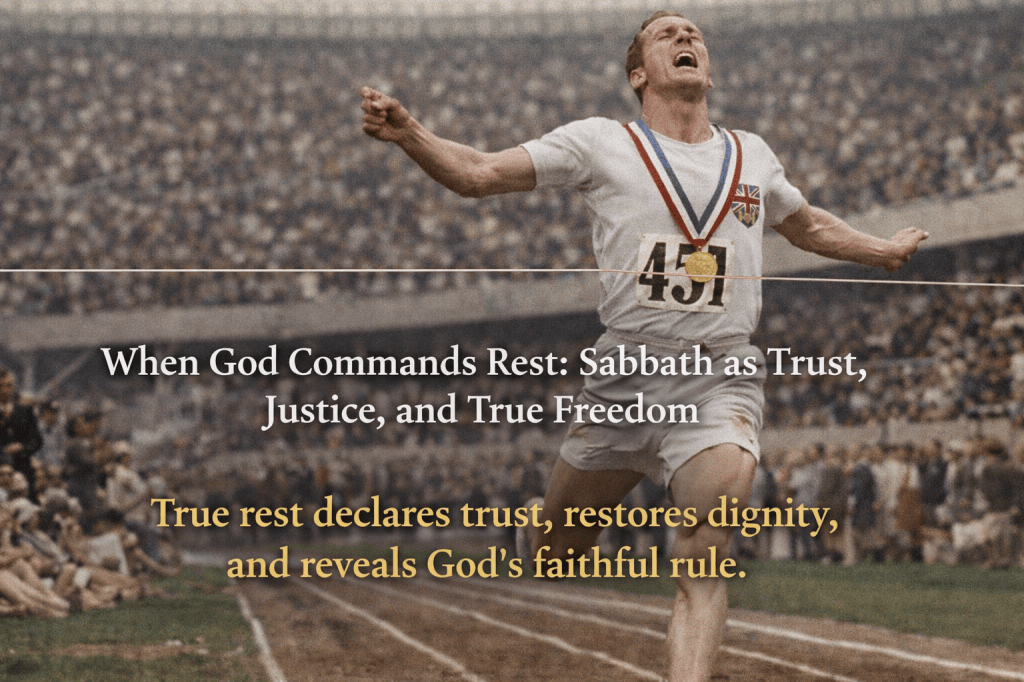
Before refusal: pressure, expectation, fear of loss.
After obedience: peace, unexpected victory, enduring witness.
Liddell’s story reminds us that honoring God’s rhythm may cost us approval—but it never costs us God’s presence.
🔗 Source:
https://www.olympics.com/en/athletes/eric-liddell
https://www.britannica.com/biography/Eric-Liddell
⚒️🎯 Personal Application :
We recognize ourselves in Israel’s struggle—tempted to measure worth by output, anxious to secure our future through constant effort, and slow to trust God with limits. We know the fatigue of carrying responsibility without rest and the quiet fear that stopping might cost us everything. Yet God calls us to release our grip, to allow space for mercy, and to declare through rest that He is our provider. As we learn to obey this rhythm, our faith deepens, our compassion widens, and our freedom grows. We are reminded again that life with God is sustained not by relentless work, but by faithful trust—so we do not give up.
🙏 🕯️Prayer:
Lord, teach us to rest where we usually strive.Help us trust You with what we release. Free us from fear driven work and hidden idols.Restore our compassion, our faith, and our joy. Be our rest, our provider, and our hope.


Leave a comment